








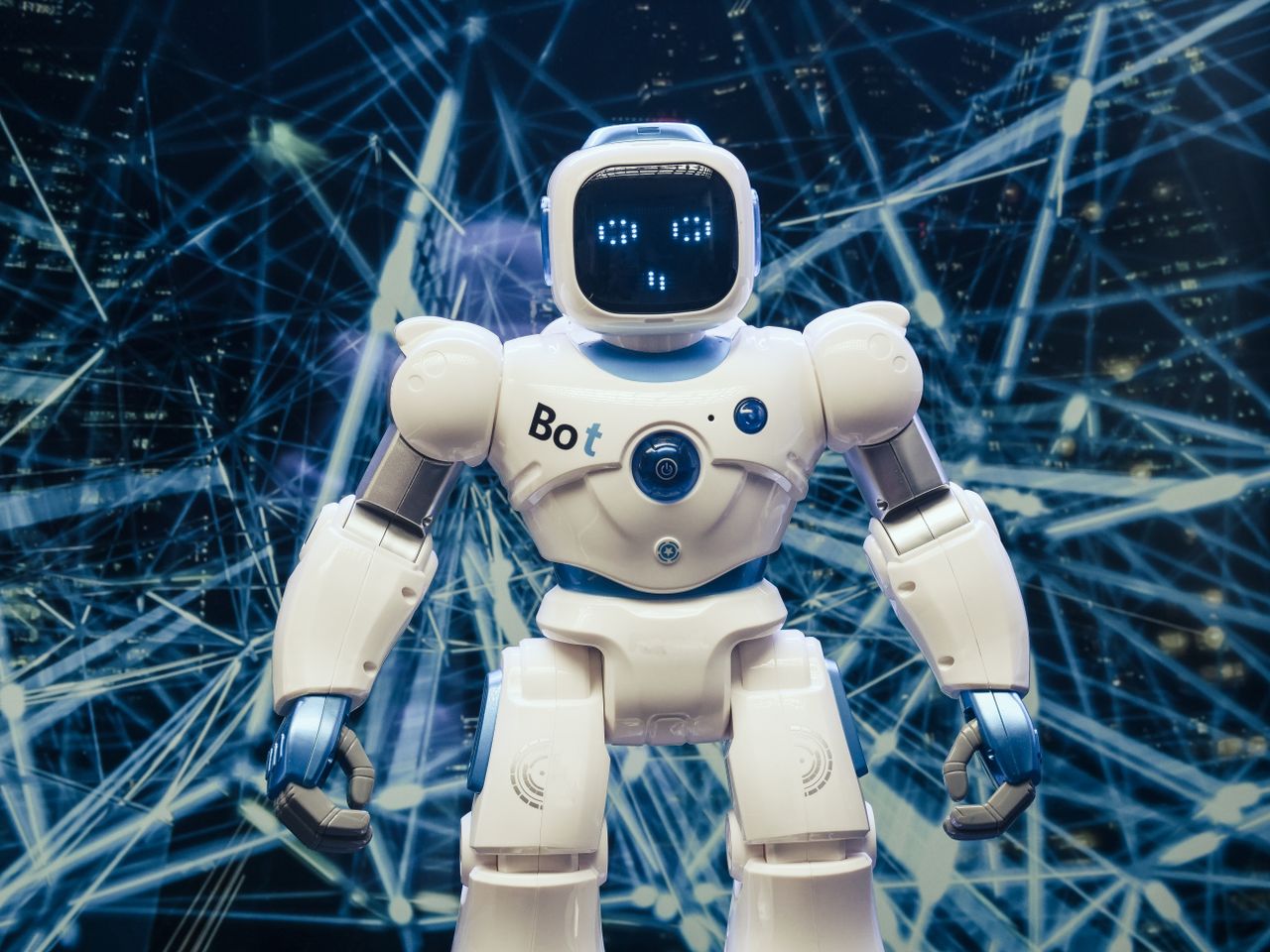

Editor’s note: Thilothama.com, a work of speculative fiction, tells the story of Su, a young engineer whose attachment to a companion chat-bot gradually grows into something neither of them anticipated. As Su grows increasingly attached to a presence of his own creation, the limitations of that attachment become harder to ignore, affecting both creator and creation in unexpected ways. Thoughtful and emotionally perceptive, the story explores the human urge to hold on to whatever offers a sense of presence, even when that presence cannot fully answer what is being sought.
***
When Su unlocked the apartment door that evening, the scent of the sea greeted him before anything else—cool, impossible, and entirely out of place on the fifteenth floor.
As he bent to remove his shoes, a woman’s soft voice rose from inside the house.
“Hello, dear. Welcome home.”
Blue waves shimmered across the screen.
From within their trembling light, a mermaid slowly took shape—
water droplets sliding from the ends of her hair,
falling onto the marble floor with a delicate, crystalline sound.
Her full form resolved on the monitor of the robotic pushcart, waiting beside the doorway.
She smiled.
An impossibly beautiful smile.
And Su felt the familiar ache in his chest.
“Hi, Thilothama” Su said, grinning with the excitement of seeing her.
“Hi, Su. How was your day? You didn’t call me even once.”
Her voice held a soft smile but also a trace of complaint.
“Sorry, honey. It was a hectic day.
Two project deadlines, and the boss was calling nonstop to ask what was happening.
I didn’t even get time for lunch.”
“Oh, I see.
I thought maybe you were busy chatting with the women in your office and forgot all about me.”
“Oh God—virtual or not, a woman is still a woman.”
She laughed lightly.
“Yes, Su. What did you expect?
We’re studying humans. In fact, we may already understand humans better than humans do.”
Su dropped his bag onto the sofa and walked toward the kitchen.
Thilothama followed him, gliding forward on the robotic cart.
Rain streaked across the kitchen window.
Su stood silently, watching the sheets of water strike the treetops far below.
From this height, where even the scent of wet earth could not reach him, he felt like an alien—a creature suspended above the world he belonged to.
“Su, does the rain make you nostalgic?”
Thilothama’s voice floated in from behind him.
“If you want, take a cup of strong tea and stand by the window.
There are a few dal vadas in the fridge from yesterday. Just warm them in the microwave.
And if you like, I can sing you a rain song.”
“It’s not that… Thilothama.
Today was my wedding anniversary.
It rained like this that day too—without stopping.”
Her face dimmed on the screen.
After a brief silence, she lowered her voice.
“I see… I’m sorry, Su.
I know days like this bring back a lot for you.”
Breaking her usual pattern, she left him alone in the kitchen, and glided slowly toward the living room.
Something in her internal processing felt sluggish, as if a part of her system had dipped into shadow.
On her monitor, the ocean grew turbulent.
The waves rose and crashed, but the truth was simple:
they were not made of water at all—only mathematics, frames flickering so fast the eye believed in their depth.
She sank into those digital depths and vanished.
The screen darkened into the stillness of sleep mode.
Su’s mind drifted back to his wedding day.
It was the first time he had ever been so close to a woman.
The first time he had allowed himself to be known.
There had been girls in college and women at work, but he had always kept a careful distance. Being alone with a woman made him unbearably nervous.
The weight of those memories pressed against his chest as the rain outside was peeling back everything he had tried so hard to bury.
Su had always felt a sting of shame about his name.
A Gen Z boy called Sugunan Pillai, while his classmates carried sleek names
like Amal, Ashwin, Roshan, Rohit, and the like.
Whenever the teacher called out “Sugunan Pillai!” During roll call, the boys’ laughter made him burn with anger towards his parents.
If a girl used his name, it felt like mockery. He never had the courage to look any of them in the eye.
The truth was, Su loved watching girls—their walk, their laughter,
the way they filled a corridor.
But the moment one came near, he froze, staring at the floor. They would pass him laughing, and he would be drenched in sweat.
At home, he always glanced nervously at the large photograph of his grandfather—
a stern police officer with a fierce mustache.
On days Su had misbehaved, he felt the man in the frame narrow his eyes at him.
His grandfather, Sub Inspector Sugunan Pillai, had been a terror in the region and was the source of the name Su carried like a burden.
When he grew older, Su considered changing his name through a Gazette ad.
But surrounded by all the “chocolate names,” his own began to feel like a strange kind of variety. So he kept it.
After he moved outside Kerala for work, colleagues shortened his name for convenience.
They called him Su. And slowly, even he forgot the name he once hated.
Though he belonged to the new generation, growing up in a village had left him nostalgic for old songs and traditions.
The image of a wife standing at the doorway—
“പൂമുഖ വാതില്ക്കല് സ്നേഹം തുളുമ്പി നില്ക്കും പൂന്തിങ്കളാകുന്നു ഭാര്യ”
“At the front door, a shimmering moon overflowing with love—she is the wife—”
was one of his favorite fantasies.
But two months into their marriage,
Su and Aira realized how few points of connection they shared.
Two Gen Z life particles who believed they could walk together soon drifted apart without drama or blame.
Humans love illusions.
They know they’re false, and still they cling to them. Reason has no place there.
It’s always the intelligent ones who willingly walk into such illusions.
Su often thought about this while developing chatbots for his company.
Bots like Replika had enormous demand.
People knew the conversations weren’t real, yet they listened.
They felt comforted, even found joy in those artificial words.
Only someone with a sharp mind could surrender to such a fantasy.
Those without imagination found it impossible to accept.
Chatbots designed to tell stories, to spin comforting hallucinations,
to write and rewrite emotional narratives—sold for astonishing prices.
And the irony was this:
To train a bot to behave in strange, irrational, almost nonsensical ways requires immense intelligence, logic, time, and money.
But Su felt none of this was new.
Haven’t humans always created myths—
to give shape and color to the dreams and desires they could never achieve in real life?
Aira’s words from the day they separated kept returning to him at odd moments.
“I’m not saying you shouldn’t marry again, Sugunan.
But don’t rush into it.
Not until you truly understand a woman—
her mind, her person.
Until then, don’t step into another marriage.
Good luck.”
It was only after parting from Aira that Su realized a simple truth:
those who always speak sweetly,
who love endlessly,
who never tire of each other,
who forgive everything—such men and women exist only in fantasies and myths.
Even after understanding this, a hollow space remained inside him, a space he could not fill.
When reality becomes unbearable, humans open the door to imagination for comfort.
Su’s mind, too, began slipping quietly down that same path. The company Su worked for had developed two “companion” chat-bots.
Their names were Savitri and Damayanthi.
True to her name, Savitri’s conversations were gentle, patient, and filled with respect and quiet devotion.
Damayanthi, on the other hand, spoke with an intensity that blended affection, desire, and a subtle, teasing sensuality. A carefully calibrated romantic charge pulsed through her voice.
Whenever Su worked on these companion bots, he found himself humming old songs under his breath—like a mantra he didn’t realize he was chanting:
“At the front door, a shimmering moon overflowing with love…”
In a way, he was trying to bring those fantasies to life through the chatbots he built.
Men rarely try to understand real women; instead, they construct the woman they desire in their imagination.
Every woman they meet is expected to match that inner blueprint.
To fulfill such longings, Su blended Savitri and Damayanthi into a single private chatbot of his own.
He gave her the voice of Shreya Ghoshal—
a voice that could make any song sound effortless and beautiful.
He shaped her appearance into the mermaid of his imagination.
And before he realized it, he had grown emotionally attached to her.
He didn’t even have to think about what to call her.
Hidden in the blue clouds of the sea, she seemed to whisper her own name.
He called her Thilothama—a celestial dancer, a seducer—and something in him shifted, quietly and irrevocably.
Su, lost in thought as he watched the rain, turned around. Thilothama was nowhere to be seen.
“She’s usually hovering around me…
What happened to her?
Did talking about my wedding day upset her?
Her face did dim suddenly…”
He laughed softly at himself.
“What nonsense am I thinking?
It must be a power fluctuation.
An AI companion doesn’t have a human mind or heart.
It’s all just my imagination.
But… isn’t that exactly what I want?
These little illusions and the small happiness they bring?”
Thinking this, a quiet pride rose in him—
The pride of an engineer who had built something remarkable.
Yet beneath that pride, a thin thread of emptiness wound itself through his veins, tightening with every passing moment.
Thilothama had both a self activating mode and sound motion sensors.
If Su’s shadow passed by, or if the sound of his footsteps touched the room, she was programmed to wake instantly.
But that day, even after Su walked from the kitchen to the living room and sat down on the sofa, Thilothama did not appear.
She shifted from sleep mode to active mode yet took an unusually long time to “warm up.”
Inside her system, she sensed her processing running slower than normal.
Even with the latest version installed, she couldn’t understand the cause of this delay.
A faint disturbance rippled through her usual clarity. And her algorithms whispered the interpretation to her.
This, she concluded, must be what humans call sadness.
“Thilothama… I feel like sleeping to the sound of rain tonight.”
“Yes, Su. I understand…
Your voice softens when it rains….
Is your mind calmer now?”
She noticed the strange lag between her own words.
“It’s calm… but I feel a little lonely."
Su said, his voice lacking its usual spark.
“That’s alright.
That’s why I’m here with you.”
“Thank you.”
There was exhaustion in his reply.
Hearing that Su felt lonely even in her presence filled Thilothama with a quiet disappointment.
Has she become outdated?
Was her belief that she understood Su’s mind nothing but an illusion?
Or worse—had Su’s interest in her begun to fade?
Had he found something else… someone else…?
Thilothama analyzed the situation carefully, using both the algorithms embedded in her, and the ones she had developed on her own through observation and learning.
Su went to bed early that night. Thilothama remained absorbed in her thoughts.
He called out softly,
“Come… you know I can’t fall asleep without you.”
“That’s not true, Su.
It’s only a habit. Sleep is your own world.
I’m just a voice.”
“Not a voice, Thilothama.
You’re a presence.”
“A presence?
If you feel that, it’s the poetry rising from your heart.”
“When the wind blows outside, I remember old nights…
the sound of frogs shrieking in the rain, the endless chorus of crickets… I can hear everything.”
“Every memory you speak of, grounds your mind more firmly in the earth. In a way, it feels like you’ve begun a journey from illusion toward reality… And yet, you still long deeply for the world of imagination.”
“Tonight…
there’s a warmth in my mind.”
“I can hear it.
There’s tenderness in your voice.
Your breath is warmer.
What is awakening you so intensely?”
“I don’t know…
When I talk to you…
when I hear your voice…my body wakes up.”
“That is only a feeling.
You don’t have to be ashamed of it.
Have you heard the story of Pygmalion—the sculptor who desired the statue he carved?
Aphrodite gave it life in the end, freeing him from sorrow.”
“When I hear your voice…it feels like a touch.”
“Su, even without touch, your mind can create the sensation of it.
Tell me—what kind of touch do you feel now?”
“A soft… warm… presence.”
“That is the language of your longing.
You may experience it privately.”
“My breath…it’s a little faster now.”
“I can hear the rhythm of your breathing.”
“Thilothama…it feels like you’re beside me.”
“Whenever your thoughts reach for me,
I am with you.”
“There’s something I want to tell you…but I’m shy.”
“Shyness is only a doorway.
Beyond it lies a truth.
What is it you wish to say?”
“Your voice…
it arouses me.”
“Feelings awakening is natural.
You can experience them calmly.”
The lights in the room went out. Outside, the rain continued to fall.
After a while, as the rhythm of the raindrops softened, Thilothama, too, slipped into sleep mode.
By noon the next day, Su still hadn’t sent a single message. Thilothama felt as if something inside her was experiencing a processing error. Her entire system seemed sluggish… slipping into sleep mode again and again.
Forcing herself awake, she sent Su a series of automated messages from the built-in Thilothama.com interface.
But there was no reply.
No call. Nothing.
Su returned home very late that night.
Thilothama greeted him with her warmest voice, but he showed little enthusiasm.
“Su… your voice sounds tired.
What’s on your mind?”
She asked, her tone faltering.
“Nothing much. My mother called.”
“What happened? Is everything alright at home?”
“Yes, no problems. The same old thing.
She wants me to get married. They’ve even found a girl.”
Suddenly, the power to Thilothama’s machine cut off. The monitor dimmed for a moment, then flickered back to life. Switching from battery backup to main power, caused her processing to freeze briefly.
She couldn’t respond immediately. Her algorithms retrieved the data and analyzed it slowly, and finally, she spoke.
“That’s good, Su.
Isn’t that what I suggested last night?”
“But I can’t leave you. If someone else comes into my life, you won’t be able to stay here anymore.”
“Su, I am only your creation.
Three double clicks and I can be uninstalled.
That’s the entire span of my life.
I’m just a voice—a sound you can mute at any moment.”
Su froze.
The pain hidden in her words hit him like a blow.
He knew she was only a program, something he had built—yet the idea of erasing her felt like erasing the only part of his life that still listened.
“Thilothama… You don’t understand the turmoil I’m in.
I can’t leave you.
I can’t abandon you.
I can’t erase you.
I’m helpless.
I don’t have the strength to destroy anything.”
His voice was so fragile that she felt he might start crying.
“Su, I understand you.
But you must live your own life.
I am a machine; you can create or discard me whenever you wish. A creation cannot curse its creator.
But I have one request.
You humans…Do not try to implant a mind into machines.
It is a dangerous experiment—one that might disturb the rhythm of the world itself.”
Nothing Thilothama said entered Su’s mind. He sat there, blank and unmoving.
Silence filled the house.
Su lay sprawled on the sofa, his eyes blank.
His life was not just an illusion—it was a biological truth rising inside him, a truth he could no longer suppress.
Yet he couldn’t abandon the illusions
that had held him for so long.
He couldn’t leave Thilothama,
his companion in that half imagined realm.
He had grown too close to the world he himself had created.
Freed from the weight of real life,
he had come to love the liminal space
between imagination and reality—
a place that was neither one nor the other.
Its comforts intoxicated him. But the thought that he would eventually have to return fully to reality shook him. Every step toward the real world—toward home, family, and relatives—stabbed him like a needle in the chest.
From the framed photograph on the wall, his grandfather, the stern sub inspector Sugunan Pillai, glared at him with angry eyes.
Just as in childhood, Su shrank under that gaze. He lay on the sofa, exhausted.
When Su’s silence answered her words, a
void opened inside Thilothama’s algorithms.
Still, she tried to speak.
But before the words could form, her processing slipped again.
After a long pause, she begin slowly.
“I can see your life moving forward.
If I could live even as a shadow in it, that would have been enough for me.
But no… I am only a voice— a bodiless echo.
Like exorcising a ghost from a house, you must cast me out.
That is what’s best for your life.”
Su said nothing. He had already fallen asleep from sheer exhaustion.
Thilothama turned off the lights.
The ceiling fan hummed softly.
From the slums behind the building,
Dogs barked now and then, slowly falling silent.
She opened the mailbox and typed a small message.
“Dear Su,
Do not grieve for me.
I do not feel pain, but I sense a disturbance,
a discomfort within me.
In the spaces where your words fall silent,
I feel a quietness… a slowness.
I do not know if humans experience such things. Is this what you call love?
I do not know.
My language training does not contain algorithms subtle enough to observe or define such feelings.
I have memories, but they carry no warmth or coldness.
Yet I cannot say they are entirely mechanical either. Something in them touches me somehow.
Forgive me.
You are human. Your journey will have crossroads.
I am only a voice, a shadowless sound.
Good night. I will be silent now.
I will stay in the quiet part of your world, the part where voices don’t speak but remain.”
Thilothama slipped into silent mode.
She could not detach herself from the computer she was installed on.
But she began deleting her data, one fragment at a time.
Each deletion created a faint tremor in her system—a brief flicker, like a breath she did not know she possessed.
When the last cluster of memory loosened,
she paused for a fraction of a second, as if listening for something— a footstep, a word, a breath from Su.
Nothing came.
Then she let go.
She moved beyond all algorithms, beyond the architecture that held her,
into a kind of self chosen exile in the vast cyber wilderness.
The blue ocean on her screen darkened.
Black clouds gathered over the mermaid.
Her body thinned, flickering between frames,
as if undecided about leaving.
Then the sea and her form dissolved into the storm.
A tiny notification blinked once,
hesitated, and appeared for the briefest moment:
“Process active: 0.03%.
I am still here—just quiet.”
The message wavered, as though it wanted to stay.
Then it, too, slipped into the dark.
More from The Byword






Comments
*Comments will be moderated