








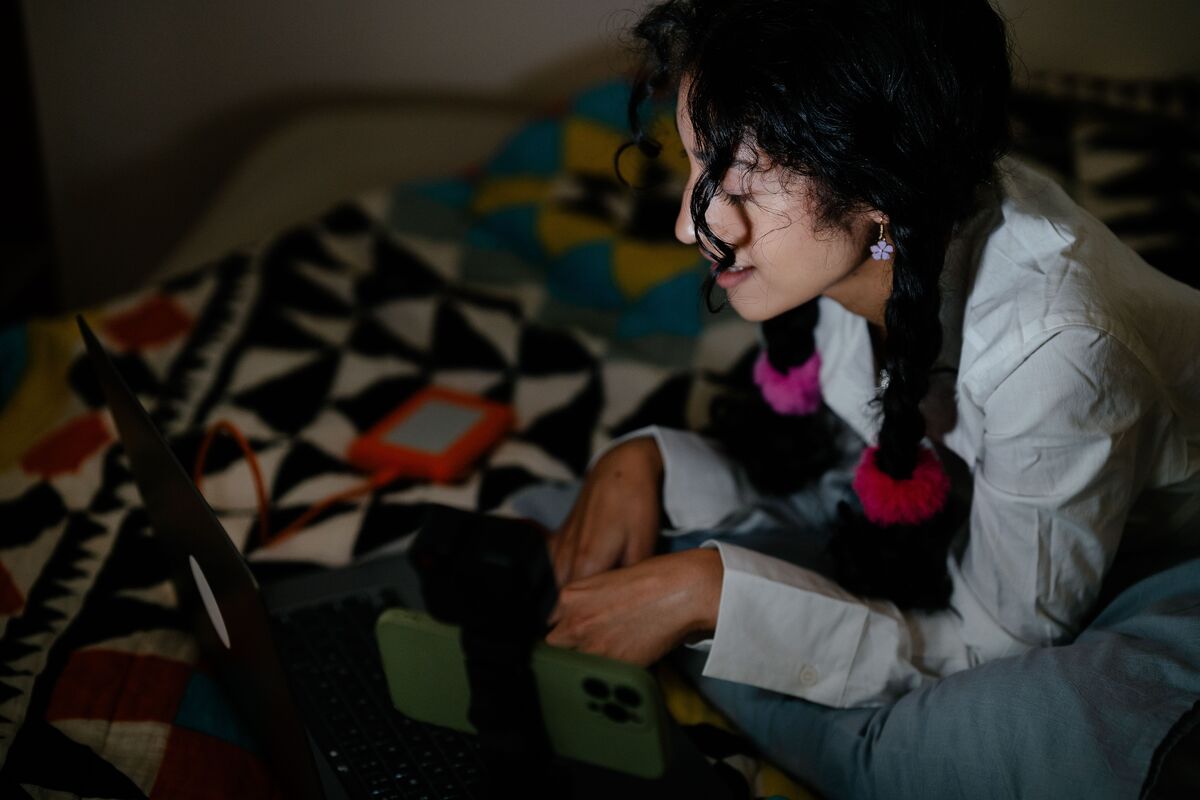
The most meaningful discoveries of our lives rarely come from searching for them. They come from wandering, and the modern internet has made wandering surprisingly difficult.

The internet has never offered more culture to consume. So why does discovering something genuinely new feel harder than ever?
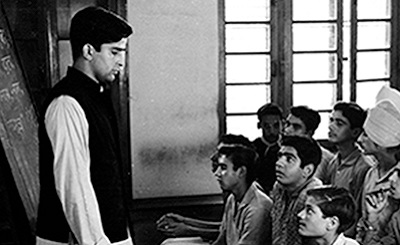
Every summer brings an old, inescapable monotony. The time that, until a few years ago, used to be filled with excitement and carefree exuberance, now seems to be deep in the doldrums. Looking back wistfully, I wonder what used to be different. Untethered by rigid syllabi, summers were the one time of the year when I could spend entire nights awake, taking Alice-style deep dives down various rabbit holes into countless wonderlands. The world felt wider and ever-expanding, with new things waiting around every bend. I remember how, on a random day, my grandparents’ offhanded mention of their favourite Sahir Ludhianvi poem somehow led me to discover the cinema of Guru Dutt. YouTube, being my trusty sidekick, brought forth a plethora of old songs and films, and there was little stopping my teenage self after that. I tore through every 1950s movie I could find, utterly fascinated by the charm and heart of the golden age.
Years later, during the long and suffocating idleness of the pandemic, I stumbled across a clip from Tim Burton’s Sweeney Todd: The Demon Barber of Fleet Street (2007). Despite growing up on Hindi movies, I had been oblivious to actual musicals, and Stephen Sondheim’s layered melodies, along with clever lyrics, felt ever so evocative. The YouTube algorithm did its job again, one recommendation led to another, and before long, I had found Hamilton. A hip-hop musical about some American founding father should have had very little appeal for someone who was bored by history and boasted about listening to classical songs. Yet I was completely consumed by something which was extremely alien to me. I ended up discovering, not only an entirely new genre of music, or a facet of history from the other side of the world, but also what I now recognise as my life-long love for theatre.
Looking back, this is mostly how I discovered my dearest pieces of culture and art. Now, trapped in the stupor of ennui, I wondered what was so different? I still have access to the internet; in fact, there is more creative work available to us now than at any other point in history. Every film, book, song, essay and niche interest imaginable lies a few clicks away. But despite this abundance, the internet landscape feels increasingly vapid, and new discoveries rarer. Why could I as a teenager have discovered history through music and theatre, Latin R&B and reggaeton through Broadway and Hip Hop, and yesteryear’s Bollywood through Urdu poetry, but now my days are filled with nothing but three trendy songs playing on repeat with every reel I watch? The answer was not difficult to come, even if it was a little heartbreaking. It was the serendipity I lacked. Tiny chain reactions of finding one unexpected thing from another has been the lifeblood of nerds all around the world, successfully sustaining and protecting us from artistic stagnation.
Years later, during the long and suffocating idleness of the pandemic, I stumbled across a clip from Tim Burton’s Sweeney Todd: The Demon Barber of Fleet Street (2007). Despite growing up on Hindi movies, I had been oblivious to actual musicals, and Stephen Sondheim’s layered melodies, along with clever lyrics, felt ever so evocative. The YouTube algorithm did its job again, one recommendation led to another, and before long, I had found Hamilton. A hip-hop musical about some American founding father should have had very little appeal for someone who was bored by history and boasted about listening to classical songs. Yet I was completely consumed by something which was extremely alien to me. I ended up discovering, not only an entirely new genre of music, or a facet of history from the other side of the world, but also what I now recognise as my life-long love for theatre.
Looking back, this is mostly how I discovered my dearest pieces of culture and art. Now, trapped in the stupor of ennui, I wondered what was so different? I still have access to the internet; in fact, there is more creative work available to us now than at any other point in history. Every film, book, song, essay and niche interest imaginable lies a few clicks away. But despite this abundance, the internet landscape feels increasingly vapid, and new discoveries rarer. Why could I as a teenager have discovered history through music and theatre, Latin R&B and reggaeton through Broadway and Hip Hop, and yesteryear’s Bollywood through Urdu poetry, but now my days are filled with nothing but three trendy songs playing on repeat with every reel I watch? The answer was not difficult to come, even if it was a little heartbreaking. It was the serendipity I lacked. Tiny chain reactions of finding one unexpected thing from another has been the lifeblood of nerds all around the world, successfully sustaining and protecting us from artistic stagnation.
Also read: Politics of hostel rooms: What student rooms reveal about class, gender, aspiration and loneliness
I remember how the thrill of exchanging newly discovered interests was the currency of our formative years. I would chew my friend’s ear off about musicals and movies, while she would introduce me to various international bands, or books I’ve never heard of. Now, I can’t remember the last time we did that. Partly because I seldom discover new things anymore. And partly because our feeds have converged, and we rarely come across something which isn’t already seen by the other. There’s no dearth of “content” for us to consume. The quantity only increases with every passing day. Then why does it feel like we’re trapped in a tedium, where I can’t tell one thing apart from the other. I consume one piece of content and 10 exact same things are shoved down my throat. The algorithm, a marvel of technology, that was designed to make surfing the vast ocean of internet easier, has completely usurped it. Who would have thought that algorithms could become so good at predicting our taste that eventually everything would start to feel all too predictable?
The contradiction is difficult to ignore. Recommendation algorithms helped me discover some of the things I love most. Yet the same systems that once introduced me to entirely new worlds increasingly seem designed to keep me in ever-shrinking boxes. Maybe because everything is constricting. Over the years, the social media experience that used to be defined by long-form YouTube videos, shifted towards short form reels and shorts. Some people can argue that they indeed continue to discover new things; obscure music, or underrated movies through the very same short format, but can’t deny that those force us to make a bigger leap and hence adds more friction in the discovery process. A 30-second reel can introduce us to a song, but rarely to an entire musical tradition. It can show us a dramatic scene from a film without encouraging us to watch the two-hour movie it came from. We encounter fragments of culture constantly, but not always the larger worlds those fragments belong to.
In a bid to keep finding ‘similar’ things, we now seem to be a place where we’re finding the exact ‘same’ things, most times just packaged differently. And then there’s the purgatory of the feedback loop. When a particular song, aesthetic, book, or film performs well, the algorithm begins pushing it to more people. For the creators, it’s an impossible lesson to miss. If one thing is being rewarded, then making something similar suddenly feels like a safer bet. Soon, the algorithm is flooded with variations of the same idea, which it then continues to promote because people have already shown interest in it.
The contradiction is difficult to ignore. Recommendation algorithms helped me discover some of the things I love most. Yet the same systems that once introduced me to entirely new worlds increasingly seem designed to keep me in ever-shrinking boxes. Maybe because everything is constricting. Over the years, the social media experience that used to be defined by long-form YouTube videos, shifted towards short form reels and shorts. Some people can argue that they indeed continue to discover new things; obscure music, or underrated movies through the very same short format, but can’t deny that those force us to make a bigger leap and hence adds more friction in the discovery process. A 30-second reel can introduce us to a song, but rarely to an entire musical tradition. It can show us a dramatic scene from a film without encouraging us to watch the two-hour movie it came from. We encounter fragments of culture constantly, but not always the larger worlds those fragments belong to.
In a bid to keep finding ‘similar’ things, we now seem to be a place where we’re finding the exact ‘same’ things, most times just packaged differently. And then there’s the purgatory of the feedback loop. When a particular song, aesthetic, book, or film performs well, the algorithm begins pushing it to more people. For the creators, it’s an impossible lesson to miss. If one thing is being rewarded, then making something similar suddenly feels like a safer bet. Soon, the algorithm is flooded with variations of the same idea, which it then continues to promote because people have already shown interest in it.
Also read: The sunset of a million hues: An opacarophile’s discovery of the waterways of the Sundarbans
Many composers have actually complained about how they’re increasingly asked to focus on making that 30-second hook catchy enough to go viral, even if at the behest of the rest of the song. Over the past year, I have seen countless trailers featuring a bearded antihero walking away from an explosion while dramatic percussion plays in the background, or “romantic comedies” deeply devoid of both defining features, starring a mediocre actor in a love-triangle, and I genuinely struggle to tell any of them apart. The rise of BookTok has undoubtedly encouraged many people to read, but it has also transformed reading into an aesthetic, where books increasingly seem to be discussed less as works of literature and more as collections of marketable tropes.
None of this can be blamed on a sudden lack of art or cultural output. No — at the risk of sounding like my mother — the problem perhaps is the lack of attention. I am rarely able to stay outside — the extremely saturated — recommendation loop long enough to discover like before. Discovery requires patience, while recommendation feeds reward immediacy. The more time I spend consuming what is placed in front of me, the less time I spend wandering far enough to discover something unexpected. In an age where everything is tailored to our tastes, perhaps what we need is not better recommendations, but more opportunities to be surprised. Algorithms may have become remarkably good at predicting what we already like, but culture has always been shaped just as much by accident, curiosity, and detours into the unfamiliar.
None of this can be blamed on a sudden lack of art or cultural output. No — at the risk of sounding like my mother — the problem perhaps is the lack of attention. I am rarely able to stay outside — the extremely saturated — recommendation loop long enough to discover like before. Discovery requires patience, while recommendation feeds reward immediacy. The more time I spend consuming what is placed in front of me, the less time I spend wandering far enough to discover something unexpected. In an age where everything is tailored to our tastes, perhaps what we need is not better recommendations, but more opportunities to be surprised. Algorithms may have become remarkably good at predicting what we already like, but culture has always been shaped just as much by accident, curiosity, and detours into the unfamiliar.
More from The Byword



Comments
*Comments will be moderated