









Imtiaz Ali’s new film turns Partition into a deeply felt story of longing, memory and the borders that still keep lovers, families and histories apart
Imtiaz Ali’s Main Vaapas Aaunga can easily be called a cinematic masterpiece. The film shows how Partition did not only divide a country; it separated lovers, destroyed homes and broke families. In his new film, Imtiaz Ali shows how Partition was far beyond politics. It was not the politicians but innocent people, who had nothing to do with politics, who suffered the most. It was innocent people who were killed on both sides, forced to leave their homes and made to carry the burden of decisions taken by others.
At its heart, Main Vaapas Aaunga is not merely a film about Partition; it is a film about love. Imtiaz Ali, who is a master at showing love in its most complicated forms, once again proves why he remains one of the finest filmmakers when it comes to portraying human emotion. For him, love is not just about two people being together. It is about longing and yearning, about the ache of being separated from your beloved but never forgetting them, and keeping that love alive in your heart. The film shows how true love does not disappear when lovers are separated. It continues to live in memories, promises and in the hearts of those who carry it.
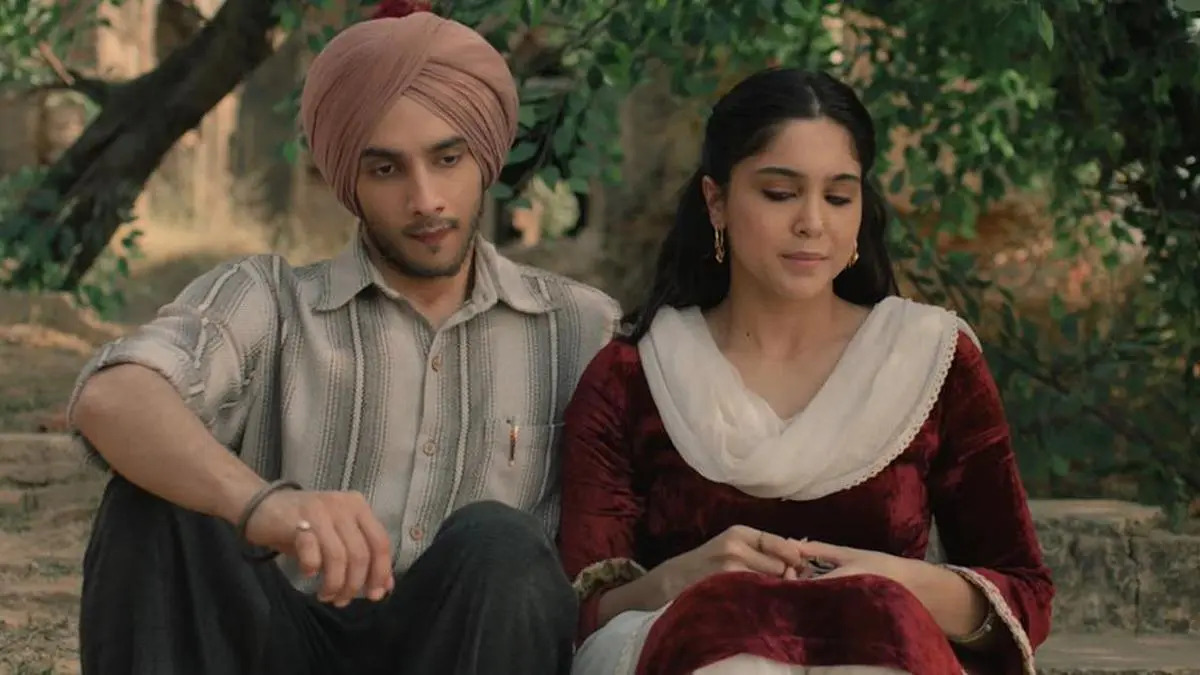
Ishar Singh Grewal’s lifelong desire to return to Sargodha is not simply longing for a place; it is longing for his home and for a love that no border could erase. The emotional weight of the film would not have worked without its extraordinary performances. Naseeruddin Shah, as Ishar Singh Grewal aka Keenu, delivers a performance of remarkable depth and tenderness. Even in his character’s moments of confusion and fading memory, he communicates an ocean of emotion with the slightest change in expression. Vedang Raina is equally impressive as young Keenu. He captures the innocence, passion, heartbreak and struggle of a young man whose life is forever changed by the horrors of Partition. Diljit Dosanjh and Sharvari also deserve appreciation for their phenomenal performances as Nirvair and Afsana. Sharvari and Vedang share remarkable chemistry as Keenu and Afsana.
One of the film’s most poignant touches comes through Keenu’s fragmented memories. On his deathbed, he refers to those responsible for the violence and bloodshed as “Martians” — aliens who invaded a world that once belonged to ordinary people. Similarly, he refers to his beloved homeland, Sargodha, as the Moon — distant, unreachable and existing only in memory. Through these metaphors, Imtiaz Ali beautifully transforms trauma into something deeply human, showing how loss can reshape the way people remember the world around them.
What makes Main Vaapas Aaunga particularly heartbreaking is that it reminds us how the wounds of Partition still continue to exist. Despite being separated by borders, people from both sides still carry a sense of familiarity with each other. They still carry echoes of one another in their language, food, traditions, music and memories. This sense of familiarity refuses to disappear. It reminds us how similar we are, how we were divided because of politics, and how we were given the poison of hate by politicians and colonisers. It is saddening to see how the foreigners who divided us now tell us how similar Delhi and Lahore are, while we, the people to whom this land belongs, cannot visit one another. Beyond hate and politics, it is art, film and music that unite us now. They remind us how similar we are. Even today, people continue to fall in love across borders, only to find themselves unable to meet because of borders and politics. The film mourns not only lovers separated by Partition but also the countless connections that could have existed had politics and hatred not intervened.
Another thing I deeply appreciated about the film was Diljit Dosanjh’s end-credit song. Imtiaz Ali shows a montage of real-world archival and documentary clips of displaced innocent people suffering because of politics: people forced to leave their homes, people who lost their loved ones, all because of political conflicts and war. Imtiaz Ali, in collaboration with Diljit Dosanjh and A.R. Rahman, creates this sequence as a tribute to the resilience of displaced people who are forced to leave their homes. The montage includes clips from different time periods and countries, including Gaza. The larger theme of loss, migration and longing, tied to the film’s Partition-era setting, echoes strongly here.
The film is elevated further by its stunning visuals. The flashback sequences are bathed in golden hues, giving them the texture of old memories and forgotten dreams. Every frame feels carefully crafted, evoking nostalgia and showing the pain of remembering a time that can no longer be relived except in memory. A.R. Rahman’s music beautifully complements the narrative, adding emotional depth to the already striking visuals.
Imtiaz Ali has indeed done it again. He shows that the Bollywood of our childhood — the Bollywood that taught us love — still exists. Main Vaapas Aaunga is a must-watch for every cinema enthusiast who thought all hope was lost for Bollywood. The film feels like poetry unfolding on screen. Imtiaz Ali’s mastery of love and longing cannot be fully captured in words. He is phenomenal in his art.
He understands love not as something that simply happens between two people, but as something that never fades and never leaves you. His films show how love is not easy, how it makes one yearn and long for their beloved, even when years pass and the person they love is no longer with them. Love never dies. It continues to live even after the lovers die; it continues to exist in memory. His art of showing how love changes a person, how it is like a poison — a sweet poison that remains in the heart forever — is beyond words. Every frame of his films feels like a poem, a beautiful poem that lingers in the audience’s mind long after the credits roll.
More from Culture






Comments
*Comments will be moderated