










Imtiaz Ali’s films use love, travel and music to push restless people toward difficult truths about themselves. From Jab We Met to Tamasha and now Main Vaapas Aaunga, his cinema keeps returning to one stubborn question: how does one become oneself?
“Why choose to be someone else when you can be yourself?” asks Tara Maheshwari (Deepika Padukone) in Tamasha (2015). Her questions is simple, almost childlike, yet it carries the central ache of Imtiaz Ali’s cinema: why live a life that does not belong to you? Ali has built a career not around formula or invincible heroes, but around people who feel trapped inside borrowed lives. His films are not just about love; they are about identity, freedom, loneliness and self-discovery. His characters are almost always searching — for a person, a place, a voice, a wound, or a version of themselves they lost along the way. Ved rebels against expectation in Tamasha, Veera finds freedom in Highway, Jordan turns pain into art in Rockstar, and Geet, with all her chaos and brightness, pulls Aditya back towards life in Jab We Met.
Over the last two decades, Ali has carved out a distinct space in Hindi cinema by making romance a doorway to introspection. His stories often move through journeys, both external and internal. His protagonists travel from one city to another, but the real movement is inward, toward buried desires, old fears and uncomfortable truths. In his films, love is not always the end point. More often, it is the disturbance that forces people to change. That is why his cinema continues to speak to younger viewers, especially those caught between family expectation, professional anxiety and the pressure to appear sorted before they have even understood themselves. What does it mean to be true to oneself? How much of life is chosen, and how much is performed? Can love help us find ourselves, or does it expose how lost we already are?
With Main Vaapas Aaunga, attention returns to a filmmaker who has always been suspicious of tidy storytelling and easy emotional answers. What makes his cinema distinctive is that it treats emotional vulnerability not as weakness, but as strength, and that makes the viewer realise that sometimes the greatest journey is the one within. Through intricate characters, memorable music and human stories, Ali keeps redefining what a Hindi film love story can be.
Very few contemporary Indian filmmakers have created a cinematic style as instantly recognisable as Imtiaz Ali’s. In an industry often saturated with formula, grand spectacle and familiar romantic arcs, Ali has always tried to probe deep into his characters' psyche. He is less interested in whether two people end up together than in what they discover about themselves while trying to love. Rather than love stories alone, his films are quests for self-discovery, personal freedom and a fuller sense of being. As Main Vaapas Aaunga arrives, it is worth looking again at the ideas that have shaped his work, and why they continue to strike a chord.
Classic Bollywood romances often begin with a meeting, move through obstacles and end in union, Ali’s romances usually begin there too, but they rarely stay there. His love stories open up larger emotional and philosophical questions. His protagonists are restless spirits looking not only for love, but for meaning. The love in his films is not so much a search for another human being, but for the self.
In films such as Jab We Met, Rockstar, Highway, Tamasha and Love Aaj Kal, relationships matter deeply, but they are rarely ends in themselves. Rather, they serve to challenge a character and propel them towards their deepest desires, fears, and true self. This introspection separates Ali from much mainstream romance. His characters question deep philosophical issues of selfhood, freedom and the true importance of self-knowledge in love.
One of the most persistent images in Ali’s work is the road. His characters are almost always in transit — on trains, highways, foreign streets, buses, cars and unfamiliar city corners. Travel in his films is rarely just movement from one location to another. It is an emotional condition. Geet’s journey with Aditya in Jab We Met helps him rediscover the will to live. Veera’s kidnapping in Highway paradoxically leads her away from the suffocation of her privileged home. Ved’s time in Corsica in Tamasha briefly frees him from the social script he has been forced to perform.
In Ali’s cinema, roads and railways become temporary republics of freedom. Away from home, family, class and routine, his characters can ask dangerous questions: What do I want? Who am I pretending to be? What would I become if nobody were watching?
Another remarkable aspect of Ali’s filmography is his depiction of women. Unlike the subservient side characters in many Bollywood films, his female protagonists are strong, complex and individualistic. Geet in Jab We Met remains beloved for her unruly exuberance. Veera in Highway grows from a frightened young woman into someone who can name her pain. Tara in Tamasha is not merely Ved’s love interest; she becomes the person who recognises the gap between the man he is and the man he has buried. Ali’s women are not perfect, and that is precisely why they stay with us. They can be impulsive, stubborn, tender and difficult. Their strength lies not in being written as symbols, but in being allowed to be human.
Perhaps the most interesting facet of Ali’s cinema is his understanding of love. In many Hindi films, love resolves the story. In Ali’s films, love often complicates it. Jordan’s relationship with Heer in Rockstar gives birth to art, but also deepens his torment. Love Aaj Kal uses two timelines to examine how commitment changes across generations, and what may be lost when intimacy becomes too casual or too guarded. In Tamasha, love becomes the force that allows Ved to reject an inauthentic life. For Ali, love is not a transaction. It is a rupture. It can be beautiful, humiliating, liberating and cruel. But at its best, it reveals one hard truth: one cannot fully love another person while remaining a stranger to oneself.

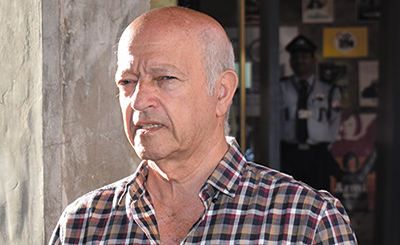
A still from Main Vaapas Aaunga
Imtiaz Ali’s characters are often outsiders — dreamers, drifters, artists, runaways or ordinary people suffocated by ordinary expectations. Jordan is alienated from his world in Rockstar. Ved hides his real self behind a socially acceptable mask in Tamasha. Veera in Highway slowly understands that the life designed for her was never truly hers. They are relatable because their battles are not always dramatic. Often, they are painfully familiar: the pressure to be successful, the fear of disappointing family, the exhaustion of pretending, the loneliness of wanting a life that others may not understand. Ali’s cinema does not romanticise confusion, but it does give it dignity. It says that being lost may also be the beginning of becoming free.
Music holds a central place in Imtiaz Ali’s cinema. Instead of being mere fillers in the plot, the songs directly translate the inner state of his characters into something more tangible. His collaborations with A. R. Rahman have produced some of modern Hindi cinema’s most beloved soundtracks, including “Kun Faya Kun”, “Tum Ho”, “Agar Tum Saath Ho” and “Safarnama”. These songs speak of love, confusion, longing, surrender and release; they convey the emotions that even dialogue cannot, a true extension of his character's emotions. Often, they say what the characters cannot.
Imtiaz Ali’s films connect because they are emotionally sincere without being simplistic. His characters are flawed and recognisably human. They make mistakes, run away, hurt others, lose themselves and then try, sometimes clumsily, to return. His films inspire reflection and patience; they understand that confusion is not failure; sometimes it is the first honest response to life.
Many youngsters are strongly connected to his films as he captures their search for identity and purpose and their search for self-expression. His characters want love, but they also want permission: to choose differently, to fail honestly, to reject a script handed to them by family, work or society. Tamasha, for instance, became a cult film because it gave shape to a generation’s anxiety about career, love, conformity and the fear of wasting one’s inner life.
Imtiaz Ali has created a unique space in Indian cinema. Where other filmmakers concentrate on outward conflicts and struggle, he focuses inwards and delves into the psychological aspects of his characters: their silence, longing and inner brokenness. His work blends romance, travel, music and introspection into stories that feel both personal and widely familiar. However, the core of Ali's work is his underlying belief that one of the ultimate quests in life is not the search for another, but the search for the self.
Love, in Ali’s world, is often the spark that begins that search. Through Geet’s brightness, Veera’s rebellion, Jordan’s anguish and Ved’s awakening, his films continue to insist that the deepest adventure is not across a map. It is inward, into the difficult, unfinished country of one’s own heart.
More from Culture





-thumbs.jpg)
Comments
*Comments will be moderated