








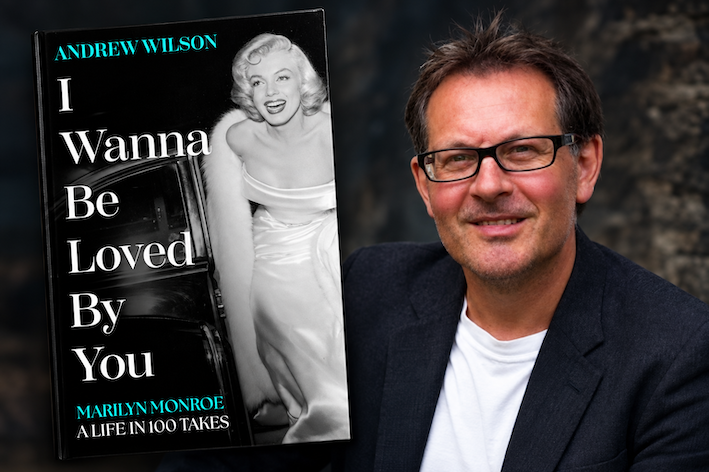
For this biography, Wilson worked through recordings made by Anthony Summers, who interviewed some 650 people for his earlier book on Monroe, as well as letters, notebooks and correspondence connected to her psychiatrist Ralph Greenson.
In I Wanna Be Loved By You: Marilyn Monroe, A Life in 100 Takes, British biographer Andrew Wilson draws on unpublished letters and recordings to revisit Monroe’s acting, ambition, relationships and death in the year of her birth centenary. He talks about the material he uncovered, Monroe’s determination to be recognised for her acting, and why he believes her life deserves to be reconsidered.
Marilyn Monroe was walking past a billboard for The Seven Year Itch when she pointed to the photograph of her white dress lifting over a subway grille. “That’s all they want me to do in films,” she told actor Eli Wallach. She had helped make that image and had grown tired of being handed variations of it. The photograph told audiences what to expect; it became harder for her to show them something else. British biographer Andrew Wilson follows the work behind the image in I Wanna Be Loved By You: Marilyn Monroe, A Life in 100 Takes (Simon & Schuster), published in the year she would have turned 100. Its short chapters flit between her work and the private life that so many people later tried to explain for her.
Wilson is equally attentive to the things Monroe kept around her. She often told the story of losing her mother’s piano as a child and spending years finding it again. The piano was real, but Wilson finds that her foster mother Ana Lower had bought it at auction; Monroe purchased it from her in 1945 for $10. She later had it painted white. There are books with pencil marks, and cookbooks stuffed with shopping lists and recipes clipped from newspapers. Monroe kept Ulysses in her car and read passages aloud because she liked the sound of the sentences, though she admitted finding it difficult. Once, when homemade pasta refused to dry before her dinner guests arrived, she pointed a hairdryer at it and blew the noodles off the counter. Endometriosis brought severe pain and surgery; pregnancies ended in loss, and sleep remained elusive. Wilson gives these experiences space beside the pleasures of reading and cooking. All of them belonged to the life she was trying to manage between films.
For this biography, Wilson worked through recordings made by Anthony Summers, who interviewed some 650 people for his earlier book on Monroe, as well as letters, notebooks and correspondence connected to her psychiatrist Ralph Greenson. The records can unsettle a story that has been told with affection: Monroe admired Ella Fitzgerald, but she was in New York during Fitzgerald’s much-discussed 1955 engagement at the Mocambo, and the photograph often placed at that club was taken elsewhere. Wilson also examines conflicting memories of Monroe’s final night and follows what happened to her belongings after her death, when private papers passed between owners and familiar objects acquired astonishing prices. The piano was eventually sold to Mariah Carey for $662,500. In this interview to The Punch Magazine, Wilson talks about the material he uncovered, the difficulty of separating fact from decades of speculation, Monroe’s determination to be recognised for her acting, and why he believes her life deserves to be reconsidered as the world celebrates the centenary of her birth this year. Excerpts:
Marilyn Monroe is one of the most written-about figures of the twentieth century. When you began this book, what did you believe was still missing from her story? Your research draws on unpublished correspondence involving Monroe, Arthur Miller and Joe DiMaggio, private material from her psychoanalyst Ralph Greenson, and recordings of people who knew and worked with her. Was there one unpublished letter, recording or testimony that made you realise that the familiar picture of Marilyn needed to be reconsidered?
Yes, there are something like 650 books about Marilyn Monroe, making her one of the most studied figures of modern times. You would have thought there was nothing left to say, but I felt that, with the 100th anniversary of her birth approaching, it was time for a reassessment. There are something many myths, so many falsehoods that people have taken as truth, that I thought some of these preconceptions needed examining. We all know she is so much more than the ‘dumb blonde’ of popular perception, but people still want to read Monroe through the persona she created. I was lucky to dig up so much unpublished material — which does indeed cast her in a new and fresh light. There was no one letter or tape — rather it was the culmination of all the new archival sources that helps reframe Marilyn in a new light.
You tell her life through 100 short “takes” rather than a conventional, chronological biography. Why did this fragmented form feel right for Marilyn? Did it allow you to show the many versions of her, or was there also a danger that the structure could turn her life into another collection of striking Marilyn moments?
I thought there had been so many birth to death biographies — some good, some not so good — and it was time to illuminate her life in a new way. Some of the chapters are really short so you can pick up the book and read, for example, about her make up routine or her body shape or her blonde hair or her cooking.
Yes, there are something like 650 books about Marilyn Monroe, making her one of the most studied figures of modern times. You would have thought there was nothing left to say, but I felt that, with the 100th anniversary of her birth approaching, it was time for a reassessment. There are something many myths, so many falsehoods that people have taken as truth, that I thought some of these preconceptions needed examining. We all know she is so much more than the ‘dumb blonde’ of popular perception, but people still want to read Monroe through the persona she created. I was lucky to dig up so much unpublished material — which does indeed cast her in a new and fresh light. There was no one letter or tape — rather it was the culmination of all the new archival sources that helps reframe Marilyn in a new light.
You tell her life through 100 short “takes” rather than a conventional, chronological biography. Why did this fragmented form feel right for Marilyn? Did it allow you to show the many versions of her, or was there also a danger that the structure could turn her life into another collection of striking Marilyn moments?
I thought there had been so many birth to death biographies — some good, some not so good — and it was time to illuminate her life in a new way. Some of the chapters are really short so you can pick up the book and read, for example, about her make up routine or her body shape or her blonde hair or her cooking.
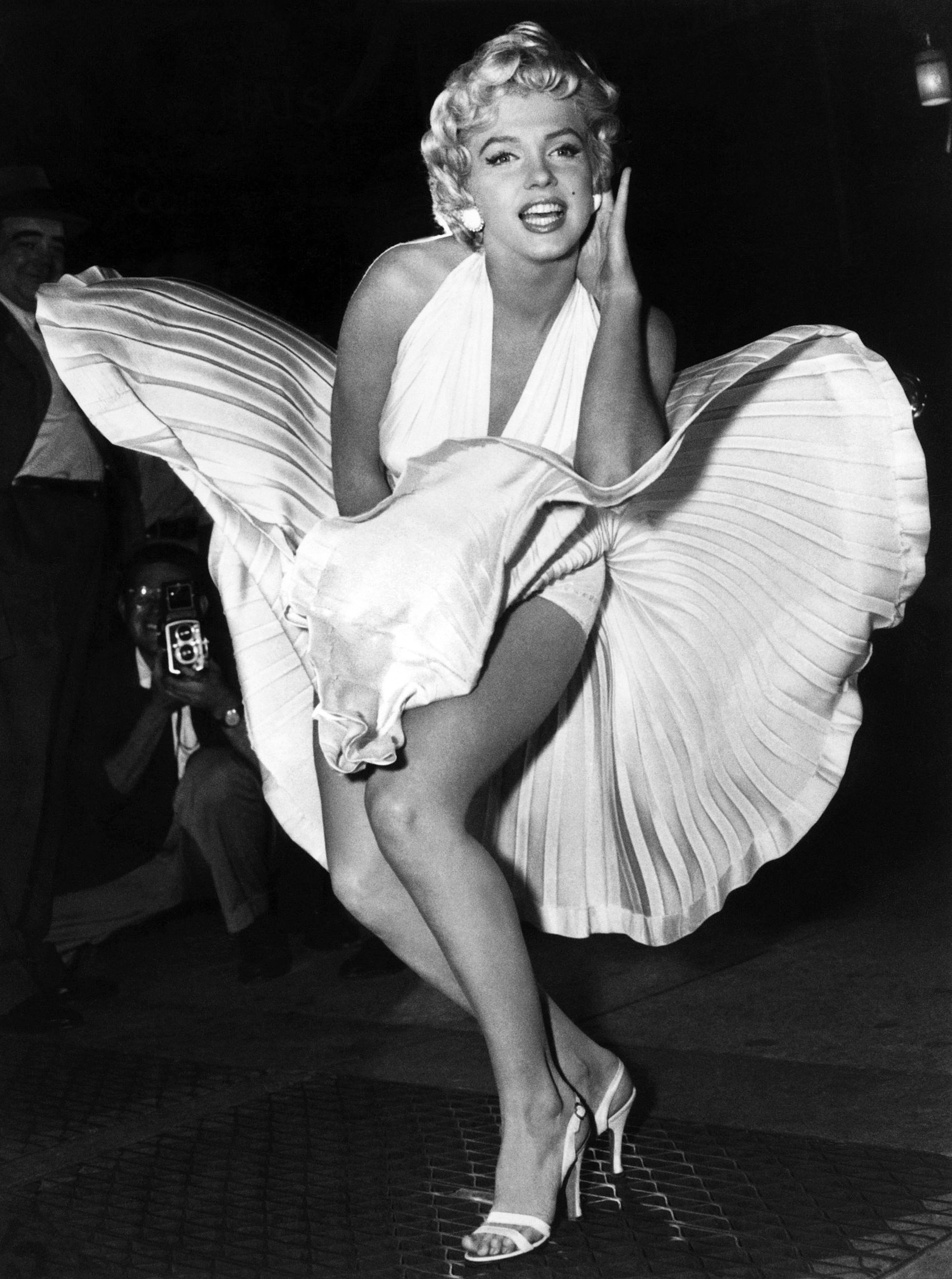
Photo of Marilyn Monroe while filming The Seven Year Itch on the streets of New York. She apparently stopped at some point during the shooting of the famous 'skirt scene' and posed for the reporters and photographers who were covering the film shoot. Photograph taken by Sam Shaw and published by Corpus Christi Caller-Times-photo from Associated Press.
Then there are the serious chapters of the book dealing with her difficult childhood, her addiction issues, her relationships and marriages, and her mental health. I did it this way so as to show the complexity of Marilyn both as person and as a performer. I hope it’s not just a selection of moments, though. I’ve crafted it so it reads as a deep dive into the enigma that is Marilyn Monroe, with each chapter being like the turn of a kaleidoscope.
The transformation of Norma Jeane into Marilyn Monroe is often presented as if one was the real woman and the other was an artificial creation. Does your research suggest something more complicated, that Marilyn was not a mask, but a character she consciously built as a means of survival, ambition and artistic expression?
Yes, great question. It’s so much more complicated than a simple transition from Norma Jeane into Marilyn, from innocent child to sexualised image. Marilyn was highly conscious of the process and used all her acting skills to create the persona that is ‘Marilyn Monroe’. She studied physiology so as to make use of certain muscle groups in order to create her trademark ‘sexy walk’.
Her childhood was plagued by instability, separation and a deep fear of abandonment. But there is a risk of using childhood trauma as an easy explanation for every decision an adult makes. How did you connect those early experiences to her later life without reducing Marilyn to a permanently damaged child searching for rescue?
One of the big themes of the book is how Marilyn is a survivor, not a victim. We shouldn’t define everything she did because of her difficult childhood or her premature death. Having said that, there’s no denying that Marilyn had a particularly traumatic childhood — a mother who was schizophrenic, an absent father, childhood sexual abuse, foster care and orphanages. She always said that this lack of love in early life made her want to seek out mass adulation: fame. And, of course, fame is one of the things that helped destroy Marilyn Monroe.
The popular image is of Marilyn as someone created and controlled by Hollywood, but she also challenged Twentieth Century-Fox, fought for better roles and attempted to take greater control of her career. How much of her story is really about a woman learning to use her fame as power, even while the studio system continued to limit and punish her?
Marilyn was treated quite badly by the studio system — and they definitely wanted to keep her under control, using her for a limited number of roles: the sexy dame, the ditzy blonde, etc. But Marilyn had grander ambitions and in 1955 she set up her own production company, making her one of the first women to do that. I think if she had lived she would have gone onto take greater control, perhaps forging creative bonds with other actors like Marlon Brando.
Marilyn worked seriously on her craft, trained with Lee Strasberg and wanted to escape the “dumb blonde” roles that had made her famous. When you look closely at performances such as Bus Stop, Some Like It Hot and The Misfits, what do you see that contemporary critics or audiences failed to recognise? And have later writers sometimes overcorrected by turning her into an intellectual figure at the expense of examining her actual acting?
During her life many of her greatest performances were written off as insignificant. But now we see those performances in a new light. No doubt this is something to do with her biography, the matrix between the star and their private life, and what we — the audience — project onto them as a result of our knowledge.
The transformation of Norma Jeane into Marilyn Monroe is often presented as if one was the real woman and the other was an artificial creation. Does your research suggest something more complicated, that Marilyn was not a mask, but a character she consciously built as a means of survival, ambition and artistic expression?
Yes, great question. It’s so much more complicated than a simple transition from Norma Jeane into Marilyn, from innocent child to sexualised image. Marilyn was highly conscious of the process and used all her acting skills to create the persona that is ‘Marilyn Monroe’. She studied physiology so as to make use of certain muscle groups in order to create her trademark ‘sexy walk’.
Her childhood was plagued by instability, separation and a deep fear of abandonment. But there is a risk of using childhood trauma as an easy explanation for every decision an adult makes. How did you connect those early experiences to her later life without reducing Marilyn to a permanently damaged child searching for rescue?
One of the big themes of the book is how Marilyn is a survivor, not a victim. We shouldn’t define everything she did because of her difficult childhood or her premature death. Having said that, there’s no denying that Marilyn had a particularly traumatic childhood — a mother who was schizophrenic, an absent father, childhood sexual abuse, foster care and orphanages. She always said that this lack of love in early life made her want to seek out mass adulation: fame. And, of course, fame is one of the things that helped destroy Marilyn Monroe.
The popular image is of Marilyn as someone created and controlled by Hollywood, but she also challenged Twentieth Century-Fox, fought for better roles and attempted to take greater control of her career. How much of her story is really about a woman learning to use her fame as power, even while the studio system continued to limit and punish her?
Marilyn was treated quite badly by the studio system — and they definitely wanted to keep her under control, using her for a limited number of roles: the sexy dame, the ditzy blonde, etc. But Marilyn had grander ambitions and in 1955 she set up her own production company, making her one of the first women to do that. I think if she had lived she would have gone onto take greater control, perhaps forging creative bonds with other actors like Marlon Brando.
Marilyn worked seriously on her craft, trained with Lee Strasberg and wanted to escape the “dumb blonde” roles that had made her famous. When you look closely at performances such as Bus Stop, Some Like It Hot and The Misfits, what do you see that contemporary critics or audiences failed to recognise? And have later writers sometimes overcorrected by turning her into an intellectual figure at the expense of examining her actual acting?
During her life many of her greatest performances were written off as insignificant. But now we see those performances in a new light. No doubt this is something to do with her biography, the matrix between the star and their private life, and what we — the audience — project onto them as a result of our knowledge.
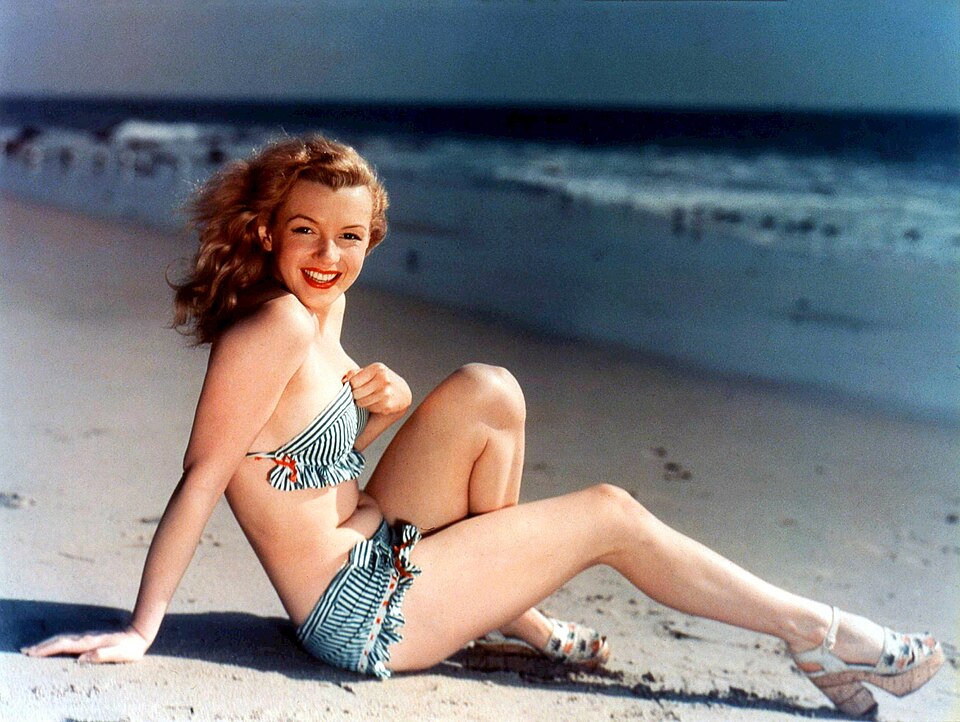
Monroe posing as a pin-up model for a postcard photograph, c. 1940s
So no one can see a Marilyn performance without the knowledge of her private life, her early death, knowledge which gives the roles a certain added frisson and poignancy. There are so many Marilyn’s — there’s one for every intellectual or academic interpretation. And that’s part of her appeal. There are a million Marilyns out there.
Your book draws on the voices of husbands, lovers, friends, directors, colleagues and enemies. Many of the surviving accounts of Marilyn come from men who desired her, managed her, judged her or felt betrayed by her. How did you decide which witnesses to trust, particularly when different people remembered the same woman in completely different ways?
That’s one of the challenges of writing biography. You just have to gather the evidence and assess the voices against one another, listening to the accounts, hearing what is being said and what is not said. And then make a judgement call.
The papers connected to Ralph Greenson take readers unusually close to Marilyn’s private fears and emotional dependence. What did this material reveal about the relationship between doctor and patient? Do you see Greenson primarily as someone trying to save her, someone whose professional boundaries became dangerously blurred, or a mixture of both?
Dr Greenson, the LA-based psychiatrist and psychoanalyst whom Marilyn started to see in 1960, is one of the most controversial figures in her biography. I had access to the letters he wrote to other therapists about Marilyn after her death, documents which give huge insight into the state of her mental health. He tried conventional therapy with her, that is, 50 minutes or an hour on a couch, with strict boundaries. But he said that this didn’t work, that she wasn’t robust enough for it. And so he made the unconventional decision to try to bring her into his family, using his wife, and two adult children, as figures to give her the security she never had. Many therapists today regard this as very dangerous, but at the time he believed it was the only option left for her. Of course, he was one of the last people to see Marilyn alive, that weekend of 4-5 August 1962.
Theories about Marilyn’s death have involved the Kennedys, the Mafia, intelligence agencies, her doctors and the Hollywood establishment. After examining the evidence and the conflicting accounts of her final night, what do you think can be stated with confidence? Why do conspiracy theories remain more attractive to many people than perhaps the possibility that she was failed by addiction, inadequate care and those closest to her?
The theories have swirled around her since soon after she died. One of the reasons is simply that if this goddess, this movie star with beauty and fame and wealth, died by suicide or accidental death, what hope is for the rest of us? There is a lot of conflicting information out there about the night of her death and its exact circumstances, particularly the time line. I examine this in detail in the book as well as the main conspiracy theory that the Kennedys killed her because she was about to call a press conference, after being dumped first by JFK, the president, and then his brother, Robert, the attorney general. I devote about 25,000 words to this issue, and present the evidence that I’ve discovered, so I’ll leave it up to the reader to decide. But I uncovered a lot of unpublished material which shows how the seeds of the Robert Kennedy conspiracy theory were sown back in 1964, just two years after her death.
You have previously written biographies of Patricia Highsmith, Sylvia Plath and Alexander McQueen, people whose work has often been overshadowed by powerful myths about their personalities and deaths. What did writing about Marilyn teach you that those earlier biographies did not? After spending years inside her life, who do you now believe she was when the cameras, fantasies and competing claims are set aside?
Each biography has its own challenges. And writing about Marilyn is particularly difficult because there’s so much out there already, so you have to spend a lot of time sifting through material, deciding what is valid and what is suspect. Doing this has reinforced my belief in the importance of primary sources — going back to archives, letters, audio tapes, interviews — rather than relying on secondary sources. Too many people have recycled the same material year and year, book after book, without bothering to check the veracity of that material. Marilyn was a complex human being who cannot be defined or flattened using any particular ideological framework. I hope that in my book she sizzles, she laughs, she cries — I hope she comes alive.
Your book draws on the voices of husbands, lovers, friends, directors, colleagues and enemies. Many of the surviving accounts of Marilyn come from men who desired her, managed her, judged her or felt betrayed by her. How did you decide which witnesses to trust, particularly when different people remembered the same woman in completely different ways?
That’s one of the challenges of writing biography. You just have to gather the evidence and assess the voices against one another, listening to the accounts, hearing what is being said and what is not said. And then make a judgement call.
The papers connected to Ralph Greenson take readers unusually close to Marilyn’s private fears and emotional dependence. What did this material reveal about the relationship between doctor and patient? Do you see Greenson primarily as someone trying to save her, someone whose professional boundaries became dangerously blurred, or a mixture of both?
Dr Greenson, the LA-based psychiatrist and psychoanalyst whom Marilyn started to see in 1960, is one of the most controversial figures in her biography. I had access to the letters he wrote to other therapists about Marilyn after her death, documents which give huge insight into the state of her mental health. He tried conventional therapy with her, that is, 50 minutes or an hour on a couch, with strict boundaries. But he said that this didn’t work, that she wasn’t robust enough for it. And so he made the unconventional decision to try to bring her into his family, using his wife, and two adult children, as figures to give her the security she never had. Many therapists today regard this as very dangerous, but at the time he believed it was the only option left for her. Of course, he was one of the last people to see Marilyn alive, that weekend of 4-5 August 1962.
Theories about Marilyn’s death have involved the Kennedys, the Mafia, intelligence agencies, her doctors and the Hollywood establishment. After examining the evidence and the conflicting accounts of her final night, what do you think can be stated with confidence? Why do conspiracy theories remain more attractive to many people than perhaps the possibility that she was failed by addiction, inadequate care and those closest to her?
The theories have swirled around her since soon after she died. One of the reasons is simply that if this goddess, this movie star with beauty and fame and wealth, died by suicide or accidental death, what hope is for the rest of us? There is a lot of conflicting information out there about the night of her death and its exact circumstances, particularly the time line. I examine this in detail in the book as well as the main conspiracy theory that the Kennedys killed her because she was about to call a press conference, after being dumped first by JFK, the president, and then his brother, Robert, the attorney general. I devote about 25,000 words to this issue, and present the evidence that I’ve discovered, so I’ll leave it up to the reader to decide. But I uncovered a lot of unpublished material which shows how the seeds of the Robert Kennedy conspiracy theory were sown back in 1964, just two years after her death.
You have previously written biographies of Patricia Highsmith, Sylvia Plath and Alexander McQueen, people whose work has often been overshadowed by powerful myths about their personalities and deaths. What did writing about Marilyn teach you that those earlier biographies did not? After spending years inside her life, who do you now believe she was when the cameras, fantasies and competing claims are set aside?
Each biography has its own challenges. And writing about Marilyn is particularly difficult because there’s so much out there already, so you have to spend a lot of time sifting through material, deciding what is valid and what is suspect. Doing this has reinforced my belief in the importance of primary sources — going back to archives, letters, audio tapes, interviews — rather than relying on secondary sources. Too many people have recycled the same material year and year, book after book, without bothering to check the veracity of that material. Marilyn was a complex human being who cannot be defined or flattened using any particular ideological framework. I hope that in my book she sizzles, she laughs, she cries — I hope she comes alive.
More from The Byword
.jpg)

Comments
*Comments will be moderated