








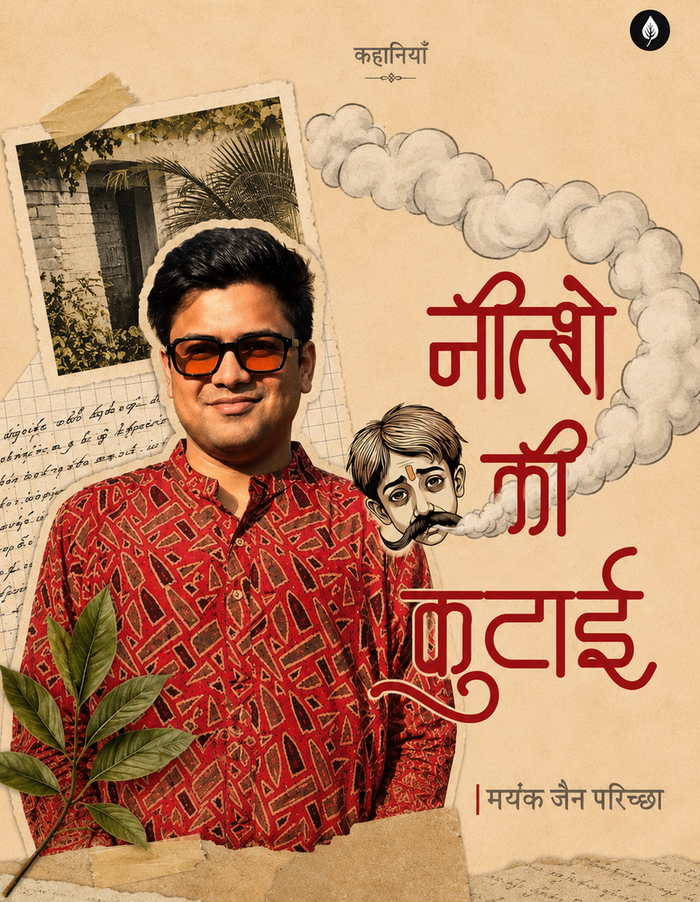

From quirky tea-shop spies to nuanced portraits of everyday women, the unapologetically desi stories in Mayank Jain’s debut collection, set across different timelines, offer a deeply personal, familiar reflection of India that stays with you
Have you ever caught yourself saying, “This is the year I’ll finally start reading”? Then, before you know it, it’s already the middle of the year. The plans you made in January —learning to drive, exercising regularly, picking up a new skill, reading more — are quietly waiting for a version of you that never quite arrived. I can’t tell you how to achieve all those goals, but I can help with one of them: reading. The hardest part is always knowing where to begin.
At a time when almost everything competes for our attention and we’re used to consuming content at double speed, getting back into reading often comes down to finding the right book. One that keeps you turning the pages instead of checking your phone every few minutes. That’s exactly what Nietzsche Ki Kutai by Mayank Jain Parichha did for me.
I love reading — or at least I used to. Last year I set myself the challenge of finishing 24 books. Somehow, through sheer consistency, I managed it. Then the New Year began and, just as suddenly, I stopped reading altogether. Until I picked up Nietzsche Ki Kutai. Within a few pages, I remembered why I had fallen in love with books in the first place.
At the heart of the collection is Nietzsche, a young boy growing up in the shadow of his father’s rigid ideas about life. In his home, even something as ordinary as eating sabzi feels like a privilege that has to be earned. He learns early that life isn’t fair, but he refuses to let that dull his curiosity.
Nietzsche is no ordinary child. He wanders about smoking bidis, observing the people around him and passing judgment with the complete confidence only children possess. More often than not, he turns out to be right — though never quite in the way anyone expects. The adults around him dismiss him because he is “just a boy”. Yet he often understands people better than they understand themselves.
Also read: Aangan: Khadija Mastoor’s timeless novel of Partition, womanhood, and the price of freedom
All this might make the book sound heavy. It isn’t. The book’s greatest strength is the ease with which it carries difficult truths. The stories are funny, warm and unmistakably rooted in everyday India. They never lecture or try too hard to make a point. Instead, they trust the reader to discover meaning on their own.
One of the pleasures of the collection is its gallery of unforgettable characters. There’s Agent Santosh, a man utterly convinced he’s a secret agent. In reality, he runs a tea stall. Every customer becomes a potential informant, every conversation a classified briefing, every piece of neighbourhood gossip a matter of national security.
What delighted me most was how easily his fantasy begins to draw others into it. Slowly, almost without noticing, the line between imagination and reality starts to blur in wonderfully absurd ways. Beneath all the comedy, though, lies a surprisingly moving portrait of a man trying to give his ordinary life a larger purpose.
Equally memorable is the story of Reshma and her daughter, July. Reshma performs at village functions and weddings — a profession people readily depend on but rarely respect. Living in a small village, she dreams of a different life for her daughter. What follows stayed with me long after I had finished the story. It quietly asks an uncomfortable question: how much have we really changed, and in which direction? The story feels less like fiction than a reflection of lives many people continue to live.
What I appreciated most, especially as a woman, was how the women in these stories are written. They are never placed on pedestals or reduced to familiar clichés of sacrifice. They are allowed to be ordinary, flawed and fully human.
Shreya makes the choices she wants to make. Shikha follows her own instincts instead of trying to fit into someone else's idea of who she should be. They aren’t presented as symbols of rebellion or virtue. They simply live, make mistakes, desire, question, struggle and carry on. There is something quietly satisfying about reading women who are not burdened with the impossible task of representing perfection.
Taken together, these stories move across different periods of Indian life. The settings change, the decades shift, but the emotions remain remarkably familiar. Hope, prejudice, ambition, fear and contradiction continue to shape lives much as they always have.
This may be Mayank Jain's debut book, but he has been writing for years. When I asked him how he approaches character, he said something that stayed with me: “If you’re unable to think like your character while writing, the reader can easily catch it. And that’s also a betrayal of the story.”
That, I think, explains why these stories feel so convincing. The people in Nietzsche Ki Kutai don’t seem invented from a distance. They feel as though they’ve been observed, lived with and remembered.
More than anything, this book reminded me why I wanted to return to reading. Stories don’t always need extraordinary heroes, elaborate worlds or dramatic twists. Sometimes the ones that stay with us are the ones that help us recognise ourselves, and the people we thought we already knew.
And if you’re wondering about the title, trust me, I wondered too. Perhaps, in Mayank's world, little Keshav is Nietzsche. Perhaps the title carries a meaning I haven’t fully understood. Or perhaps I’m reading too much into it. There’s only one way to find out: read the book.
More from The Byword







Comments
*Comments will be moderated