










In this excerpt from The Shortest History of Football, Brian D. Bunk takes a look at how the lure of wages, crowds and trophies turned football from a weekend pastime into a professional game, and gave birth to the world’s first league.
From 1894 to 1897, a Scotsman named Henry Boyd scored thirty-two goals in forty games for Arsenal. His goals-per-game average is still the highest in the club’s history. He moved on to Newton Heath, the team that became Manchester United. In two seasons with the club, he notched thirty-four goals in fifty-five appearances. A miner by trade, he also made money to play football. Before his success in England, Boyd had come to the US in 1891. He first settled in Braidwood, Illinois, a coal-producing town about sixty miles south-west of Chicago. He played football and joined Thistle, one of Windy City's leading clubs.
On 19 September 1891, Thistle played in Fall River, Massachusetts, securing a 3-3 draw against the Olympics. Over the next few days, he was impressed by a game against Rovers and a rematch with the Olympics. Because Fall River teams played in several competitions each season, they were constantly on the lookout for new talent. Boyd fits the bill. The Olympics lured him back to the city to compete for them in the Bristol County Cup.
Also read: The sunset of a million hues: An opacarophile’s discovery of the waterways of the Sundarbans
Money was tight at the club, so Boyd also joined a different team, the East Ends, for the local New England League and the American Cup. They paid him a sum estimated from $30-$50 (about $1,100-1,800 today. The club also got him a job with flexible hours, allowing him time off for matches and training. Amazingly, Boyd won three titles with two different teams in space of just a week. From 7-14 May 1892, he captured the Bristol County Cup wearing an Olympics shirt and the New England League title and American Cup with East Ends. Fall River football officials changed the rules for the next season, preventing players from appearing for more than one club.
Boyd's career reveals how the idea of professional football spreads around the world. When he starred for Arsenal, paying players had been legal in England for less than ten years. A fully professional league began in England in 1888. It shows how the ability to make money in the sport led to players changing teams both domestically and internationally. As football emerged, all matches were ad hoc or friendlies, arranged between clubs for a specific time and place. The FA Cup established a national competition, but at first a few clubs outside London took part. As more teams formed, they competed for trophies at the municipal, regional, and national level. The system was far from perfect. Matches could be cancelled or not played for a variety of reasons.
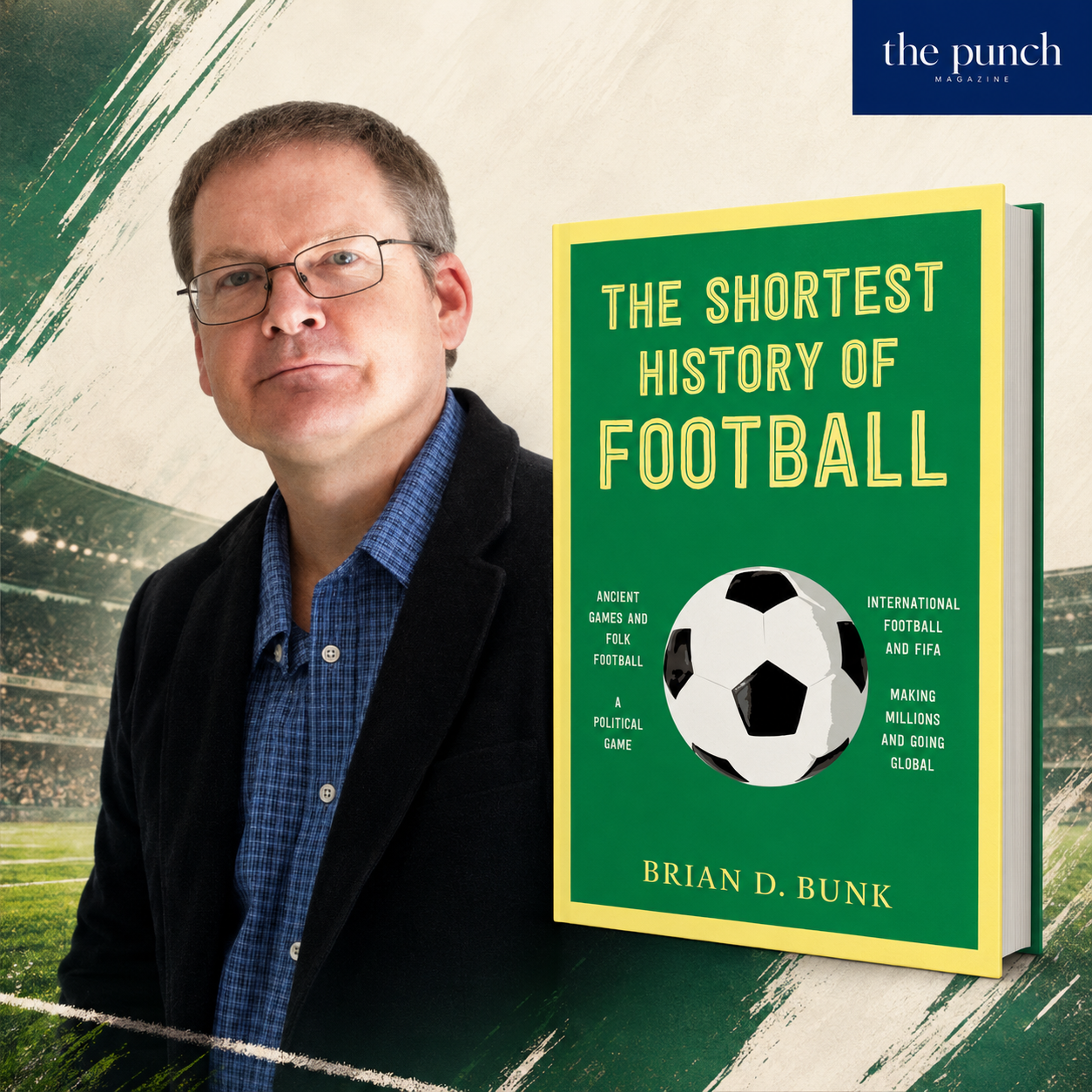
The Shortest History of Football by Brian D. Bunk, Pan Macmillan India, pp. 256, Rs 499
A club might not have enough players to show up for the game, or they may not have arrived in time for kickoff. Financial considerations could be a factor, as when Queen's Park forfeited the FA Cup semi-final in 1872 because they could not afford to travel south. Early round FA Cup matches did not attract large enough crowds to cover expenses.
As football became more popular, opportunities to play grew. In 1876-77, for example, there were twenty-four organized football clubs in Birmingham, and three years later, there were 155. The sport was heading down two tracks: a casual amateur game played by lots of people and a commercialized one played by a small number of skilled athletes. Increasing competitiveness among clubs in the 1870s and 188os planted the seeds of professional football.
Football had steadily become more organized, leaving folk football behind for good. Games were contested by a set of players on a standard-sized field. Team selection was no longer open to anyone and instead was based on skill level.
Watching the best players compete made the games more attractive to fans. Teams invested in upgraded facilities so that they could make steady money. Clubs moved away from being primarily social organizations and instead became commercial rivals for trophies, fans, and players.
From Amateurs to Professionals
What had been an amateur game turned professional. Other sports, including cricket in England and baseball in the United States, had already established systems for paying players. Broader economic changes in England also played a significant role in the professionalization of football. The trade union movement had been successful at lowering the number of hours worked per week, and many areas had 'short Saturday', when people had a half-day off. Wages grew during this period, and food prices fell. The result was the emergence of an urban working class that had more free time and more money to spend. Some of that free time may have been spent playing football in formal or informal ways.
Three developments suggested rising professionalism as clubs recruited the best players using various means. The first was the signing of people from outside a local area, with many of these men coming from Scotland. The second was using guest players who had a regular home club but could be convinced to play a different team in certain games. Finally, teams signed players from their rivals.
Records from these early years do not yet show that players received direct payments from the clubs themselves, although such arrangements were taking place under the table. One method of attracting players without directly paying them was to have a business that was linked to the club to offer them a job. Such employment may not have required any actual work beyond training and playing football. Teams paid money to reimburse players for wages they lost while appearing for the club. Sometimes they might get a little extra on top.
By 1884, things had reached a tipping point. In Lancashire, at least fifty-five players in eleven clubs were known to be professionals. Eleven of them played for Preston North End. When the club's chairperson publicly admitted this, the FA kicked his team out of the cup competition. The FA had debated for a while on how to deal with the obvious professionalism in the sport. The leaders were split between those who felt they could fight it and those who could control it.
The decision to accept professionalism was based on two factors. Firstly, high-level cricket was already a professional sport, so the FA had a model on how to regulate the system. Secondly, the relationship between workers and management across most industries at the time was good. Club directors felt they could control and discipline the players. By July 1885, the FA voted to accept professionalism.
The Football League
Professionalism was legal in England from 1885, but it took time to spread across the country. Some regions such as Lancashire quickly responded to the new reality while others like the Shefield Football Association remained amateur until 1887. When Arsenal was the first club from the London Football Association to turn pro in 1891, they were expelled from both the amateur organization and its cup competition.
The greatest impact of professionalism was the formation of the Football League in 1888. Clubs needed a regular and reliable schedule of games to earn enough money to pay rising wage bills and other expenses. The driving force behind the league was William McGregor, a Scotsman who was a director at Birmingham club Aston Villa. In early 1887, McGregor wrote to other teams to gauge interest in forming a permanent competition. After a series of sometimes contentious meetings, the world's first professional football league formed on 17 April 1888.
It included twelve teams: Accrington, Aston Villa, Blackburn Rovers, Bolton Wanderers, Burnley, Derby County, Everton, Notts County, Preston North End, Stoke, West Bromwich Albion, and Wolverhampton Wanderers. The Football League chose teams based on their potential to attract large crowds to well-built stadiums. Preston North End won the first Football League championship.
(Excerpted from The Shortest History of Football by Brian D. Bunk, with permission from Pan Macmillan India)
More from The Byword






Comments
*Comments will be moderated