








Editor’s Note: These poems are held together by a sustained emotional and imaginative architecture. Moving between parenthood, love, exile, memory, betrayal, darkness and the labour of endurance, they return repeatedly to the question of how we continue living after certainty has left us. Ordinary objects — a map, a key, a lamp, a bridge, a room, a bird —acquire symbolic meaning without losing their familiarity, allowing private experience to open onto something larger and more universal. The poems favour restraint over declaration, trusting recurring images, silences and carefully developed metaphors to accumulate meaning. Read together, they become an extended meditation on absence, belonging, forgiveness and the various ways in which the heart continues to remember long after language believes it has moved on.
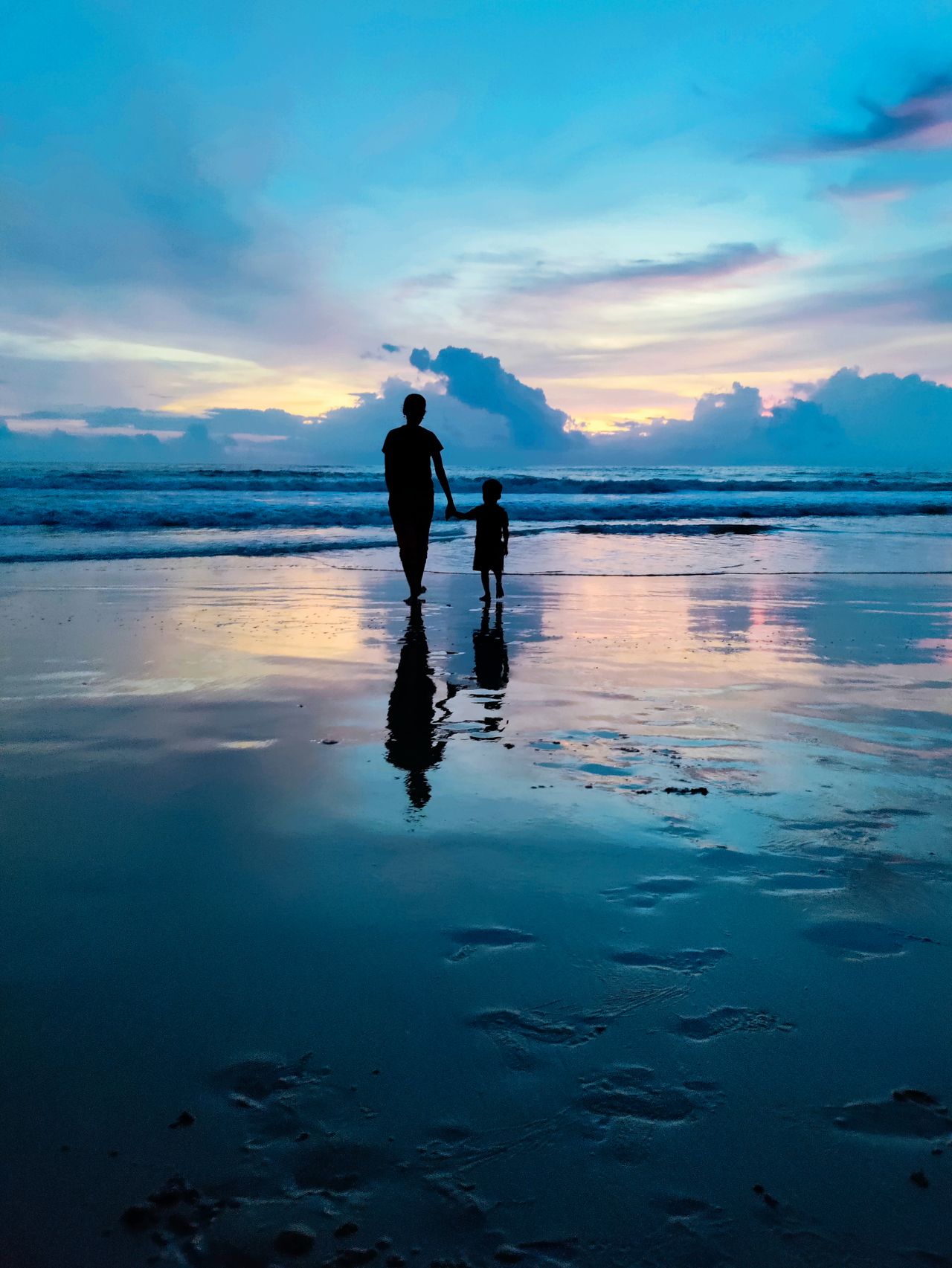
The Lies I Tell My Child
My child has begun
to outgrow my answers.
I can tell.
There is a hint
of scepticism
in the way he
listens to me
as though he has learned
that hope sometimes arrives
clad in tomorrow’s clothes
and never quite finds
the right address.
As though
he has noticed
that tomorrow
is a room
parents keep
furnishing
with invisible things.
Yet every now and then
he places another question
between us,
small as a sparrow,
certain I will know
which way it should fly.
So I answer.
I don’t delude myself I know
the truth,
I merely know that love
has always been
an accomplished translator,
turning uncertainty
into something
a child can carry.
Some days
my words are little more
than borrowed umbrellas
held above weather
I cannot command.
Some days
they are paper bridges
laid gently
across rivers
I have never crossed myself.
There are promises
I fold so many times
they become small enough
to fit
inside an ordinary afternoon.
They travel
in coat pockets,
between the pages
of library books,
inside the steam
rising from evening tea,
never announcing themselves
as promises at all.
Only as sentences
that ask
for one more season.
I have become
a careful gardener
of postponed mornings.
I loosen the soil
around unfinished days.
I water them
with the oldest faith
I know —
that light,
delayed long enough,
will still remember
the address.
***
Every promise is planted
with the hope that tomorrow
will rain where today would not.
There are lies
that sound almost holy
because they protect a child’s sleep,
bring him peace of mind
Sometimes he asks questions
that make my tongue feel
like cracked earth
pierce every pore
of my body
Make me feel
Yearning to rebuild
the sky
And our world
from the ground up.
My lies are small enough
to fit inside lunch boxes.
Inside taxi rides.
Inside bedtime stories.
Each one stitched carefully,
like your mother
mending the same school uniform
so neatly
you almost cannot see
where it once tore.
Sometimes,
late at night,
after he has fallen asleep
with one hand still open,
as though reaching for tomorrow,
I wonder
whether lies have weight.
Mine do.
They gather quietly
inside my chest,
like damp clothes
that never quite dry.
hope and helplessness
sometimes wear
the same face.
He listens
as though my words
were old trees,
their roots reaching
deeper than doubt.
***
The strange thing is,
he rarely interrupts me.
He receives my words
the way the sea
receives rivers —
it may not
believe every current,
but it understands
where they are trying to go.
Sometimes
I catch him
looking away
before I have finished speaking,
granting me
the privacy
of my own illusions.
Children learn mercy
long before
adults learn gratitude.
There are silences
he leaves untouched,
like old porcelain
displayed in a glass cabinet.
He could lift them,
turn them over,
discover the hairline cracks,
but instead
he walks past
as though they are whole.
Love,
perhaps,
is this quiet agreement
to leave certain mirrors
slightly untended.
The future
drifts through our conversations
like a migratory bird.
It never lands.
Only circles,
casting its brief shadow
over the table,
over books left open,
over windows
that continue
looking outward.
We speak of it
the way astronomers
speak of distant constellations —
with astonishing detail,
though neither of us
expects to arrive there.
And still,
each dawn
slips another unopened letter
beneath the door.
I smooth its creases.
Read only
the first line.
Leave the rest
for another day.
Perhaps that is
what growing older means:
becoming fluent
in the dialect
of almost.
Almost there.
Almost enough.
Almost ready.
Almost.
The word hangs
from the ceiling of the house
like a lantern,
its light
never quite reaching
the floor,
yet somehow
keeping us
from walking
into the furniture.
One day
he will discover
that my certainties
were sewn together
from frayed thread,
from weather forecasts
written on water,
from maps
that ended
at the edge
of hope.
I do not think
he will be surprised.
He has always known,
I suspect,
that I was never
building him
a perfect world.
Only a small raft
strong enough
to carry us both
across the flood
between today
and tomorrow.
I Have Become a Careful Gardener of Postponed Mornings
I have become a careful gardener
of postponed mornings.
Every dawn arrives
with its sleeves rolled up,
carrying a small basket
of dew,
birdsong,
the smell of bread
escaping someone’s kitchen window.
I meet it
with the soft apology
of a man who promises,
tomorrow.
So the mornings wait.
They gather
behind the shed of unfinished days,
their light folded
like shirts never worn,
their blue skies
stacked neatly
between unpaid bills,
half-read novels,
phone calls that begin with
“Sorry, I’ve just been busy...”
I water them
with intentions.
Prune them
with excuses.
Tie fragile hopes
to bamboo sticks
so they do not collapse
under the weight
of another week.
The sparrows,
once impatient,
have learnt my habits.
They no longer peck
at the windowsill.
They conduct their small republic
without me.
The tea grows a skin.
The newspaper
loses its urgency
before it is unfolded.
Even the sun,
that stubborn creditor,
stops knocking so loudly.
Some mornings
have begun flowering
without ever being lived.
I find them later
pressed between old calendars,
their petals brittle
with forgotten light.
A walk
I kept postponing
has become
a path swallowed by weeds.
A letter
I meant to write
has yellowed
inside my chest.
The child
who wanted me
to watch the clouds
learnt instead
to name them alone.
The woman
who once waited
at the breakfast table
now lets the toast burn
without looking
towards the staircase.
Time is patient
only until it isn’t.
Then one season
the garden changes.
The unopened mornings
ripen all at once.
They fall,
softly,
without accusation,
rotting beneath the trees
into a sweet smell
that belongs equally
to memory
and regret.
Sometimes,
before the city wakes,
I walk barefoot
among them.
The grass is wet
with opportunities
that no longer remember
my name.
I kneel,
lift one bruised morning
into my hands,
and discover
that even now
it smells faintly
of rain,
of possibility,
of the man
I might have been
had I stepped outside
when the light
first called.
A Letter I Meant to Write Has Yellowed Inside My Chest
A letter
I meant to write
has yellowed
inside my chest.
The paper has grown brittle
from the moistness
of unshed years.
Its folds remember
the warmth of my hands,
though my hands
have forgotten
the courage
that once reached for a pen.
Sometimes,
late at night,
I hear it shifting —
a dry rustle
beneath my ribs —
like autumn
turning over in its sleep.
I never addressed it.
Your name
remained a country
whose borders
I kept tracing
without crossing.
I rehearsed
the first sentence
a thousand times.
Each version
arrived carrying flowers.
Each one
left carrying silence.
I wanted to tell you
about ordinary things —
how winter has become quieter,
how the kettle still whistles
like someone calling me home,
how I still slow down
when I pass
the bookstore
where we once
mistook an entire afternoon
for forever.
I wanted to ask
whether the rain
still finds your window first,
whether someone now
knows the tinkling topography
of your laughter,
whether another pair of hands
has learnt
the patient language
of your sorrows.
But years
are jealous editors.
They crossed out
our verbs.
Reduced us
to footnotes.
Archived us
under
What Might Have Been.
There are whole lives
pressed inside that letter.
A small apartment
with mismatched cups
where you had made tea
for me as I’d lay
lifeless in a familiar stupor
Curtains breathing
in an open window.
A child
running barefoot
through rooms
that never existed.
Arguments
forgotten
before bedtime.
Books
left open
face down.
Grey hair
discovered together
under the same mirror.
There is a train
I never boarded,
a college I never went to
a city
that still carries
an empty chair
in some café
where another version of me
arrives every Thursday,
orders two coffees,
and waits.
There is a road
I did not take
because it seemed
too well-travelled.
A profession
I admired from afar,
afraid that desire,
spoken aloud,
would hear itself
and demand
a different life.
There are friendships
that dried into postcards,
dreams
that became passwords
to accounts
I no longer remember,
songs
I stopped listening to
because they insisted
on opening windows
inside the heart.
And there is you —
always you —
not as you were,
but as memory insists
on rewriting you,
gentler than truth,
more forgiving
than either of us deserved.
Perhaps
the letter
was never meant
to reach your hands.
Perhaps
it has always belonged
to the museum
of unfinished selves,
where every unwritten poem,
every unsaid apology,
every almost-kiss,
every house
never built,
every goodbye
never spoken,
hangs quietly
behind glass,
waiting
for someone
to recognise
their own reflection.
One day,
when they carry me
towards the earth,
they will find
not a heart,
but an envelope,
creased at the corners,
sealed
by fear,
addressed
in the careful handwriting
of hope,
its stamp
long out of date,
its message
still perfectly legible —
I loved you.
I simply arrived
too late
to my own life.
Your Name Remained a Country Whose Borders I Kept Tracing Without Crossing
Your name remained a country
whose borders
I kept tracing
without crossing.
I learnt your name
the way exiles
learn the outline
of a homeland —
by memory.
Never touching it
for too long,
lest longing
mistake itself
for return.
There were years
when I carried it
inside my mouth
like an unposted letter,
careful not to speak it aloud,
afraid
that language,
once trusted,
might betray me
the way people do.
It is strange
how betrayal
never arrives
wearing another face.
It borrows
the familiar one.
The key
already knows
the lock.
The knife
already knows
the back.
***
There were nights
I whispered it
only inside myself,
afraid that uttering it
might count
as trespassing.
Some names
do not belong
to the people
who utter them.
They belong
to distances.
To unfinished letters.
To trains
that chug along
without looking back.
To the last lamp
burning
in a house
that has forgotten
who it was waiting for.
Your name
was like that.
I carried it
the way exiles
carry maps
of cities
that exist now
only in memory —
creased,
fading,
handled
more often
than unfolded.
I never arrived.
I simply grew
more familiar
with the road.
Darkness
was always
its official language.
Not the darkness
that falls from the sky,
but the quieter one
that gathers
after trust
has packed
its belongings.
The shadow
that knows
every room
by heart.
That sits
in your favourite chair
and waits
for evening
to make it visible.
Betrayal,
I discovered,
never enters
through the front door.
It learns
the house
from inside.
It already knows
where the cups are kept.
Which floorboard
complains.
Page
Donate Now
More from The Byword
Comments
*Comments will be moderated