








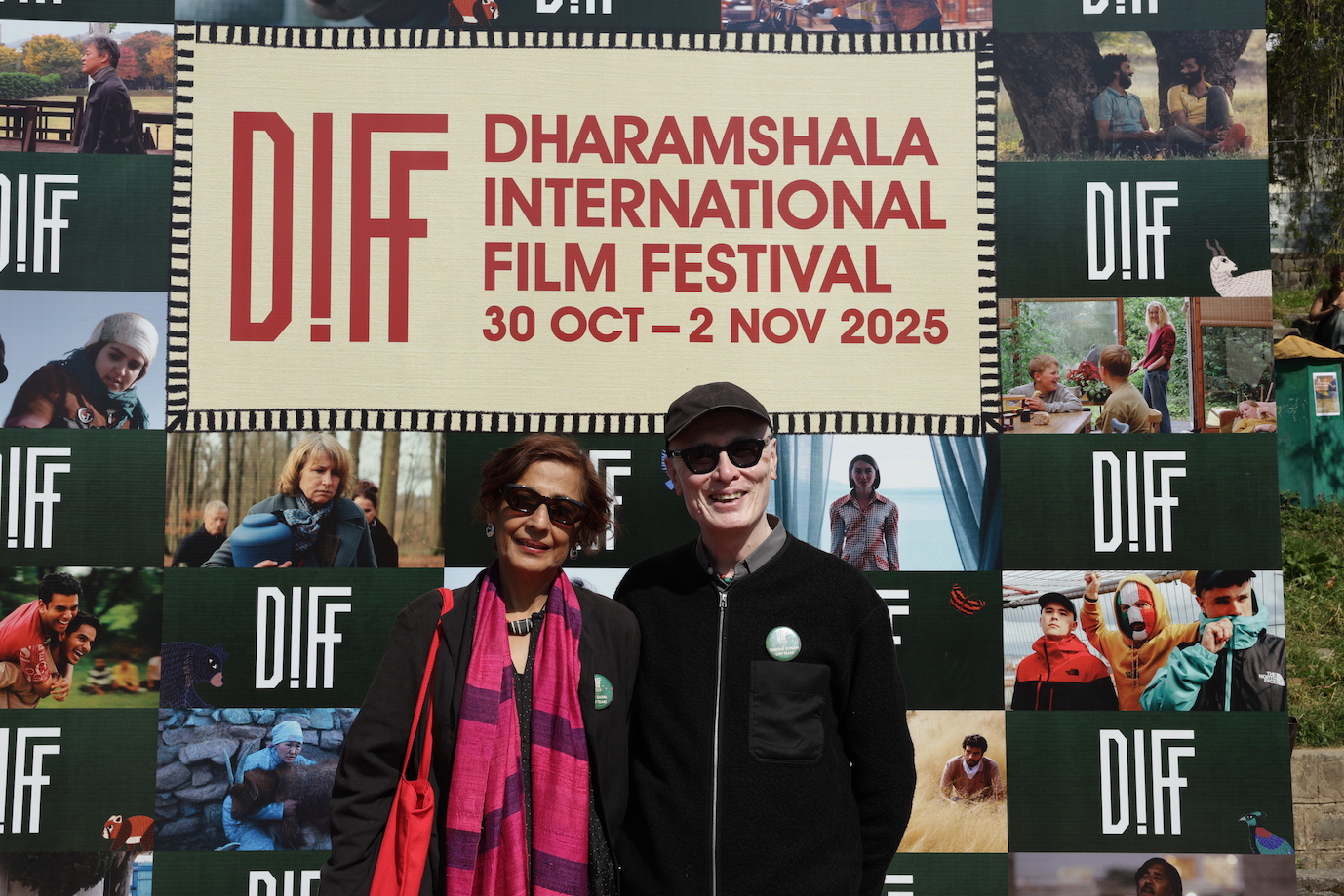
Ritu Sarin and fellow filmmaker Tenzing Sonam established DIFF in 2012 to share the cinema they loved with the place they called home. Photos: DIFF
As the Dharamshala International Film Festival returns for its 15th edition, founders Ritu Sarin and Tenzing Sonam and programming director Bina Paul discuss keeping it independent, making room for difficult cinema and reaching audiences beyond the festival
A short film about three youngsters taking on a corrupt road contractor found appreciative audiences in two very different settings in Kangra: schools and the district jail. For Ritu Sarin, co-founder of the Dharamshala International Film Festival (DIFF), the response to Daanish Shashtri’s Sadak offered a reminder of how readily people connect with independent cinema when they get the chance to see it. Audiences need little preparation to recognise a struggle, follow an unfamiliar life or enter a conversation about something that concerns them.
“What we have learnt over many years of community screenings is that audiences respond to these films, even when they have never experienced anything like them before,” Sarin says. Taking films into communities serves two purposes: introducing people to non-commercial cinema they might otherwise never encounter, and encouraging discussions that give the experience a life beyond the screening.
That belief has sustained DIFF through its growth from a local initiative into a festival drawing audiences from across India. Its 15th edition takes place from October 29 to November 1, 2026, at Tibetan Children’s Village in Upper Dharamshala. Over four days, screenings will be organised alongside workshops, masterclasses, conversations and mentorship. Filmmakers and audiences will have time to meet outside the screening rooms, an encounter the festival’s founders have valued since its beginnings.
Sarin and fellow filmmaker Tenzing Sonam established DIFF in 2012 to share the cinema they loved with the place they called home. Its subsequent reach brought opportunities, but also bills, organisational demands and uncertainty. “Before we knew it, DIFF had taken on a life of its own, and as it grew, so did the logistical and financial challenges,” Sarin says. “Securing funding year after year without compromising DIFF’s integrity as an independent film festival has been a constant struggle.”
There were years when they feared they would have to stop. Support from friends and partners who understood the festival helped them continue. Sarin hopes it remains recognisable as the space they first imagined: somewhere independent cinema can be celebrated on its own terms. “That’s why we have kept it free of a competition or market section, even when it might have been easier to add one.”
With no awards or juries, DIFF asks filmmakers to find value in the screening, the audience and the exchanges around their work. Bina Paul, its director of programming, acknowledges that this comes with disadvantages. “The lack of a competition does hamper us in some fronts,” she says. Yet filmmakers continue to entrust their films to DIFF, encouraged by its programme, organisation and attention to both filmmakers and audiences. In a crowded festival world, that trust has become an asset.
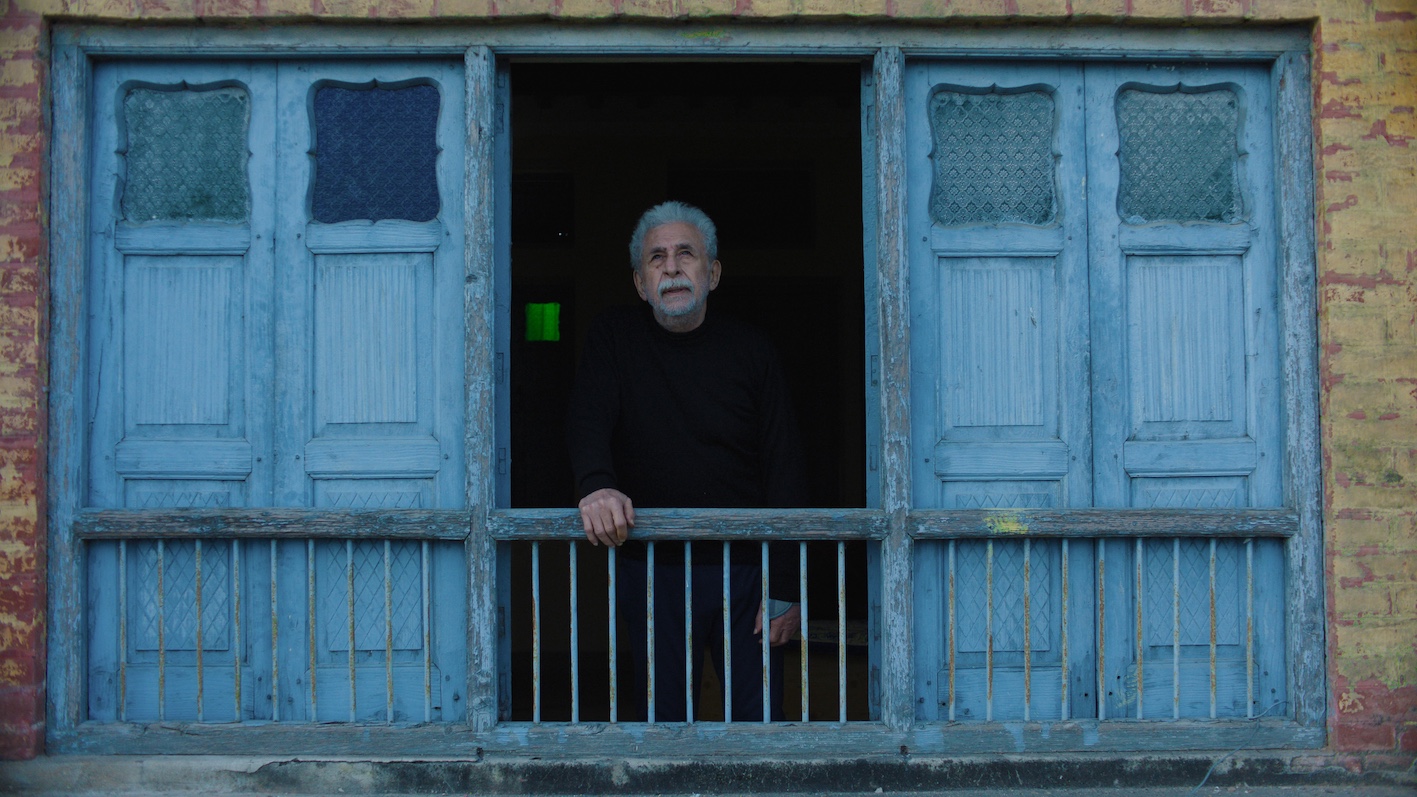
Naseerudin Shah in Gurvinder Singh's Punjabi feature film Rehmat
Paul’s own appetite for cinema includes work that takes a risk and does not quite pull it off. “Personally I enjoy films that are ambitious in their ideas and may often not be successful,” she says. She looks for cinematic quality, but also for the possibility of discomfort. “What’s the fun of going to a festival and watching a film that’s not provocative?”
This year’s submissions have given her grounds for optimism, particularly about Indian cinema. Their subjects and formal choices surprised her, challenging the assumption that attention has become irreversibly committed to shorter formats. “Filmmakers are really engaging with long form cinema, outrageous structures and quirky styles,” she says. Many of these films are also closely rooted in lived experience. She is especially enthusiastic about the Indian selection, describing it as “the most amazing line up this year”.
The first announcement suggests something of that range. Tamil filmmaker R Gowtham’s Members of the Problematic Family follows a family negotiating grief after the death of a troubled young man. Gurvinder Singh’s Rehmat draws together four stories by Punjabi writer Ajeet Cour, considering displacement, memory, conflict and compassion in contemporary Punjab. Both approach intimate lives carrying pressures that extend beyond the household.
In The Ordinary Star, Samreen Farooqui and Shabani Hassanwalia examine the traffic between performance and lived experience. Their film follows Nawazuddin Siddiqui studying the actual resident of the room inhabited by his character in Dibakar Banerjee’s Star. Shaunak Sen’s fiction Termite, meanwhile, enters the lanes of Old Delhi, where an unexpected marriage proposal unsettles the lives of two middle-aged termite exterminators.
Elsewhere, journeys take several forms. Óliver Laxe’s Sirāt follows a father searching for his missing daughter across southern Morocco’s deserts in the company of ravers. Sompot Chidgasornpongse’s 9 Temples to Heaven accompanies a family visiting nine temples in a day, bringing faith, mortality and family relationships into the pilgrimage. Dennis Harvey and Lars Lovén’s Celtic Utopia approaches contemporary Ireland through folk music, cultural inheritance and its relationship with the past.
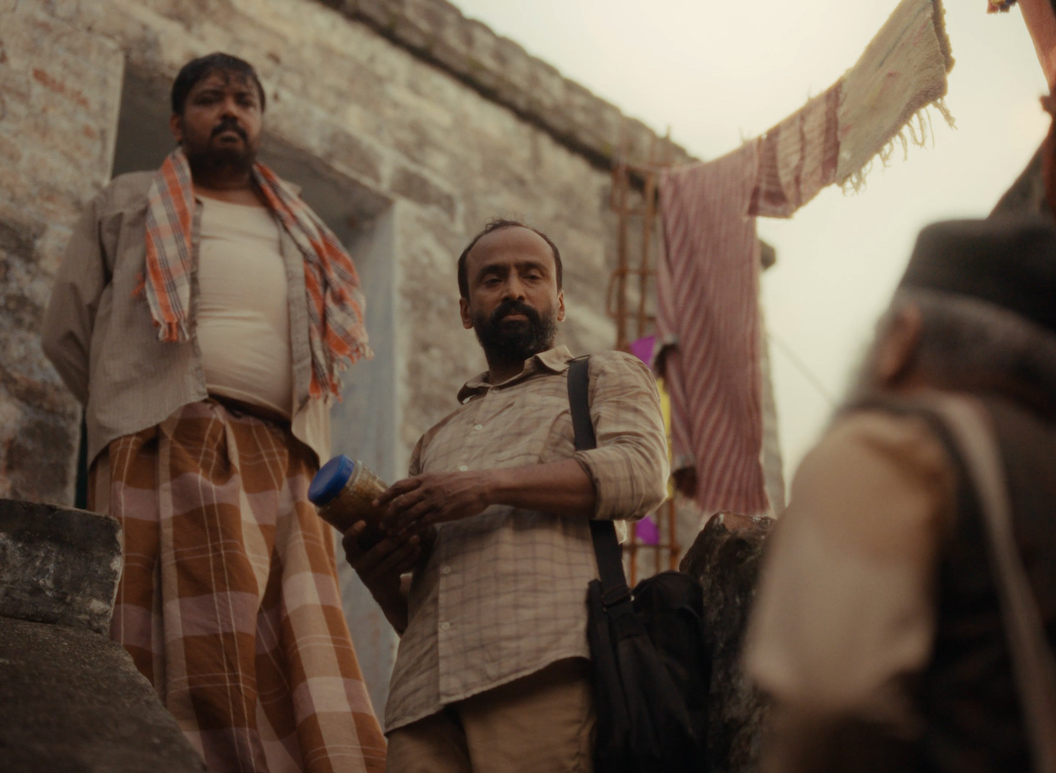
A still from Termite, a 31-minute fiction short film by Oscar-nominated documentarian Shaunak Sen
Sara Dosa’s documentary Time and Water centres on Icelandic writer Andri Snær Magnason and his homeland’s changing landscapes. Family memory and climate change meet in its consideration of how people understand the natural world. Together, these films offer different ways of thinking about loss, belonging and change, while leaving room for considerable differences in style and approach.
For Sonam, access to such differences was always essential to DIFF’s purpose. Dharamshala’s community includes a substantial Tibetan exile population, and the founders wanted to bring otherwise hard-to-see independent films to their neighbours. An international programme could also give local filmmakers, Tibetans among them, opportunities to learn through screenings, discussions with visiting directors and masterclasses.
The festival has since shown several Tibetan films and witnessed the development of exile Tibetan cinema. Sonam finds that growth encouraging. This year brought another reason for satisfaction: a young Tibetan filmmaker was selected for the Himalayan Film Fellows Programme. The selection connects DIFF’s international outlook with its investment in filmmakers closer to home.
Supported in 2026 by Arthshila, the programme works with filmmakers from the Indian Himalayan Region developing their first or second feature-length fiction film. Seven fellows will work with three mentors and one another to strengthen their projects and prepare for the industry. This year’s mentors are Bhutanese filmmaker Dechen Roder and Indian directors Umesh Kulkarni and Dominic Sangma. Previous mentors have included Hansal Mehta, Gurvinder Singh, Anupama Srinivasan and Kesang Tseten, alongside Kulkarni.

A still from Rima Das's coming-of-age drama Not a Hero, the opening film at DIFF this year
Sonam is clear about the difficulties awaiting these filmmakers. Raising money and finding distribution remain daunting for anyone making independent films. Mentorship begins with what they need before approaching either: “an original vision and a tight script”. Experienced filmmakers can help younger directors recognise and refine their voices, then prepare them to present and pitch a project, anticipate obstacles and understand what the process might demand.
The relationship is intended to continue after the in-person sessions, through online feedback and support. “In this way, we hope the bond between mentor and mentee will endure through the making of the film,” Sonam says. It is a modestly stated ambition with practical consequences: a filmmaker can return to someone who knows the project as it changes under the pressures of getting made.
DIFF’s work between editions also includes DIFF On the Road, which takes curated films to other audiences through collaborations with cultural organisations and festivals. These have included the Sā Ladakh Biennale, where Himalayan filmmakers’ work has travelled across Ladakh, as well as the Kochi Biennale, Colomboscope in Sri Lanka and programmes with partners including Royal Enfield.
At home, the festival’s partnership with Royal Enfield Social Mission will have enabled 24 community screenings across Kangra this year. Schools, universities, nunneries, NGOs and the district jail have hosted films, reaching people who may never buy a festival pass. Sarin sees these screenings as opportunities to look beyond immediate circumstances and imagine other possibilities through shared human experiences.
The Kiran Nadar Museum of Art, DIFF’s Learning Partner, will bring another form of participation to the four festival days. Drop-in activities include cyanotype printing and film-strip weaving. A collaborative mosaic mural at TCV has been designed by local Tibetan artist Tashi Nyima and made by artist Sanjay Kumar. A Kangra miniature painting booklet will give audiences waiting in screening queues something further to explore.
These activities make the festival’s attachment to its setting tangible. So do the screenings elsewhere in Kangra and the continuing relationships with young filmmakers. For Paul, years of such attention have built a group of “DIFF faithfuls”: filmmakers who understand what the festival offers and willingly give it their films. For the founders, reaching a 15th edition means another chance to bring people together around work they might otherwise miss — and allow the conversations to take their course.
More from Culture


Comments
*Comments will be moderated