








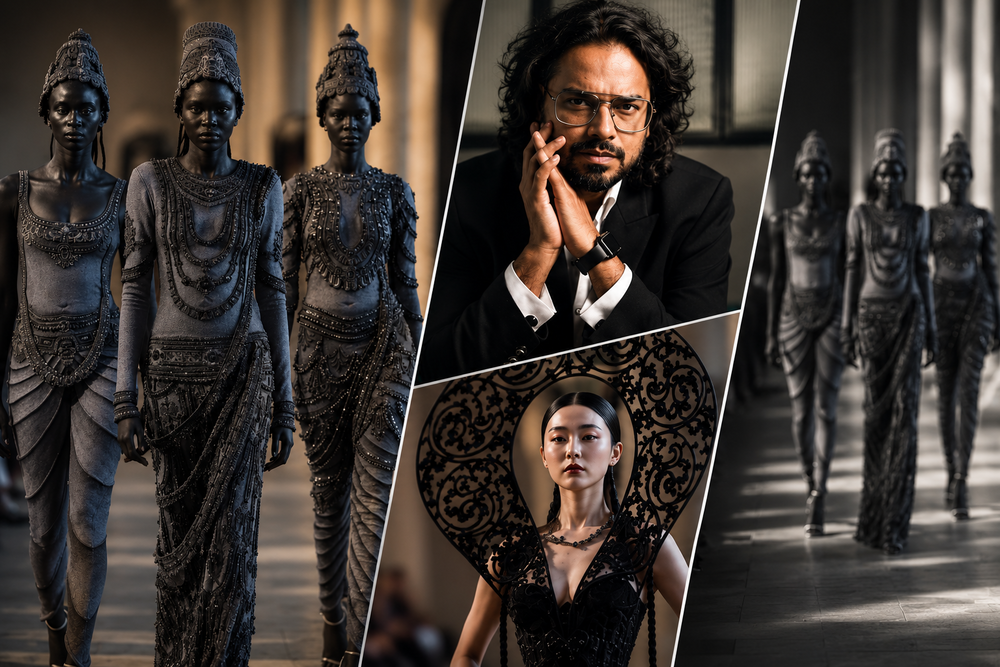
Perhaps what Devi ultimately reveals is a larger anxiety within in luxury fashion. There remains an almost compulsive need to prove Indianness, explain references, amplify symbolism and foreground heritage until every collection is sacrificed at the altar of a cultural dissertation of sorts.
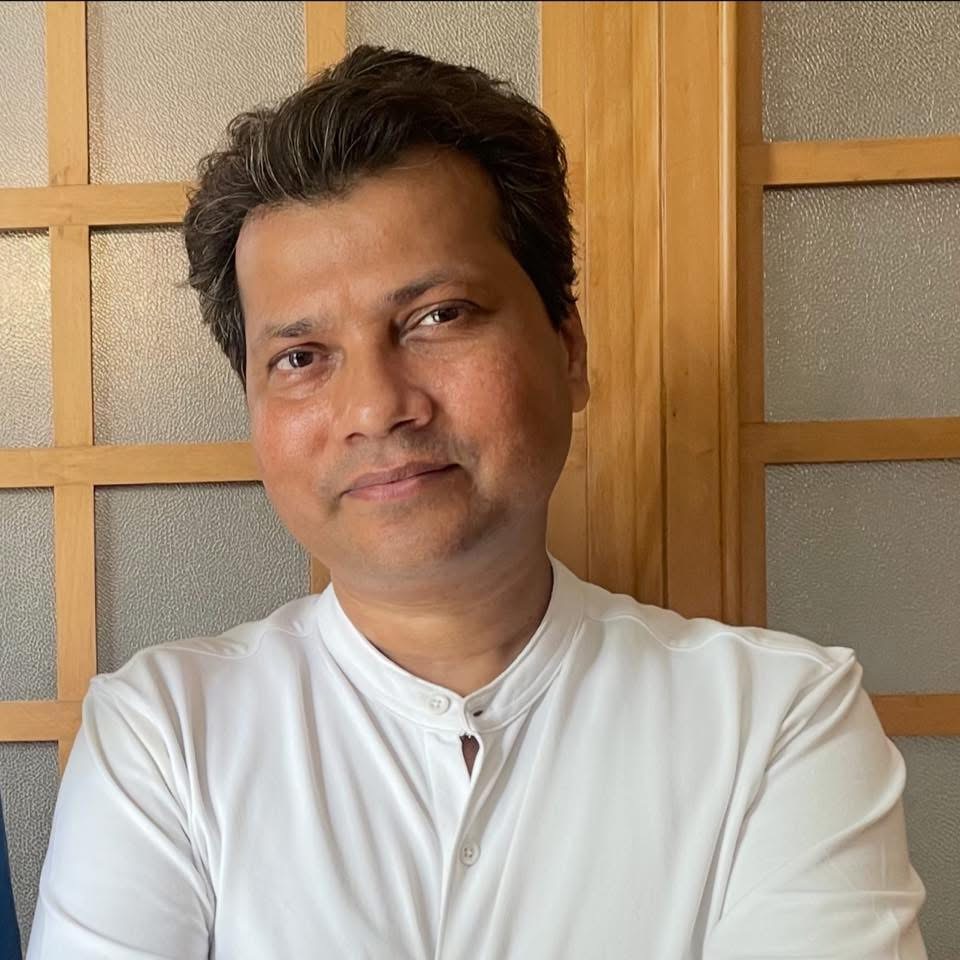
Rahul Mishra’s Autumn/Winter 2026/27 collection, showcased during Haute Couture Week in Paris, is breathtaking in its craftsmanship and steeped in Indian temples. But it makes you wonder: who, exactly, is all this for?
Let’s begin with the obvious. Rahul Mishra is one of the finest couturiers working today. There is no debating the sheer virtuosity of his atelier. If embroidery were an Olympic sport, India would keep winning gold thanks to ateliers like his. If you’ve kept a tab on his work, you’d know that they have every bead placed with great patience, every motif built diligently, thread by thread. Watching his collections often give you a sense that you are watching haute couture taking the form of poetry that you can touch and feel.
But craftsmanship alone does not exempt a collection from criticism. In recent years, fashion has become remarkably bad at asking uncomfortable questions. You’d have noticed how people in the fashion fraternity tend to label every oversized silhouette “architectural”. Every bizarre headpiece becomes “conceptual”. Every impractical garment is defended, well, because “it’s couture”, after all. Somewhere along the way, criticism has given way to applause. To be fair, his Autumn/Winter 2026/27 haute couture collection, Devi: The Eternal Muse, which was showcased beneath the soaring stone vaults of the 13th-century Collège des Bernardins, at the Paris Haute Couture Week and has become one of the most talked-about presentations of the season, deserves both.
His metallic zardozi, dense dabka work, crystals and bugle beads create surfaces that resemble weathered sandstone. Skin-toned bodysuits dissolve the boundary between the body and the garment, while a restrained palette of charcoal, stone grey, ivory, bronze and antique gold deepens the illusion. Collaborations with traditional clay artisan Sumant Kumar, celebrated British milliner Stephen Jones, Tanishq Natural Diamonds, René Caovilla and sound designer Jayant Luthra reinforce the extraordinary ambition behind the collection.
The presentation, which drew a star-studded front row, including Cardi B and Isha Ambani, both dressed in custom goddess-inspired creations, marked a noticeable departure from the exuberant florals that have long been his signature, turning instead to India's ancient temple architecture, cave sanctuaries and the divine feminine for inspiration. Drawing from the Ajanta and Ellora caves and the sculptural traditions of Karnataka’s Hoysaleswara and Tarakeshwara temples, Mishra transformed apsaras, devis and celestial attendants into monumental couture.
If you ask me, the premise is seductive, no question about that. And the result is visually arresting. Models emerge looking as though they have stepped directly off temple walls, their skin painted in shades of basalt and granite, their bodies wrapped in garments that blur the boundary between carved stone and embroidered fabric. The illusion is extraordinary. The collection is breathtaking in its craftsmanship, but it also makes you wonder: who, exactly, is all this for?
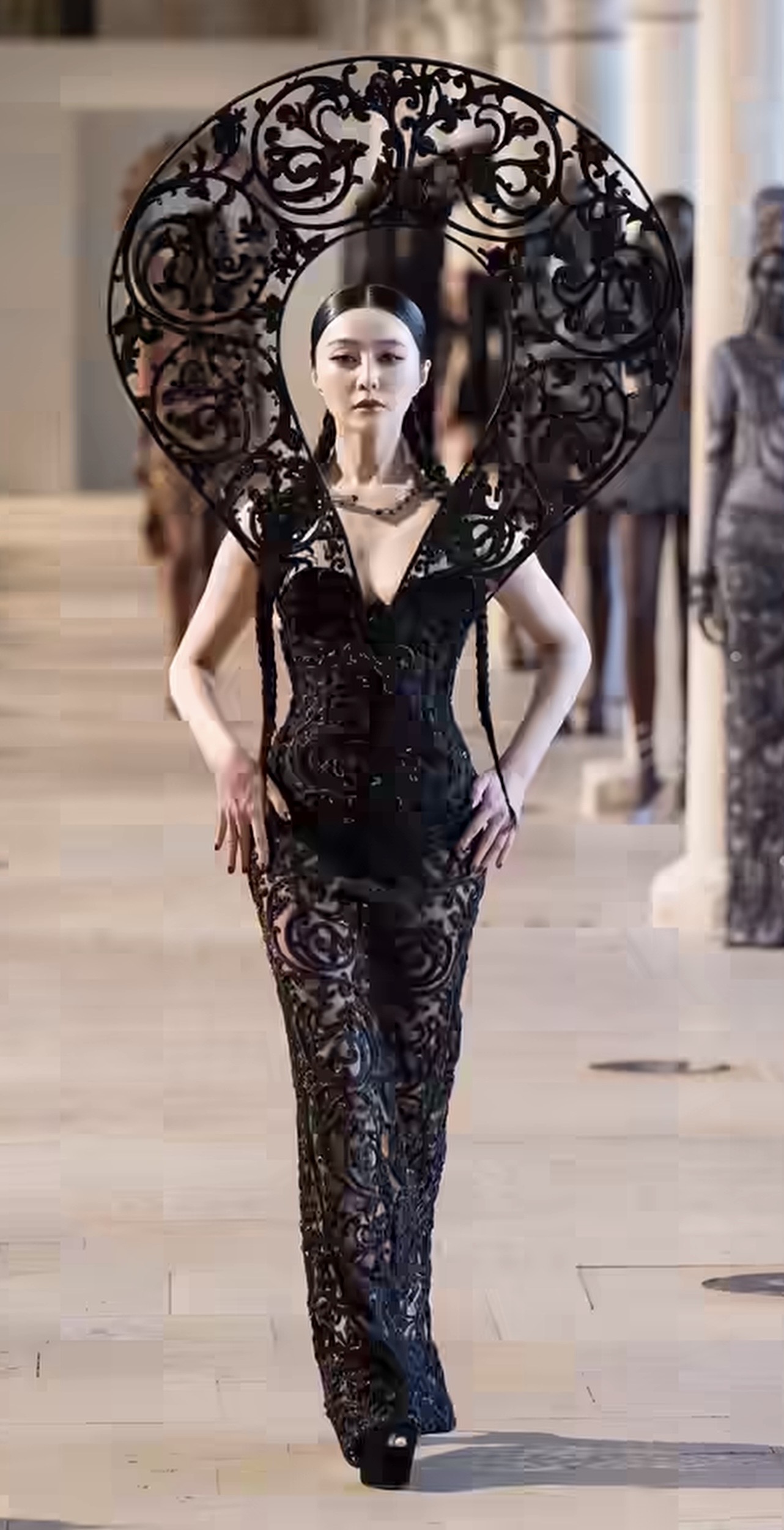
For a few minutes, you are in thrall of its magic. Every surface shimmers with embroidery. Necklines cascades into layered bibs, reminiscent of temple jewellery. Waistbands resemble sculpted girdles. Headpieces echo ancient crowns without slipping into costume. There is embellishment upon embellishment upon embellishment. But soon the spell begins to wear off. The collection begins to seem as if it’s caught between couture and costume, unsure whether it wants to dress women or recreate museum exhibits. Some garments appear to imprison the body beneath layers of heavily embellished jewellery-like embroidery that almost overwhelms the wearer. Others drift into theatrical flourish, where floating sculptural heads and monumental crowns begin competing with the clothes themselves.
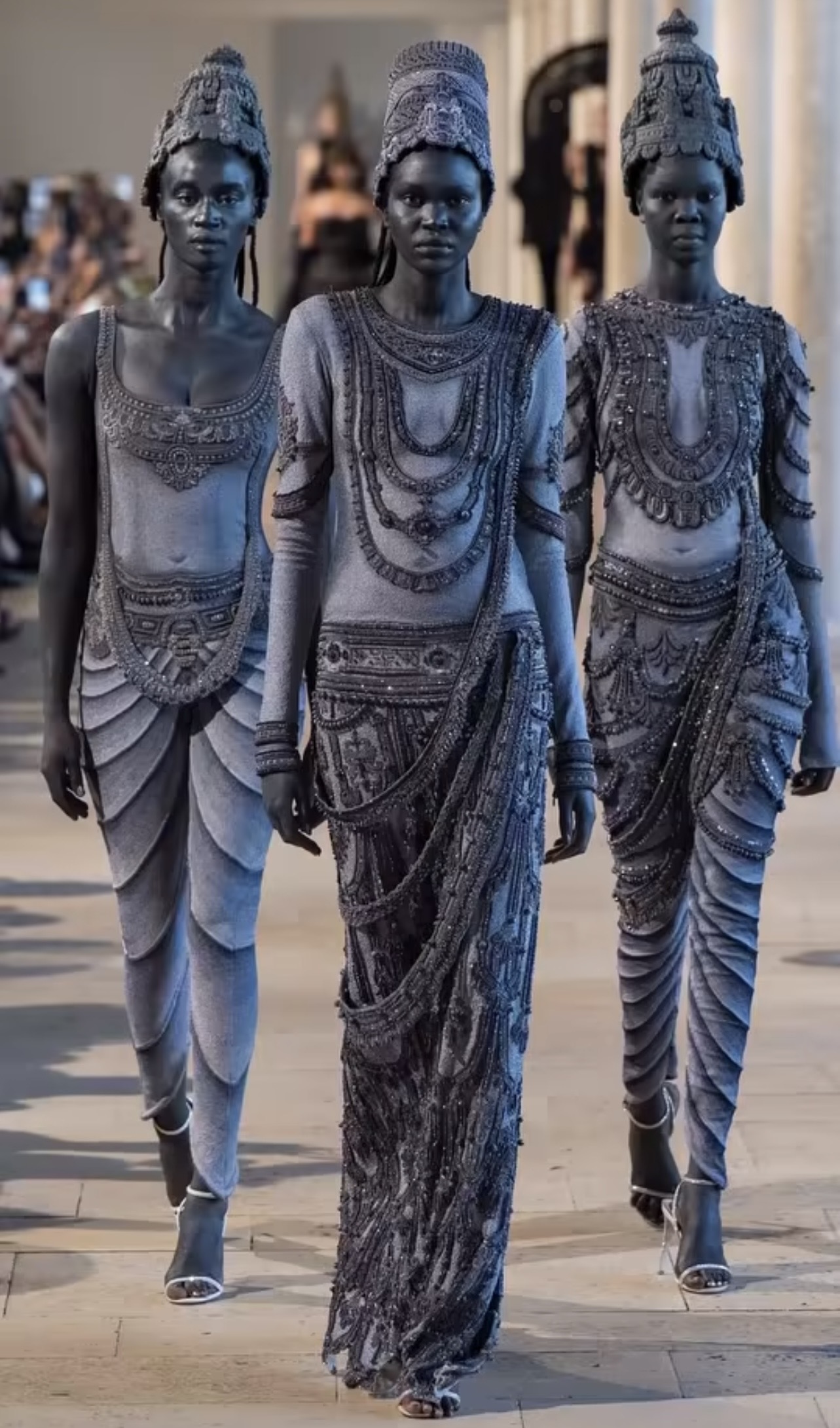
One begins wondering where the garment ends and the installation begins. Of course, defenders will immediately reach for couture’s favourite escape clause: It’s not meant to be wearable. Fine. But couture has never truly been about unwearability. If you remember, Christian Dior’s New Look transformed wardrobes. Cristóbal Balenciaga revolutionised silhouette. Yves Saint Laurent democratised the tuxedo for women. Even John Galliano’s most flamboyant Dior collections ultimately produced clothes clients actually bought. So, the point is that couture has always balanced fantasy with function. I may be wrong but I’m not sure not how fantasy without function can make any collection desirable.
This is, however, not entirely Rahul Mishra’s problem. It is, by and large, the Indian couture’s problem. Somewhere over the past decade, our designers have collectively decided that bigger automatically means better. If there are embroidery, sequins, trains, feathers, and drama, the collection will be splashed all over, including the Instagram handles of magazines and fashion influencers. Every bridal lehenga has become heavier than the bride herself. Every couture presentation today is accompanied by enough symbolism to require a curator rather than a stylist.
There is an exhausting predictability to much of Indian couture today. Ancient India appears every season, invariably. Temple architecture returns with alarming regularity. Banaras is rediscovered annually. Tribal motifs have been the go-to-zone for many. Goddesses arrive on cue. Mughal gardens bloom every now and then. Every designer promises to “celebrate heritage” while presenting, nay regurgitating, another elaborately embroidered variation of ideas we’ve already seen. It’s sad but it’s true: Heritage has become fashion’s safest cliché.
The irony is that India’s visual culture is perhaps the most expansive in the world. It contains contradictions, humour, sensuality, violence, absurdity, spirituality and everyday life in astonishing abundance. But fashion repeatedly returns to the same familiar icons: the goddess, the lotus, the temple, the peacock, the flower, the maharani. One almost expects someone to embroider an entire ASI monument next season.
Rahul Mishra avoids some of these traps through sheer sophistication. His references feel researched and not at all superficial. The embroidery is breathtaking because it serves illusion. There are moments when the garments genuinely appear carved rather than stitched, and those moments are among the finest achievements of contemporary couture. But even Mishra occasionally falls victim to fashion’s addiction to play to the gallery, and mount elaborate games of trompe-l’œil.
The truth is designers today create for freeze frames, close-ups, viral Insta reels and Pinterest boards. A floating sculptural head photographs magnificently, you can’t deny, whether it contributes anything meaningful beyond that is another question. Fashion has always flirted with excess, but today excess is of an altogether another level. Look weirder. Dress stranger. Go viral. Repeat.
It is telling that some of the strongest looks in Devi are also the quietest, those where embroidery alone performs the miracle. A beautifully draped sari silhouette transformed into stone through meticulous beadwork says far more than elaborate conceptual accessories ever could. Mishra’s confidence as a craftsman is so immense that he doesn’t actually need these distractions. He should leave all this to designers of lesser mettle.
Perhaps what Devi ultimately reveals is a larger anxiety within in luxury fashion. There remains an almost compulsive need to prove Indianness, explain references, amplify symbolism and foreground heritage until every collection is sacrificed at the altar of a cultural dissertation. You will rarely see such proclivities in European fashion. Nobody asks Chanel to justify tweed. Or expects Prada to explain Milanese history every season. But Indian designers are endlessly expected to perform civilisation through clothing. Sometimes they overcompensate. And that’s how we get collections that feel overloaded with meaning but occasionally underwhelming, for lack of a better word, as fashion. This is where Mishra remains both participant and exception.
He possesses genuine artistic ambition. His atelier is preserving extraordinary craft traditions. His work has earned its place in Paris not as mere tokenism but on the basis of technical excellence. Few designers working today understand embroidery as profoundly as he does. While Western couture often constructs volume through internal architecture (horsehair, boning, crinolines, hidden engineering), Mishra frequently achieves monumentality through embroidery itself, allowing embellishment to become both ornament and structure. Fashion students could happily spend weeks dissecting that alone.
Which is precisely why one hopes Mishra understands that restraint is not the enemy of grandeur. You’d agree that beneath all the sculptural drama of his latest collection lies an astonishing designer capable of making thread seem like stone. To me, that’s already miraculous enough.
More from Culture






Comments
*Comments will be moderated