








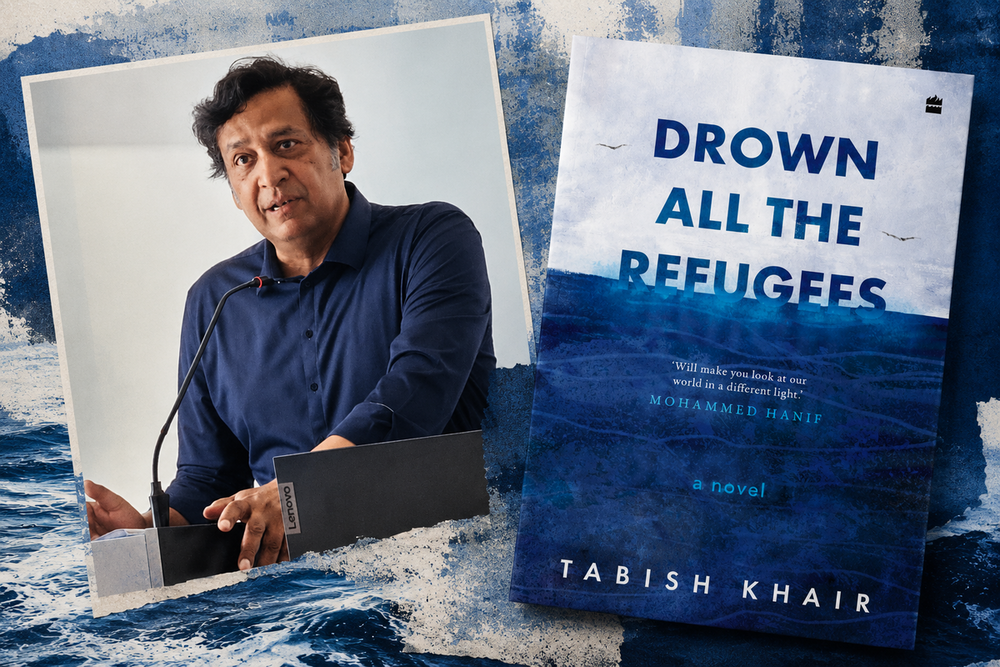
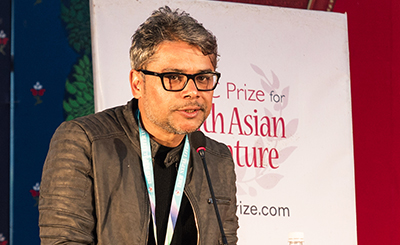
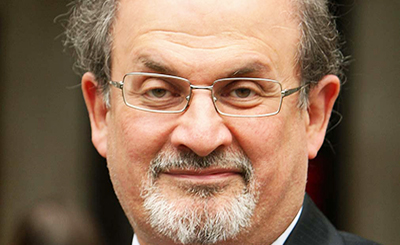
Tabish Khair’s latest novel, Drown All the Refugees (HarperCollins India), draws together many of his lifelong concerns. It is perhaps his most haunting work and also the sharpest thing he’s written yet. Photos courtesy of the publisher
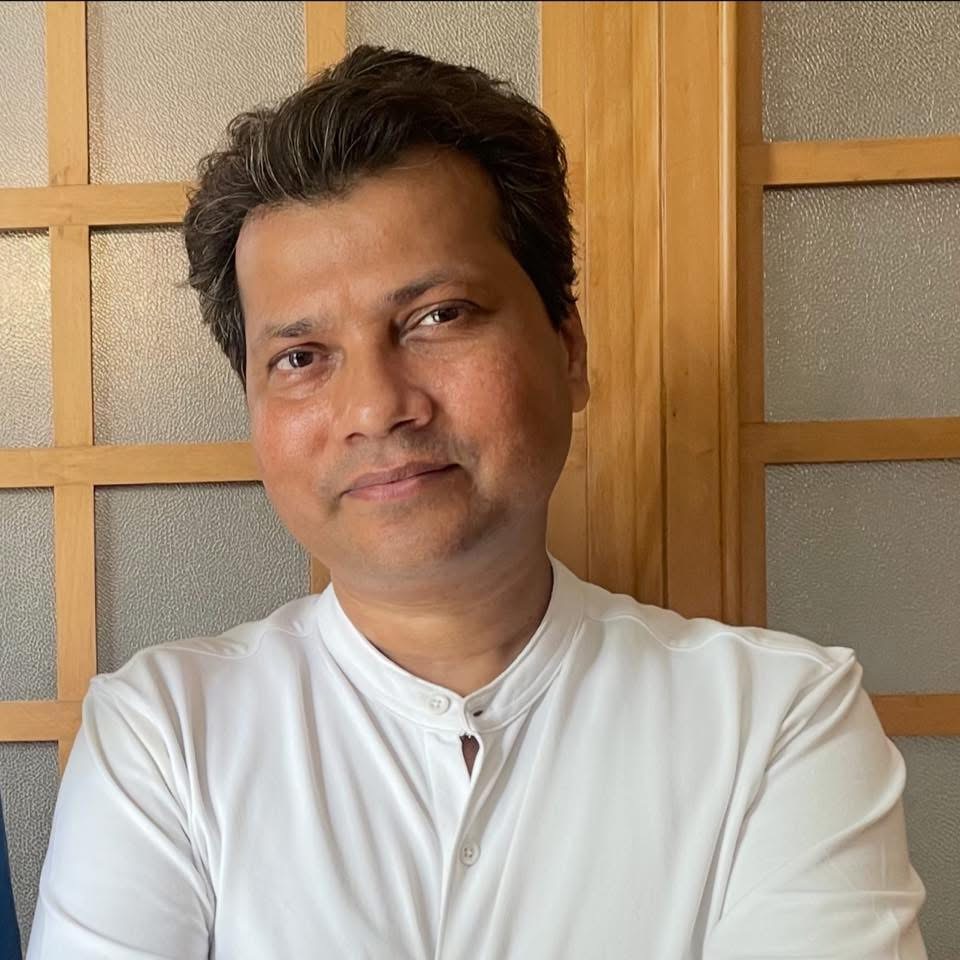
In a wide-ranging conversation, Tabish Khair talks about his latest novel, Drown All the Refugees, the pull of the Gothic, refugees, home, migration, love, capitalism, humour, reading, writing and why literature still matters
Tabish Khair is one of those writers who refuses to stay in a single lane. Over the past three decades, the Ranchi-born, Denmark-based author, who turned 60 this March, has written as though the world might still be persuaded by literature, juggling with enviable ease novels, poetry, criticism and cultural theory, taking readers from the dusty lanes of small-town India to the shadows of Victorian London and the disorienting realities of migration and exile.
His books (there are so many that you can be forgiven for losing count) never let ideas overshadow characters or stories drift free of history’s inconvenient questions about power, belonging, and otherness. He’s scholarly without being stuffy, and he never forgets that a good tale should unsettle you, make you laugh in dark places and catch you off guard.
His latest novel, Drown All the Refugees (HarperCollins India), draws together many of his lifelong concerns. It is perhaps his most haunting work and also the sharpest thing he’s written yet. It is not just a novel about refugees. Nor is it merely about the mind-numbing genocide of innocent men, women and children in Gaza, migration, borders or the violence of the American Empire, although all of these pulse through its pages.
More profoundly, it is a novel about haunting, about lives that refuse to disappear even as the West presides over avoidable wars. It is about exile in its broadest human sense: political, emotional, sexual, historical and spiritual. It foregrounds those who lose their homes, and those who discover, often too late, that home itself is a far more fragile idea than they had imagined. It is about everything modern societies learn to bury (wars, labour, grief, memory, colonial violence, even love itself) and about the impossibility of keeping those things buried forever.
With illustrations by Vikram Nayak that perfectly match its haunted mood, Drown All the Refugees kicks off at a literary festival on the Caribbean island of St Martin, where writers gather beneath a sky “aflame in colours,” discussing books while the Mediterranean and the Atlantic continue swallowing nameless bodies elsewhere. The unnamed narrator, provoked by a globe-trotting liberal writer, blurts out a line so jarring that it seems to violate every moral instinct: “Drown all the refugees.”
The sentence sounds like an obscenity, shocking the polite company gathered around him. Before we recoil, however, Tabish asks us to ponder over that discomfort. Why would a thoughtful novelist say something so monstrous? What grief, what exhaustion, what moral catastrophe lies behind such words? “It is a cry to make the reader sit up and wonder: why is he saying so? What is the matter?” Tabish tells me. Certainly, the sentence functions as an irresistible narrative “hook: it draws in the reader”.
But, as the story reveals later, it is also an indictment of how we look. “It connects to the fact that we often fail to talk about what is happening or talk about it in a rather glib manner. After all, refugees drown every day somewhere in the world in a bid to reach safer havens, and what do we do? Offer pity maybe, if we do not actively justify the structures that make this (and similar monstrosities) happen on a daily basis.” The provocation, thus, is directed at the complacency with which the world consumes the suffering of refugees.
The narrator, who is gay and discovers his sexuality while away from his family in the US, carries the sharp awareness of an insider-outsider. His Palestinian boyfriend, Abdul, is dead; his childhood friend Pedro, son of the family’s nurse Maria, crossed borders illegally chasing an American dream that devoured him. When Pedro vanishes, Maria turns to the occult. But then his ‘shadow’ returns, carrying terrors from the journey out and the passage back.
Also read: Daniel Kehlmann: ‘I am interested in exploring what a strange, distant country our past can be’
Tabish has flirted with Gothic motifs in earlier works, but never with such sustained intensity. “In this case, the Gothic was inevitable because the hidden and buried erupt into the present in the Gothic, which is all about what we bury and how it refuses to stay buried. In this novel, what erupts into the light of day is the violence we allow to happen to the dispossessed and how we then bury what happens to them. Pedro returns — and his return has to be faced by the narrator. The displaced we bury in our consciences refuse to stay buried in this novel — this is a Gothic situation.”
When I ask Tabish why ghosts and doubles continue to fascinate him, his answer turns unexpectedly towards economics rather than literature. “Think of money. Or think of capital,” he says. “Think of the labour, hope, exploitation, wear, tear, pain, etc. that go into creating those numbers we quote as company profits, bank balances or GDPs. How can we talk about all that? It is all buried in our worlds... This realisation leads automatically to ghosts, doubles, vampires, so to say.”
The observation reveals that the Gothic in this novel is not merely aesthetic but material. Capital itself becomes a haunted house. Every balance sheet conceals invisible workers. Every glittering city rests upon forgotten hands. Every statistic hides innumerable individual griefs. The ghost is no longer a supernatural creature but an economic principle, feeding upon lives while erasing the evidence of its appetite. Karl Marx, after all, famously described capital as dead labour that lives by sucking living labour. Tabish extends that insight into fiction. What modernity buries beneath numbers returns as spectres.
This explains why the novel continually shifts between intimate grief and vast historical violence. Gaza appears as an open wound bleeding into the narrator’s daily life. He watches television images with mounting horror, unable to comprehend the calm vocabulary through which mass death is translated into maps, graphics and military analysis. “No one counts shadows,” he remarks with devastating simplicity. Few recent novels have captured so precisely the moral anaesthesia of mediated catastrophe.
The narrator himself is an intriguing guide through the novel’s haunted landscape. A middle-aged writer from a remote plantation town, he is acutely aware of his own privilege and equally aware of its inadequacy. Tabish says he had to “make him different from myself.” He adds: “I come from a background of small town privilege too, but he is different from me in terms of small town background, language, location, sexuality, etc. Then I could start letting him be himself, not just turn him into a mouthpiece.”
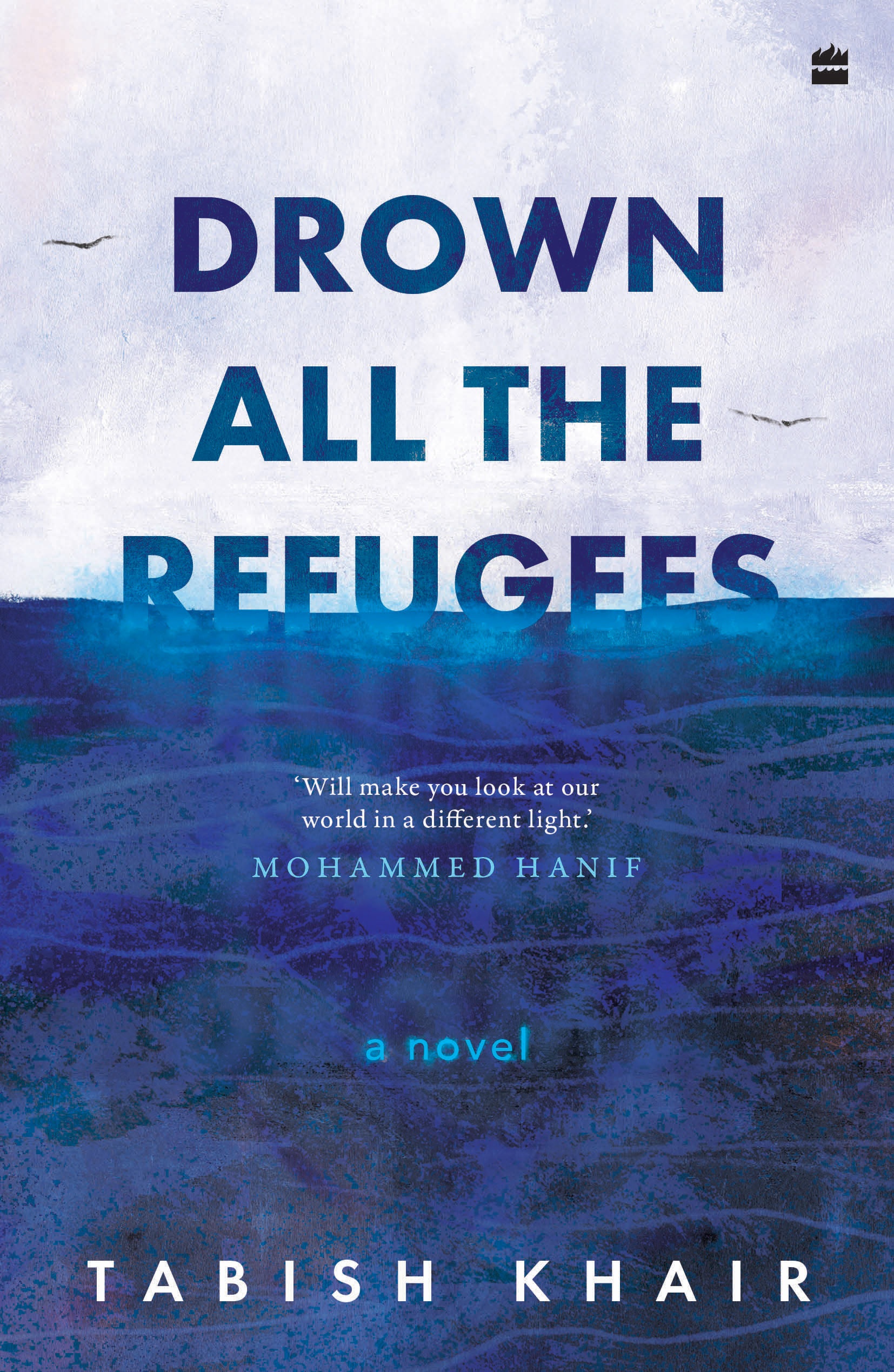
“His anger, like my anger, comes from the fact that despite his privileges, he has reasons not to connect to the comfortable status quo. And he has an awareness, because of Abdul, Maria, Pedro, of those who cannot claim similar privileges. Just as, growing up in small town Bihar, I cannot forget about the deprived and the poor as easily as I might have if I had grown up in posh metropolitan circles or, for that matter, even small town Denmark.”
The narrator is forever interrupting himself, arguing with an imagined American interlocutor whom he addresses ironically as “m’lord”, correcting his memories, doubting his conclusions, wandering into digressions before circling back to the story. Even the opening pages refuse conventional realism. “I wish I could recollect the kind of day it was,” he admits after introducing Maria, the woman who has worked in his household since childhood. “If this were a novel, I would pretend to do so.” Instead, he reflects that in small places “there seem to be seasons, but no days.” Time itself becomes blurred, memory collapsing ordinary chronology into something older, slower and more dreamlike.
Maria also carries centuries of erased history. The narrator cannot reveal her real name because it belongs to several intertwined languages that have “resisted translation”. It is one of those deceptively simple passages in which Tabish compresses an entire philosophy of language into a few sentences. There are people, the narrator observes, who know every leaf, feather and stone intimately but see no reason to translate those names into forms recognisable to imperial languages. Translation here becomes a metaphor for the violence of modernity itself, which demands that everything unfamiliar become legible to dominant cultures.
Also read: Gabriela Cabezon Camara: ‘It’s important for us to be able to imagine other possible worlds’
The refusal to translate echoes throughout the novel. So does the refusal to simplify. Maria is never reduced to an emblem of poverty. She exists in a web of local histories, rumours and losses. Her son Pedro has left, like countless migrants before him, searching for another life. When he eventually returns, he is no longer recognisable. A mere shadow of his former self. Pedro has crossed oceans, but what has truly changed is less geographical than spectral. Migration has not simply altered him; it has hollowed him out.
Shadow is one of the novel’s governing images. It appears so often that it becomes almost another character. One of the epigraphs, borrowed from Hans Christian Andersen, speaks of a man growing so thin that even his shadow shrinks. Mirza Ghalib’s famous couplet imagines every figure clothed only in paper. Hannah Arendt reminds us that human beings cannot leap over their own shadows. Throughout the novel, shadows become the visible shape of absence, the lives history records only as outlines, the refugees counted only when they disappear.
Abdul, a lecturer in social anthropology, is a colleague at the narrator’s university. One of the very few “foreign faculty” members, their friendship begins through language. After a lecture on travel writing, Abdul approaches the narrator with one of those digressive observations that seem merely playful until one realises they contain the novel in miniature. “Sifar, which is zero in Arabic, entered English as ‘cipher’,” he says. “Safar is travel, and comes from safira, which means empty. It is a strange journey, isn’t it, from emptiness and nothingness, through travel, to writing?” Then, smiling, he wonders aloud whether the English word suffer might somehow belong to the same family.
It is a glorious moment because Tabish allows etymology to become destiny. Travel, emptiness, writing, suffering — whether or not the words are actually related scarcely matters. The association itself becomes a map of exile. Every journey empties us of one life before asking us to imagine another. Writing becomes an attempt to inhabit that emptiness without pretending to fill it.
Later, after Abdul’s death, the narrator finally looks up the etymology of suffer. It has nothing to do with Arabic after all. The word comes through Latin and Old French, its ancient root meaning “to bear,” as one bears a burden or even bears children. “Abdul would have appreciated that,” the narrator reflects, “the strange children that suffering bears.” It is one of those devastating moments that Tabish scatters throughout the novel, where scholarship, memory and grief converge.
Abdul himself resists every category through which the contemporary world attempts to organise identity.The narrator calls him “a refugee in more senses than one,” and each qualification complicates the last: “First, by just being who he was — a Palestinian, unwanted by Zionists, and then an Afghan, unwanted again by the US-led free world… Last, he was a sexual refugee, fleeing from the tyrannical nation-state of compulsory heterosexuality.”
Abdul’s parents were Palestinians displaced after the 1967 war before finding temporary refuge in Afghanistan. He grows up in Kabul, not in the Afghanistan of Taliban clichés but in one where, as he fondly recalls, women wore miniskirts and socialist ideals seemed capable of imagining another future. Later, he flees again, escaping the rise of the Mujahideen and the Taliban after his communist student organisation is outlawed. India offers him shelter, but only provisionally. He is also a Muslim whose faith refuses sanctioned orthodoxy, and an intellectual whose loyalties are to curiosity rather than dogma.
The narrator, with characteristic irony, wonders whether Abdul should have sought asylum in Scandinavia instead of India. The question is less geographical than philosophical. Refuge, Tabish suggests, is never merely a matter of crossing borders. The world has become adept at providing paperwork while withholding belonging.
When I ask Tabish about the persistence of home and departure across his fiction — from The Bus Stopped and The Thing About Thugs to The Body by the Shore and now Drown All the Refugees — and what feels most alive to him about the idea of “home” and “leaving home,” his answer is poignant. “Home is always in a relationship to leaving it,” he says. "We think of home mostly when we leave it, and many leave in order to find a home, for home is also a safe haven. Home and leaving home are interlinked for me.”
Page
Donate Now
More from The Byword


Comments
*Comments will be moderated