








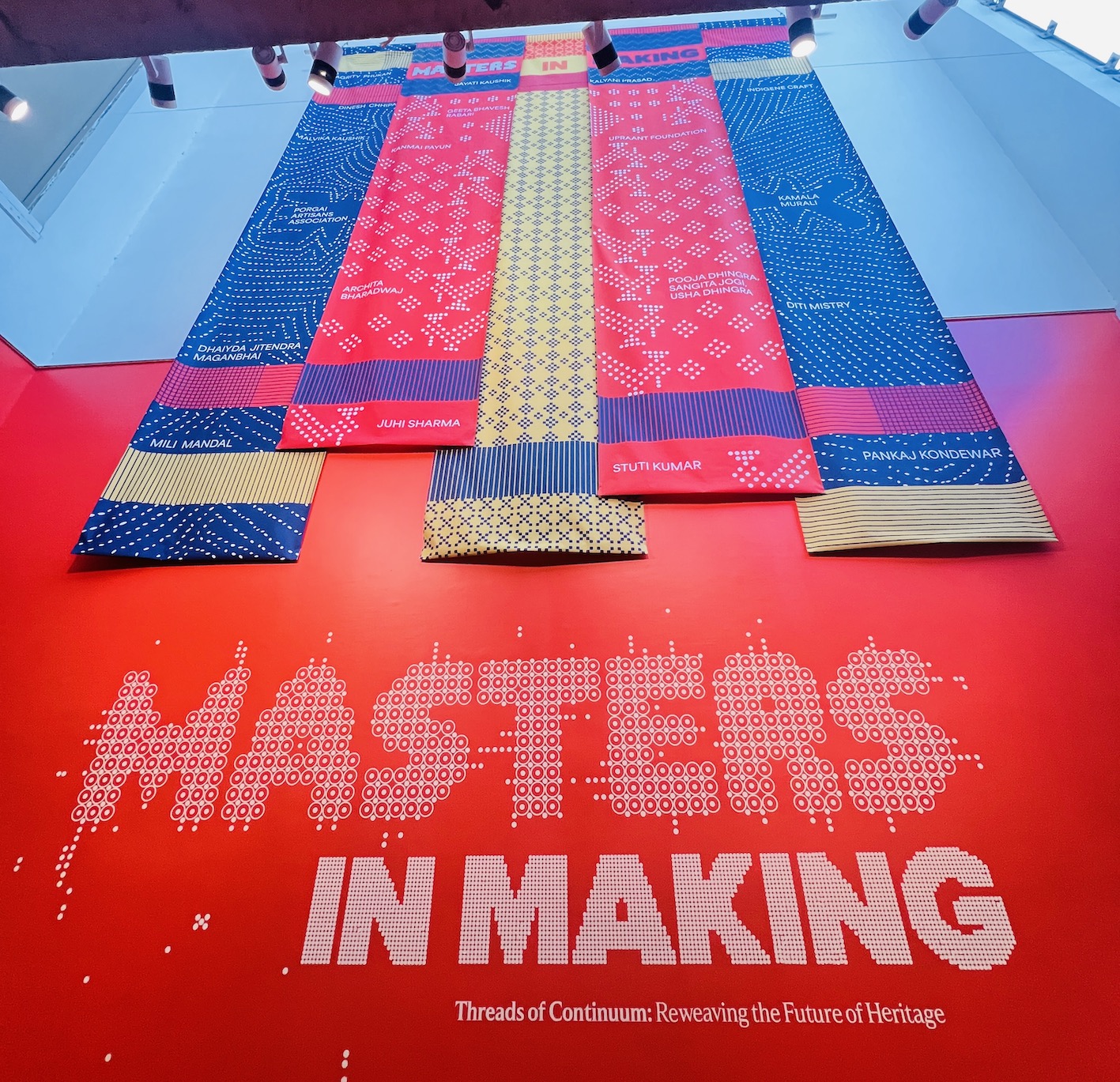
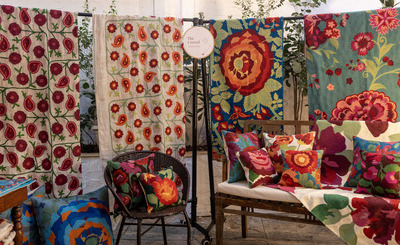
At Threads of Continuum, 20 artists, artisans and collectives brought inherited textile knowledge into contemporary practice and asked what support makers need to sustain it. Photos: Shireen Quadri/Nawaid Anjum
The inaugural Burgoyne Original Masters' Masters in Making exhibition brought 20 artists, artisans, craft-led brands and collectives to Delhi. Their work, and the conversations around it, asked how inherited knowledge can find new life while remaining connected to the people and communities that sustain it
How does a textile tradition stay alive as the world around it changes? That question shaped Threads of Continuum: Reweaving the Future of Heritage, the exhibition marking the first edition of Burgoyne Original Masters’ Masters in Making grant. Organised in association with Art Culture Festival India, it brought together 20 artists, artisans, craft brands and collectives at Galerie Romain Rolland, Alliance Française de Delhi, from 1 to 10 October 2026. A preview took place on 30 September.
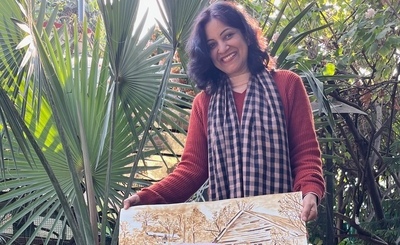
The grant supports emerging and mid-career artists working with textiles. Its nationwide open call received more than 180 applications from across India. An expert jury selected 20 participants, including five grant recipients: Jagrity Phukan, Porgai Artisans Association, Dinesh Chhipa, Dhaiyda Jitendra and Kanmai Payun. The full cohort showed work in the exhibition, curated by Anjchita B. Nair. The five grant recipients bring distinct inherited practices into view. Jagrity Phukan, a textile artist and researcher and founder of Assam’s Way of Living Studio, follows Muga, Eri and Mulberry silk from soil to cloth in The Touch of the Sun. Her work traces the links between land, labour, ecology and the community knowledge behind the Brahmaputra Valley’s silk traditions.
The grant supports emerging and mid-career artists working with textiles. Its nationwide open call received more than 180 applications from across India. An expert jury selected 20 participants, including five grant recipients: Jagrity Phukan, Porgai Artisans Association, Dinesh Chhipa, Dhaiyda Jitendra and Kanmai Payun. The full cohort showed work in the exhibition, curated by Anjchita B. Nair. The five grant recipients bring distinct inherited practices into view. Jagrity Phukan, a textile artist and researcher and founder of Assam’s Way of Living Studio, follows Muga, Eri and Mulberry silk from soil to cloth in The Touch of the Sun. Her work traces the links between land, labour, ecology and the community knowledge behind the Brahmaputra Valley’s silk traditions.
Porgai Artisans Association is a collective of 80 women from Tamil Nadu’s Sittilingi Valley. Its Lambadi embroidery tradition was revived from near extinction in 2006 and remains closely tied to the artisans’ livelihoods and dignity. Dinesh Chhipa, a fifth-generation practitioner of Bagru hand block printing, returned to the complete 16-step process, including the increasingly rare Fadat technique. Dhaiyda Jitendra draws on nearly 700 years of Tangaliya weaving from Kutch, working with Kala cotton and tussar silk alongside inherited techniques. Kanmai Payun, a master weaver of the Mishing community in Majuli, brings forward Fulor Saneki, Gadu and four-paddle weaving, intricate earth-loom practices that are increasingly rare. The cohort also included Malvika Kaushik, Kalyani Prasad, Medha Khosla, Jayati Kaushik Mehra, Archita Bharadwaj, Juhi Sharma, Indigene Craft, Pooja Dhingra, Geeta Rabari, Upraant Foundation, Kamala Murali, Stuti Kumar, Diti Mistry, Pankaj Kondewar and Mili Mandal.
Textile designer and independent practitioner Malvika Kaushik’s People in the Matrix brings together Kala cotton, tussar silk and Indian Merino wool. Woven in Kachchh with the Vankar Vishram Valji family, the work is further developed with handspun Lahuli wool through Kantha and tufting. Its stitches suggest individual lives held within a larger whole; madder-dyed wool marks points of connection, courage and conviction. Fashion and textile designer Kalyani Prasad’s The Kasota Saree Project returns to the endangered Kasota loin-loom weave, a tradition she has worked to revive. It also considers how traditional textiles have shifted in everyday life as mill-made fabrics have spread.
Goa-based artist Medha Khosla took her material inquiry to a residency in Portugal, thinking about the routes through which materials travel between the two places and the histories they carry. Portugal’s 400 years of colonial rule in Goa inform that inquiry. In Time Horizon, a diptych of handwoven panels, Khosla brings together found materials, including yellow plastic cables, ropes and industrial waste, to see how they “react with each other” and what connections she can “build and rebuild.” “It’s a very process-driven practice,” Khosla tells The Punch Magazine. Each work takes about a month, from research and collecting to cleaning, processing, deconstructing and hand-weaving with a needle.
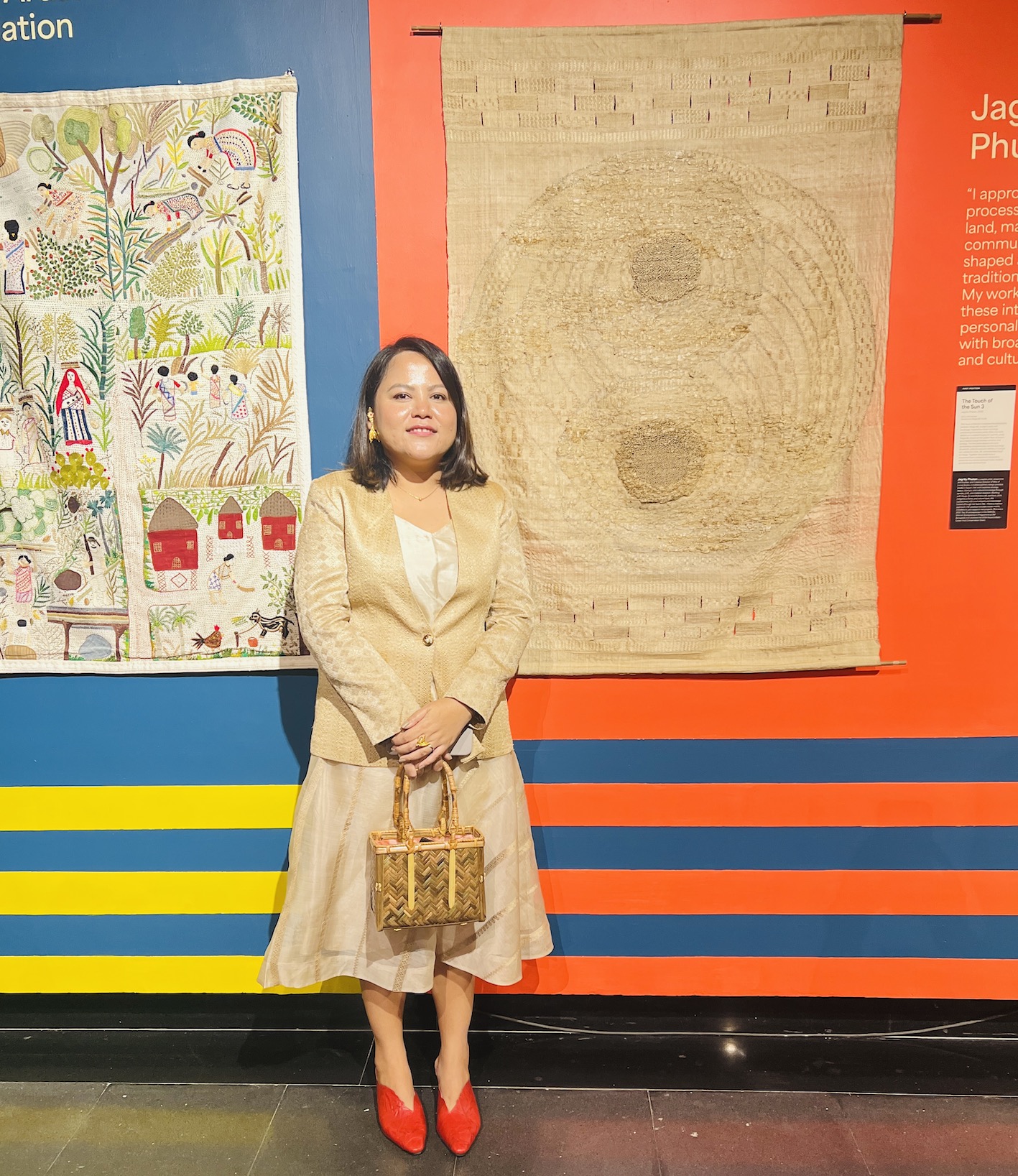
Jagrity Phukan, a textile artist and researcher and founder of Assam’s Way of Living Studio, follows Muga, Eri and Mulberry silk from soil to cloth in The Touch of the Sun. Photo: Shireen Quadri
The front and back produce different results, and breakages remain visible as part of the process. She does not currently work on a loom, which she finds limiting for larger pieces: dependent on the shuttle, she cannot control where the work breaks, though she may explore the loom again. Khosla suspends the panels rather than fixing them to a wall, setting their lightness against the labour involved and letting viewers walk around their textures and forms. “I want the viewer to rethink their relationship with the materials around us,” she says. What seems “mundane and wasteful and boring,” she argues, has a geography and a history. Her work asks viewers to trace materials to their origins and reconsider the value they assign to what they use.
Delhi-based visual artist and printmaker Jayati Kaushik Mehra has worked across printmaking, painting, textiles and mixed media for more than 15 years. With an MFA in printmaking from Maharaja Sayajirao University, Vadodara, she draws on Indian philosophical thought, ritual and symbolism, using embroidery, mark-making and hand-dyeing. Her work has been exhibited in India and internationally, including through residencies and platforms in the United States and Germany. Neelkanth (2026), a 68-by-84-inch textile of hand-dyed indigo on 100 per cent cotton, is embroidered with hundreds of French knots. It connects indigo’s history and symbolism with Shiva and devotion; repeated forms turn prayer, counting and meditation into a visual language.
Malvika Kaushik’s People in the Matrix brings together Kala cotton, tussar silk and Indian Merino wool.
Bharadwaj works with reclaimed textiles, leftover yarns and other existing materials, drawing connections between weaving, memory, land and belonging. Her practice considers how fibres carry personal and geographical histories, and how making can help people understand their relationships to home and identity. Sharma engages with women from nomadic, denotified and Indigenous communities in Rajasthan. Embroidery, natural dyeing, hand-spinning and hand-weaving, community engagement and documentation form part of her practice. She looks at how textile knowledge holds histories, identities and memories, and continues to change through the people who practise it.
Indigene Craft, founded by Ruchi Tripathi and Jaya Bhatt in 2012, works with artisan communities across hand embroidery, hand-weaving, tie-dye and batik. The label brings craft research and design together with training and sustained partnerships with makers. Its commitment to handmade, ethical and circular production puts artisan knowledge and livelihoods within the design process.
For curator Anjchita B. Nair, bringing the 20 practices together meant looking beyond the usual divide between art and craft. “I wanted to look at what connects different ways of making: material knowledge, skill, memory and experimentation,” she said. She sees an unexpected connection between Phukan’s The Touch of the Sun and Riddhika Bhandari’s Pela no Dholavira: Phukan begins with living fibres and their relationship to land and ecology, while Bhandari gives discarded textiles another life through Kantha. “One looks at where material comes from; the other at what it can become after use.”
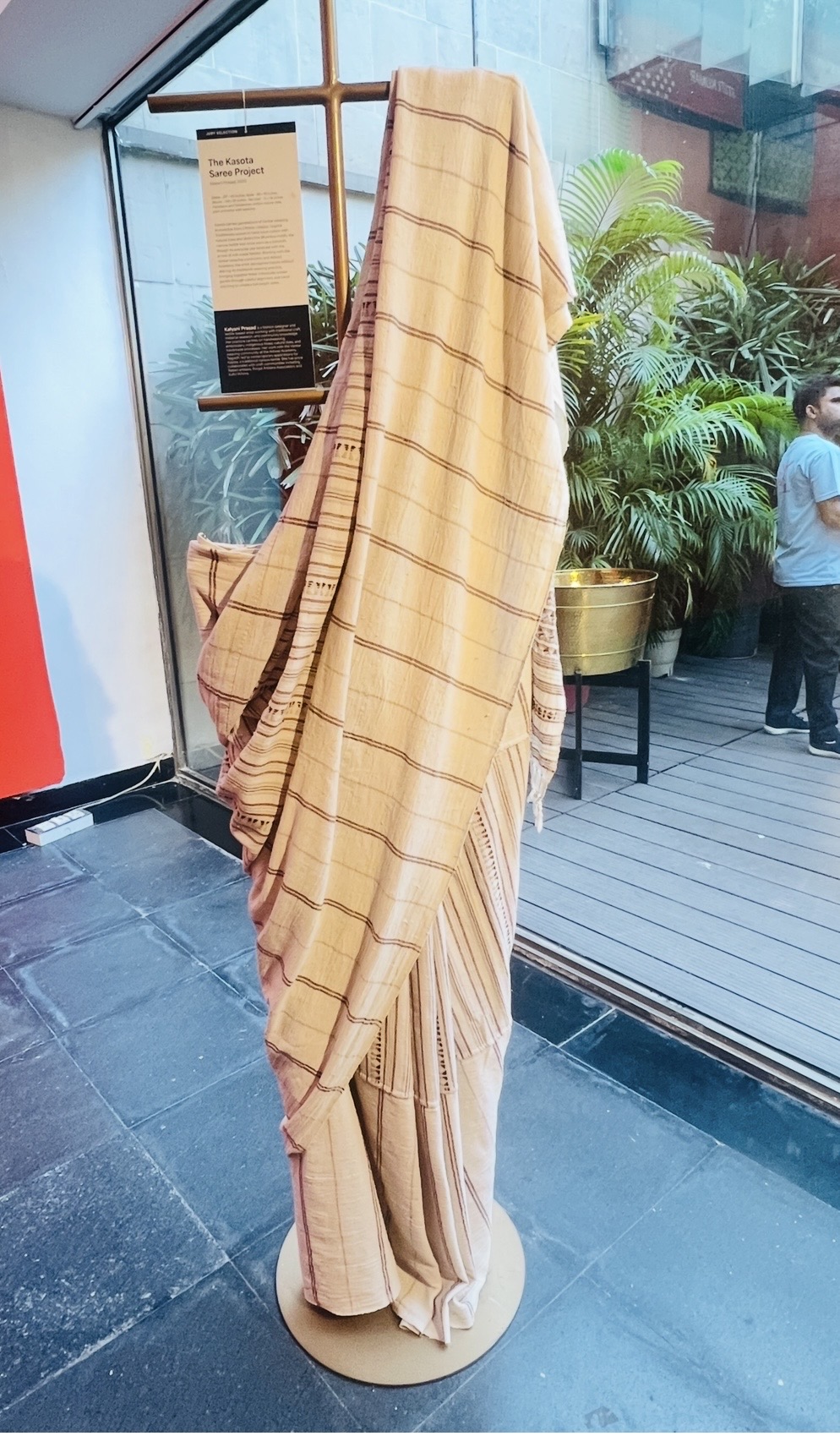
Fashion and textile designer Kalyani Prasad’s The Kasota Saree Project returns to the endangered Kasota loin-loom weave, a tradition she has worked to revive
Nair said it was important to show not only the beauty of finished textiles but the materials, labour, techniques and economic and environmental pressures that shape whether the practices can continue. Payun works with rare weaving traditions; Chhipa revisits Fadat printing; and Prasad’s Kasota project asks how the spread of mill-made fabric changed the place of traditional textiles in daily use. “The idea was to let audiences enjoy the beauty and skill of the work, while also seeing what is at stake in its making: the materials, the people and the changing conditions that sustain them,” Nair said.
The exhibition also brought questions of attribution into the gallery. Nair cautioned against treating collective work as the work of one person simply because that person facilitated or presented it. In Firewood Collection (Ancestral Story), the work is credited to Bhagyalakshmi, Kuppammal and Lavanya, alongside Porgai Artisans Association. The story draws on Kuppammal’s memories of gathering firewood and was developed through conversations with village elders. “For me, attribution is a curatorial responsibility, not just a matter of labels,” Nair said. The curator asks who made a work, whose knowledge and story it carries, and how those people can be named.
Aparupa Ray Ganguly, Curator and Creative Consultant at Burgoyne Original Masters, said the grant was created to address the limited institutional support, visibility and audience access available to many practitioners sustaining India’s textile traditions. The volume and range of applications revealed the depth of inherited knowledge and makers’ desire to experiment. Ganguly said the grant seeks to approach textile heritage with reverence while imagining how traditional knowledge, materials and stories can evolve in future practice. It is intended to create recognition, dialogue and exchange as well as financial support. “Makers need more than funding,” she said. “They need sustained engagement, meaningful visibility, access to new markets and an environment in which their knowledge is valued on its own terms.” In BOM’s words, the aim is to see textile “not merely as a craft practice, but as a living archive of memory, resilience, healing and hope.”
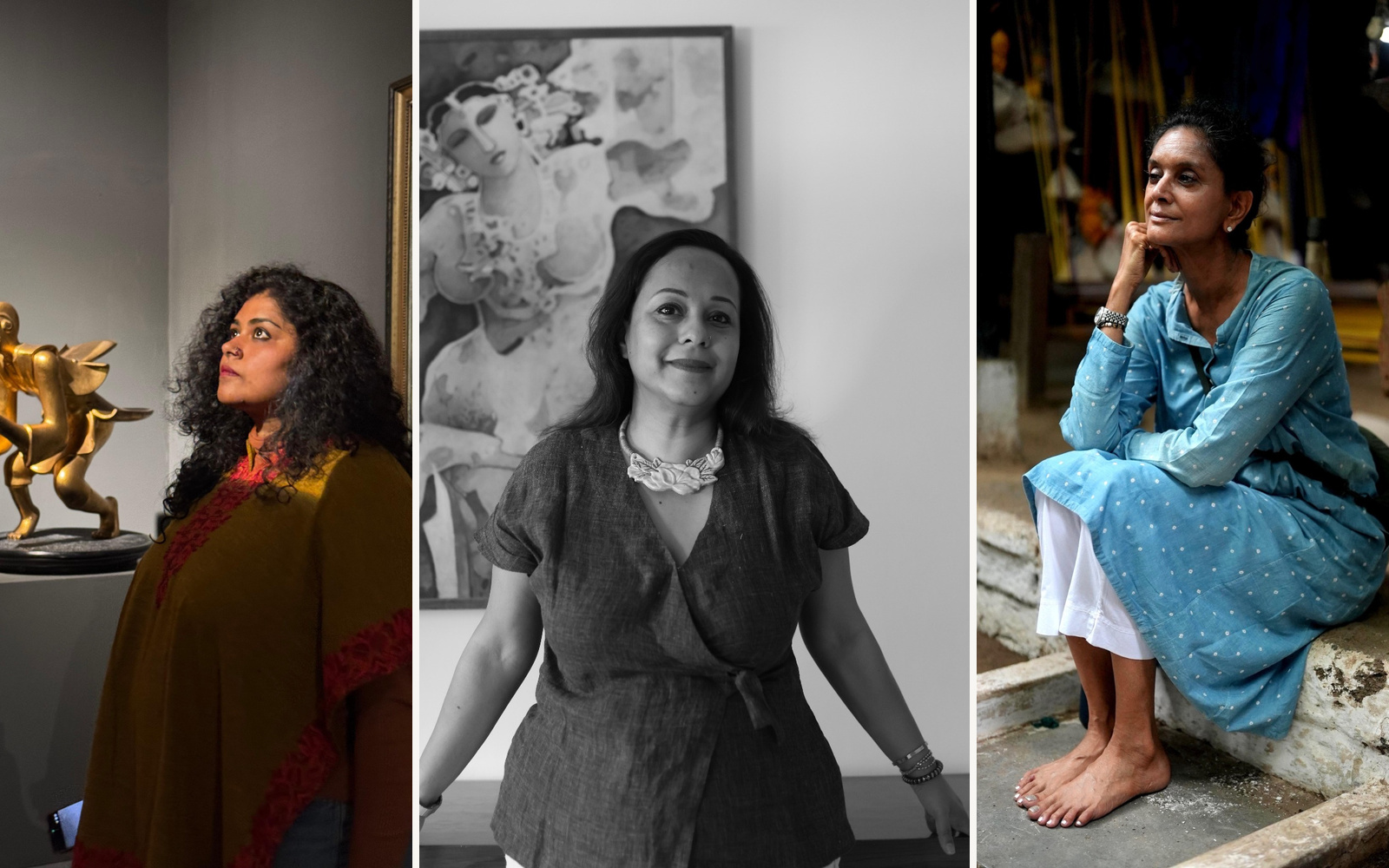
(From left) Curator Anjchita B. Nair, Aparupa Ray Ganguly, Curator and Creative Consultant at Burgoyne Original Masters, and jury member Hema Shroff Patel, founder of Amba. Photos: Burgoyne Original Masters’ Masters in Making
For Ganguly, preserving a craft cannot mean freezing it in time. “A tradition remains alive only when it is allowed to evolve,” she said. Textile practices have always responded to social, cultural and economic change. Experimentation can continue a tradition when it grows from an understanding of its knowledge, processes and communities; adaptations risk disconnection when that context is ignored. She cautioned against imposing outside ideas of authenticity and said younger practitioners should be free to question and reinterpret inherited practices.
The jury brought expertise across art, research, textiles and artisan communities. Dr Madan Meena is a visual artist and researcher focused on rural, nomadic and tribal communities; he has worked on oral traditions, indigenous knowledge and craft revival, and is a trustee of Vadodara’s Bhasha Research and Publication Centre. Hema Shroff Patel, founder of Amba, has spent more than three decades sustaining weaving, block printing and natural dyeing with artisan communities. Dr Vandana Bhandari, former Dean Academics at NIFT, is a textile scholar, author and board member of craft organisations. Curator Sreyansi Singh researches South Asian textile art, material histories and makers’ narratives.
Shroff Patel said the jury assessed applications through originality, authenticity and impact, including exchange with other artisans and artists and the building of community. “The sweet spot” was an old technique kept relevant through thoughtful innovation without losing its essential character; each grant recipient, she said, found that balance in a distinct way.
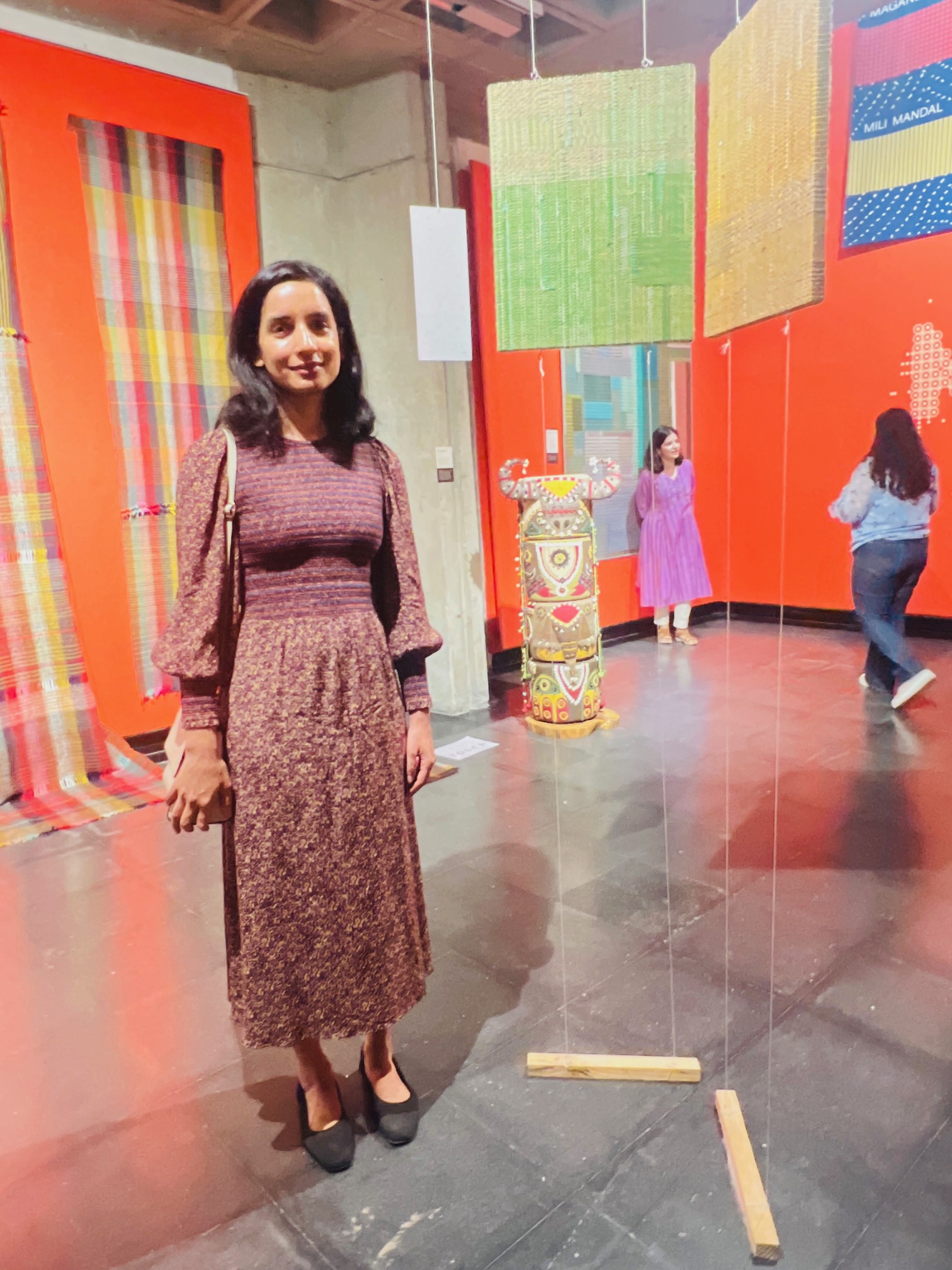
In Time Horizon, a diptych of handwoven panels, Goa-based Medha Khosla brings together found materials, including yellow plastic cables, ropes and industrial waste, to see how they “react with each other”
The jury also made a conscious effort to give equal attention to submissions from artisans with and without formal education. Shroff Patel said the work mattered more than the concept note, since applicants had different levels of comfort with writing and some used AI to help express their ideas. The jury considered the makers and the circumstances in which the work was produced; many were making art pieces with very limited resources. She compared the challenge to working on a two-pedal loom: “With fewer resources at your disposal, you have to work harder and think more creatively to make something interesting.” The question, whether for a Tangaliya weaver, a Sujuni embroiderer or a block printer, was whether they could work within constraints, push a technique’s boundaries and make something distinctive.
Young artisans, Shroff Patel said, need meaningful opportunities in their craft clusters. Partnerships between formal and informal education can help: she pointed to the Handloom School and Somaiya Kala Vidya, which support artisans in building skills, moving beyond traditional roles and becoming artisan entrepreneurs. Designers can connect makers with markets. She cited Indigene, founded by Ruchi and Jaya in 2012, as a label committed to craft and artisan livelihoods; Ruchi spoke about its work at BOM’s panel discussion, The Hand That Holds the Threads. Platforms such as BOM can give artisan-led exhibitions and projects greater exposure and bring stakeholders together to exchange ideas and knowledge.
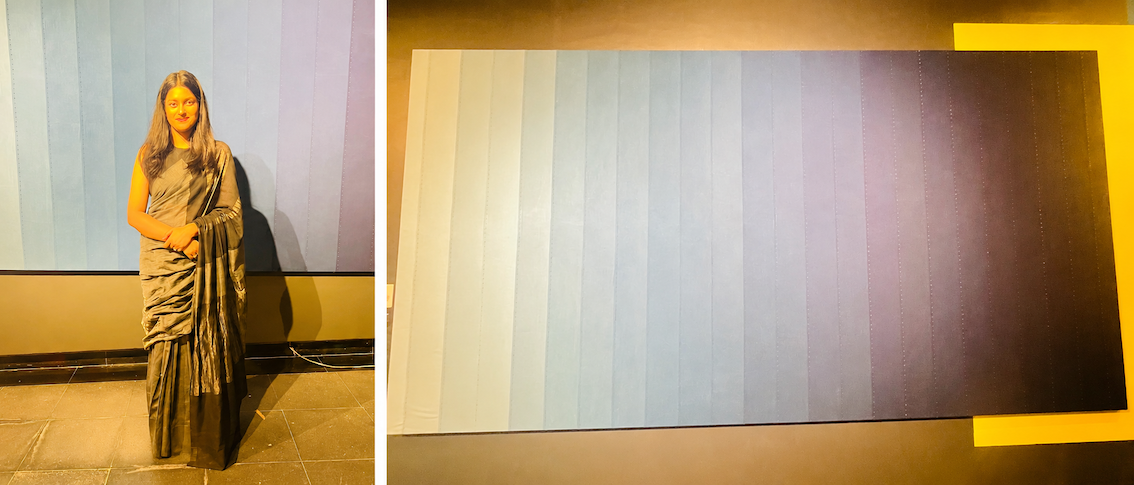
Neelkanth (2026), a 68-by-84-inch textile of hand-dyed indigo on 100 per cent cotton by Jayati Kaushik Mehra, is embroidered with hundreds of French knots.
A contemporary art exhibition can also change how audiences see a master weaver such as Payun. Ganguly said it can make visible weaving as an intellectual, creative and artistic practice shaped by material, technique, community and lived experience, beyond the familiar frames of craft, utility or heritage. But the gallery should not become the only lens through which the work is understood. Payun’s practice remains closely connected to her Mishing identity and the community contexts in which the weaving continues. For Ganguly, the point is not to reshape a community practice to make it legible in a gallery, but to recognise the maker as the knowledge-holder and creative force, and to give the work and the knowledge behind it equal respect.
The exhibition was the start, rather than the end, of BOM’s engagement with the cohort. Ganguly said the organisation hopes to maintain relationships with participants, connect them with institutions, designers and potential collaborators, and help their work reach wider audiences. It will look for signs of stronger market links, commissions, sustained collaborations and confidence, as well as the effects on livelihoods, continuity of practice and transmission of knowledge. The inaugural grant is also a learning process; the first cohort’s experience will help shape a longer-term framework for future editions.
Burgoyne Original Masters supports engagement with India’s artistic and cultural traditions through contemporary creative practice. Its programmes support emerging and established practitioners, encourage interdisciplinary dialogue and cultural exchange, nurture new voices and strengthen ties between traditional knowledge systems and contemporary expression. Threads of Continuum brought that purpose into the gallery, asking how to recognise the people behind textile knowledge and what conditions will let them keep making.
More from Arts

Comments
*Comments will be moderated