








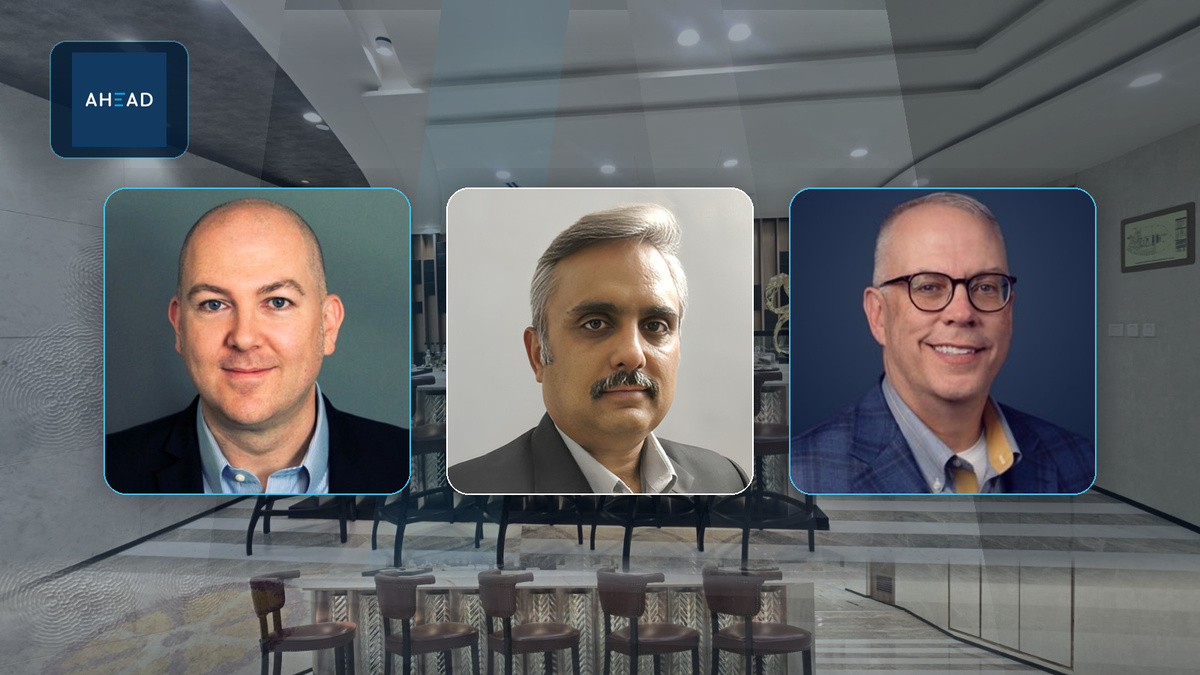
Ahead's Foundry EVP Chris Tucker, India MD Sumed Marwaha and Consulting & Services EVP Keith Odom.

As AHEAD expands across Gurugram, Hyderabad and Bengaluru, India MD Sumed Marwaha, Foundry EVP Chris Tucker and Consulting & Services EVP Keith Odom speak about moving AI beyond demos, from ServiceNow and high-performance computing to liquid cooling, and why the real test is what improves for customers and employees
The chief executive of a publicly listed manufacturer of bulbs and tubes had a question for Sumed Marwaha: why did his business need artificial intelligence? Shareholders had asked the chief executive about his AI plans. He had turned to Marwaha, a friend, unconvinced that the technology had much to do with making lights. Marwaha thought he was overlooking its possible uses across the company, including finance, supply chains, customer service, maintenance and the factory floor.
The story came up during our conversation at AHEAD’s Gurugram office recently. Marwaha, the company’s managing director for India, was joined by Chris Tucker, executive vice president (EVP) of Foundry, and Keith Odom, EVP of Consulting & Services. Our conversation shifted from getting AI systems to work to what their growth means for employees, infrastructure and the companies now under pressure to show an AI plan.
Chicago-headquartered AHEAD helps businesses design, build and run their technology systems. Founded in 2007, it grew up in the data centre and still keeps deep infrastructure expertise at the centre of its business. The company now sees itself as an engineering-led platform working across cloud, cybersecurity, data, AI, infrastructure and operations. Its interests span consulting and managed services as well as the physical equipment needed for AI and high-performance computing. That gives its executives a view of what happens after somebody approves an AI experiment, when enthusiasm has to survive contact with everyday operations.
That is crucial because AHEAD is not merely selling software licenses or shipping hardware. Its work can begin with advice on what a business should modernise, move into building data, cloud, security or infrastructure platforms, and continue into running and supporting those systems. Its services include business IT consulting, IT financial consulting, managed services, intelligent support, AHEAD Foundry, Hatch IT lifecycle management and liquid-cooling rack integration. For a reader outside enterprise technology, that means AHEAD occupies the difficult middle: between a board that wants AI, a technology team that must make it safe and usable, and an infrastructure stack that must actually carry the load.
Odom sees companies being hurried into demonstrations before they have prepared their data or decided who can access it. They have yet to work through security, the rules for using AI, or whether to run it through a large cloud provider or on their own equipment. They may also have missed the economics of tokens, the units of information AI models process and which often determine usage charges.
Boards and technology chiefs want visible progress. Teams oblige, then discover they must go back and do the groundwork. Odom says this is the pattern in roughly nine out of ten such situations where AHEAD is called in, his account of client experience rather than an industry-wide failure rate. “People are just getting pressured to show results quickly,” he says.
McKinsey’s August 2026 global survey puts numbers to the gap. Eighty per cent of respondents said AI had improved their individual productivity. Only 37 per cent attributed positive impact on their organisation’s earnings before interest and tax to AI. About one in five said operating costs were constraining use. Getting faster at a task and improving a company’s finances are different achievements.
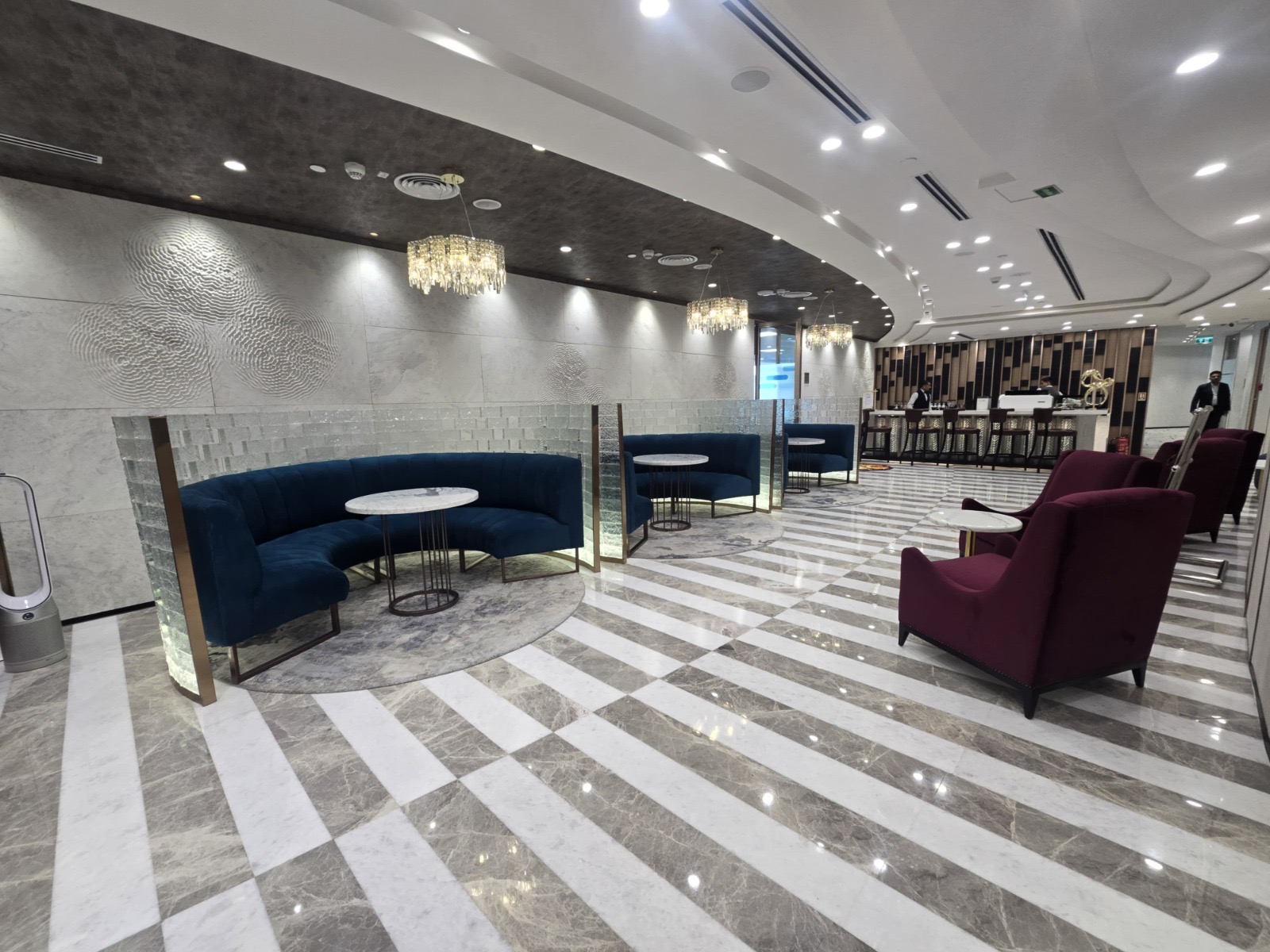
Ahead's first office in Gurugram
Odom’s test of success is straightforward: agree on the business result, then measure whether it happened. A target might be a 20 per cent reduction in costs or coding errors; those are examples, not results he claims for every project. Completing the agreed tasks is insufficient. “I can achieve those tasks and still not provide value to the client,” he says.
AHEAD’s expanded ServiceNow partnership, announced on September 9, addresses that gap. Its offerings help customers put AI into use, get more from software they already own and understand how their services depend on underlying infrastructure. The emphasis is on what the investment actually changes. ServiceNow is one of AHEAD’s strategic platform partners; the company also works with technology providers including AWS, Dell, Microsoft, Cisco, Google Cloud, NVIDIA, Palo Alto Networks, Rubrik and VMware.
For Tucker, the same discipline applies to hardware. AHEAD Foundry brings equipment together, configures it and tests it before delivery. Foundry industrialises the build, configuration and testing of complex AI, high-performance computing and edge infrastructure. Servers must work with their networks and storage, and the cooling must cope with the heat. Tucker calls the approach an “industrialised consumption model”: much of the assembly and troubleshooting happens before the equipment reaches the customer.
Some problems are surprisingly basic. Components arrive dead. A supplier dispatches the wrong item. With demand pressing against supply, Tucker says, “a customer may have ordered A, but they’re actually shipping B”. Foundry’s checks, supported by AHEAD’s Hatch asset-management platform, aim to catch these mistakes early. Hatch gives technology teams visibility into assets, sites and shipments across geographies, an important function when equipment is being procured, integrated and deployed across countries. The useful measure is how quickly a customer can start using the capacity it has bought.
Tucker describes rapid growth, a broader international presence and a move into cooling that carries heat directly away from chips using liquid. In March, AHEAD announced a 10-megawatt integration facility at Libertyville, Illinois, scheduled to open in April. It is designed for demanding AI systems, including racks exceeding 100 kilowatts. In May, AHEAD also announced the acquisition of Prolimax, a Netherlands-based technology services partner, and a new Foundry facility in Reading, outside London. Its Reading facility opened on August 11, following the acquisition. Tucker also describes further Netherlands expansion and an assessment of how to serve Asia-Pacific customers.
That physical expansion brings us to AI’s less comfortable questions. The International Energy Agency’s April 2026 assessment projects global data-centre electricity consumption rising from 485 terawatt-hours in 2025 to about 950 in 2030. It also describes tightening constraints on grid connections and equipment supplies. Efficiency gains per AI task have to contend with growing use and more demanding applications.
Also read: Hybon, Tonino Lamborghini bring Italian luxury and Indian engineering to India’s premium elevator market
Asked about water, Tucker distinguishes Foundry’s assembly and integration facilities from data centres that continuously run customers’ workloads. He says its liquid-cooling process uses a closed loop. That distinction matters, but a closed loop around computing equipment does not, by itself, establish a whole facility’s water consumption: the US Department of Energy describes systems that still reject heat through evaporative cooling towers.
Tucker expects operators to bear more of the costs of supplying infrastructure and meeting environmental requirements. Odom points to investment in small modular nuclear reactors. Amazon, for example, says it has invested $500 million in X-energy, with an ambition to help bring more than five gigawatts of nuclear capacity online by 2039. These are investments in future supply. Amazon itself acknowledges that the technologies have yet to be proven commercially at scale.
Odom is hopeful that pressure will encourage innovation, while leaving room for doubt. “Does it create other problems? We’ll see.” It is a useful qualification when the benefits being promised stretch years ahead and the pressure on local resources is a concern already.
In India, AHEAD’s expansion is easier to count. Marwaha puts its workforce at 900 across three offices, built over three years. Gurugram opened in 2023, followed by Hyderabad in 2024 and Bengaluru in 2026. “All of this growth has happened through new business,” he says, explaining that these are additional jobs, rather than existing US positions transferred to India. AHEAD’s own May 2026 announcement described its India services and support operations as having more than 700 employees then, which suggests the India headcount has continued to climb.
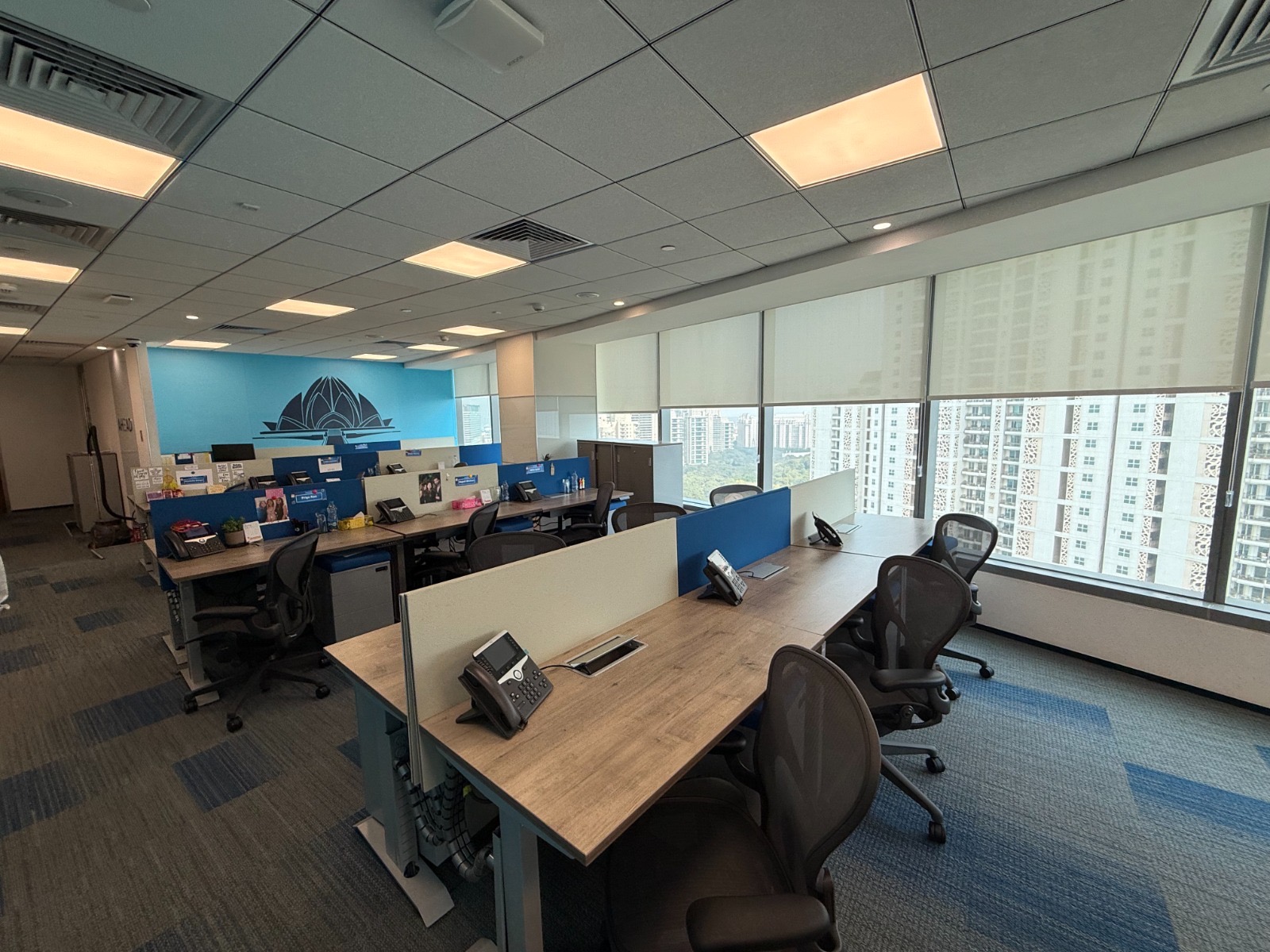
Marwaha sees flexibility as a reason people stay. He describes a workplace where “there is a lot of trust in the system”
Appointed in August 2025 after leadership roles at Unisys, NTT Data and Dell, Marwaha says AHEAD has spent the past year building its AI team. He describes an organisation of roughly 3,800 people globally, with relatively few management layers and access to senior leaders and US customers. AHEAD’s 2024 acquisition of CDI helped create an organisation with more than $3.7 billion in gross revenue and over 2,500 employees across 40 locations globally; Marwaha’s figure gives a sense of the company’s more recent scale. He also points to employee recognition: AHEAD announced renewed Great Place To Work certification in June.
Our conversation becomes more personal when we discuss where employees live. Marwaha describes people settling into their jobs and then asking to return to their hometowns. The company allows that flexibility, he says. Staff are expected to be prepared and present in their work; living in a particular technology hub is not the test. He credits founder and chief executive Daniel Adamany with supporting that approach. Marwaha sees flexibility as a reason people stay. He describes a workplace where “there is a lot of trust in the system”.
Odom says local leadership helps the company understand what matters to employees in each country. Marwaha participates in senior leadership discussions, bringing an Indian perspective to decisions. Jobs remain the harder question. Marwaha believes AI will eventually create more roles than it removes, comparing the uncertainty with earlier waves of computerisation. The employment forecast he recalls needs context. The World Economic Forum’s Future of Jobs Report 2025 projects 170 million jobs created and 92 million displaced by 2030. Those figures cover several economic and technological changes, not AI alone, and are projections rather than guarantees. That outlook cannot tell a displaced worker whether the next job will be nearby, pay as well or be accessible with their present skills. Employers have to give people enough time and support to learn.
Odom says AHEAD has not replaced employees with these technologies. Growth, he argues, is still outpacing the productivity gains AI provides. The company is teaching staff to use AI and develop agents that carry out tasks, with processes to manage and maintain them. It tests applications internally before taking the lessons to customers. “We like to be our own first best client,” he says.
The next stage in India is being considered in steps. The executives outline more space in Gurugram and additional Hyderabad capacity over roughly the next year. A Foundry operation could follow in the second half of 2027. Sales teams targeting Indian enterprises are a possibility for 2028 or 2029; the present focus is serving US clients internationally. They describe UK sales hiring and Netherlands hiring planned for next year.
More from Business




Comments
*Comments will be moderated