








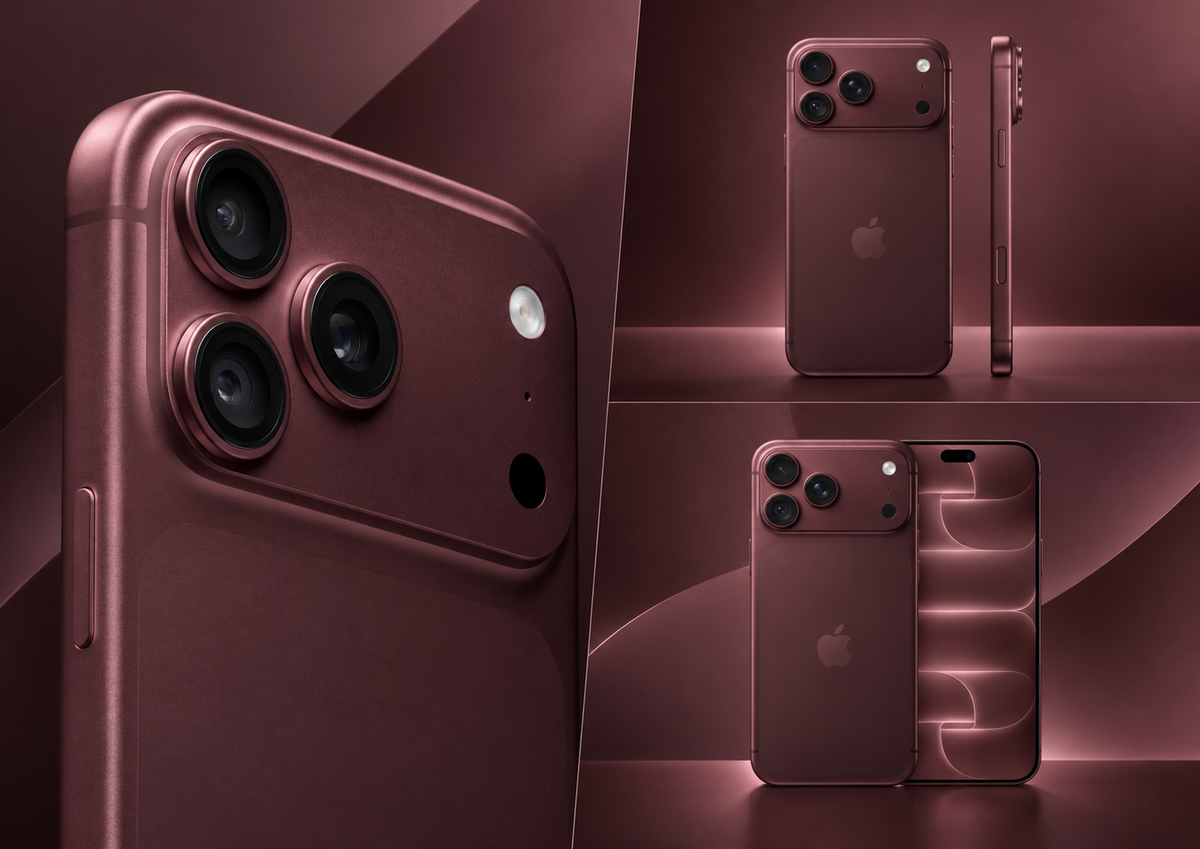
The iPhone 18 Pro Max is faster, lasts longer and finally gives serious photographers more say over the image. But it is also heavy, all-too-familiar and heavily priced
The longer battery life and new camera controls make a real difference, especially if you’re coming from an older iPhone. But at Rs 1,79,900 for 256 GB and 2TB of storage costing Rs 3,14,900, owners of last year’s model have a much harder decision
There comes a point with every mature piece of technology when improvement becomes increasingly harder to see. If you have been using the iPhone, you would know this: its screen was already excellent, the cameras were already very good, apps opened instantly and video looked superb. Battery anxiety had, by and large, disappeared. An iPhone, goes the argument, could survive a rainstorm, shoot a short film and edit it before you got home. So what exactly was Apple supposed to do next?
With the iPhone 18 Pro Max, the answer appears to be that the company wanted to make several things noticeably better, leave much of the rest alone and charge considerably more for the sheer privilege. It starts at Rs 1,79,900 for 256GB. The iPhone 18 Pro with 2TB of storage costs Rs 3,14,900, or roughly Rs 15,417 a month on a 24-month EMI. Step up to the 2TB iPhone 18 Pro Max and you are looking at a whopping Rs 3,29,900, which works out to about Rs 16,151 every month for two years. For many in India, that’s making a fairly serious monthly financial commitment.
Last year's iPhone 17 Pro Max began at Rs 1,49,900. That Rs 30, 000 rise explains almost everything that follows. The phone comes in Black, Silver, Glacier and a new, much-hyped Burgundy. The first three are very much in familiar Apple territory. Burgundy is the interesting one because it’s, well, new and unflashy, and on such a large phone it gives the back some character. If you are going to spend this much on a device whose basic shape has barely changed, it is nice to have at least one colour/finish that makes the new model look new.
The Pro Max remains a large object. Its 6.9-inch Super Retina XDR OLED screen is beautiful, bright and wonderfully smooth, with ProMotion running up to 120Hz. Peak outdoor brightness remains 3,000 nits. Apple has also reduced reflections and made the Dynamic Island smaller, partly by moving more of the Face ID hardware beneath the display. The smaller island is pleasant. I doubt anybody should spend Rs 1.8 lakh because of it. It sounds clichéd, but the size matters far more.
The phone is 163.4mm tall, 78mm wide and 8.75mm thick. More strikingly, it weighs 249g. Put a case on it and you are carrying a quarter of a kilogram around before you have slipped anything else into your pocket. Some people, including yours truly, adore a screen this large. And there are many reasons for that. Reading, for one, is easier. Two, photographs are more pleasurable to look at. Three, maps make more sense. Four, editing a picture or trimming video feels less cramped. Last but not the least, a film watched on a flight is genuinely more enjoyable than it is on a smaller phone.
There is a cost, though. One-handed use remains awkward, and prolonged reading in bed eventually turns into an exercise in wrist management. The Pro Max has always required its owner to accept that compromise. Apple has done nothing this year to disguise it. The reward, as it’s common knowledge now, is in the battery life.
The 18 Pro Max claimed it could go up to 43 hours of video playback, 38 hours of streamed video and 29 hours of typical use. I’ve not counted the hours so I’d only say that It can comfortably make it through a second day with average use. This, for some, may be the best reason to buy the Max.
People who spend their days flitting between meetings, airports, shoots, restaurants, galleries or reporting assignments, as I do, will understand why. A phone that reaches midnight with 12 per cent left creates a low-level irritation. A phone that reaches bedtime with half its battery intact removes the subject from your mind. That sort of improvement is more useful than many of the cleverer things Apple demonstrated on stage.
Charging has also become less tedious. The new Pro phones can reach 50 per cent in around 15 minutes with a compatible adapter. A five-minute charge can provide up to five hours of video playback on the Pro Max. MagSafe and Qi2 wireless charging go up to 25W. Apple still expects you to supply the appropriate charger though.
The other reason to look closely at the 18 Pro Max is its camera. For years, Apple has worked on the assumption that the smartest phone camera is the one that makes every difficult decision itself. Usually, that approach works brilliantly. Occasionally, you look at a photograph afterwards and wonder why the phone brightened the evening until it looked like afternoon.
The 18 Pro series gives some control back. Its 48MP Fusion Main camera now has a genuine variable aperture with four settings: f/1.48, f/1.8, f/2.8 and f/4. Apple has also brought shutter speed, white balance and other Pro controls into its own Camera app. The aperture control is more useful than the numbers initially suggest.
At f/1.48 the main camera allows in more light and can produce a shallower plane of focus. It helps when photographing someone across a dinner table, an object in poor light or a face against a busy background. At f/4, more of the scene remains sharp. That may be preferable when photographing an artwork, interiors, food, several people or anything where an aggressively blurred background becomes an annoyance rather than an aesthetic choice. However, it does not turn the iPhone into a Leica.
A smartphone sensor remains tiny beside the sensor in a serious camera, and computational photography continues to do a great deal of the work. The difference between aperture settings can sometimes be subtle. What matters more is that you can now make the choice yourself. I’d say that really has changed the character of the camera.
There is pleasure in slowing the shutter for movement at night rather than accepting whatever frozen, brightened image Apple’s software selects. A photographer can choose white balance instead of correcting it later. Manual focus is available when autofocus keeps grabbing the wrong part of a frame.
Apple has spent years advertising the iPhone as a professional camera while hiding many of the controls that professionals use. The 18 Pro Max finally relaxes that contradiction. The other cameras remain strong. There is a 48MP ultra-wide and a 48MP 4x telephoto. The system offers an optical-quality 8x option, macro photography and the usual range of computational tools. Video recording goes up to 4K Dolby Vision at 120fps, with ProRes RAW and Apple Log 2 available for users who know what to do with them.
For journalists and people working in media, the less glamorous camera addition may be one of the most interesting. Apple Reference Image can preserve authentication information with a photograph taken on the main camera, helping establish its provenance later. At a time when a perfectly plausible photograph can be generated without a camera having been anywhere near the scene, tools that help establish where an image came from are becoming practically useful. It will take widespread adoption before this becomes routine newsroom infrastructure. The direction makes sense.
The front camera is an 18MP Centre Stage unit that can reframe automatically and supports Dual Capture. It is very good at what front cameras have increasingly been used to do: calls, video, quick pieces to camera and the increasingly elaborate business of taking photographs of oneself. Beneath all this lies the A20 Pro chip. Apple’s current Pro phones have reached a strange point where discussing everyday speed feels almost meaningless. Messages do not require this much processing power. Nor does ordering dinner. Instagram was not waiting for a seven-core GPU.
The advantage becomes clearer under sustained load. Games, video exports, AI processing and other intensive work can use the extra performance, and Apple has enlarged the vapour-chamber cooling system to keep the chip running fast for longer. Review testing has found substantial performance gains over the A19 Pro, with improved thermal behaviour during demanding games. This is worth caring about even if you never play a game on your phone.
Heat damages the experience of using any small computer. A phone that spreads heat better is more comfortable, less likely to dim its display under load and more capable of maintaining performance during a long recording or export. It is one of those improvements you notice through the absence of an irritation. Siri AI, Apple's rebuilt assistant, has iOS 27 and is designed to understand more conversational language, use personal context and work with what is visible on screen. Apple Intelligence is threaded through the system and than presented as a separate chatbot.
Siri needed the attention. For years it has had the peculiar distinction of living on some of the world's most advanced consumer hardware while frequently struggling with perfectly ordinary requests. The new version appears considerably more useful. I would still hesitate to make Siri a reason to buy the Pro Max. Software keeps changing, AI features will continue to arrive on other Apple devices, and several functions depend on language, region and rollout schedules. I really believe that a phone should survive the excitement surrounding its launch software. The 18 Pro Max easily does. The question is whose money it deserves.
For an iPhone 17 Pro Max owner, the answer is difficult to make. You already have an excellent display, excellent cameras and strong battery life. While variable aperture is interesting and better battery life is welcome, if you ask me, neither makes last year’s phone obsolete. The same is largely true for the 16 Pro Max. People who use their phone heavily for photography or video will see more reason to move. Everyone else could keep their money.
Come from an iPhone 13 Pro Max or 14 Pro Max and the picture changes. Several years of improvements suddenly arrive together: brighter display, better cameras, USB-C, faster charging, substantially stronger battery performance, newer wireless hardware and an enormous jump in processing power. There is also a simpler question that Apple would rather buyers did not ask: do you actually need the Max?
The iPhone 18 Pro has the same A20 Pro chip and the same principal camera system in a body that is easier to carry. What the Max buys you is the 6.9-inch display and that remarkable battery. For someone who values those two things, the extra Rs 15,000 over the Pro is easier to understand than the overall Rs 1,79,900 price. At Rs 1,79,900 and higher, a phone has ceased to be an incidental purchase for most Indian buyers. Move up through the storage options and the 2TB Pro Max reaches Rs 3,29,900. For that money, it should feel exceptional.
The iPhone 18 Pro Max mostly does, but its weakness is peculiar: the previous iPhone was already so accomplished that Apple has made its own upgrade case difficult. Perhaps that is the fairest way to describe the 18 Pro Max. It is a phone I can find very little wrong with and several reasons not to buy. If your present iPhone is three or four years old, this is an enormous upgrade. If you spend much of your working day on your phone, shoot frequently and despise carrying a power bank, the Max has a purpose. If there is already a 16 Pro Max or 17 Pro Max in your pocket, keep walking. You’re good.
More from Business


Comments
*Comments will be moderated