








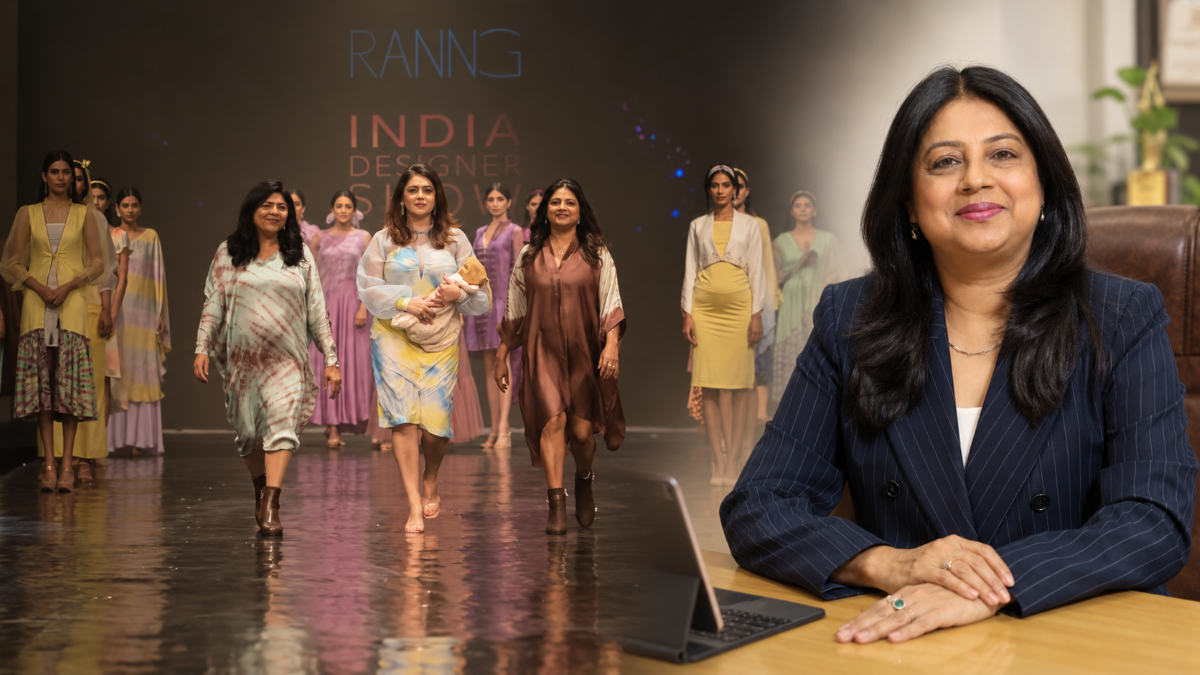
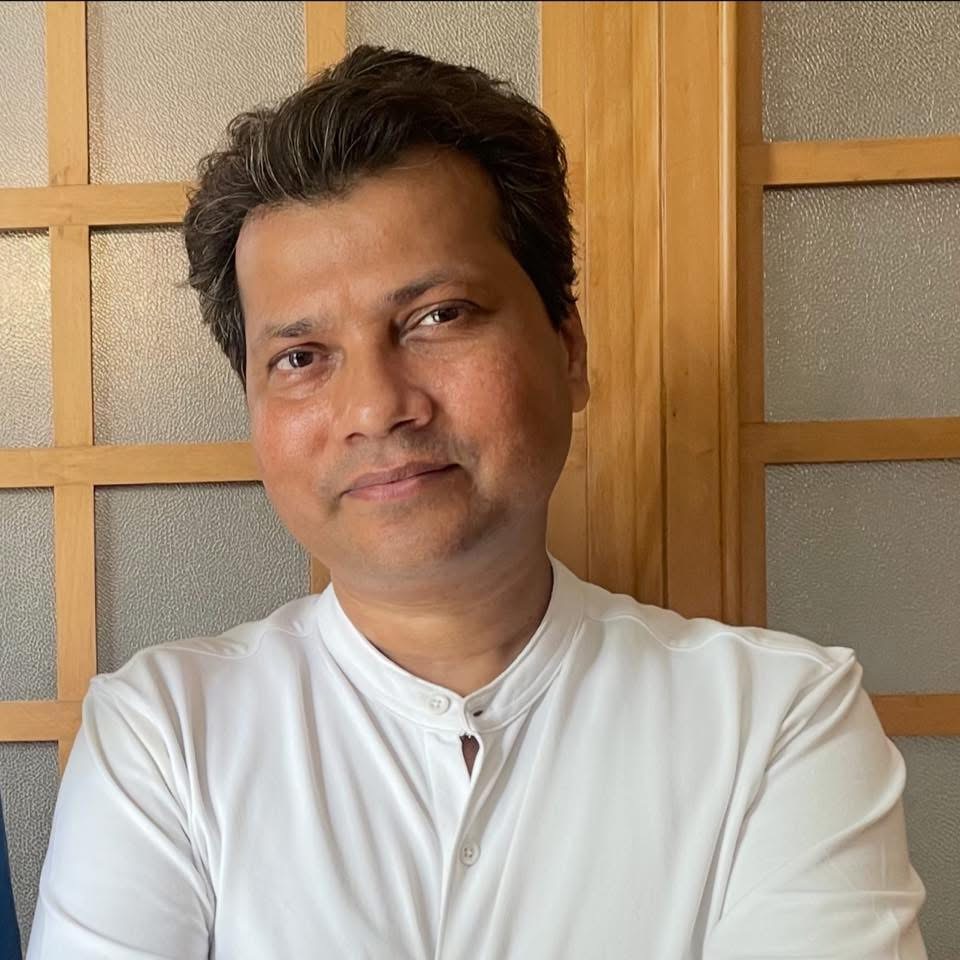
From a small design studio in 1994 to a workwear business producing at scale for aviation, hospitality, healthcare and industry, Ranng has travelled a long way. But founder and designer Vandna Khera says the question she still begins with is: who is going to wear this, and what will their day actually be like?
When Gurgaon-based Vandna Khera began Ranng in 1994, she had just finished college. She knew how to design clothes. What she did not yet know was how to take an idea tossing around vaguely in somebody else’s head and turn it into something that person could actually wear. There were no digital mock-ups to speed things along. A customer would describe what she wanted; Khera would sit with pencil and paper, sketching, changing, and drawing again.
Sometimes, the real work was listening than drawing. “Every person has a different body type, preference and personality,” she says. The same design, she learnt very early, could not simply be imposed on everyone. That sounds obvious until you consider the business Ranng has become.
What began as a design house and boutique now operates in a very different world: bulk manufacturing, uniforms, institutional clients, international markets, technical fabrics, safety standards, sustainability targets and supply-chain traceability. Ranng Global works across aviation, hospitality, healthcare, retail, logistics and manufacturing, while Ranng Label keeps Khera connected to the more personal world of fashion and individual customers. But she insists that the old boutique instinct has survived the scale. “We start by understanding the person who will eventually wear the garment,” she says.
That explains much of Ranng. Uniforms are usually noticed only when something is wrong with them. A jacket pulls when you reach forward. A waistband becomes unbearable six hours into a shift. A fabric looks smart in an air-conditioned fitting room but is miserable on a humid afternoon. A shirt designed for a standing body does not work for someone seated for long periods. Management may approve a uniform in ten minutes; an employee may have to live in it for 12 hours. Khera thinks about that difference.
She recalls a recent order for more than 10,000 employees. The client had already supplied the design. Ranng worked out sizing that covered roughly 95 per cent of the workforce and made individual sizes for the remainder. On paper, the job had been done. Then the clothes went out into the real world.
Feedback started coming in. Certain areas of the garment became uncomfortable after long hours. Instead of treating the complaints as an inconvenience, the team went back to the construction. They altered the fit and the internal build of the garment without changing its outward appearance or disturbing the client’s visual identity. The revised version worked better. It is a useful example because it shows how far uniform design can be from simply choosing a colour and embroidering a logo on a shirt.
A hotel worker, nurse, airline employee and warehouse worker may all be “in uniform”, but their clothes are being asked to do completely different jobs. Even within one sector, geography changes everything.
A hotel in Rajasthan, Khera points out, cannot be dressed according to exactly the same fabric logic as a resort in the hills or a property beside the sea. Aviation is more complicated still: a crew member can leave one climate and arrive in another within hours. The fabric has to survive that movement while remaining presentable, breathable and comfortable.
Before a large order enters production, Ranng fixes the fabric, sizing, fit and construction standards, then carries them through manufacturing and quality control. The uniform must carry a company’s identity, Khera says, but it must also survive the employee’s working day.
Ranng says it can now produce more than 70,000 garments a month. Scale of that kind can easily push clothing towards sameness, which is where Khera’s continued involvement with Ranng Label comes in. “I am a fashion designer first,” she says.
The label allows her to keep designing for individuals, dealing with different bodies and personal choices rather than abstract size charts. Her ambition is to take Ranng Label to major Tier 1 and Tier 2 cities, while growing Ranng Global into a trusted workwear name in India and overseas. She sees the two businesses feeding each other: the label stays close to actual people and fit; the manufacturing business learns how to carry those lessons into thousands of garments.
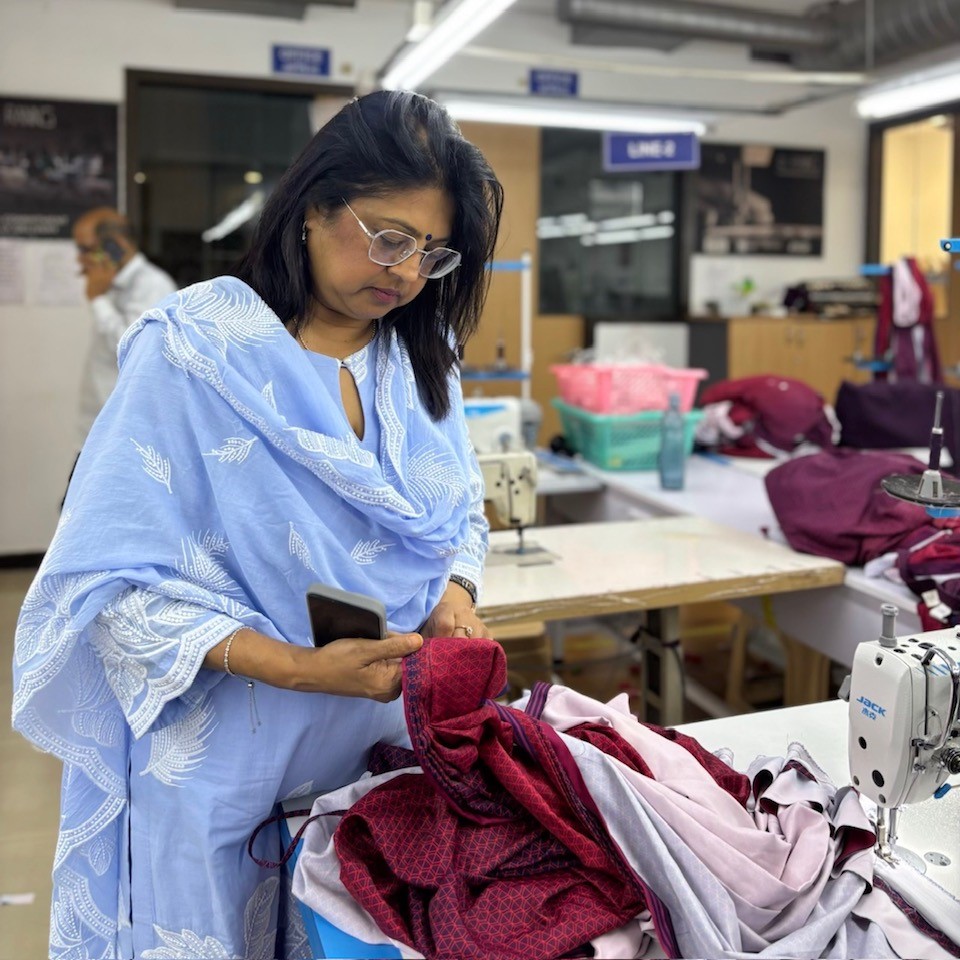
Vandna Khera’s ambition is to take Ranng Label to major Tier 1 and Tier 2 cities, while growing Ranng Global into a trusted workwear name in India and overseas.
Nowhere is that attention to the body clearer than in Ranng’s work on adaptive clothing. For Khera, this did not begin as a fashionable conversation around inclusive design. It grew out of years of noticing how people’s clothing requirements change. She has designed around pregnancy and nursing, temporary injury and changes in mobility. Then the subject became deeply personal through her mother, who is now 93.
Khera has effectively redesigned her mother’s wardrobe several times over the course of her life. She wore saris into her sixties. Her clothes changed again in her seventies and eighties as movement became harder. Now, in her nineties and largely confined to bed, the requirements are different once more.
Watching that progression made Khera think about something the fashion industry often avoids: clothes are usually designed around an imagined healthy, mobile, standing body. Real bodies do not remain unchanged. A conventional button can become a daily obstacle. A badly placed seam can matter enormously to someone who spends much of the day sitting or lying down. A garment that requires assistance to put on can quietly take away a little independence.
Magnetic closures are one answer Ranng has explored. Khera talks about them not as ‘medical devices’ but as good design. If a person who struggles with buttons can dress without help, the benefit is obvious. Then she laughs about making a magnetic shirt for her son, who has no mobility problem at all. He is simply impatient with buttons and loves it. That, for her, is the larger point. Adaptive design does not necessarily need to be in a special corner labelled “adaptive”. A useful feature can be useful to everybody.
There is another question hanging over any company producing clothing at volume: what happens to all the material? Ranng talks extensively about sustainability, but Khera is aware that the word has become very easy for businesses to use. Her answer is measurement.
Garment cutting creates waste. Ranng says it separates that material rather than sending all of it to landfill and works with partners who reuse or recycle it. Over the past two years, Khera says, roughly 6,000 kilograms of textile waste has been diverted through these channels. The company also maintains a collection point where unwanted clothing can be donated into its recycling network. The harder part is what happens after a uniform itself has finished its working life.
Uniforms are an interesting waste problem because companies replace large quantities at once. They may also carry logos and identifiers that make casual redistribution difficult. Ranng now wants to work more closely with its institutional clients on what those garments become next.
Khera also knows that good intentions are not the same as accountable numbers. Ranng is preparing its first ESG report for FY 2026–27, intended to track consumption, waste, diversion from landfill and social and environmental performance more systematically. “For us, sustainability needs to be measurable,” she says. That demand for evidence is becoming commercially important too.
Europe is moving towards far greater product traceability, including systems such as the Digital Product Passport. For exporters, the garment may increasingly need a history: where its materials came from, what went into making it and what resources were consumed along the way. Ranng is not claiming to have solved this already. “We are not fully DPP-enabled today,” Khera says.
Instead, the company is strengthening audits and examining how information around materials, consumption and manufacturing resources can be collected. The complication is that a garment manufacturer cannot create traceability alone. Fabric mills and other suppliers must also be able to provide dependable information.
Khera expects costs during the transition, but she also sees an opening for Indian manufacturers that can get it right. Reliable information can make a supplier more trustworthy, particularly in markets where buyers increasingly want evidence rather than assurances.
Trust is a word that appears repeatedly in Ranng’s own description of itself. Its stated ambition is to become an end-to-end textile solutions company rather than simply a factory receiving orders. Its leadership includes CEO Akshay Batra, co-founder and chief administrative officer Seema Batra, EU operations officer Tamer Osman and Khera herself as founder, chief designer and curation officer. For Khera, though, growth seems to come back to the lesson she learnt before any of those titles existed. The garment has to work for the person inside it.
That may mean changing a seam after 10,000 uniforms have already gone into use. It may mean choosing a different cloth for Rajasthan and the hills. It may mean replacing a fiddly button for a 93-year-old woman. It may mean admitting that sustainability is not meaningful until somebody starts counting the waste.
Thirty-two years after those early pencil sketches, Khera is dealing with factories, international clients and a far more complicated apparel business. But her starting point has hardly changed. First, listen to the person who has to wear the clothes. Then design.
More from Business






Comments
*Comments will be moderated