








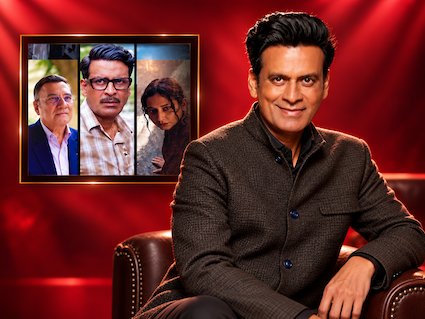

In Last Man in Tower, Manoj Bajpayee plays a retired teacher who becomes the odd man out when he refuses to sell his home. It is the kind of difficult not-always-likeable character the actor has returned to throughout a career that has taken him from Bhiku Mhatre and Professor Siras to Srikant Tiwari, without ever quite settling into one mould.
In Last Man in Tower, which is releasing in theatres on September 11, Manoj Bajpayee plays Masterji, an ageing retired teacher who has lived long enough in a Mumbai housing society to become part of its everyday life. He teaches the children, helps out where he can, knows his neighbours and, like many older people who have lived in one place for decades, seems to belong not just to his flat but to the building itself. Then a developer comes calling.
The residents of Vishram Society are offered the sort of money that can change lives. There are new flats to dream about, more space, newer buildings, perhaps a more comfortable future. Most of them are ready to take the deal. Masterji is not. He refuses to sell, and very quickly the neighbour everybody knew becomes the man standing between everybody else and what they want. It is easy to guess why Bajpayee was drawn to him.
Masterji is not written as an uncomplicated old hero fighting greedy builders. He can be stubborn and difficult. He is convinced of his position and increasingly alone in it. In some interviews, Bajpayee has said that he and director Ben Rekhi were quite willing to take the character to a place where the audience might actually find him annoying. “If that happens, it’s a win for all of us,” he said recently.
That makes the film, adapted from Aravind Adiga’s 2011 novel, more interesting than a straightforward battle between one principled man and a changing city. Boman Irani plays the developer; Divya Dutta is among the residents whose relationship with Masterji changes as the offer begins to divide the society. What is at stake is money and property, but also something less easily measured: what happens to people who have spent years living together when suddenly everybody has a different price on the future.
Bajpayee himself has spoken about the film in those terms. He has watched cities change, old neighbourhoods disappear and familiar streets turn into flyovers and towers. Bigger houses are supposed to mean better lives. He is not entirely convinced. “I wonder, as we gain space, what are we losing? Relationships, humanity,” he told an interviewer.
It is a thought that suits him. Bajpayee has spent much of his career playing people caught between what they want and what life has given them. His own journey took its share of unexpected turns. He grew up in Belwa in Bihar’s West Champaran district, in a farming family, and came to Delhi as a teenager with acting already firmly in his head. He studied at Delhi University, did theatre and desperately wanted to get into the National School of Drama (NSD). It did not happen. Bajpayee has spoken in recent years about being rejected four times by NSD, describing his eventual relationship with the institution almost in terms of Eklavya and Dronacharya: the school that never admitted him nevertheless remained an important presence in his imagination.
What mattered more in the immediate years was theatre. He worked with Barry John, spent long days rehearsing, teaching and performing, and became known in Delhi theatre circles before the movies really knew what to do with him. The move to Mumbai did not immediately solve anything. There were small parts, television and the usual humiliations that come with being a young actor looking for work. Shekhar Kapur’s Bandit Queen gave him an early film appearance, but it would take a few more years before the country really noticed him.
It was his role as Bhiku Mhatre that proved to be a game-changer. So much so that it is difficult now to separate Satya from Bajpayee. Ram Gopal Varma’s 1998 film had several memorable performances, but Bhiku walked away with the film’s most unruly energy. He was a gangster, but Bajpayee did not play him like the gangsters Hindi cinema was used to. Bhiku was dangerous and funny, loving and insecure, full of vanity, anger and sudden childishness. He could threaten somebody in one scene and appear almost ridiculous in the next.
Bajpayee won a National Film Award for the performance, but perhaps the more important thing was that Bhiku did not turn into a template for the rest of his career. He could easily have spent the next few years being offered different versions of the same volatile gangster. Instead he came up next with Shool, in which he played Samar Pratap Singh, a policeman trying to remain honest in a system designed to wear him down. The tightly wound Kaun, the bruised Dil Pe Mat Le Yaar!!, Shyam Benegal’s Zubeidaa, Rakeysh Omprakash Mehra’s Aks and Chandraprakash Dwivedi’s Pinjar came out in the years that followed.
Not all the films worked. There were also long stretches when Bajpayee seemed strangely underused. Hindi cinema in the 2000s did not always know where to place an actor like him. He was too individual to become the standard supporting actor, but he was not being built as a conventional Hindi-film hero either. There were roles taken because an actor has to work, films that disappeared, and years far less celebrated than the ones before and after them. That part is important to his story. Bajpayee’s career looks wonderfully inevitable only in retrospect. Living through it was another matter.
Gangs of Wasseypur in 2012 was one of the films that brought him roaring back into popular conversation. Sardar Khan could have been another Bhiku Mhatre, but Bajpayee found an entirely different man. Sardar is boastful, lustful and often absurd. He wants power, revenge, women and respect, frequently all at once. Bajpayee understood that a man like that becomes more dangerous, and more believable, when the actor is not frightened of making him look foolish. Then, a few years later, he won our hearts all over again as Professor Ramchandra Siras in Hansal Mehta’s Aligarh. It remains one of those performances worth returning to just to see how little an actor sometimes needs to do.
Siras, a professor at Aligarh Muslim University, is subjected to public humiliation after his private life is invaded and his sexuality exposed. Bajpayee does not turn his grief into a series of big scenes. He lets it settle into the body. Siras seems increasingly unsure of how much space he is allowed to occupy. He smiles hesitantly, sits by himself, listens to music, talks about poetry. Even his silences have a kind of shyness to them. The performance is moving because Bajpayee never asks you to admire him for performing it.
That ability to juggle between men as different as Siras and Sardar Khan has been one of his great strengths. Put them beside the lonely policeman of Bhonsle, the trapped man of Gali Guleiyan, Man Singh in Sonchiriya, the desperate migrant father of Joram or the lawyer P.C. Solanki of Sirf Ek Bandaa Kaafi Hai, and there is very little obvious similarity between them. Except perhaps that none arrives neatly packaged as a “Manoj Bajpayee role”. For a younger generation of viewers, however, Bajpayee may first be Srikant Tiwari.
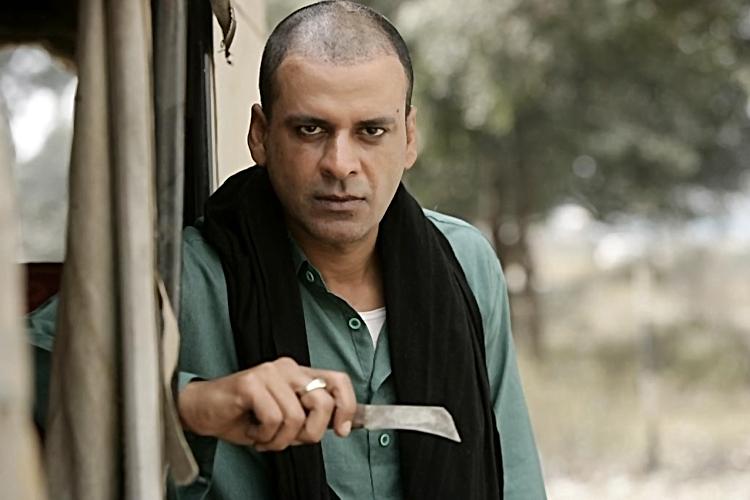
As Sardar Khan in Gangs of Wasseypur
The Family Man (Amazon Prime) changed the size of his audience when it arrived in 2019. Srikant is an intelligence officer dealing with serious threats to the country, but much of the pleasure of the series comes from watching him deal with the considerably less glamorous dangers waiting at home. His children are irritated with him. His marriage is strained. Money is an issue. He lies to his family about work and then has to remember which lie he told. Bajpayee plays Srikant as a man permanently running slightly behind his own life.
That was the joke and the charm of the character. He could be chasing terrorists and still look like somebody worried about getting home before another domestic argument began. By the time the third season arrived in November 2025, The Family Man had become one of Bajpayee’s biggest popular successes, and conversations around a fourth season are due to begin.
Streaming also gave him the freedom to flit with enviable ease between very different worlds; Gulmohar, a tender family drama; the strange black comedy of Killer Soup; the bleakness of Joram; and Despatch, in which he plays a crime journalist far removed from the upright men actors of his stature are often expected to choose. More recently have come Inspector Zende, Jugnuma (one of the best films to have come out in recent years) and Governor.
Streaming also gave him the freedom to flit with enviable ease between very different worlds; Gulmohar, a tender family drama; the strange black comedy of Killer Soup; the bleakness of Joram; and Despatch, in which he plays a crime journalist far removed from the upright men actors of his stature are often expected to choose. More recently have come Inspector Zende, Jugnuma (one of the best films to have come out in recent years) and Governor.
The sheer volume means the results can be uneven. That is true, too. Not every Manoj Bajpayee film is a great film, and not every role adds something substantial to what he has already done. But there is something refreshingly unprecious about that. At a stage when many actors begin guarding their image, working less and repeating what audiences already like about them, Bajpayee still seems willing to take the risk of an odd film, a small film, a character who might not be particularly attractive, or simply something he has not tried before.
Also read: How Curry Barker’s Obsession finds its real victim in the girl trapped inside a lonely boy’s wish
Which brings him back to Masterji. At 57, Bajpayee does not need to convince anyone that he can carry a film on his shoulders all alone. What is more interesting is that he still wants to play a man the audience may spend half the film arguing with. And as Last Man in Tower prepares for release, he has already moved to another part that comes with a very different burden. Bajpayee is now shooting in Lucknow for Sudhir Mishra’s next film, in which he plays Mahatma Gandhi. Gandhi and My Mother is the working title; the story centres on a 21-day period around Independence and also features Divya Dutta and Saurabh Shukla.
Gandhi brings another problem for an actor: everybody already knows what he is supposed to look and sound like. The temptation with such roles is to get the physical imitation right and hope the rest follows. Bajpayee’s career suggests he will be looking somewhere else. After all, Bhiku Mhatre was never just the gangster. Sardar Khan was never simply the bad man. Professor Siras was more than his tragedy. Srikant Tiwari would be much less interesting if he were only a spy. And Masterji would be a duller character if he were merely the good old man standing up to a builder.
Bajpayee seems happiest when there is something in a person that does not quite add up. Perhaps that is why, after nearly three decades of being famous, he remains surprisingly hard to reduce to a type. We know the face now. We know the Bihar-to-Delhi-to-Mumbai story. Bhiku Mhatre has long since entered Hindi-film folklore. Srikant Tiwari has made him familiar to an entirely different audience. But put him in a room as a lonely professor, an exhausted father, an ageing constable, a gangster or an obstinate retired schoolteacher, and all that history soon falls away. You begin watching the man in front of you. For an actor who has now been watched for more than 30 years, that may still be the most interesting thing about Manoj Bajpayee; he may have become a familiar face, but he has managed, remarkably, not to become a fixed one.
Sirf Ek Bandaa Kaafi Hai seems to fit Bajpayee particularly well. As P.C. Solanki, the ordinary sessions-court lawyer taking on a far more powerful adversary, Bajpayee had no starry props to fall back on. Much of the film rested on one man talking, listening, arguing and holding his ground in a courtroom. It was a role that understood exactly what Bajpayee can do with an ordinary man placed in an extraordinary situation, and he won the Filmfare OTT Award for the performance. There is a nice coincidence in the title, too. In the crowded streaming space, where actors and shows arrive by the dozen, Bajpayee has become that rare presence who can make you stop scrolling because his name is on something. For Manoj Bajpayee on OTT, it turns out, ek hi bandaa kaafi hai.
More from Culture



Comments
*Comments will be moderated