








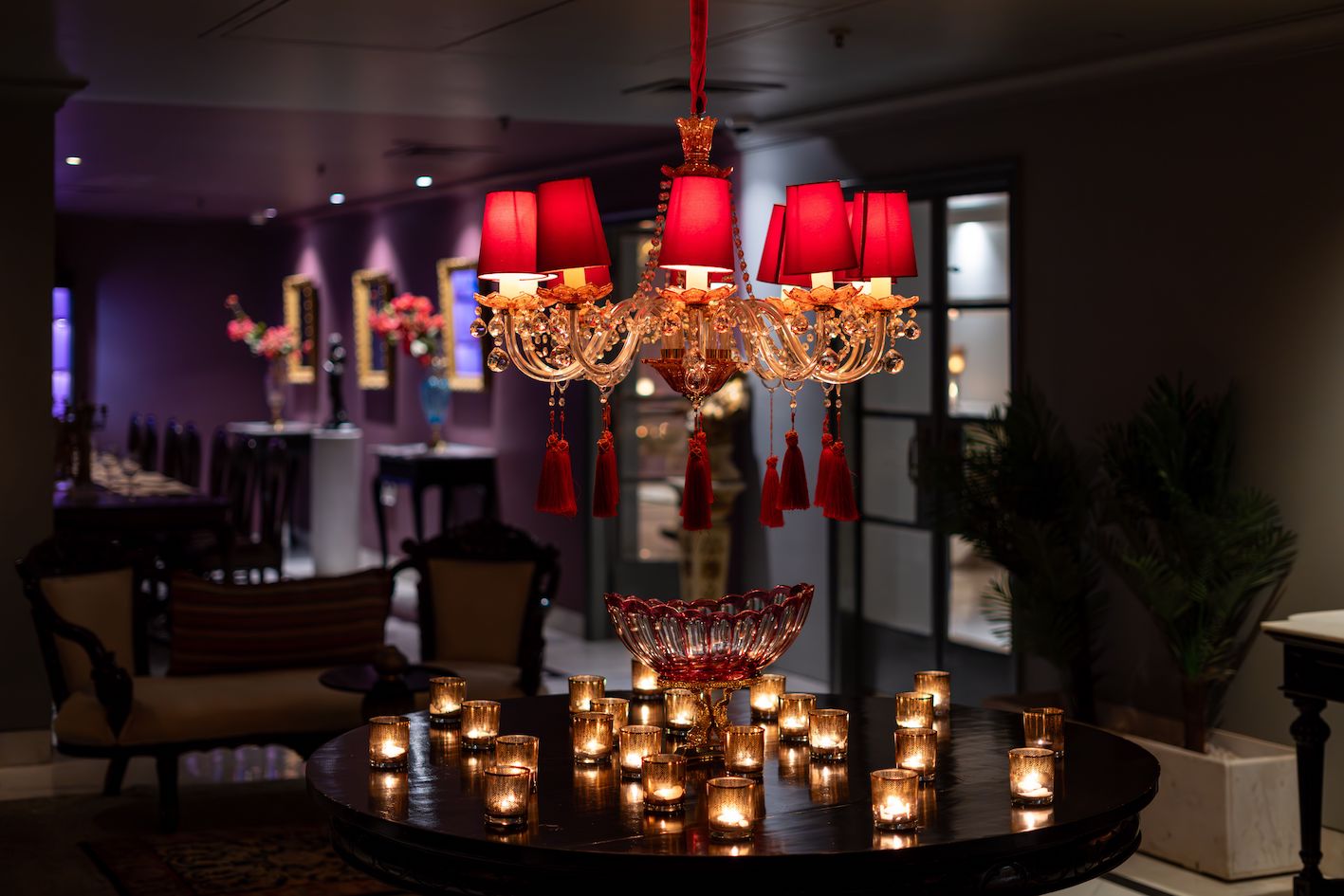
Drawing on nearly four decades at Mr. Light Illumination, a lighting designer reflects on how fixtures from around the world have changed the way we see and use familiar spaces in Indian homes.
India has always had a rich, emotional relationship with light. Think of the first light of morning falling into a courtyard. The flicker of a diya set down at a threshold. Sunlight breaking through the geometry of a jaali, throwing patterns across a stone floor that shift with the hour. The soft gold of a verandah at dusk, when a family gathers without quite meaning to. An entire home lit up during Diwali, every corner declaring itself alive. We have lived inside light in this country, worshipped by its glow, and timed our days and our festivals around it. But for the longest time, there was a real gap between living with light and designing with it, and closing that gap has quietly become one of the more interesting design shifts in Indian homes over the last few decades.
For most of my working life, lighting design as a discipline barely existed in the Indian imagination. A room was either bright enough or it wasn’t. You installed a central fixture, added a few supporting points if the room demanded it, and considered the problem solved. Light was infrastructure. It served architecture, but it did not speak to it. Meanwhile, India’s design vocabulary was steadily looking outward, toward Italian furniture, European finishes, global materials and craftsmanship refined over centuries in very different climates and cultures. Lighting, curiously, lagged behind. It was one of the last aspects of the home to be treated as a design decision rather than an electrical one, and closing that gap is genuinely what India needed.
I have watched this shift unfold, slowly and then all at once. The question in Indian homes has moved from ‘How much light do we need?’ to something far more interesting. ‘What should the light make us notice?’ Light, done well, does not simply illuminate a room. It creates hierarchy. It directs the eye toward a piece of art and away from a service duct. It reveals the grain in a stretch of teak or the texture of a lime-plastered wall. It can make a dining table feel like the most intimate place in the house or turn a garden into something that exists just as fully at night as it does at noon. It can frame a staircase the way a spotlight frames a performer.
This is not decoration. This is architecture, extended into the hours after sunset. I often tell young designers that the real evolution in lighting has nothing to do with making spaces brighter. It is about making them more intentional. A far richer international vocabulary of layers, colour temperatures, materials and controls gave Indian designers tools they simply did not have access to before. But the vocabulary was never the destination. What excites me far more is watching how it gets interpreted through Indian proportions, Indian materials, Indian rituals of gathering and Indian light.
India has embraced global design with genuine enthusiasm across almost every category. Italian furniture sits comfortably in Mumbai apartments. European kitchen systems have become aspirational in a dozen cities. Scandinavian forms, international textiles and contemporary art from every continent have all found a home here, absorbed into an increasingly cosmopolitan Indian sensibility. But lighting behaves differently from all of these. A sofa, a kitchen and a painting are things you put in a room. Light is not an object you place in a room. It is the medium through which every other object in that room is experienced. Change the light, and you change how the marble reads, how the art is seen, how a family looks to one another across a table at nine in the evening. That is what makes lighting design such a different and, in some ways, more demanding discipline than the rest.
So when an international fixture arrives in India, designed in a studio in Milan or Antwerp, shaped by a European sense of proportion and restraint, it does not simply sit in an Indian home as an imported object. It begins an entirely new life the moment it is switched on. It meets Indian marble, quarried and polished a certain way. It meets craftsmanship passed down through generations of artisans. It meets Indian art and architecture, as well as the rituals and habits of an Indian home, from lighting a lamp during a puja to creating the warmth expected at a wedding. It meets the particular way an Indian family gathers, argues, celebrates and unwinds under a single roof. The most meaningful part of this work has never really been about distributing international lighting. It has been about translating it, taking a design language born in one context and helping it find honest, resonant expression in another. That is the part of the job I care about most, and it is what nearly four decades at Mr. Light have taught me firsthand.
India has never been a passive recipient of global design. We have our own visual language, one shaped by centuries of ornament, geometry, climate and craft. International lighting cannot simply arrive here and dictate how a home should look or feel. It has to listen first. It has to adapt. It has to be willing to be reinterpreted by the very culture it is entering. And when that happens, when a Belgian architectural system finds itself illuminating a haveli-inspired courtyard, or an Italian decorative piece hangs above a dining table set for a Diwali feast, something genuinely new is created. Not an imported aesthetic. Not a diluted one either. What emerges belongs distinctly to this moment in Indian design, with global craft filtered through an unmistakably Indian sensibility.
That, to me, is the real story behind these four decades of change. It lies in the slow, ongoing education of an entire design culture in how to see with light. When global lighting truly listens to India, its origins matter less. It simply becomes light, doing what it has always done best in this country, making a space feel like home.
More from Culture





Comments
*Comments will be moderated