








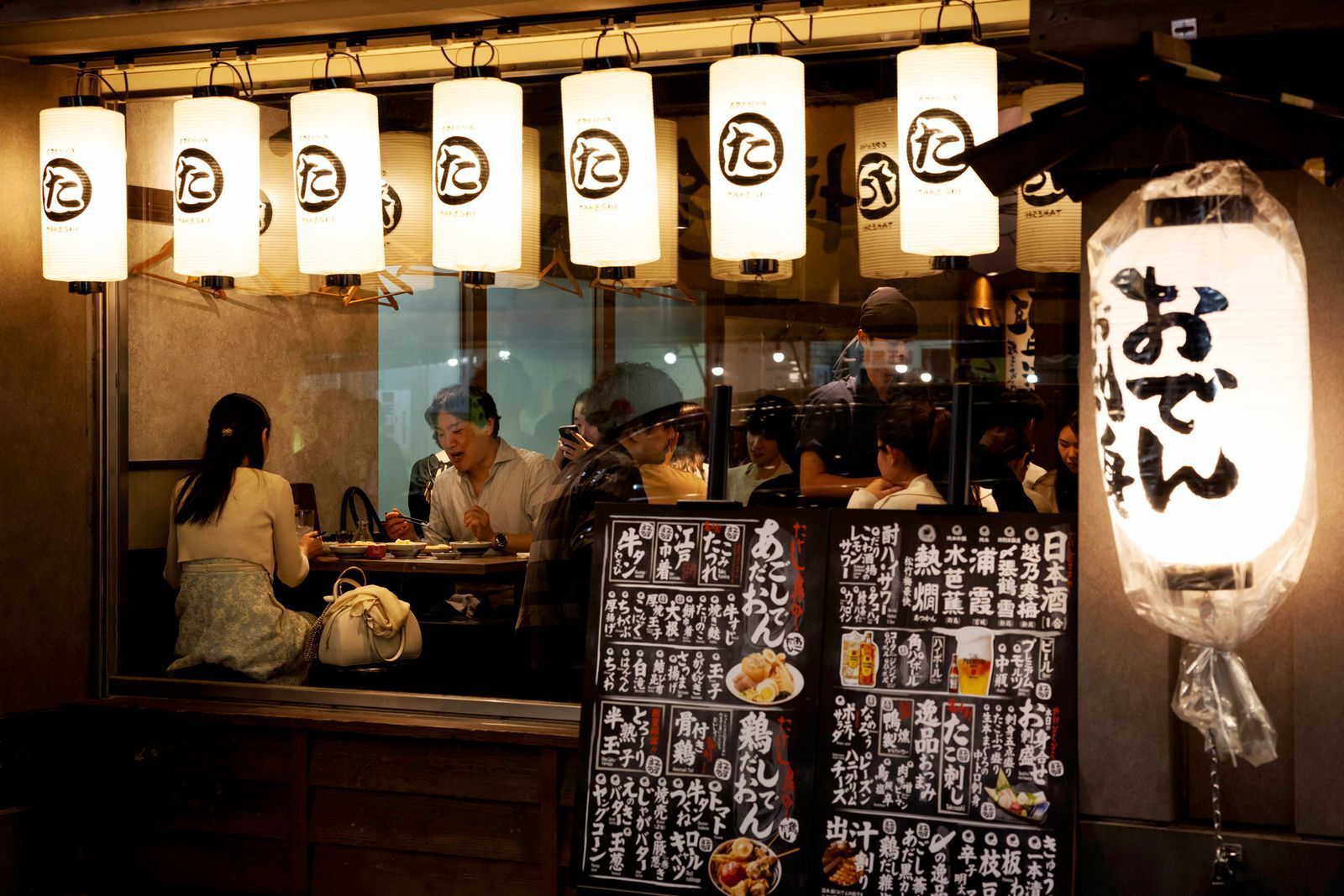
The izakaya is where the Japanese public self-sheds its armour. It’s a kind of twilight theatre, where you play neither your professional role nor your private one, but something softer, fuzzier. More honest. Think of it as Japan’s emotional speakeasy. All photos courtesy of Sonder/Niranjana H.

Between skewers, sake, and strangers’ confessions, Tokyo’s back-alley pubs reveal a softer Japan, where stories are shared, names are forgotten, and for a few hours, everyone belongs. Sonder’s Izakaya Night Trail curates just this kind of immersive unravelling.
Somewhere between the third glass of highball and the sixth stick of blistered chicken skin, I realised I was no longer a tourist in the land of the Rising Sun. I was in an izakaya in Shinjuku. The kind that announces itself not with signage, but with the soft hush of noren curtains and the unmistakable scent of grilled things. The kind that seats twelve if you’re generous, and where the chef doesn’t speak English (or anything for that matter), but the universal dialect of flame, sake and fried fish (or tofu) is more than enough.
The man next to me, a salaryman with a loosened tie and a face like a sleepy Akita, poured me another drink. We hadn’t exchanged names, but we’d already shared childhood memories, theories about unrequited love, and a silent agreement that everything tastes better with yuzu kosho. This is an antithesis to the regular Japanese introduction where everything is done in the right order.
This, I would come to learn, was the quiet magic of the izakaya. Here, formalities are forgotten. We don’t colour inside the lines. Unlike the polished restraint of a tea ceremony or the performative camaraderie of a karaoke bar, the izakaya is where the Japanese public self-sheds its armour. It’s a kind of twilight theatre, where you play neither your professional role nor your private one, but something softer, fuzzier. More honest. Think of it as Japan’s emotional speakeasy.
Lovers of Netflix’s Midnight Diner would get this emotion. The show is basically an izakaya with a pause button. People walk in with a craving, but it’s rarely about the food. it’s about something they’ve swallowed for too long. The “Master” barely speaks, but he sees everything. It’s slow, strange, tender… like life, if it came with pickled plum and a closing theme. That’s the thing about izakayas. You never walk in expecting to be known. But in the clatter and comfort, you catch someone’s story in mid-air. And just for a second, you hold it like it’s your own.
.jpg)
Izakayas are tucked in alleys that have no names, but everyone knows the way.
These are not pubs in the Western sense, nor are they restaurants. They’re interzones. Tucked in alleys that have no names, but everyone knows the way. Part kitchen, part confession booth, part memory palace. The seating is cramped. The lighting is moody. The menus are written in calligraphic shorthand or in unreckonable kanji on pieces of parchment that resemble fortune cookies for grown-ups. Omurice, tsukune, nasu dengaku. You order not to eat but to linger. To nibble and nurse your feelings.
In India, we are taught that intimacy is either familial or romantic. That strangers are to be avoided or negotiated with. But here, elbow-to-elbow with a crowd I did not know an hour ago, I learned a different kind of closeness. One unburdened by context. The izakaya grants you a temporary reprieve from your autobiography. You are not your job, or your gender, or your accent. You are just another soul seeking warmth.
There’s a certain rhythm to the night. It begins with the clatter of chopsticks and the polite first sips of warm sake. The early crowd is subdued, tired from work, speaking in office tones. But then someone orders a second round, a plate of okonomiyaki or tempura arrives like a punctuation mark, and suddenly the room softens.
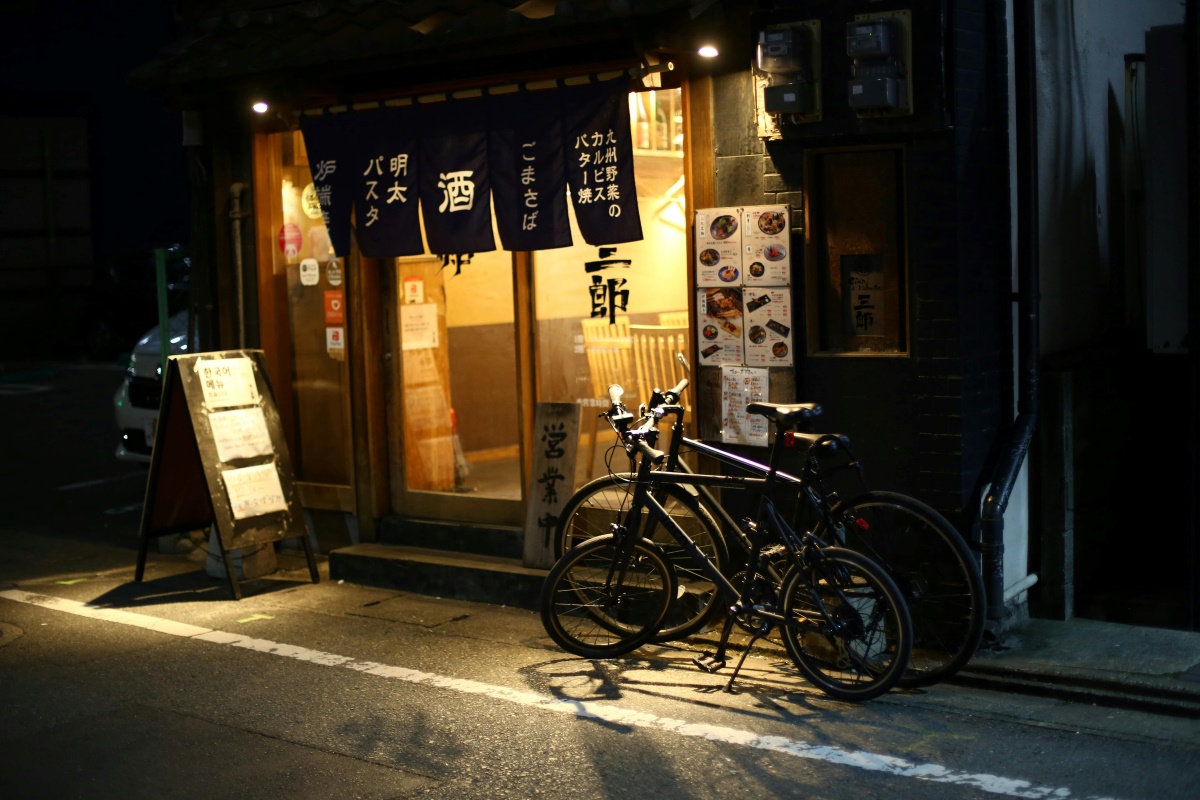
The izakaya grants you a temporary reprieve from your autobiography. You are not your job, or your gender, or your accent. You are just another soul seeking warmth.
Laughter, once cautious, becomes generous. Jokes in foreign languages unfold with the slow ease of steamed clams. Strangers lean in, not out. The air grows smoky with grilled negi, the yakitori master fans the charcoal like a priest blessing the congregation, and somewhere between last trains and lost inhibitions, a collective amnesia sets in. What was said here stays here. Not because it is forbidden, but because it is sacred.
It reminded me of the addas back home in Kolkata, those sprawling, slow-cooked conversations over chai and cigarette smoke. Or the lingering after-dinners in a South Delhi drawing room, where stories pile up like mango peels. But in India, conviviality is often loud. It thrives on opinion, argument, interruption. It demands spectacle. The izakaya, in contrast, is built on the poetics of pause.
Here, silences are not awkward, they’re fermented. Pickled. You can sit beside someone for thirty minutes in silence, and then, midway through a skewer of grilled liver they’ll whisper a heartbreak so precise, so delicately phrased, it feels like a haiku disguised as a wound. There is no pressure to respond. Just nod. Sip. Pass the soy sauce.
It’s this choreography of emotional minimalism that fascinates me. In a country known for social reserve, the izakaya is a pressure valve. But it’s also a mirror. It reflects how a society processes intimacy in layers, with ceremony, through food.
.jpg)
The menus are written in calligraphic shorthand or in unreckonable kanji on pieces of parchment that resemble fortune cookies for grown-ups. Omurice, tsukune, nasu dengaku.
One night, I followed a local friend to an izakaya under a train track in Setagaya. The whole place trembled every time the yellow line rumbled overhead, like it was exhaling. We sat on cramped tables facing a counter carved with many initials, drinking sour plum Umeshu, watching a group of old punk musicians trade war stories about the 1990s.
A woman next to me, a stranger again, told me about her divorce, her pet turtle, and the onigiri recipe her grandmother used to make. She showed me a photo of the turtle. I showed her the tattoo of the split red-and-green cover from Haruki Murakami’s Norwegian Wood, a quiet promise I’d inked into my skin, to never again abandon myself for someone else. We raised our glasses to small salvations.
She bowed before she left, thanking me for listening. I wanted to say it was I who should be grateful, but the words felt too loud for the moment. And this is where sonder floats to the surface.
.jpg)
In a country known for social reserve, the izakaya is a pressure valve. But it’s also a mirror. It reflects how a society processes intimacy in layers, with ceremony, through food.
That gentle realisation that every person you meet, every hunched salaryman, every plum-umeshu-drinking divorcee, every lone foreigner on a stool is living a life as vivid and flickering as your own. Their heartbreaks, too, are warmed by grilled skewers. Their memories, too, take refuge in the haze of miso and mirin.
Izakayas are not just places to eat and drink. They’re places to witness to feel the hum of a shared human script, even when the lines are in another language.
Back in India, I find myself searching for izakaya equivalents. A chai tapri at 11 PM in Bandra, where strangers argue over cricket or the next Bolly nepo kid. A hole-in-the-wall bar in Kochi where the bartender plays vintage Yesudas records as many fingers dive into plates of “BDF”. Janta Bar in Bandra, where beer is cold, judgement is warm, and every table is part confessional, part casting couch. The Sunday fish market, maybe, where aunties discuss seer fish inflation and marinate secrets.
But they aren’t quite the same. There’s a distinct social contract in the izakaya that’s hard to replicate. It’s not about the setting, or even the sake. It’s about the shared understanding that for a few hours, we are all citizens of elsewhere. Unnamed, unburdened, uncynical.
On my last night in Tokyo, I went back to that first izakaya.
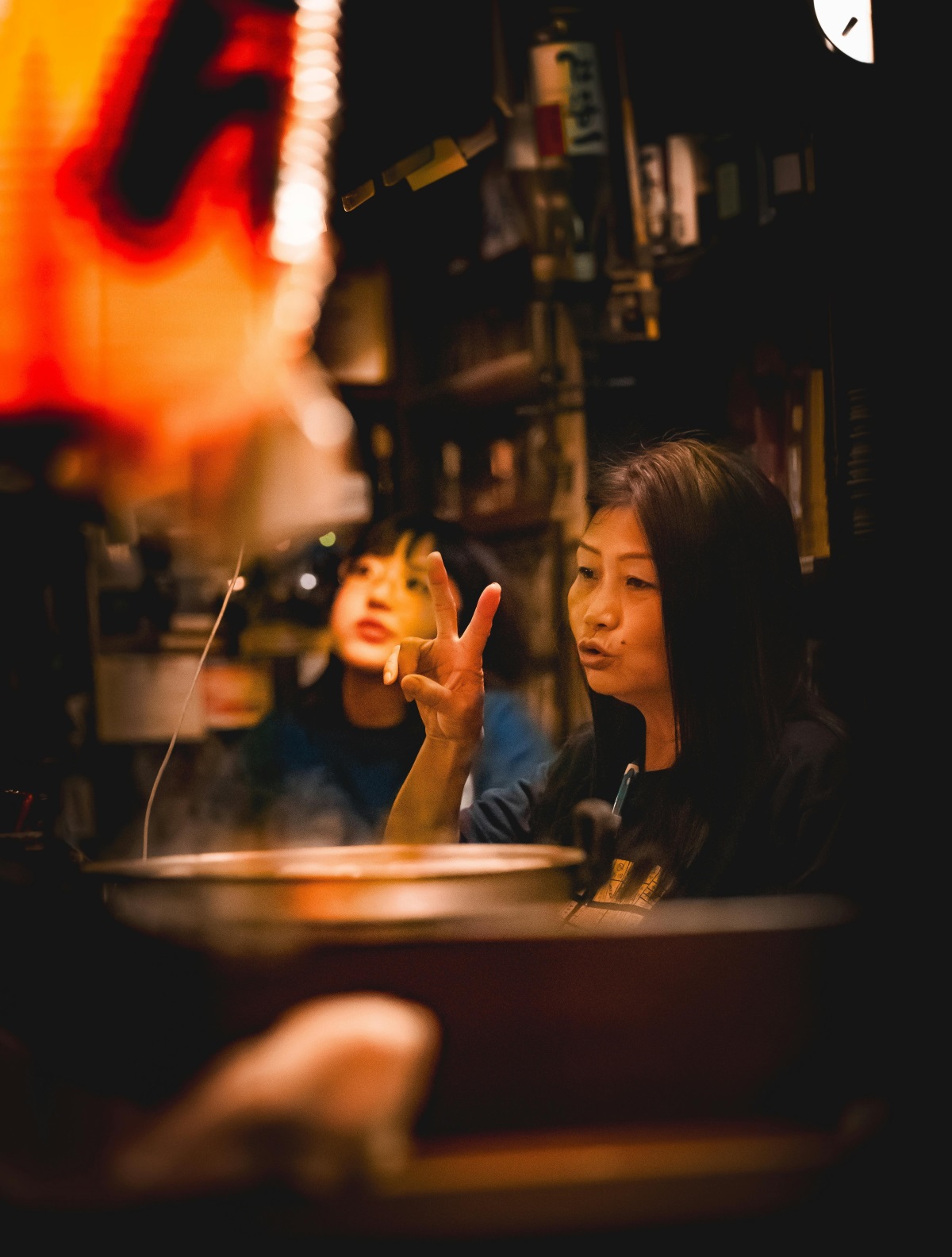
Izakayas are not just places to eat and drink. They’re places to witness to feel the hum of a shared human script, even when the lines are in another language.
The chef remembered me, not by name, but by appetite. “Skin, again?” he asked, grinning.
The Akita salaryman wasn’t there, but his stool was. I sat on it. Ordered the usual. A couple next to me was arguing softly about their cat. The door opened. Someone came in, cold and alone. The warmth took over.
There was no music, no mood lighting, no curated vibe. Just miso and murmurs. Smoke and sake. The kind of quiet that glows.
As I left, someone called out, ‘Otsukaresama desu.’ It means “you must be tired” but also “thank you for your effort.” It’s how the Japanese acknowledge the small heroics of daily living.
I nodded. And for the first time in weeks, I felt rested.
And this is how sondered travel works.
Not through checklists or must-sees, but in those small, serendipitous encounters that alter your emotional coordinates. At Sonder, we believe that the most meaningful journeys are the ones where you don’t just take in a place, but let it take you in, too. Where a stranger’s story becomes a part of yours, even for an evening.
Sonder’s Izakaya Night Trail curates just this kind of immersive unravelling, a path through smoky kitchens, untold conversations, and twilight confessions. It’s not a tour. It’s a feeling. A hush. A flicker of recognition. A warm bowl of something you can’t pronounce, passed to you with quiet grace. And somewhere between first pour and last train, you’ll know: you are now a character in someone else’s story.
(This is the second part of a series on Sonder, which seeks ‘curated trips to Japan for the quietly curious’)
More from Culture


Comments
*Comments will be moderated