








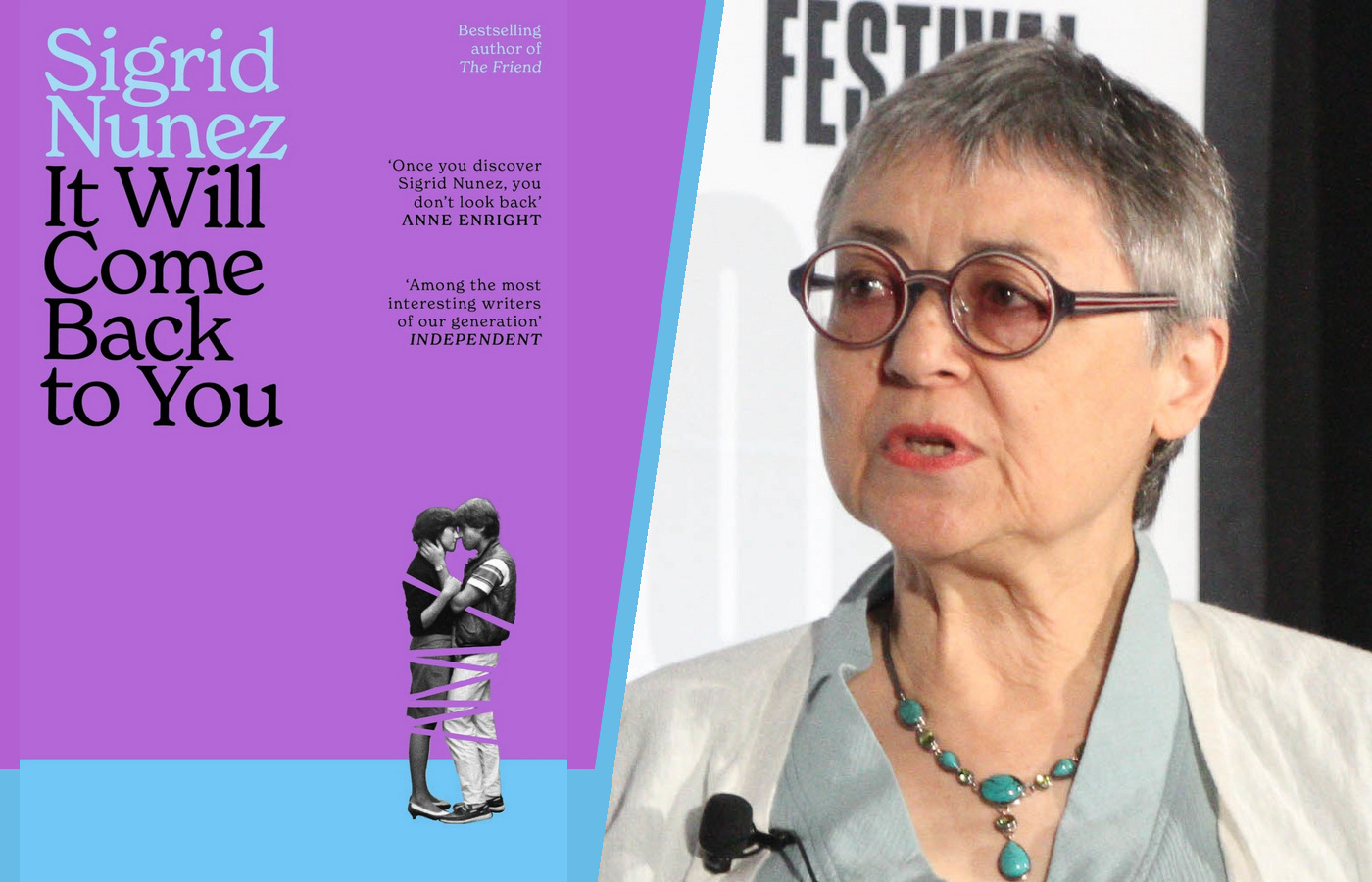

Across 13 stories, Sigrid Nunez writes about memory, love, loss, moral ambiguity and the ordinary lives we piece together, using lucid sentences and the autobiographical mode that has long marked her fiction
When a novelist known for simple sentences, minimalist prose and layered emotions chooses to publish a collection of 13 stories in a book titled ‘It Will Come Back to You,’ one feels almost tempted to compare her writing in the long and short forms. What one discovers is that her short stories — even though brief — are novelistic in intent and ambition. The sentences remain simple, the choice of words precise and minimalist, with a significant autobiographical element running through the prose. The everydayness of ordinary lives yields profound meanings; moral ambiguities come into conflict with ethical anchors; and a ceaseless love of life remains pervasively present.
It Will Come Back to You
The title of the book, as well as that of its final story, constitutes the raison d’être of the collection. Reflecting upon the loss of hearing and the erosion of memory, the author considers how memory plays tricks on us: why we remember what we remember, why we forget what we forget, and how what has been forgotten does not remain lost forever but chooses to return when it is least expected.
Raised by a single mother during a troubled childhood, the female narrator finds solace in Gilda, a neighbourly aunt who longs for a child but is unable to bear one and is “not stable enough” to adopt one either. The narrator finds herself torn between her biological but emotionally distant mother and the aunt she feels like calling mother.
Separated from Gilda, with her own mother dying a lonely death elsewhere in time and space, the narrator battles hearing loss and subsequent problems with memory. Her memories become unreliable, shifting, whimsical, often inventive and fragmented. This makes her pose and grapple with complex questions.
Also read: Main, Sifar: In Pankaj Mridul’s poems, zero is not emptiness but the place where self begins
Does the past shape who we become in the present? What happens when our memories fail us? Aren’t we all unreliable narrators of our own lives? Nunez suggests that when memories fail to return, imagination fills the gaps left by their faltering. To quote her: “That everything that was and is no more is to be mourned is an unsettling idea, but what other explanation can there be for the persistence of this kind of emotion? And it is this yearning, I think, that is partly — perhaps even mostly — responsible for why we get so much wrong, for why memory is so easily overruled by fiction, and why it can be so hard, no matter how we struggle, to get at the truth of our lives.”
Fractured lives and piecing together their scraps
Many of the stories in the book dwell upon our essentially fractured lives, which should fracture our sense of optimism as well. Somehow, however, hope survives, lingers and awaits its turn. The first story is titled “Philosophers”. The female narrator finds herself besotted with a classmate who, in turn, is also in a relationship with a teacher they have in common, Mrs Mint.
Feeling alternately possessive and jealous, the narrator watches as the boy returns unscathed from the Vietnam War, marries Mrs Mint, has a child with her and is eventually consumed by cancer. Mrs Mint lays it all bare to the narrator in a letter. Love that comes to fruition and love that remains unrequited leave both lives fractured, with memories being all that the two characters are left with. A relationship may end, but memories are recalcitrant.
Also read: Tabish Khair on Drown All the Refugees and why ‘home is always in a relationship to leaving it’
Another story, ‘Greensleeves’, deals with melancholy, depression, vulnerability and therapy. A therapist seeks to understand the disturbing voices from which the female narrator’s brother is suffering. The twist in the tale is that the therapist’s wife has walked out on him, while his daughter is suffering from terrible anxiety about the future of the world. The therapist is himself emotionally devastated and distraught. He then finds himself attracted to the narrator because her concern for her brother finds resonance in his own concern for his daughter.
Layered emotions
Like her novels, Nunez’s stories unfold at many levels. ‘Worried Sisters’ is about elder sisters concerned about their youngest sister, who is sensitive and emotionally vulnerable. She says nothing about herself, and it is through the caring but judgemental eyes of others that we get a glimpse of her psychodynamics. After a series of challenges and failures, she eventually succumbs to depression and requires medication.
Several layered questions hang in the air. Who is the real person: the woman as she is or the woman as she is described by others? Is normality the same as happiness? Her medicine-induced normality could give way to abnormality if she is weaned off the medication. And can love ever be absolute? Her elder sisters obviously love her, but their love comes with judgement and a desire to make her life more socially acceptable.
In ‘Imagination’, an adolescent girl, Elsie, is going through puberty and is utterly confused. She realises that other people are looking at her changing body in sexualised ways. Her mother fails to empathise with her. The young girl turns to imagination, which functions as a survival mechanism.
Sigrid Nunez is best known for her novels. Her most recent novel, ‘The Vulnerables’, unfolds against the backdrop of the Covid-19 pandemic, which also forms the background of several stories in this collection. The book should be read because its stories are simple and layered at the same time, written in Nunez’s trademark minimalist prose and lucid, flowing sentences.
Even a very short story like ‘The Balloon’ deals with complex emotions that are not easy to categorise: “I know exactly what is wrong with the man. I don’t forgive him. And yet I cannot stop being fascinated by him.”
More from The Byword





Comments
*Comments will be moderated