








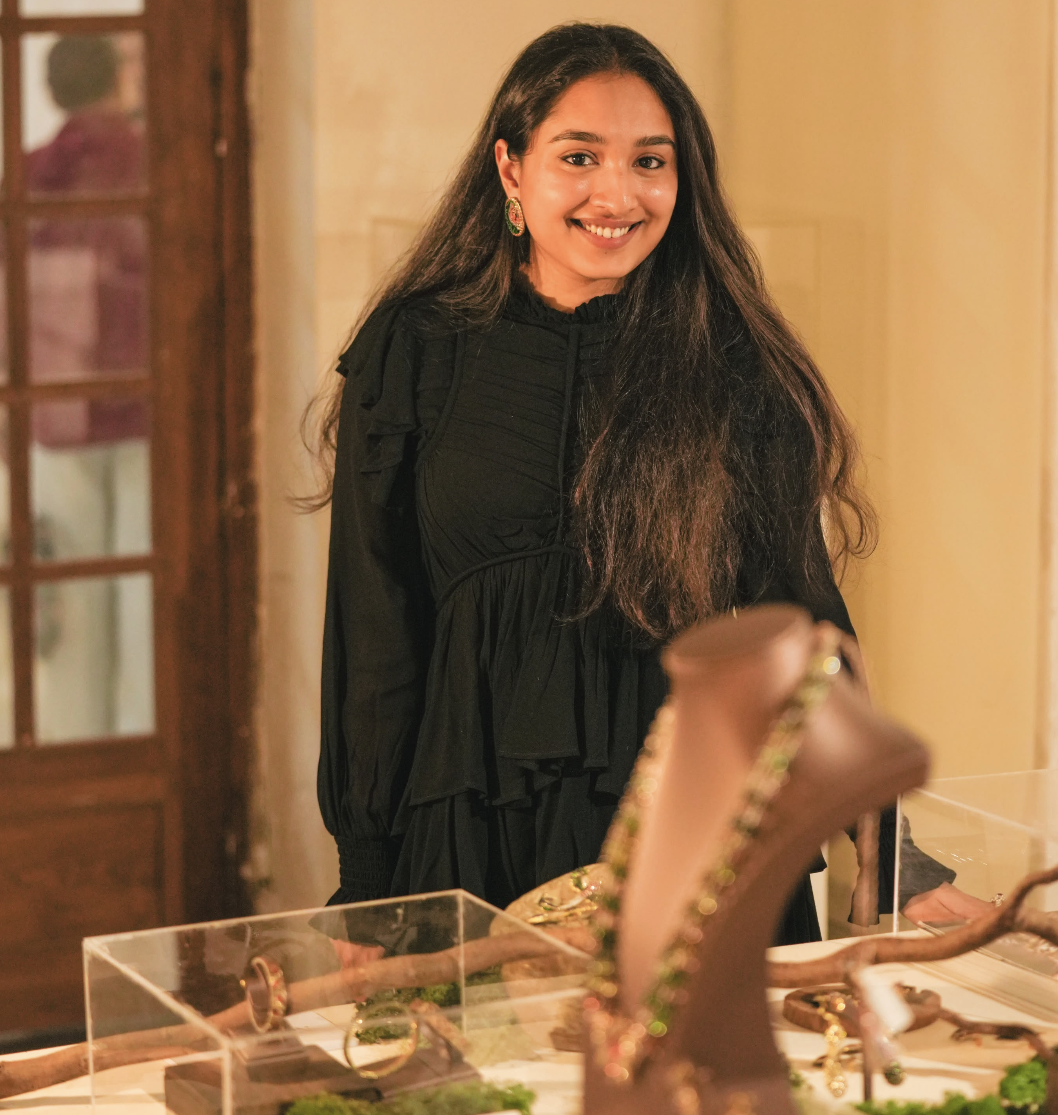
Keya Agarwal Badhalia; KEYA looks at jewellery as wearable art, which is limited, collectible, sculptural and deeply tied to Indian craftsmanship. Photos: KEYA by Adbhut
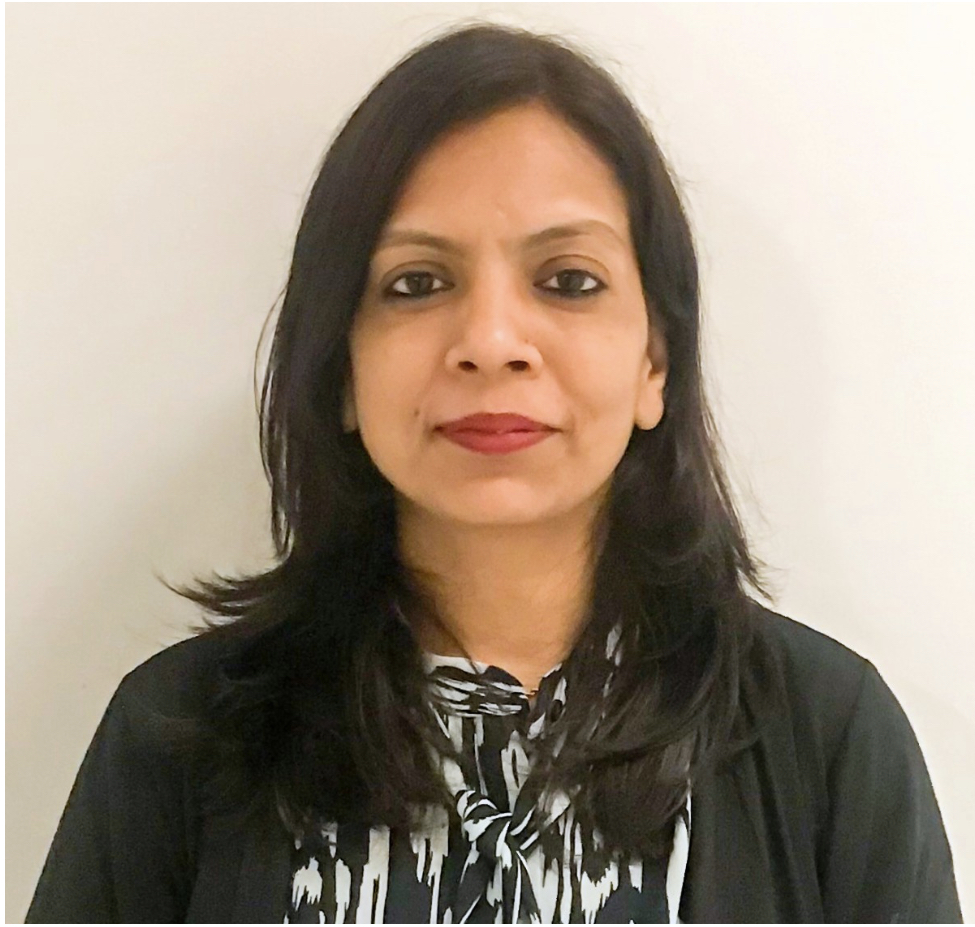
The Jaipur-based designer, researcher and author on creating jewellery that feels closer to collectible objects, using natural gemstones as part of the creative process, and giving Indian craftsmanship a contemporary form
At Delhi Art Weekend 2026, held from September 25 to 27 at Travancore Palace in New Delhi, KEYA by Adbhut entered a space usually occupied by artists, designers, collectors and cultural practitioners. That setting made sense for the young jewellery label. Founded by Jaipur-based jewellery designer, researcher and author Keya Agarwal Badhalia, KEYA looks at jewellery as wearable art, which is limited, collectible, sculptural and deeply tied to Indian craftsmanship.
For Keya, this journey did not begin as a sudden break from the world she grew up in. Jewellery was always around her. Her grandfather, Mohan Badhalia, founded Adbhut Jewels, which was later developed by her parents, Pankaj and Bela Badhalia. Her father has been closely involved in sourcing rare and precious natural stones; her mother has played an important role in the design and development of finished jewellery. As a child, Keya saw gemstones, artisans, exhibitions and conversations around colour, cut, quality and value as part of everyday life.
.png)
However, her own path first took her outside the conventional route of jewellery design. She studied finance through the World Bachelor in Business programme, completing degrees from the University of Southern California, Hong Kong University of Science and Technology, and Bocconi University in Milan. Her education, across the US, Hong Kong and Italy, gave her a wider view of luxury, commerce, technology and consumer behaviour. It also shaped her research-led book, Luxury Uncut, in which she examined how value is created and understood in the jewellery market, from gemstone quality, rarity and provenance to auction histories, craftsmanship and the emotional worth of an object.
Also read: Subodh Gupta interview: ‘Even the most ordinary objects can carry extraordinary human histories’
“I grew up around jewellery, so in many ways it was always part of my world,” Keya says. “But when I went on to study finance across the US, Hong Kong and Italy, I began looking at the jewellery and luxury industry from a very different lens, through value, economics, technology and changing consumer behaviour.” Somewhere along that journey, she says, she realised she did not want to only study where jewellery was going. She wanted to participate in shaping it.
That is where KEYA by Adbhut comes in. She describes it as a contemporary creative identity in the Adbhut universe, not a severing from the family legacy but a way of looking at it afresh. “Adbhut has decades of knowledge around natural gemstones, craftsmanship and sourcing; KEYA allows me to take that foundation and interpret it through my own generation’s perspective,” she says. The shift, for her, was not from finance to jewellery. It was, as she puts it, from “researching the value of jewellery to creating my own point of view on what jewellery could be.”
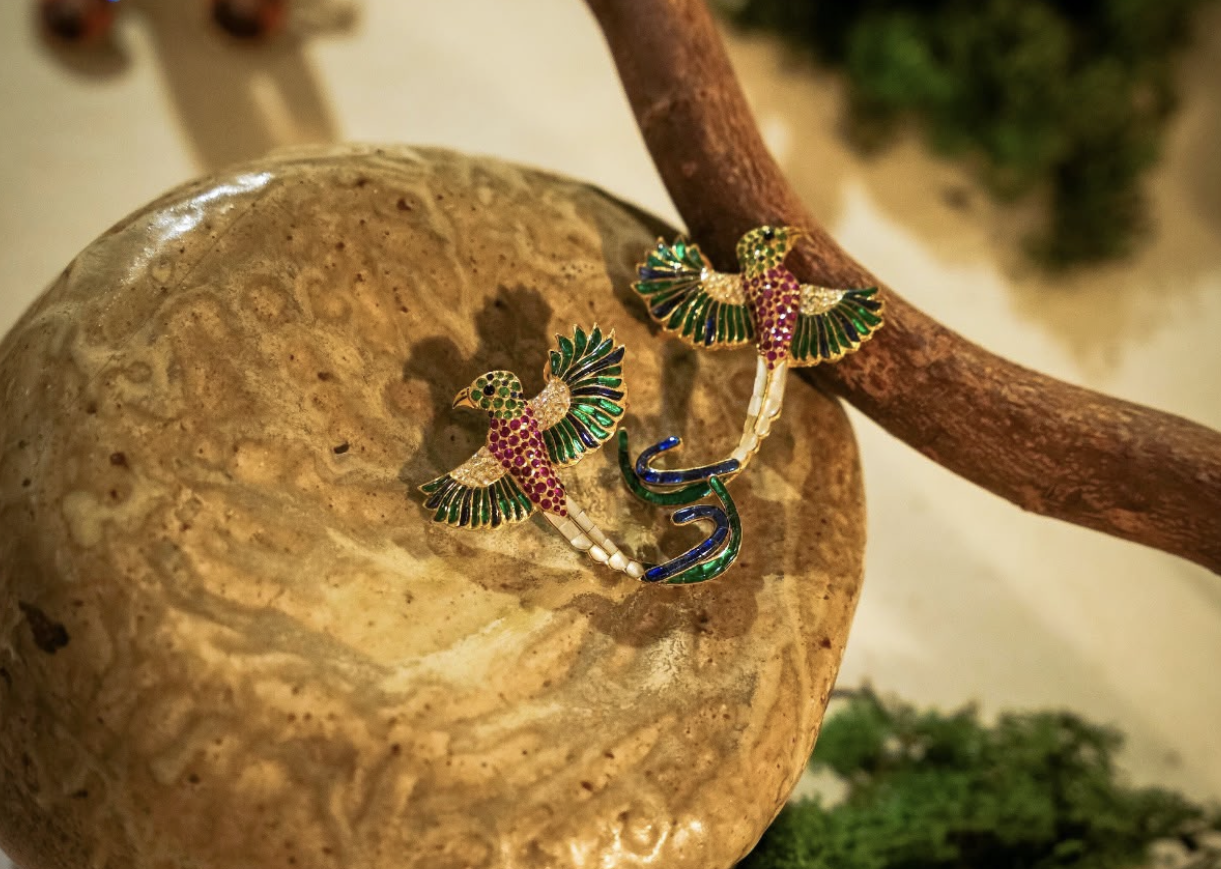
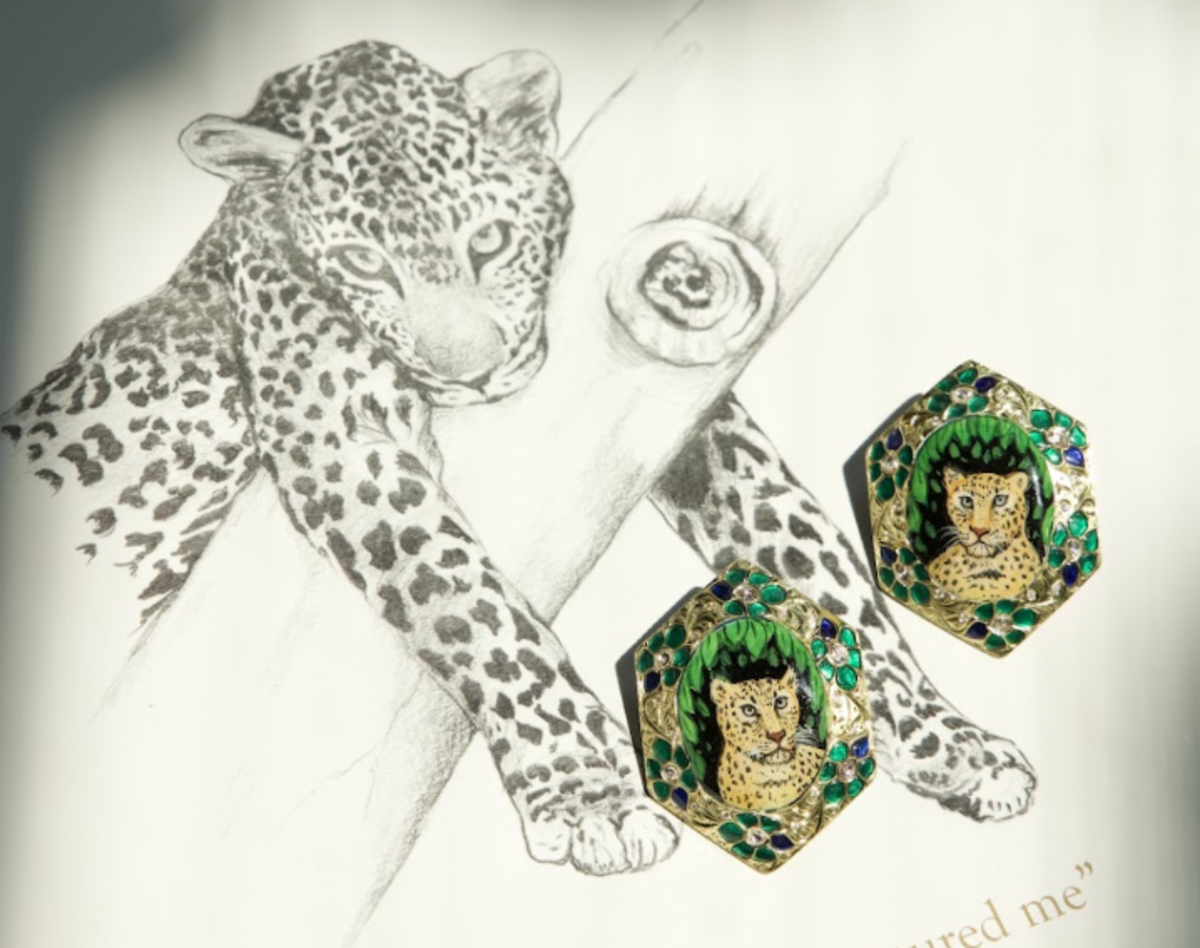
That point of view is visible in the brand’s debut collections, ‘Under the Ocean and Into the Forest.’ Both collections look closely at nature. The marine pieces draw from shells, seahorses, starfish, turtles and the changing colours and movement of water. The forest pieces turn to leopards, peacocks, birds, flowers and foliage. In each case, the attempt is to translate movement, texture and personality of the nature motif into gold and gemstones.
“Nature felt like the most natural starting point for KEYA because it gives us an endless vocabulary of form, movement, texture and colour,” Keya says. She speaks of a leopard’s spots, the movement of a seahorse, the structure of a flower and the way light moves through water. “There is a kind of perfection in those forms that doesn’t need to be embellished.”
This is where Jaipur becomes central to her imagination. Growing up in the city, she says, meant absorbing a culture where gemstones and craft are not distant ideas but living practices. A stone, she learnt early, is not beautiful only because of how it looks. Its origin, character, cut and the skill required to bring it to life all matter. She also grew up seeing artisans who could take a drawing or an idea and transform it into something intricate by hand.
That respect for craft is at the heart of KEYA. The label works with traditional techniques including Jadau, Partash, Meenakari, Gulabi Meena and Utarai. For Keya, they are part of the language of the piece. “I don’t want to modernise a traditional craft for the sake of making it look contemporary,” she says. “I want to understand what makes the craft distinctive and then find a new context for it.”
In her work, Partash may be used not only for conventional ornamentation but to carve the feathers of a bird or the scales of a fish. Meenakari, too, goes beyond familiar floral patterns into more unexpected territory, allowing full faces and natural forms to emerge through painted enamel. Utarai, with its thin slices of natural gemstones, lets the brand play with transparency and colour in a light, layered and contemporary way. The balance, Keya says, is instinctive. “The technique should remain honest, while the object doesn’t have to look historical.” She wants viewers to recognise the hand of Indian craftsmanship when they look closely, but also feel surprise at first glance.
Also read: Jenjum Gadi interview: ‘My village in Arunachal is my identity, Delhi made me who I’m today’
Some pieces feel almost like miniature sculptures. Keya says she begins “somewhere in between” the object and the body. The emotional starting point is often the form itself: a leopard sitting in a particular posture, a seahorse moving through water, a flower opening, a peacock unfolding its feathers. At that stage, she thinks about silhouette, movement, side view, back view, and the way light will interact with gold and stones. Only later does the question become: how does this object become jewellery?
That approach is deliberate. “KEYA is meant to feel closer to collectible objects released in limited editions than to a conventional jewellery collection,” she says. Each work is produced in limited quantities and individually numbered. The reverse of each jewel also carries hand-painted detailing, giving the piece a more intimate life. Even the side that may not be immediately visible is treated as meaningful.
But the body is never forgotten. Jewellery, unlike a sculpture in a vitrine, must move with a person. Keya thinks about scale, weight, balance and wearability. A brooch must work on a jacket or sari. A kadha must sit well on the wrist. Earrings must have presence without becoming impractical. “The jewellery should have a life of its own,” she says, “but it should come alive differently when it meets the body.”
Natural gemstones bring another layer of unpredictability. Keya does not see stones as interchangeable components. Their variations in tone, inclusions, transparency, weight and light are part of their individuality. Sometimes, she says, a stone changes the direction of a design completely. A particular emerald or ruby may become the eye of an animal, the heart of a flower, or the unexpected flash of colour that shifts the whole mood of a piece.
“Sometimes I design the piece and find the stone for it; sometimes I find the stone and the piece tells me what it wants to become,” she says. For her, the second kind of design is often the most exciting because it requires listening to the material rather than imposing a fixed idea on it.
This idea of listening runs through her practice: listening to gemstones, to artisans, to inherited techniques, to nature, and to the older knowledge embedded in Jaipur’s craft traditions. At the same time, KEYA is not nostalgic. It is shaped by a designer who has studied finance, written on value in the luxury market, thought about technology’s effect on gemstones, and grown up inside a family business while wanting to speak in her own voice.
Delhi Art Weekend offered the brand a useful context. The event brought together exhibitions, conversations, workshops, performances and curated retail, creating a wider platform for art, design, music and contemporary culture. For KEYA, being there was not only about presenting jewellery to potential buyers, but about placing Indian craftsmanship in a larger conversation around collecting, contemporary design and artistic practice.
More from Arts



Comments
*Comments will be moderated