








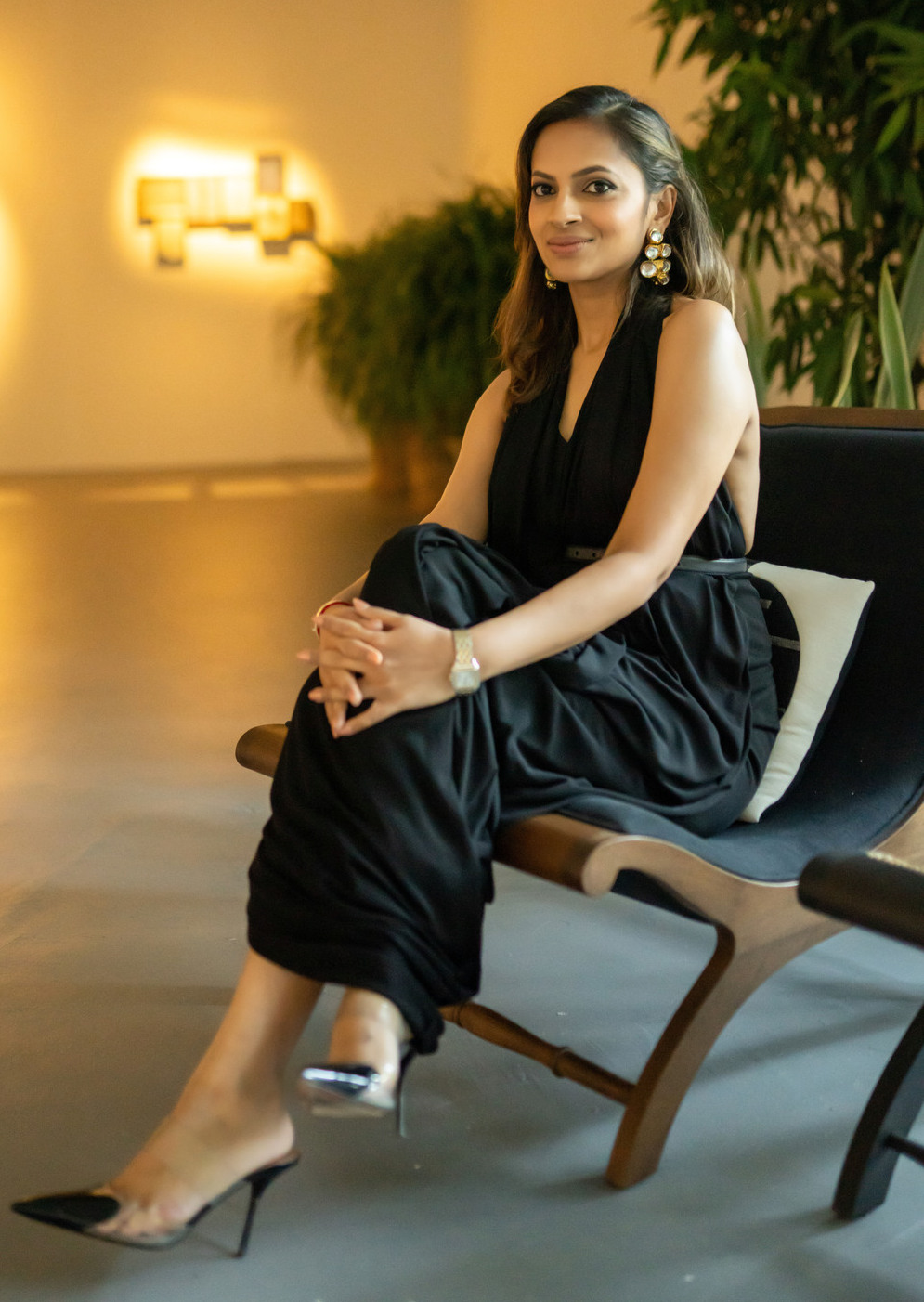
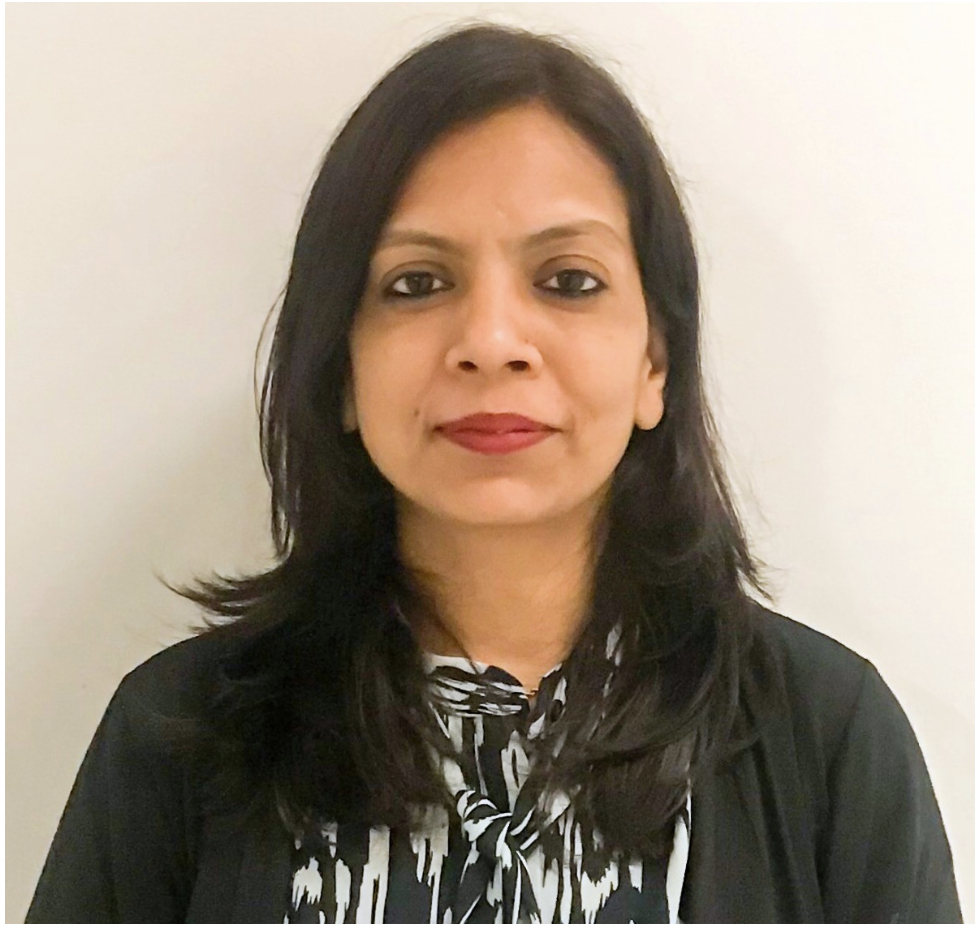
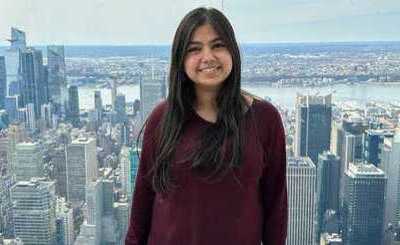
From a childhood spent visiting museums on family holidays to founding the Museum of Contemporary Art Ahmedabad, the third-generation real estate professional and art collector wants to give the city a place to encounter contemporary art on its own terms. She talks about collecting, emerging artists, international exchange and why she believes India has a much bigger appetite for art than it is given credit for
There is a daybed, a cluster of plants, books within reach and music playing through headphones. You can sit down, spend time with an artwork, read something or simply take in the space. It is an unusual arrangement for an art exhibition, where visitors are more accustomed to walking from one work to another, often at a respectful distance.
At I Dwell in Possibility, the first exhibition at the Museum of Contemporary Art Ahmedabad (MCAA), the invitation to slow down is part of the idea. Presented in collaboration with GALLERYSKE, the exhibition brought together the works of Avinash Veeraraghavan, Buddhadev Mukherjee, Dia Mehhta Bhupal, Sudarshan Shetty and Sunil Padwal, placing them in conversation with people working in fields beyond visual art.
Furniture studio Phantom Hands brought pieces from its Geoffrey Bawa Collection; landscape architect Aditya Shah responded to the works through plants and botanical arrangements; academic Arjun Jayadev selected books; music archivist Nishant Mittal created a sonic accompaniment; and culinary researcher Sheetal Bhatt contributed recipes and texts drawn from food cultures and regional histories.
The exhibition took its title from the opening line of an Emily Dickinson poem, I Dwell in Possibility, which imagines a house with more possibilities than a conventional structure can contain. Here, the house becomes a way of thinking about art, with each work opening a passage into another discipline, memory or lived experience. Visitors werre encouraged to sit, listen, read and look without feeling hurried.
For Aneri D. Patel, who founded MCAA, the exhibition offered an early indication of what she wants the institution to become. Its satellite venue occupied part of an office building belonging to her family, which has a real estate business in Ahmedabad. The permanent museum is still being developed, but the first exhibition has already given the city a glimpse of the thinking behind it.
The response was encouraging. The exhibition opened on September 18, alongside India Art Fair’s EDI+IONS Ahmedabad, and attracted more than 300 visitors over its opening weekend. Several of the artists were exhibiting in Ahmedabad for the first time. During Ahmedabad Cultural Week, which ran from October 23 to November 1, the museum extended the programme with walkthroughs and other public engagements.
Aneri is pleased with the interest, particularly from younger visitors and university students. She had wondered whether there was an audience for a contemporary art museum in Ahmedabad. The early response has strengthened her conviction that there is.
A museum that begins with a love of looking
Aneri’s engagement with contemporary art has developed over the past decade, during which she has built a personal collection of South Asian art and formed connections with artists, galleries and creative practices across the region. After spending ten years in London, she returned to India with an interest in building a cultural institution that could contribute to the country’s arts landscape. Now based in Ahmedabad, her interest in museums goes back much further, to family holidays when visiting a museum was often the first outing of the day, whether in London or Switzerland.
She remembers enjoying exhibitions, spending time with artworks and discovering connections between artists from different parts of the world. As she travelled more, these connections became clearer, particularly when she came across Indian artists in international collections and exhibitions. Many of India’s modern artists had studied or undertaken residencies in Europe, and their work carried traces of those exchanges. Her visits to international art fairs, including Frieze London, Art Basel Paris and Art Basel in Basel, have continued that exploration. A visit to Swiss artist Claudia Comte’s studio in Basel remains one of her memorable encounters.
 & GALLERYSKE.jpg)
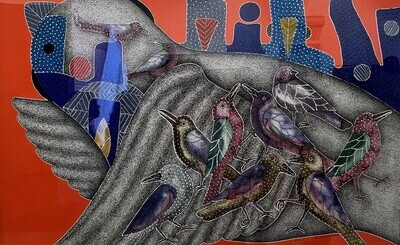
Artworks by Dia Mehhta Bhupal and Sunil Padwal. Image courtesy of Musuem of Contemoporary Art Ahmedabad and GALLERYSKE
Aneri began collecting around ten years ago. Her first art fair was India Art Fair, which she visited with her mother. More fairs and international exhibitions followed, and collecting gradually became a sustained interest. At some point, she began thinking about what would happen to the collection as it grew. "Even collecting is, where am I putting it, right? In my bedroom or living room? No. I wanted more people to see it," she says. "How do we have more people enjoy this? It's only me or my family, and that's not enough." The question was also about what a collection could mean beyond the person who owns it. For Aneri, the idea of making art accessible to a wider audience began to take shape alongside her own experience of collecting.
There is also a family and professional context to this interest in creating something lasting. A third-generation member of the board of Ganesh Housing Limited, the listed real estate development company founded by her grandfather, Aneri has grown up with an understanding of how the built environment shapes the way people experience a city. She sees art as part of that conversation, with the ability to bring people together, prompt exchanges and give places a stronger cultural identity. Her academic background reflects these intersecting interests: she completed her undergraduate studies at the University of Warwick, followed by master’s degrees from London Business School and Sotheby’s Institute of Art. More recently, she supported Architectural Digest India’s special showcase with Raw Mango in Ahmedabad, an event bringing art, architecture and fashion together at the iconic Amdavad Ni Gufa.
The idea of a museum had been with her for some time. She had imagined doing it later in life, but decided to begin now. Part of that decision came from observing the changes taking place in India’s art ecosystem. There was a new energy around galleries, collectors, institutions and cultural initiatives, and she felt it was the right moment to be part of that movement.
Ahmedabad, she believes, offers a particularly interesting setting. The city has a long history of cultural patronage and institution-building, from the Calico Museum to the architectural and design legacy associated with Louis Kahn and Le Corbusier, as well as institutions such as the National Institute of Design and CEPT University. The Sarabhai family’s contribution to the city’s cultural life is another influence she acknowledges.
There are also newer galleries and initiatives. Iram Art and 079 Stories are among the spaces she mentions, while Ahmedabad Cultural Week and Abhivyakti have brought fresh opportunities for audiences to encounter different art forms. What she felt was missing, however, was the experience of a dedicated contemporary art museum. “When you go to these European cities, there is that experience of just something slowing down, where you feel the world is left behind in some way and it’s just you and an artwork,” she says. “It’s a quiet space.” That is the feeling she hopes MCAA will offer, even as it develops a contemporary programme that appeals to younger audiences.
She has noticed a gap among visitors in the 22-to-38 age group. Exhibitions often attract students and older visitors, but there have been fewer opportunities for young professionals and people in their twenties and thirties to make art a regular part of their weekends.
When she returned to India after studying in London, she and a few friends would seek out exhibitions, but there was not much of a wider cultural calendar for that age group. That is changing, she says. Ahmedabad Cultural Week has created a reason to explore the city’s galleries, heritage sites and cultural venues, while Abhivyakti has added to the city's arts calendar. For MCAA, reaching this audience will be an important part of the work ahead.
The city, the collection and the people who will use the museum
As the only woman on the board of her family business, she describes the experience as different but valuable, and sees a connection between the work of developing a city and creating spaces for art and culture. “Art spaces for art and culture are as important as a residence or an office or a pool,” she says. “Whether that is through a museum or a foundation or a gallery, places for art and culture are a part of what we create.”
The connection is particularly relevant as Ahmedabad prepares for big international events. With the Commonwealth Games on the horizon and the possibility of the Olympics in the future, she believes the city will need cultural institutions capable of hosting exhibitions and conversations besides sporting events. Her visit to the Paris Olympics reinforced this thought. She remembers walking into galleries and museums where exhibitions had been organised around sport. The idea of an entire city’s cultural institutions responding to a major international event stayed with her. “I was like, wow, this will happen here when we have the Commonwealth and Olympics,” she says. She hopes MCAA will be among the institutions contributing to such a programme.
The relationship between art and real estate is already visible in her family's buildings. Works from the family’s collection are displayed in the office where the museum’s satellite venue is located, as well as in other properties. Patel would like to develop this further by introducing public art into entrances, courtyards and lobbies, with information that helps people understand what they are seeing. For her, public installations have a particular value. They allow people to encounter art as part of their everyday lives, rather than only in a gallery or private collection.
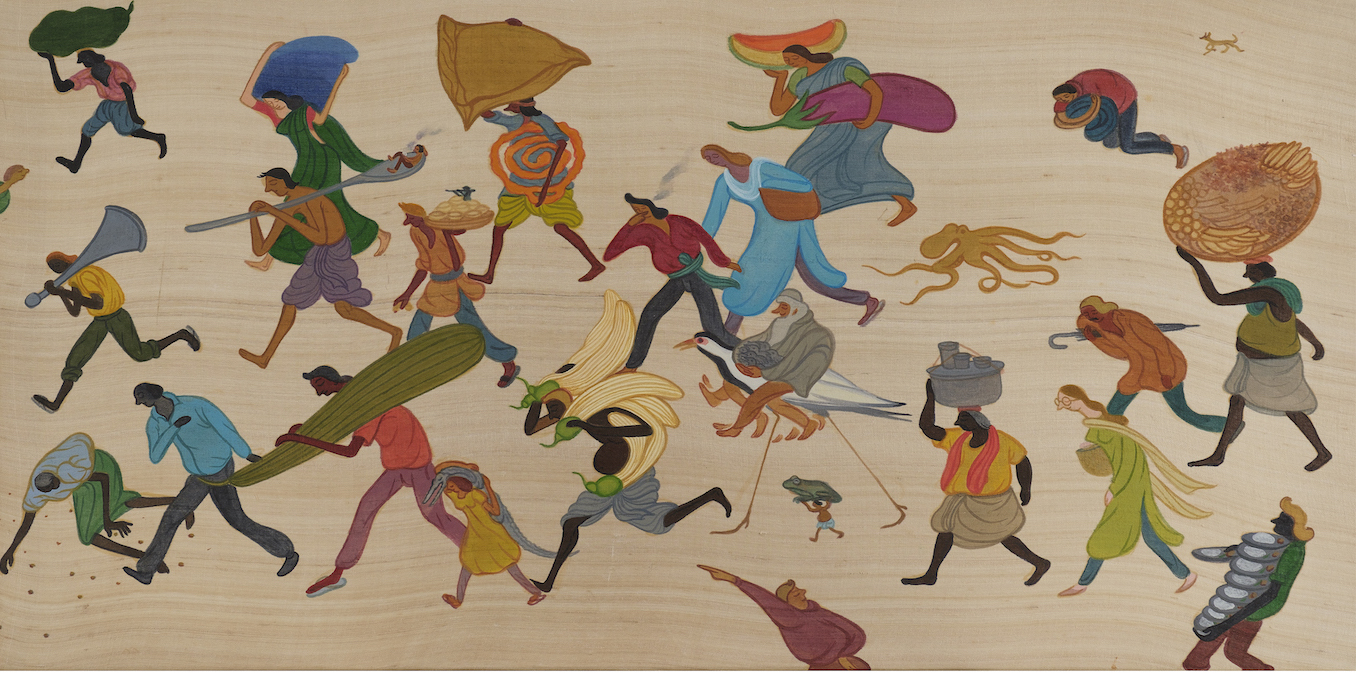
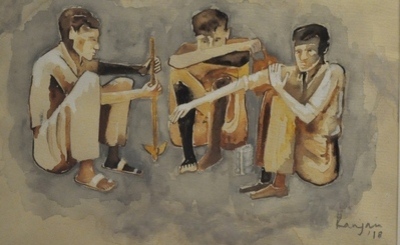
Buddhadev Mukherjee, Ways of Life. Image courtesy of Galleryske
The museum’s collection will focus primarily on contemporary South Asian art, with international works accounting for approximately 10 to 15 per cent. Acquisitions are already under way. Patel is also keen to keep the museum connected to galleries of different sizes and generations.
She makes a point of visiting younger galleries whenever she is in Mumbai, including during Art Night Thursday. Gallery Maxima, a recently opened space run by a young gallery owner, is one example. MCAA has already acquired a work by a young Baroda-based artist from one of its exhibitions. “There are people who love every artist that you mentioned, and will not forget those artists. But now there is a whole generation of young collectors who don’t want to do what their parents did,” she says.
For her, supporting younger galleries and artists is important to the health of the larger ecosystem. Established names will continue to have their place, but institutions must also pay attention to practices that are still finding their audience. Her own experience as a collector is informing this approach, although she is careful not to suggest that it gives her all the answers. Decisions about acquisitions will involve her family as well as experts from different fields with whom she is in conversation. “I doubt things also, and I doubt myself also,” she says, laughing. The aim, she adds, is to have the right conversations and ensure that the museum presents good work to its visitors.
She is also interested in seeing greater representation of women artists across collections and institutional platforms. Her association with the Foundation for Indian Contemporary Art (FICA), support for the Kochi-Muziris Biennale and recent appointment to Tate Modern’s South Asian Acquisitions Committee have given her different perspectives on how art institutions support artists and build collections. She was in London recently for a committee meeting and describes the process of discussing and voting on acquisitions as “an important learning experience.” She hopes to bring some of that understanding to MCAA as its collection develops.
A dialogue that begins in Ahmedabad
International exchange is another part of Patel’s plans, although she is clear about what she means by it. The museum is not primarily intended to act as a platform for exporting local artists or developing individual careers internationally. Its focus is the city and the people who live there. “I think more than anything else, everything we do eventually is to show great art to the people here,” she says. She wants curators, researchers, writers and academics from other parts of the world to visit Ahmedabad, speak about their work and engage with local audiences. Her own travels and relationships within the international art community could help create those opportunities.
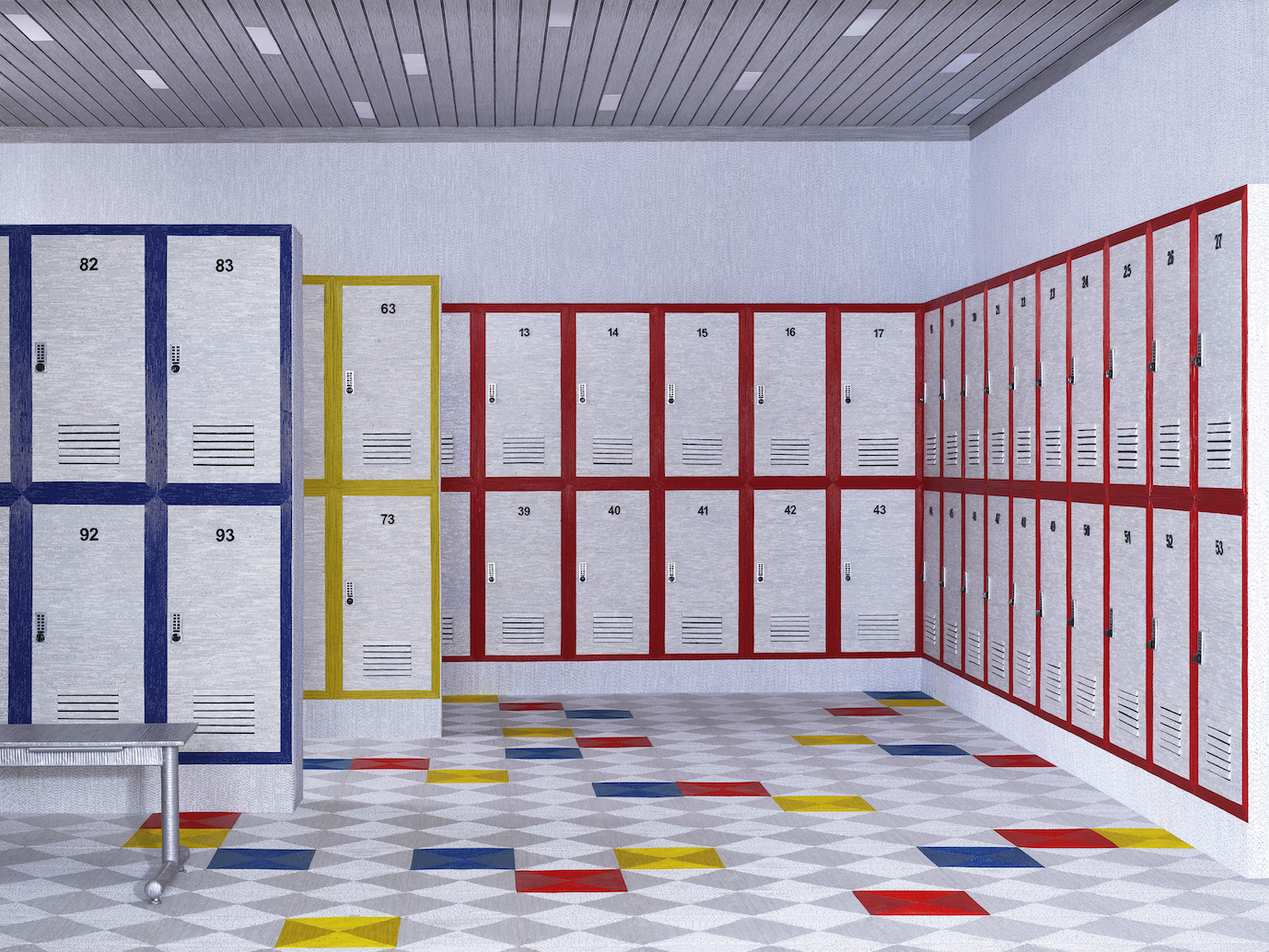
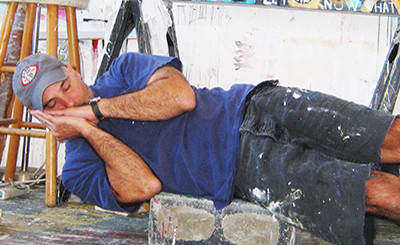
Dia Mehhta Bhupal, Locker Room, Courtesy of Galleryske
London is particularly close to her heart. Basel is another place she feels strongly about. A visit that was meant to last two days extended into more than a week because she found so much to see in its museums. Paris, with its exhibitions and galleries, is another city she would like to connect with Ahmedabad. She would like to develop relationships between these art communities and the city. Collaborations with galleries and institutions could bring researchers and curators to Ahmedabad outside the crowded calendar of major art fairs, when conversations can receive more sustained attention.
The museum’s satellite programme is also open to collaborations within India. Patel mentions institutions such as MAP in Bengaluru and the Kiran Nadar Museum of Art as examples of different approaches to building audiences and presenting art. She has visited exhibitions at both and is interested in the possibilities of working across institutional networks.
Her international engagement also gives her a view of how collections are built and how different institutions approach representation. She sees the Tate committee as an opportunity to learn from a process that brings together people with knowledge of South Asian art.
More exhibitions, more audiences
The collaboration with GALLERYSKE for I Dwell in Possibility was, in many ways, a statement of intent. Patel was familiar with some of the gallery’s earlier multidisciplinary experiments in Bengaluru. When the idea was presented to her, she was drawn to the possibility of bringing together visual art, furniture, music, books, plants and food.
The exhibition’s contributors were not asked to explain the artworks. Each responded through their own practice, allowing different interpretations. Phantom Hands’ furniture, the botanical arrangements, Jayadev’s book selections, Mittal’s music and Bhatt’s research into food traditions gave the exhibition a sense of a lived-in space. It was a new experience even for someone who has spent years visiting exhibitions in India and abroad. That willingness to experiment is something she would like to retain as MCAA develops its own programme. The current plan is to present three exhibitions a year, while remaining open to institutional and gallery partnerships. The satellite venue will continue to serve as a place for exhibitions and outreach as the permanent museum takes shape.
The first exhibition has also taught Patel something about audiences. She believes there is a much greater appetite for art in India than institutions sometimes assume. The interest has come from children, university students, teachers and people who may not have had many opportunities to visit contemporary art exhibitions before.
Also read: Subodh Gupta interview: ‘Even the most ordinary objects can carry extraordinary human histories’
“We underassume how much people want it,” she says. “There is a big audience in India that wants to see things, even kids, even young people, university students, teachers.” She does not agree with the argument that India lacks a museum-going culture. The country has a young population, and she believes people are curious about ideas and experiences. What is needed is a greater number of spaces where they can encounter them.
As for Ahmedabad Cultural Week, which MCAA supported through its programme, Aneri hopes the initiative will continue to grow. Even as an annual seven- or eight-day event, she feels it has value. But she would also like to see a space where contemporary art exhibitions can continue throughout the year, giving the festival a more sustained presence in the city. For now, MCAA is taking its first steps through exhibitions, partnerships and public engagement. The permanent building is still in the works, and the museum’s collection and programme will evolve over time.
Aneri does not claim to have the entire journey mapped out. She is learning from the institutions she visits, the people she meets and, increasingly, the audiences who walk through the doors of the satellite venue. What she seems certain about is the need to keep making room for art in Ahmedabad. “Even if someone does an okay exhibition, it’s still good for the city,” she says. “The more people do, the better for now.” It is a straightforward way of looking at the work ahead. Build the spaces, bring people in, allow artists and ideas to meet, and give audiences the time to look. The rest, she believes, will follow.
More from Arts


Comments
*Comments will be moderated