








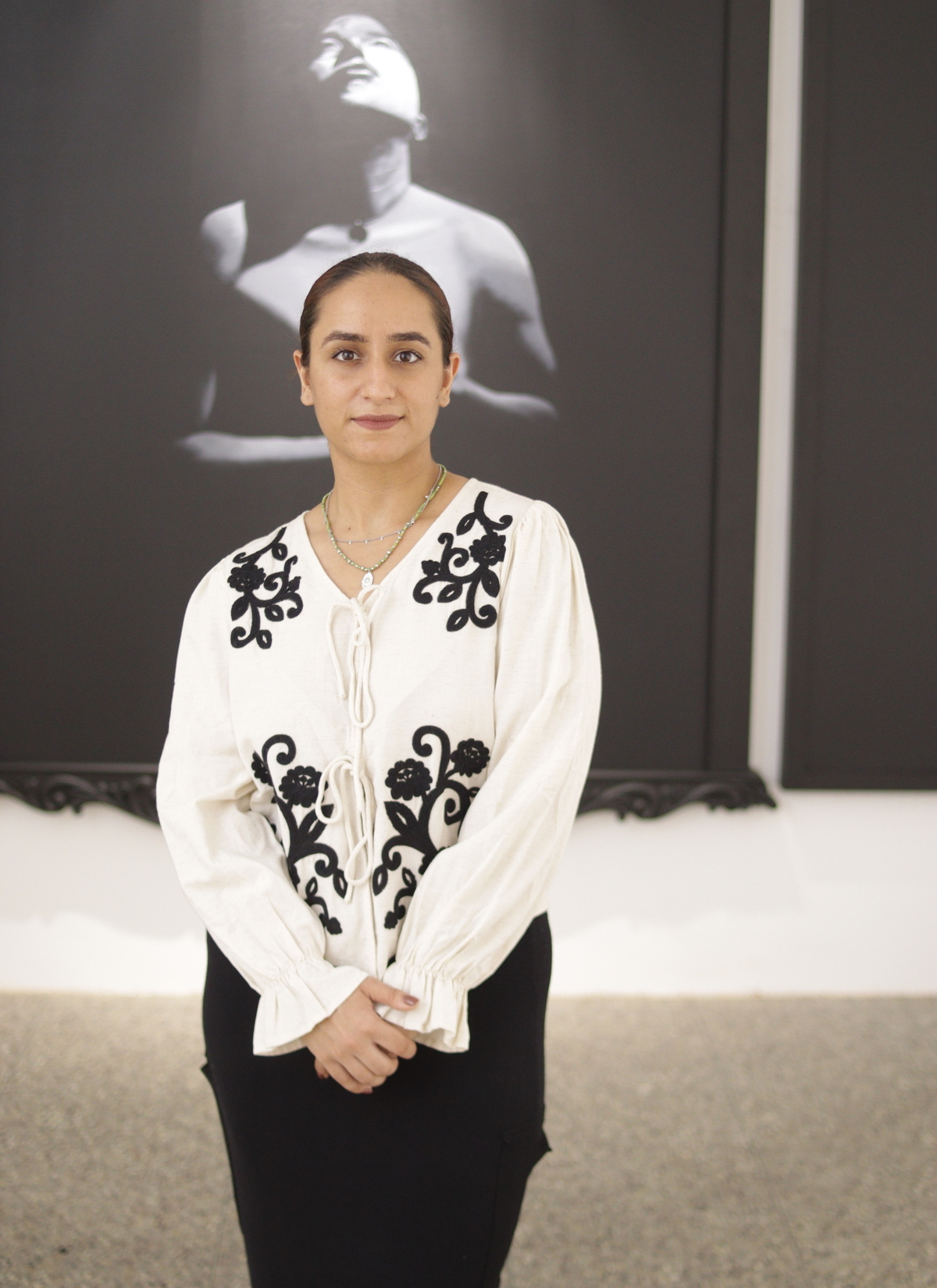
Shristi Sainani, curatorial director of Ahmedabad Cultural Week. Photos: Ahmedabad Cultural Week
From Bhanu Shrivastav’s performance with salt to exhibitions by Sonal Ambani and Thukral and Tagra, the second edition of Ahmedabad Cultural Week brought 18 venues into a conversation about contemporary art, climate change and the city’s cultural life.
Salt has a particular place in Ahmedabad’s history, dating back to one of India’s most defining acts of civil resistance. On March 12, 1930, Mahatma Gandhi set out from Sabarmati Ashram on the Dandi March, walking roughly 390 kilometres to the Gujarat coast to challenge British control over its production and taxation. An everyday substance became the means through which a colonial system could be confronted. Nearly a century later, artist Bengaluru-based artist Bhanu Shrivastav returns to salt in a performance that asks what freedom means when environmental breakdown threatens the conditions of everyday life.
Titled Under the Same Sun, the work formed part of the second Ahmedabad Cultural Week, which was held from October 23 to November 1. Shrivastav uses salt to consider ecological collapse and the unequal ways its consequences are felt. For curatorial director Shristi Sainani, the connection with the city’s history gave the performance a local urgency. The reference to the Dandi March opened a question about the present: how much freedom does someone have when their environment becomes increasingly difficult to inhabit?
This is one route into Take Weeks, Take Months: Addressing the Global Crisis of Climate Change, which brought 18 venues into the programme. Exhibitions were held alongside dance performances, film screenings, workshops, guided walks and public discussions. Museums and commercial galleries participated with spaces devoted to architecture, craft and performance. The Sabarmati Riverfront was among the settings, allowing the programme to encounter people beyond the usual circuits of cultural attendance.
Sainani begins with a practical observation about how those circuits work. A city can have a substantial cultural life while its audiences remain unaware of much of it. Institutions develop their own regular visitors, habits and conversations. Someone familiar with one museum may rarely enter a contemporary gallery nearby. A person who follows performances may have little contact with spaces concerned with architecture or material traditions. Proximity alone does not create exchange.
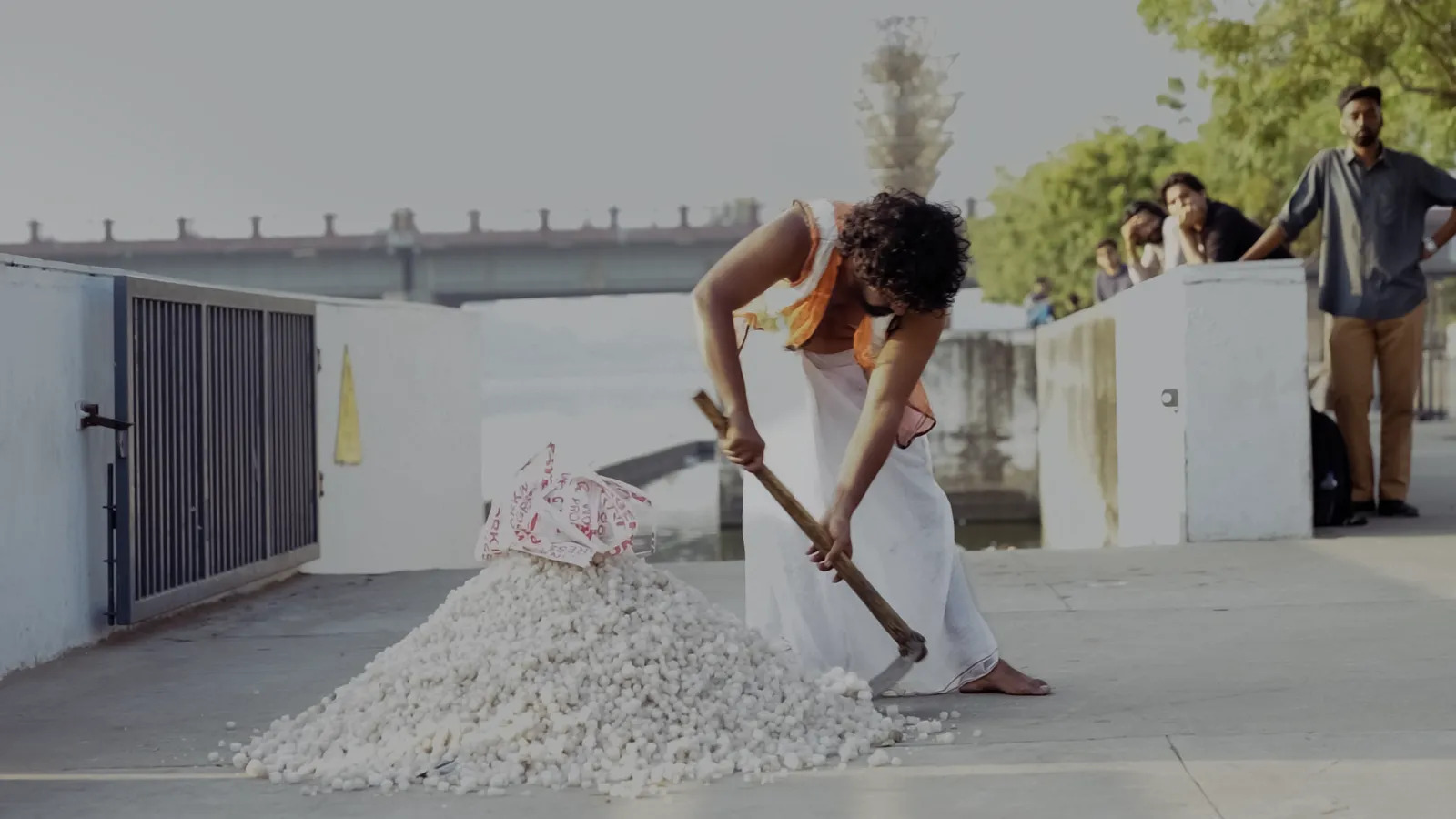
Under the Same Sun, Bhanu Shrivastav
“I think the real possibility lies in moving from individual institutional voices to a collective, contemporary, cultural voice for the city,” she says. Ahmedabad’s spaces bring different histories and kinds of expertise to that possibility. Cultural Week gives them a shared occasion to direct attention towards one another. “Someone who enters a museum might discover a contemporary art gallery; someone who comes for a performance might find themselves drawn into a conversation about architecture, ecology or craft.”
Her description makes audience movement part of the curatorial thinking. What happens between venues matters as much as what happens inside them. The hope is that one encounter creates an appetite for another, helping people recognise a larger field of activity than the one they usually inhabit. As she puts it, “Each space begins to open a door to another.”
The climate theme gives that exchange a pressing subject. The organisers place the programme against a background of extreme weather, pressure on resources and the disruption of agriculture and infrastructure. Germanwatch’s Climate Risk Index 2026 ranks India ninth among countries most affected by extreme weather over 1995-2024. That is a measure of recorded human and economic impacts, rather than a prediction of future vulnerability. It nevertheless gives a sobering context to a programme asking how cultural institutions might respond to environmental change.
Ahmedabad has already brought climate concerns into municipal planning. Its Climate and Sustainability Budget formed part of the municipal budget for 2025-26. The city has also joined the C40 Cool Cities Accelerator, with Mumbai and Bengaluru, committing to measures that protect residents from extreme heat and support longer-term urban cooling. These initiatives locate the subject within decisions about spending, infrastructure and public health. The cultural programme approached the same city through the ways people experience and understand it.
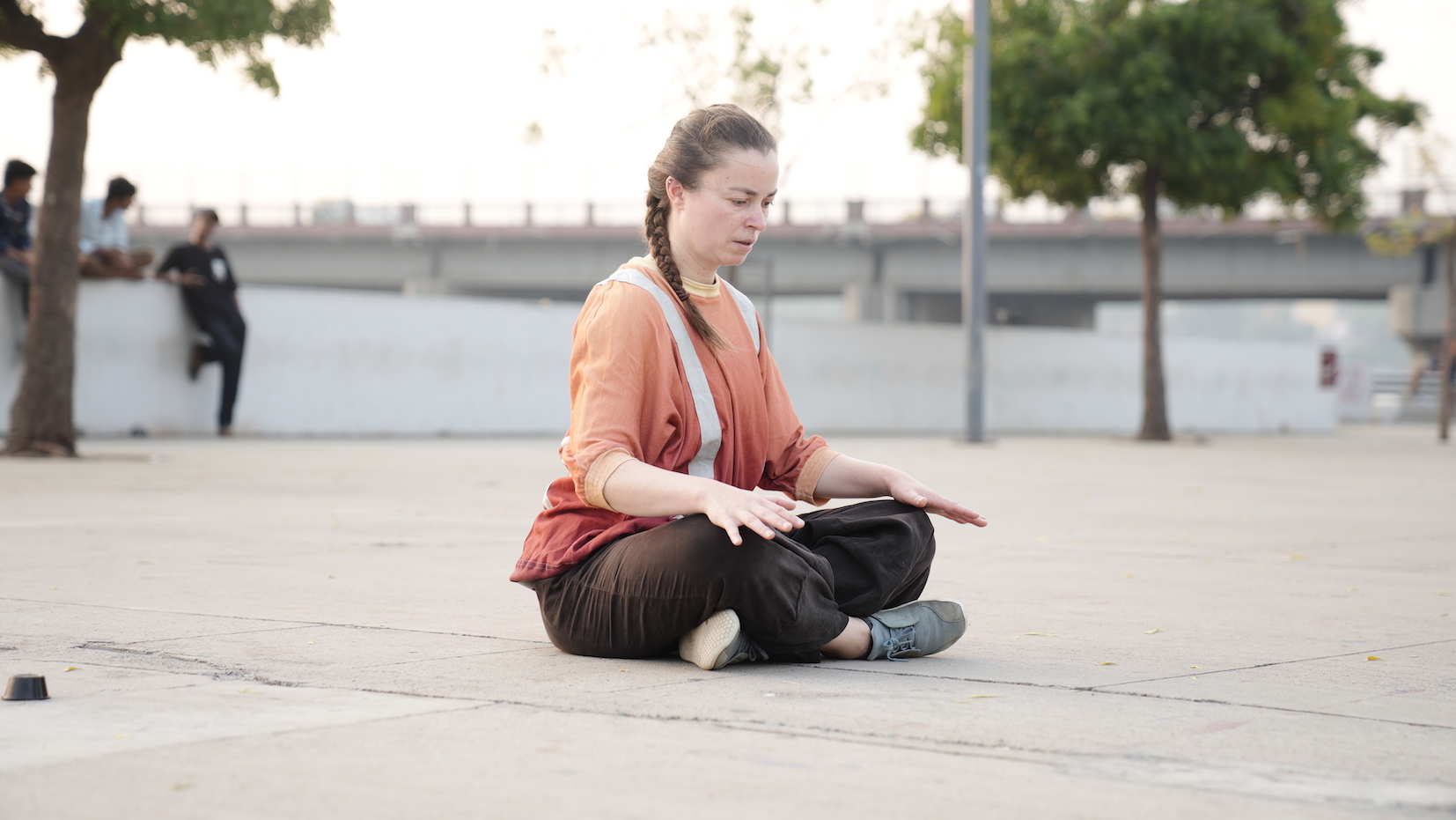
At the Sabarmati Riverfront, Glasgow-based artist Penny Chivas’ Where We Choose to Stand approached climate activism and political change through dance theatre
“The climate crisis is global, but we experience it locally, through the places we inhabit, the resources we depend on and the ways we organise our lives,” Sainani says. “We wanted to begin from that understanding rather than approach climate change as an abstract or distant concern.”
In Ahmedabad, she identifies heat and water as immediate concerns, besides urban development and material consumption. These touch the city’s architectural heritage, its textile and craft traditions, and its relationship with the Sabarmati. They also lead towards knowledge developed within communities over generations. A discussion about materials can open onto the resources used to produce them. A building can prompt questions about how people occupy space and cope with their surroundings. The city offers specific ways of approaching a subject whose scale can otherwise feel overwhelming.
At the Sabarmati Riverfront, Glasgow-based artist Penny Chivas’ Where We Choose to Stand approached climate activism and political change through dance theatre. Movement and music were combined with real stories and moments of connection with the audience. Sainani says the performance invited reflection on individual choices and what it means to stand together. Its public setting gave that invitation a different reach from an event at an institution.
Chivas and Shrivastav enter the subject through different means. One draws on the body, stories and collective action; the other works with a substance carrying ecological and political associations. Their place within the same programme allows those concerns to meet without making either work an illustration of a predetermined argument. The riverfront, meanwhile, brings the discussion into a setting already bound up with the city’s relationship to water, development and shared space.
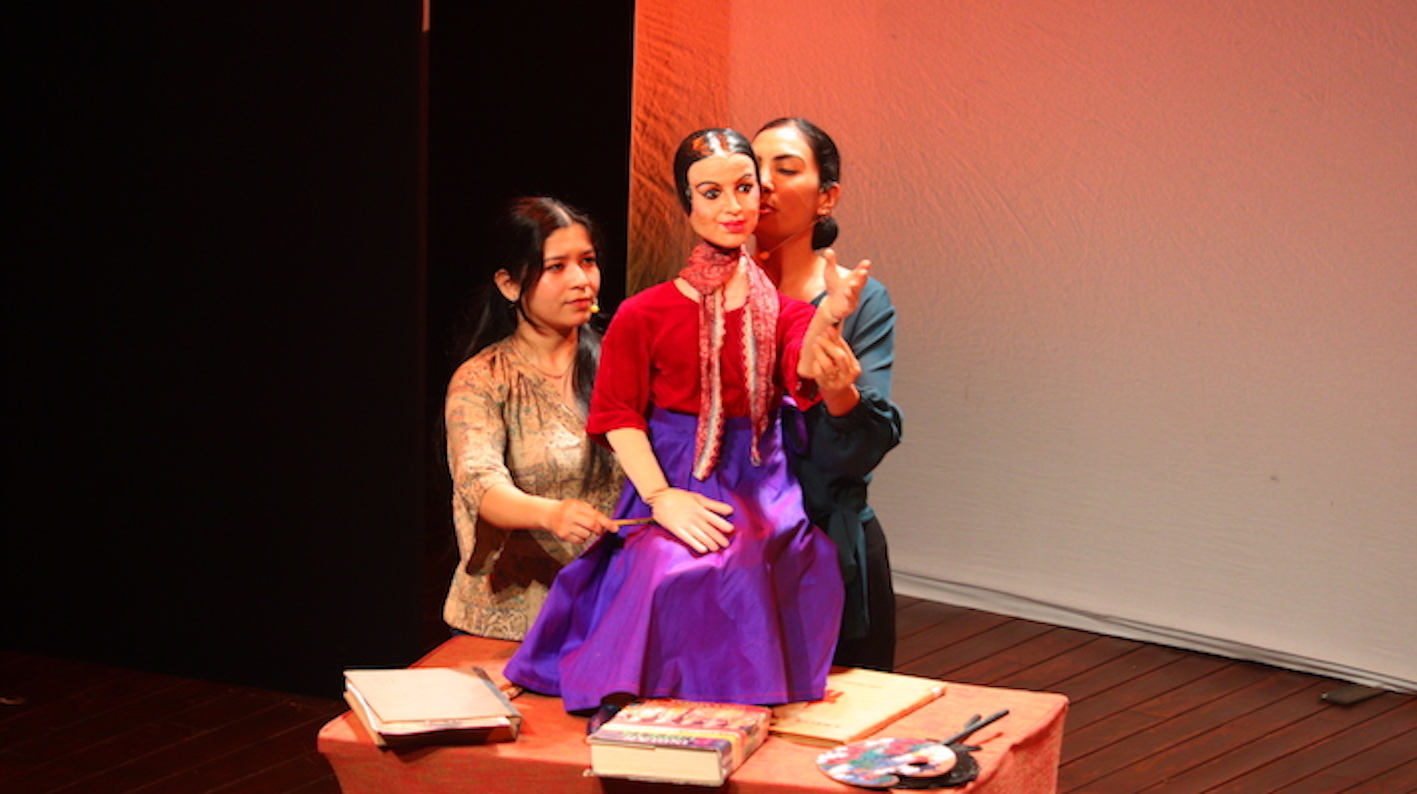
Amrita Sher-Gil: A Life Lived, part of The Natarani Theatre Festival by Darpana
For Sainani, this connection between a planetary crisis and lived experience is essential. “Rather than offering a single definition of climate change, we wanted to create multiple entry points through which people could recognise their own relationship with the environment.” Recognition, in this account, begins with something close enough to examine: a familiar material, a place, a bodily experience. The wider systems became questions that could be approached from there.
The range of participating institutions made for an unusually broad cultural map. It included Museum of Contemporary Art Ahmedabad, 079 | STORIES, Archer Art Gallery, Arthshila and Conflictorium; Darpana Academy of Performing Arts and Natarani; Gujarat Vishwakosh Trust, Hutheesing Visual Art Centre, Iram Art and Kanoria Centre for Arts. Kasturbhai Lalbhai Museum x Indigo Art Museum and Lalbhai Dalpatbhai Museum also participated as did Mehnat Manzil, Nexus Art, Samara Art Gallery, Shreyas Foundation and Vastu-Shilpa Foundation. The Sabarmati Riverfront completed the list of 18 venues.
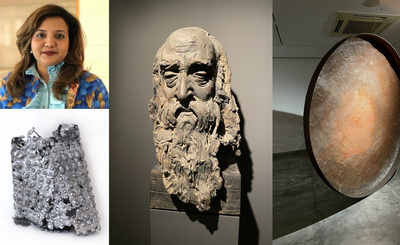
At Samara Art Gallery, curator Sonal Ambani brought together a group of artists for Tomorrow, and Tomorrow, and Tomorrow, a title drawn from Shakespeare’s Macbeth. The exhibition considered humanity’s tendency to put off difficult decisions, particularly on climate change, leaving responsibility to a future that may have fewer choices. Works by Jayesh Prajapati, Mehul Rathod, Mrinal Dutt, Alpesh Dave, Vishala Patel, Purvi Parmar, Tushar Kamble, Prashant Sitapara, Margee Patel and Ambani herself explored questions of sustainability, environmental change and the consequences of collective inaction. The gallery also organised walkthroughs, artist talks and conversations around material practices and creative processes, bringing students and visitors into the discussion.
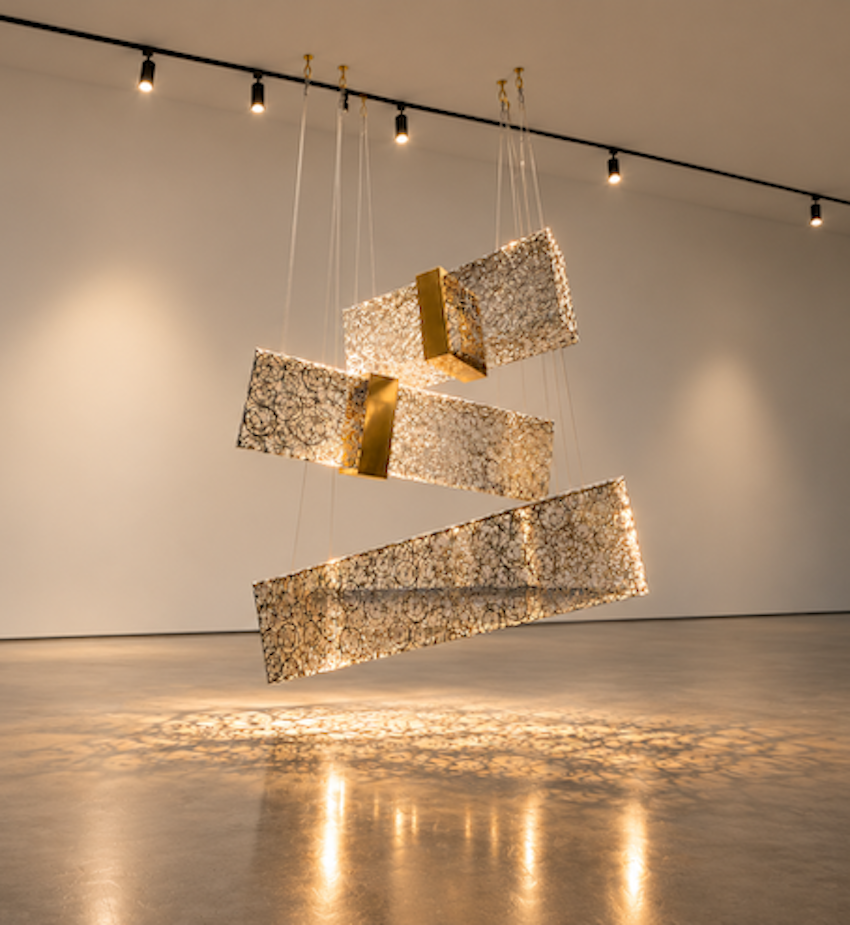
Sonal Ambani's Shadow and Form: Illumination in Steel
A different engagement with contemporary anxieties came through Games People Play 03, by artist duo Jiten Thukral and Sumir Tagra, presented by Ashvita’s at the Urmila Kailash Black Box, Kanoria Centre for Arts, from October 27 to November 2. Curated by Ashvin E. Rajagopalan, the exhibition marked the third chapter of a project that began in 2015 at Mumbai’s Dr Bhau Daji Lad Museum, followed by its second edition at Lalit Kala Akademi, New Delhi, in 2025. The original exhibition drew on the museum’s collection of traditional Indian games to explore play through physical, mental and psychological frameworks, inviting visitors to participate rather than remain passive spectators.
Over the years, the idea has taken on a more contemporary edge, turning games into a way of examining the social and political structures that shape everyday life. The Ahmedabad edition was conceived as a seven-day playtest in exhibition-making, bringing together seven works from different moments in the artists’ practice. Each day introduced a new state to this changing curatorial gameboard, with questions of vulnerability, anxiety, hope, belief, speculation, adaptability and care coming into play. Visitors were invited to navigate ideas of time, memory, displacement and chance, and consider how individual responses might alter the rules. The project draws on the artists’ continuing interest in how people negotiate uncertainty and the structures around them, making play a way to think about contemporary life and its unsettled realities.
Over the years, the idea has taken on a more contemporary edge, turning games into a way of examining the social and political structures that shape everyday life. The Ahmedabad edition was conceived as a seven-day playtest in exhibition-making, bringing together seven works from different moments in the artists’ practice. Each day introduced a new state to this changing curatorial gameboard, with questions of vulnerability, anxiety, hope, belief, speculation, adaptability and care coming into play. Visitors were invited to navigate ideas of time, memory, displacement and chance, and consider how individual responses might alter the rules. The project draws on the artists’ continuing interest in how people negotiate uncertainty and the structures around them, making play a way to think about contemporary life and its unsettled realities.
Also read: Subodh Gupta interview: ‘Even the most ordinary objects can carry extraordinary human histories’
Sainani says the curatorial process began with a shared, loose prompt, allowing each institution to respond through its own practice. “We approached the diversity of Ahmedabad’s cultural landscape as a strength,” she says. There was no intention to impose a single curatorial language across spaces with different purposes. An exhibition could connect with a discussion or a walk through an idea, a material or an unexpected association. Some connections would be indirect. That openness left room for audiences to make links the programme did not need to spell out in advance.
There was room to consider how cultural heritage enters an environmental discussion. The references to Ahmedabad’s textiles, buildings and community knowledge invited closer attention to particular practices and the circumstances in which they developed. This approach also reflects the breadth of Sainani’s own practice. Based in India, she works as a curator, designer, researcher and writer, and is a member of the international Curatorial Ethics Network. Her independent work has taken her across commercial galleries, museums, public art spaces and independent organisations internationally. Her interests include exhibition making and contemporary art from the Global South and its diasporas.
She has examined the collections and architecture of private art museums, including modern and contemporary art from Africa and Asia. Her paper on inclusivity in museum spaces received the INSC Researchers Award in 2021. Those concerns are relevant to a programme that depends on institutions thinking about whom they reach and how people enter their spaces. The architecture of a museum, its collection and its habits of address all influence who feels able to spend time there.
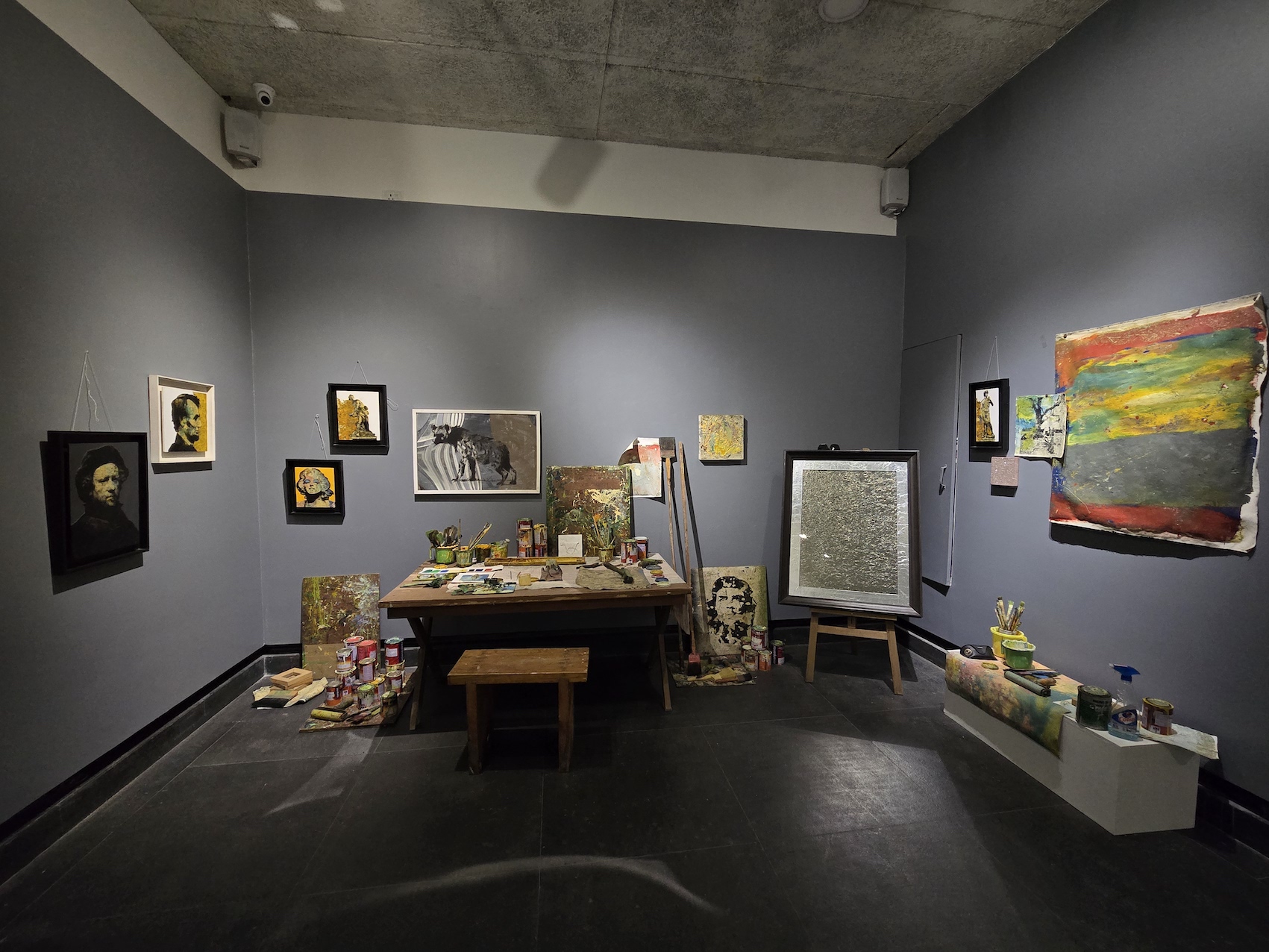
A Moment's Reprieve: A Solo exhibition of Pulkit Prajapati's works, designed by Samir Wadekar
For an unfamiliar visitor, an arts programme spread across a city can be difficult to navigate. Having more choices does not automatically make participation easier. Sainani acknowledges this: “A city-wide programme can feel exciting, but it can also feel overwhelming, particularly for someone who does not regularly visit museums or galleries.”
Her answer rests partly on offering different forms of encounter. An exhibition allows a visitor to hang around and look at their own pace. A workshop offers participation through an activity. Screenings and conversations provide other ways in, while guided walks bring attention to the surroundings through which people move. Someone need not arrive with a prior interest in contemporary art to find a point of connection.
Public performances have a particular role here because their audiences can include people who did not set out to attend an arts event. That possibility changes the relationship between the programme and its visitors. An encounter may begin through curiosity about something happening in a familiar place. “We have therefore thought about participation as more than simply making a programme available,” Sainani says. “It is also about helping people feel that they belong within it.”
Public performances have a particular role here because their audiences can include people who did not set out to attend an arts event. That possibility changes the relationship between the programme and its visitors. An encounter may begin through curiosity about something happening in a familiar place. “We have therefore thought about participation as more than simply making a programme available,” Sainani says. “It is also about helping people feel that they belong within it.”
Also read: Jenjum Gadi interview: ‘My village in Arunachal is my identity, Delhi made me who I’m today’
There is a related question about what visitors are being asked to take away. Climate programming can easily slip into familiar instructions or images of catastrophe. The release sets out a wide field of concerns: warming driven by human activity, particularly the burning of coal, oil and natural gas; land exploitation, deforestation, pollution and contamination; sustainability, carbon neutrality, biodiversity and environmental conservation. These are substantial subjects. Asking every artwork to communicate them as a lesson would leave little room for artistic enquiry.
“One of the things we were conscious of was that art should not become a vehicle for simply repeating messages that audiences already recognise,” Sainani says. “The climate crisis is urgent, but urgency does not mean that every artistic response needs to be didactic or arrive at a neat conclusion.”
This is where the programme’s breadth becomes more than a matter of format. Different practitioners approach the environment from different positions. Some attend to living materials and the agency of non-human life. Others examine the human footprint or the emotional experience of ecological anxiety. Still others consider the social and political consequences of environmental change. Such approaches can disagree about responsibility, action or even what deserves attention.
This is where the programme’s breadth becomes more than a matter of format. Different practitioners approach the environment from different positions. Some attend to living materials and the agency of non-human life. Others examine the human footprint or the emotional experience of ecological anxiety. Still others consider the social and political consequences of environmental change. Such approaches can disagree about responsibility, action or even what deserves attention.
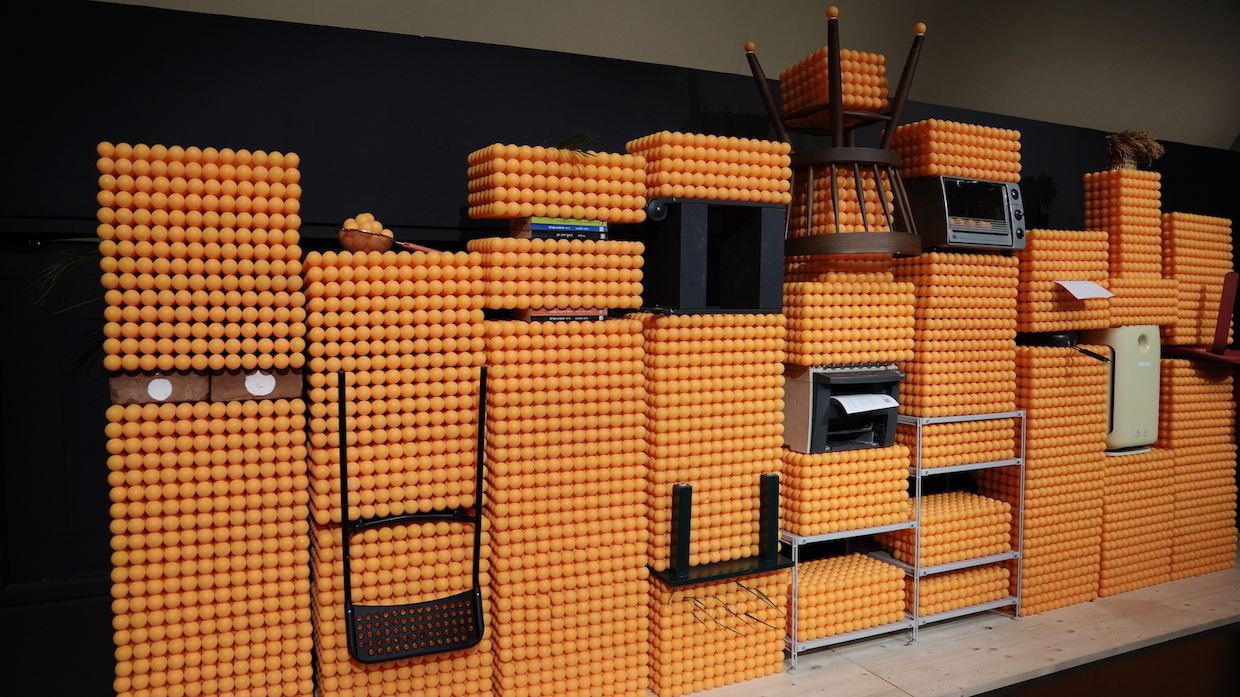
Games People Play by artist duo Jiten Thukral and Sumir Tagra.
Sainani wanted that disagreement to remain possible. “Art can make us uncomfortable, complicate our assumptions, hold contradictory experiences together and ask questions that do not have immediate answers,” she says. An audience may recognise the urgency of environmental damage while remaining uncertain about its own implication in it. A work can give that uncertainty a form, allowing it to be considered for longer than a public message might permit.
The question of responsibility becomes especially difficult when consumption and choice are discussed as though everyone has the same options. Access to resources affects how people protect themselves from environmental change, and how much control they have over the conditions in which they live. An appeal to individual action needs to take those differences seriously. Otherwise, it risks making the people most exposed to harm answerable for circumstances they have little power to alter.
“I also think it is important to acknowledge that people experience the climate crisis differently,” Sainani says. “The relationship between consumption and responsibility, for example, is not the same for everyone. Nor do we all have the same resources or choices when it comes to responding to environmental change.”
Shrivastav’s performance brings this concern back into view. The title Under the Same Sun suggests a shared condition, while the work examines unequal consequences. Salt’s association with civil disobedience adds another question: what forms can resistance take in the present ecological moment? The historical reference gives an audience something specific to consider, while leaving the distance between colonial rule and contemporary environmental injustice open to examination.
This emphasis places a responsibility on the curatorial framework too. It needs to accommodate responses that are unresolved, or uncomfortable for the institutions presenting them. The value of a shared theme depends partly on how far participants can question its terms. Sainani’s account leaves that possibility open, recognising that agreement about the seriousness of a crisis need not produce agreement about how to represent it.
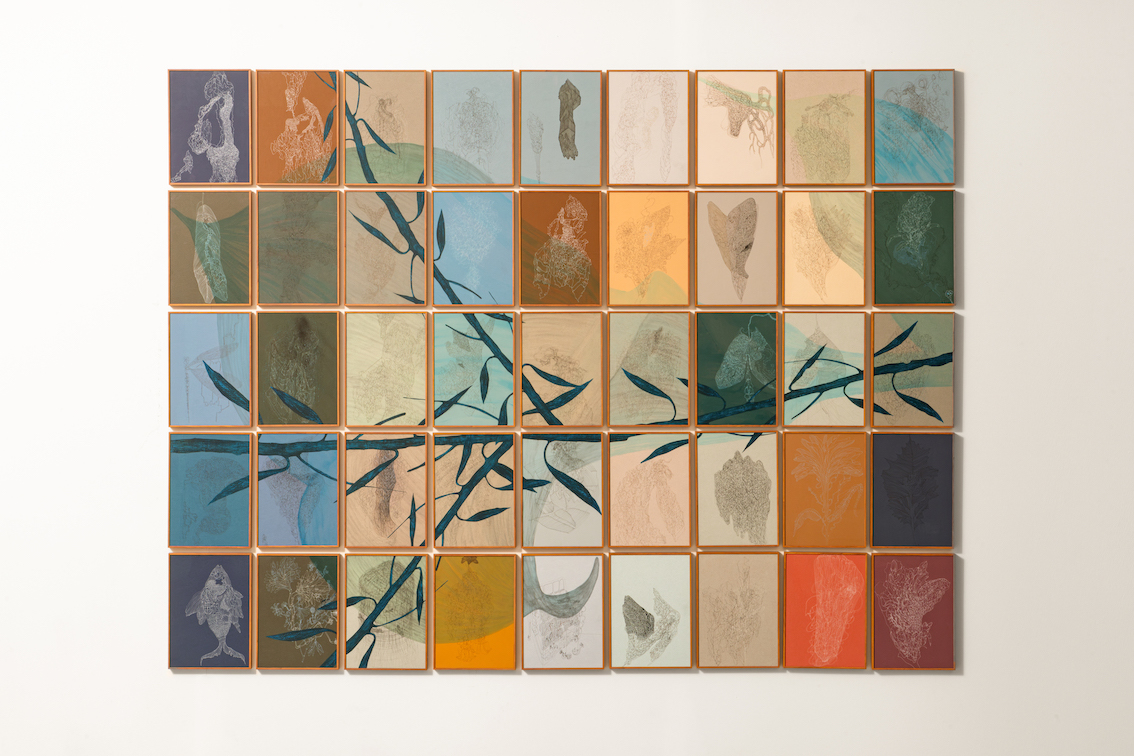
Sunil Padwal's 45 Pages of Eloquent Silence, which was part of 'I Dwell in Possibility,' Galleryske's multi-artist group exhibition at Museum of Contemporary Art Ahmedabad.
The programme’s collective structure had its own limits and possibilities. Eighteen institutions sharing a theme cannot be assumed to share every position on it. Their differences can make the exchange productive, provided collaboration allows space for separate ways of working. Sainani’s ambition is for the scale of participation to give the conversation a reach that an isolated event would struggle to achieve.
She is equally interested in what that collaboration might make possible after November 1. The participating institutions already have programmes and audiences of their own. Shared programming could encourage visitors to keep moving between them. Exchanges across disciplines could lead to work that would be harder to develop within one institution. Sustaining those relationships would give Cultural Week a life beyond its concentrated run of events.
“It would be wonderful for the connections established during the week to become part of the city’s cultural life throughout the year,” she says. Her suggestions are practical: more exchange between institutions, new collaborations and continuing opportunities for audiences to explore spaces they previously experienced separately. These are ambitions for future work, rather than outcomes that can be claimed on the strength of a single edition.
She hopes the environmental conversation will continue at a similarly everyday level. Thinking about water, the materials people use and the buildings they inhabit can make the relationship between individual decisions and larger systems easier to examine. Public spaces also belong within that discussion: how they are shared, who can use them comfortably, and how their condition affects encounters between people.
“Environmental awareness does not necessarily begin with a grand gesture,” Sainani says. It is an observation that brings the scale of the programme back to an individual visitor. Someone might leave with an unfamiliar institution to return to, or with a question about something they had previously taken for granted. Those small changes in attention are difficult to measure. They are also part of how a cultural programme can enter a person’s life.
For Sainani, the immediate hope is renewed curiosity about Ahmedabad’s histories and contemporary creative activity, and about the environment that sustains both. “If a work leaves someone with a difficult question rather than an easy answer, that can be a meaningful outcome in itself.” As this edition draws to a close, the question for its institutions is how to keep making room for such encounters when there is no shared calendar prompting them.
More from Arts


Comments
*Comments will be moderated