








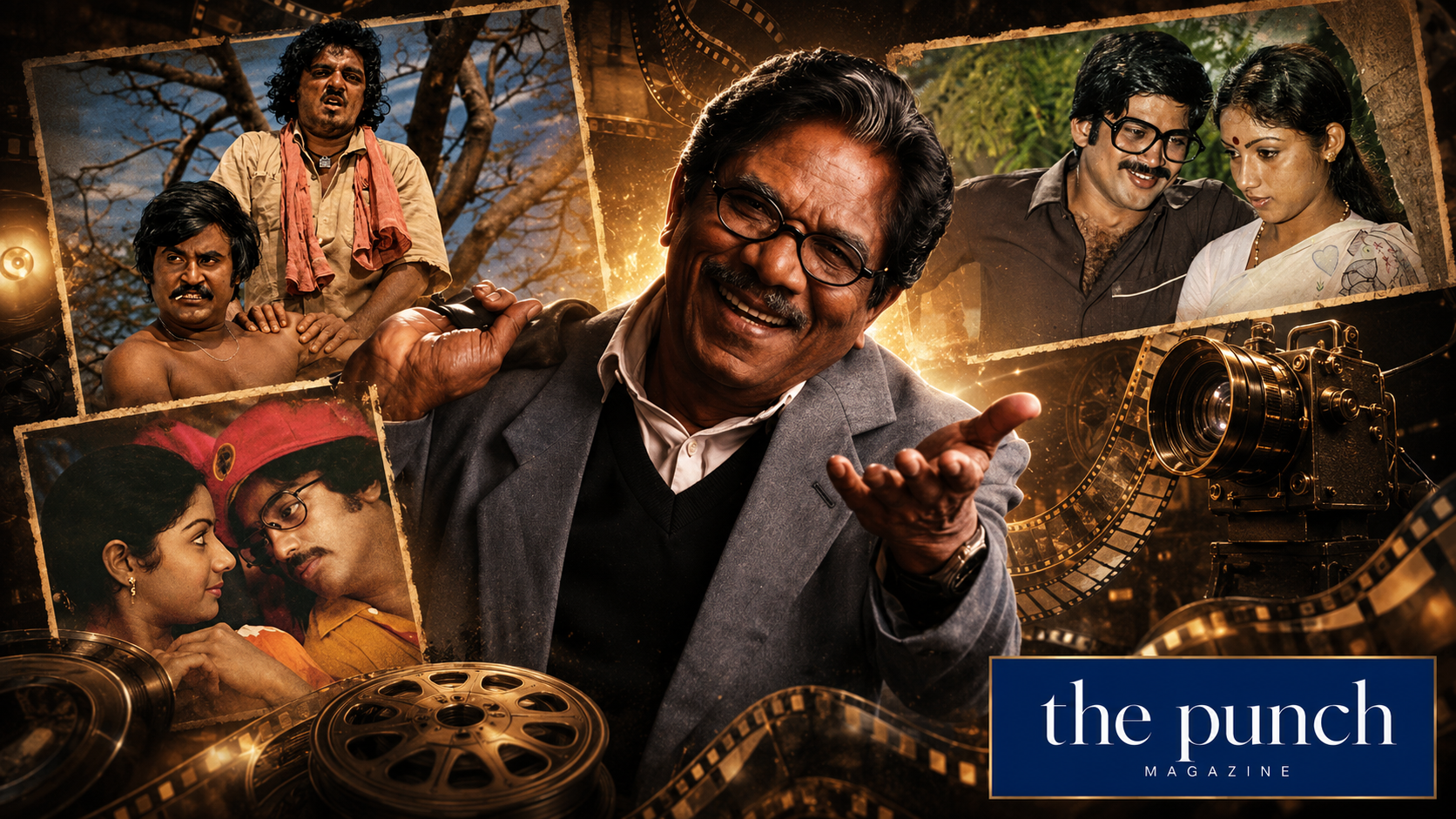
The films of Bharathiraja (1941-2026) showcased the village’s hunger, shame, desire, caste, rain, gossip, tenderness, rebellion, and memory. With his passing, Tamil cinema has lost one of the last great witnesses of its earth
The smell and feel of the wet earth after the pouring rain. The sound of a train passing through a village. A young woman standing at a threshold. A man walking away with a sense of pride and defeat. The lull before an impossible love is given a name. For more than four decades, Bharathiraja made cinema out of such moments. He gave them dignity, spotlighting the picturesque vistas of rustic life: its dusty tracks, dusky women, green fields, and golden sunrises.
Born Chinnasamy on July 17, 1941, in Theni Allinagaram, to Periyamaya Thevar and Karuthammal, Bharathiraja carried the earth of his birthplace into everything he later made. That may sound simple, but it is not. Many artists come from small towns and villages and spend the rest of their lives trying to escape them. Bharathiraja did the opposite. In his cinema, he returned to the world that had formed him.
The villages, however, were not havens of innocence to him. For he knew their cruelty, hypocrisies, caste arrogance, gossip, and suffocating codes. But he also knew their music, erotic charge, humour, moral theatre, and landscapes of loneliness. He understood that rural life was not mere background, but drama itself.
Before him, much of Tamil cinema was made inside studios. The village was often a set, painted and lit, domesticated for melodrama. Bharathiraja opened the door and let the sun in. In his 1977 debut, 16 Vayathinile, he shifted the axis of Tamil cinema. Suddenly, the countryside was not a place to be visited by the hero. It was the world. Its people stopped being mere tools to provide colour to a city-bred imagination. They had their own storms, vanities, hungers, humiliations and dreams. The film’s young characters, with mud on their bodies, had whorls of longing in their hearts.
Every generation inherits the revolution of the previous one as habit. Today, location shooting, natural light, dialects, fresh faces and rural textures may seem commonplace, but it was Bharathiraja who helped make that vocabulary possible in Tamil cinema. He changed not only where Tamil films could be shot, but what they could look at. He changed the face of the heroine, the body language of the hero, how desire could be framed, how shame could be shown, how caste could be confronted. In short, he gave Tamil cinema a new idiom.
The famous address with which he reached out to audiences — “En Iniya Thamizh Makkale,” my sweet Tamil people — will go down history as cultural memory. It was affectionate, theatrical, intimate and political all at once. This was the trademark of a filmmaker who did not speak from a pedestal, but as someone among his people, even when he was provoking them, angering them, challenging them. He wanted to be heard not only as a director but as a witness. The phrase had warmth, but also responsibility. It said: these stories are ours; look at them properly.
After 16 Vayathinile, one could have expected him to keep repeating himself. Many filmmakers spend their careers making the same kind of film in myriad different ways, working with the same material that first brought them success, shot them to prominence. Bharathiraja refused that comfort. Kizhake Pogum Rail strengthened his bond with rural life, but he then made Sigappu Rojakkal, a psychological thriller about a woman-hating killer, urban and dark in conception. It was as if he wanted to answer his critics before they became comfortable with their own labels. He could do the village, but he could also do dread, experiment, speed, perversity.
Nizhalgal and Tik Tik Tik widened the field further. He was not a “rural director” in the narrow sense. He was a director who knew that place shapes character, and that cinema must find the right soil for every story. Still, it is through his village films that he entered the bloodstream of Tamil life. Alaigal Oivathillai, Mann Vasanai, Muthal Mariyathai, Vedham Pudhithu, Karuththamma, Kizhakku Cheemaiyile are all testimony to this. They hold love, caste, kinship, honour, violence, motherhood, longing and rebellion in ways that still seem relevant. Bharathiraja could be lyrical, but his lyricism was never weightless. Even when a shot was beautiful, something human was at stake inside it. He knew that a field could be romantic in one moment and oppressive in the next. He knew that a pond, a pathway, a courtyard or a railway line could hold the fate of a life.
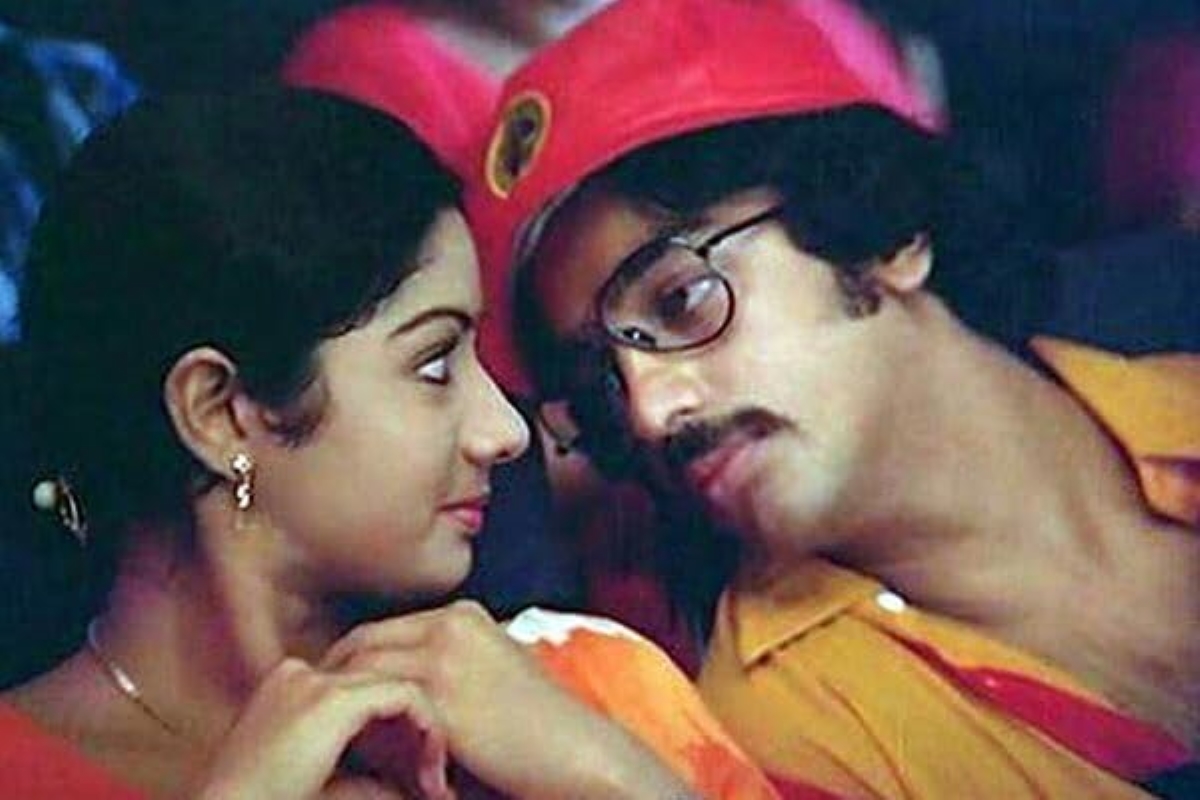
A still from Sigappu Rojakkal
Muthal Mariyathai remains one of his most tender achievements. With Sivaji Ganesan as the ageing village head and Radha as the younger woman whose presence unsettles the moral arrangements around him, the film handled love as something quieter and more dangerous than possession. Bharathiraja understood affection between people separated by age, caste and class as a form of recognition. The film has the ache of things unsaid. It is not loud in the way lesser films about forbidden love are loud. It is steeped in the sorrow of people who know that tenderness may not save them from the world.
In Vedham Pudhithu, Bharathiraja looked at caste with a fiercer eye, as habit, speech, pride, ritual, entitlement, and family inheritance. That was one of his strengths. He could make social criticism felt through bodies and rooms, and not lectures alone. His cinema was not always even, not always free of excess, not always beyond debate. But it had nerve and was willing to enter the wound. Bharathiraja kept returning to the violence of caste.
The women in his films suffered, desired, resisted, compromised, waited, broke down, and endured in the end. He was drawn to women at the edge of family and community, women who carried the burden of social codes more directly than men. Sometimes his gaze belonged to his time and carried its limits. But he also opened space for female characters of unusual force and complexity. Karuththamma, with its focus on female infanticide, remains one of his most socially conscious works. It is a film born out of outrage, grief and moral disturbance, showing all characteristic of a filmmaker unable to look away.
Bharathiraja’s eye for actors changed many lives. Karthik, Radha, Revathi, Radhika, Vijayashanti, Janagaraj, Vadivukkarasi, Pandiyan, Napoleon and several others found important beginnings or defining turns through his cinema. He had a gift for seeing screen presence before the industry had named it. He did not always need perfection. A tremor in the eye, a stubborn mouth, a body that belonged to the landscape, all these mattered to him.
Many future filmmakers and actors passed through his world: K. Bhagyaraj, Manivannan, Manobala, Thiagarajan, Ponvannan. His influence was evident in people as much as in films. This is often the least measurable part of a director’s legacy. Bharathiraja’s cinema became a school even before he formally ran one. He was honoured often: six National Film Awards, Filmfare Awards South, Tamil Nadu State Film Awards, the Nandi Award, the Padma Shri in 2004, an honorary doctorate from Sathyabama University, lifetime honours and public reverence. But his true award was that his images became public memory. People remembered the way his characters called out, wept, waited, crossed fields, faced elders, broke rules.
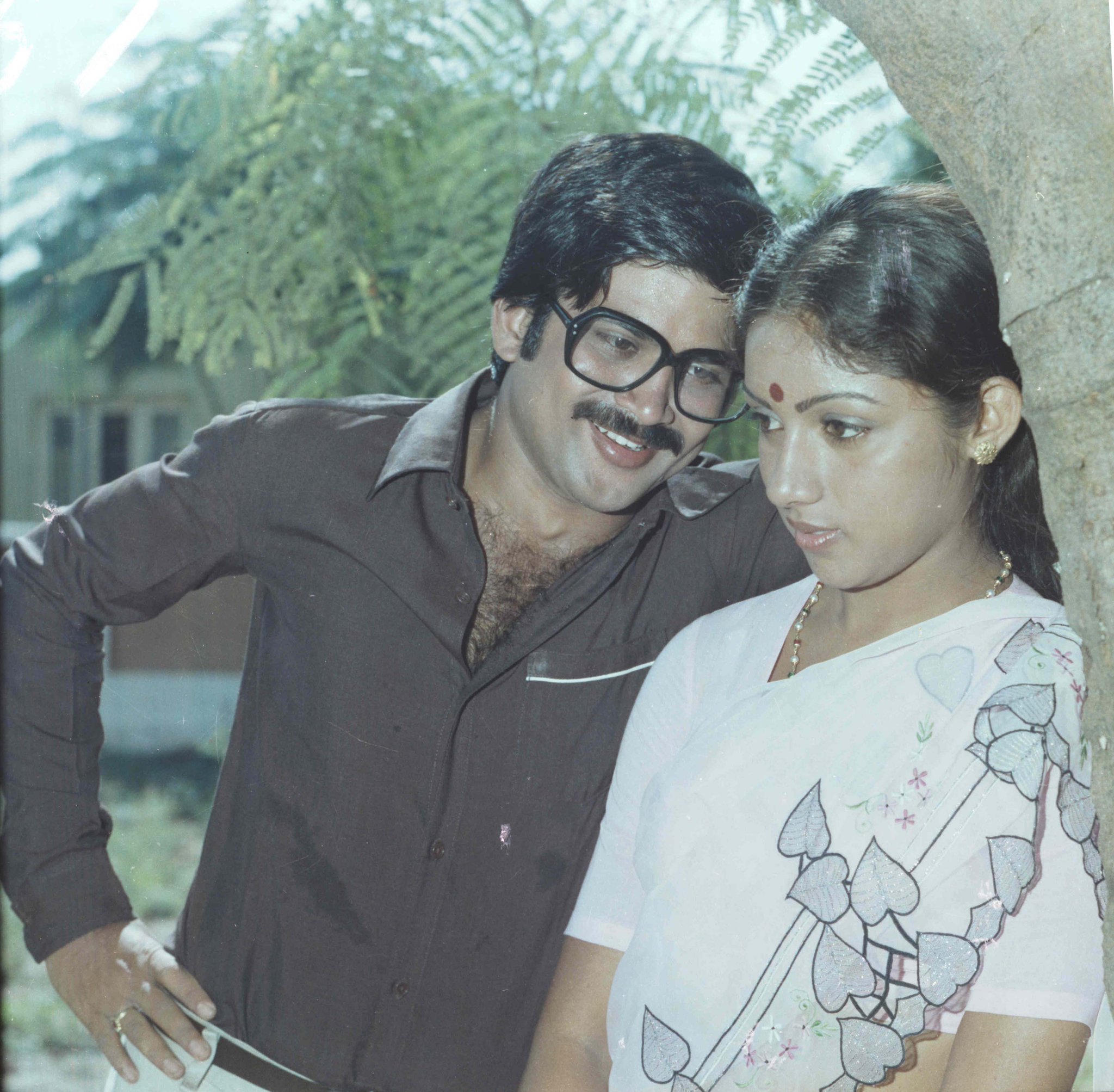
A still from Pudhumai Penn
His later years were not without struggle. There were unrealised projects, shelved films, arguments, legal tussles, television work, public controversies, political statements, moments that invited criticism. He belonged to the rougher tradition of public artists: outspoken, emotional, sometimes combative, often larger than the room he occupied. His positions could provoke disagreement. His language could be sharp. His sense of Tamil identity, like his cinema, was intense and not always easy. But even his contradictions belonged to the same source: he cared fiercely about people, land, language, pride and memory.
In his final years, sorrow came close to home. His son Manoj Bharathiraja, whom he had introduced in Taj Mahal, died of a heart attack in March 2025. No parent should have to stand on that side of the funeral fire. Those who saw Bharathiraja afterwards spoke of a man carrying grief in the body. Age had already made its claims; illness had begun to circle. But the death of a child rearranges the life of a parent. To write of Bharathiraja’s passing a year later is also to remember that behind the public mountain stood an old father who had been hurt in the most private way.
Perhaps that is why his death feels especially heavy. He had spent a lifetime filming the grief of others: lovers, mothers, daughters, men trapped by honour, women trapped by custom, children born into cruel arrangements. In 2026, grief has visited his own house. The man who gave Tamil cinema so many images of longing and loss had to live through a loss no art can redeem. And yet, art remains. That is the strange mercy. Bharathiraja is gone, but somewhere someday a young viewer will watch 16 Vayathinile and feel the shock of its freshness.
Somewhere Muthal Mariyathai will make an older viewer fall silent. Somewhere Vedham Pudhithu will disturb a comfortable mind. Somewhere Karuththamma will make a daughter’s life feel newly sacred. Somewhere a filmmaker not yet born when these films were made will learn that cinema need not begin in the city, flatter power, or make every face coalesce into sameness. It can begin in a field. It can begin with a girl’s anger, a mother’s fear, a boy’s foolish pride, an old man’s loneliness, a caste insult, a train whistle, a stretch of dry land waiting for rain.
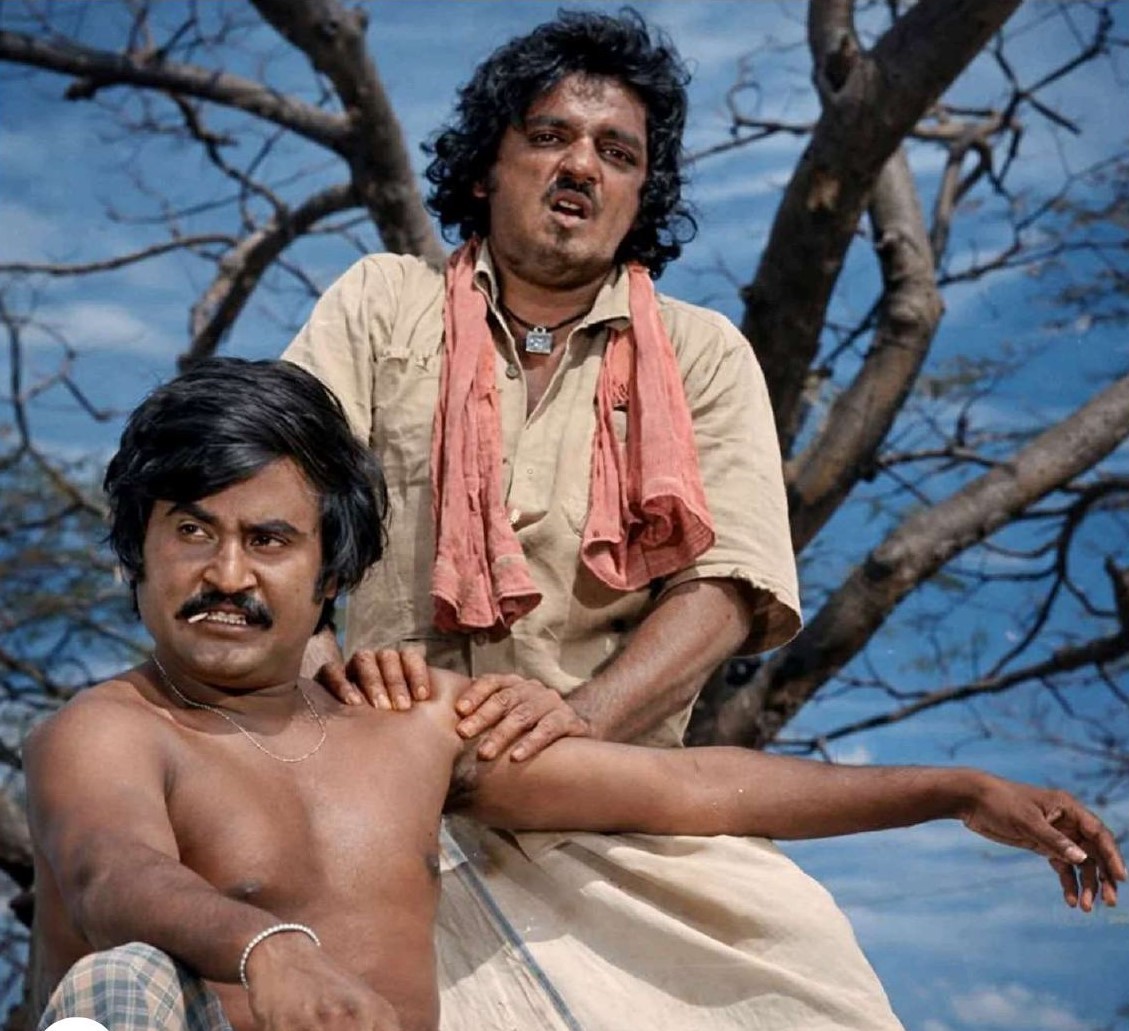
A still from 16 Vayathinile
Bharathiraja’s greatness lay in making the local feel vast. He went deep into Tamil Nadu to become universal. That is what great artists do. They do not chase the world, but they make one corner of it so truthfully that the world recognises itself there. In his villages, one could see India’s wounds. In his women, one could see the cost of patriarchy. In his lovers, one could see the cruelty of social hierarachies. In his landscapes, one could see how memory clings to land long after people leave it.
Bharathiraja was a maker of emotional geography who mapped Tamil life through feeling: desire, shame, pride, caste, love, loss, rebellion, tenderness. He gave cinema back its smell of earth. Now the voice that once called out to “En Iniya Thamizh Makkale” has fallen silent. But the call remains. It remains in the faces he found, the actors he worked with, the filmmakers he inspired, the villages he returned to us, the women he placed at the centre of pain and courage, the uncomfortable truths he forced into the frame. It remains whenever Tamil cinema steps out of the studio and trusts the uncharted territory.
Bharathiraja has gone back to the soil he spent a lifetime filming. The earth was not a metaphor for him. It was origin, archive, witness and wound. He came from it, listened to it, argued with it, loved it, exposed it, and made it speak on screen. Perhaps this is all one can ask of an artist: that he leave behind a new way of seeing. Bharathiraja did that. He taught us to look at a nondescript village and its ordinary people and find ourselves ensnared, entranced. He taught Tamil cinema that the most powerful stories may be waiting not under arc lights, but under the hard sun, beside a field, in a house where someone is swallowing tears. The mountain has fallen. The landscape he revealed remains.
More from Culture





Comments
*Comments will be moderated