








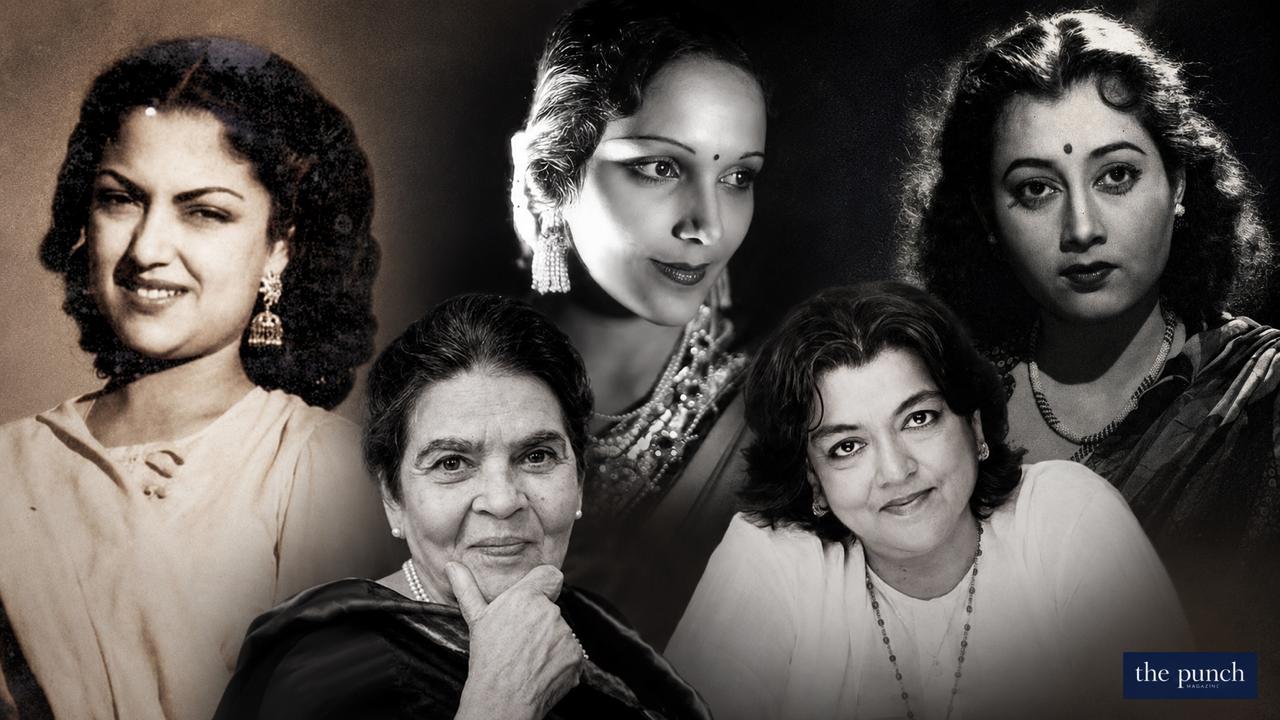
(Clockwise from left) Fatma Begum, Devika Rani, Protima Dasgupta, Kalpana Lajmi and Sai Paranjpye. One hundred years after Fatma Begum’s Bulbul-e-Paristan, the story of Hindi cinema looks very different when we remember the women who wrote, produced, directed and changed it from the start.

Since Fatma Begum’s Bulbul-e-Paristan premiered in 1926, each generation of women directors has pushed cinema into new territory, from fantasy and parallel films to feminist dramas, OTT experiments and global acclaim
June 2026 marks 100 years since Bulbul-e-Paristan, the directorial debut of India’s first female director, Fatma Begum (1892-1983), premiered in 1926. It’s a milestone which challenges the common assumption that women in filmmaking emerged only in the last three decades. As it turns out, women have been behind the lens for longer than sound has been part of our movies.
Fatma Begum, an estranged wife of a nawab, entered the industry as a scriptwriter, after years of acting in Urdu theatre. After acting in a few movies in the early 1920s, Begum wrote, directed, acted, and produced several films under the banner of Fatma Films, along with her daughters.
Her debut, Bulbul-e-Paristan, was set in a fantasy land, to give the illusion of which Begum used trick photography and elaborate song and dance sequences, a highly innovative and experimental choice for its time. Sadly, neither prints of any of her movies nor much information about her life have survived the test of time. What has endured is the legacy she left behind, and the precedent she set for generations of women storytellers who followed. It’s intriguing to note that long-forgotten Begums may have preceded the Kapoors as Indian cinema’s first ‘film family’, with Begum’s daughter Zubeida going on to star in India’s first talkie, Alam Aara (1931).
Women continued to shape Hindi cinema as producers, actors, writers and choreographers. Pioneers such as Devika Rani (1908-1994), along with her first husband, Himanshu Rai (1892-1940), led Bombay Talkies, while writers such as Ismat Chughtai (1911-1991) left an indelible mark with their storytelling. Despite their growing presence on screen and behind the scenes, women remained few and far between in the director’s chair in the years that followed.
It's important to note that the historical records are fragmentary, with inadequately documented contributions, making it possible that perhaps some of the women filmmakers were lost to time. Among the names that have survived, are that of Protima Dasgupta who directed the hit Chhamia (1945), and Shobhna Samarth, who directed two films a decade apart, introducing the world of cinema to her daughters, Nutan and Tanuja. The 1950s ushered in the golden era of Hindi cinema with films quickly becoming woven into the everyday imagination of the country.
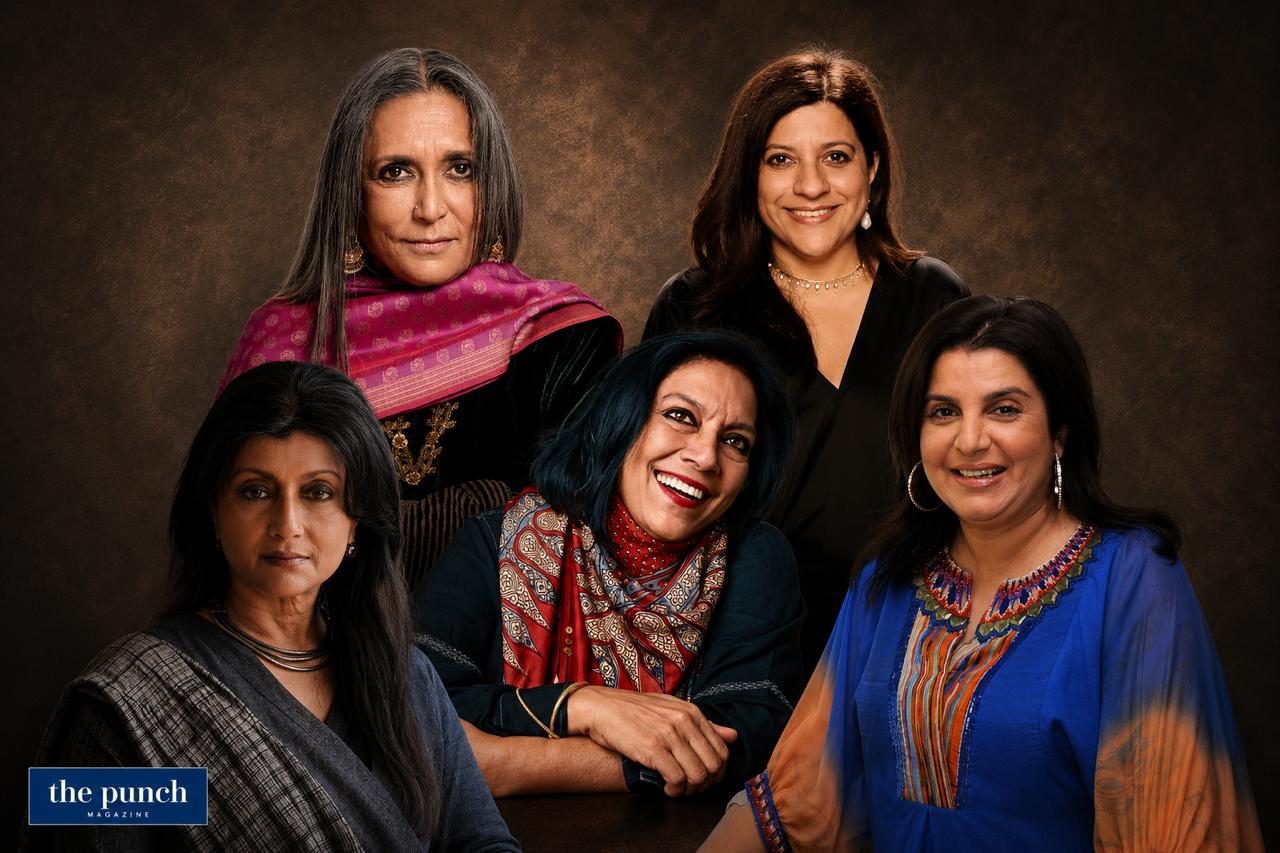
(Clockwise from top left): Deepa Mehta, Zoya Akhtar, Farah Khan, Meera Nair and Aparna Sen
The decades that followed saw significant leaps in experimental storytelling and technology, with colour films and blockbuster successes. The 1970s launched superstars like Amitabh Bachchan and Rajesh Khanna to unprecedented popularity, and the stories increasingly became more male-centric, with the rise of the ‘angry young man’ archetype. Women were more visible than ever as actors, dancers, and choreographers, but rarely in the director's chair. Perhaps there were more women directors than history currently remembers. Cinema, after all, has a habit of preserving its actors and icons more readily than its architects.
The 1980s marked a turning point with the emergence of four significant women directors: Sai Paranjpye, Aparna Sen, Kalpana Lajmi and Mira Nair. Each carved out a distinct cinematic voice that challenged the established norm, breaking the mould of not only what was acceptable for female directors, but also what was popular at the time. Paranjpye’s Chashme Baddoor (1981) is a masterclass in deadpan humour and satire, as it parodied macho posturing of young men and various other ‘filmy tropes’. Casting Amitabh Bachchan and Rekha as themselves to spoof their own on-screen personas was a stroke of genius we seldom see in Bollywood. Paranjpye is also the first female director to win the filmfare award for best direction for her film Sprash (1980).
Aparna Sen became one of the most celebrated voices of parallel cinema, creating intimate and character-driven dramas that examined socio-political themes while remaining grounded in interpersonal relationships. She has earned nine National Film awards for films like 36 Chowringhee Lane (1981) and Mr. and Mrs. Iyer (2002).
Kalpana Lajmi tackled complex social and feminist issues, like female desire and marital fidelity in Ek Pal (1986), and caste politics in her film Rudali, which went on to win three National Film awards and was India's official entry for the Oscars in 1991. Mira Nair defined the new era of filmmaking in the 1990s with her independent and socially conscious dramas, and experimental documentary-style filming in Salaam Bombay (1989) and Mississippi Masala (1991).
Deepa Mehta’s Elements trilogy caused a political storm, particularly with her groundbreaking movie Fire (1996), which explored a deeply romantic and intimate relationship between two sister in-laws. The openly lesbian story was unprecedented in mainstream India at the time, and triggered protests, riots and attacks on cinema halls. Water (2005), the final instalment in the trilogy, received an Oscar nomination.
The industry women entered, remained overwhelmingly male-dominated, both on screen and behind the scenes. For women filmmakers, simply securing funding and distribution often meant making creative compromises, such as weaving in male leads and romantic subplots, and navigating the established system. Yet what stands out about these directors is that they were not content with merely occupying a seat at the table. While breaking into the industry, they also expanded the boundaries of what Indian cinema could be.
They proudly challenged long-held storytelling conventions and carved out distinct creative identities of their own, defying every storytelling and technical precedent set before them. Much of their work emerged from parallel and independent cinema, spaces that often proved more receptive to women filmmakers than the mainstream industry.
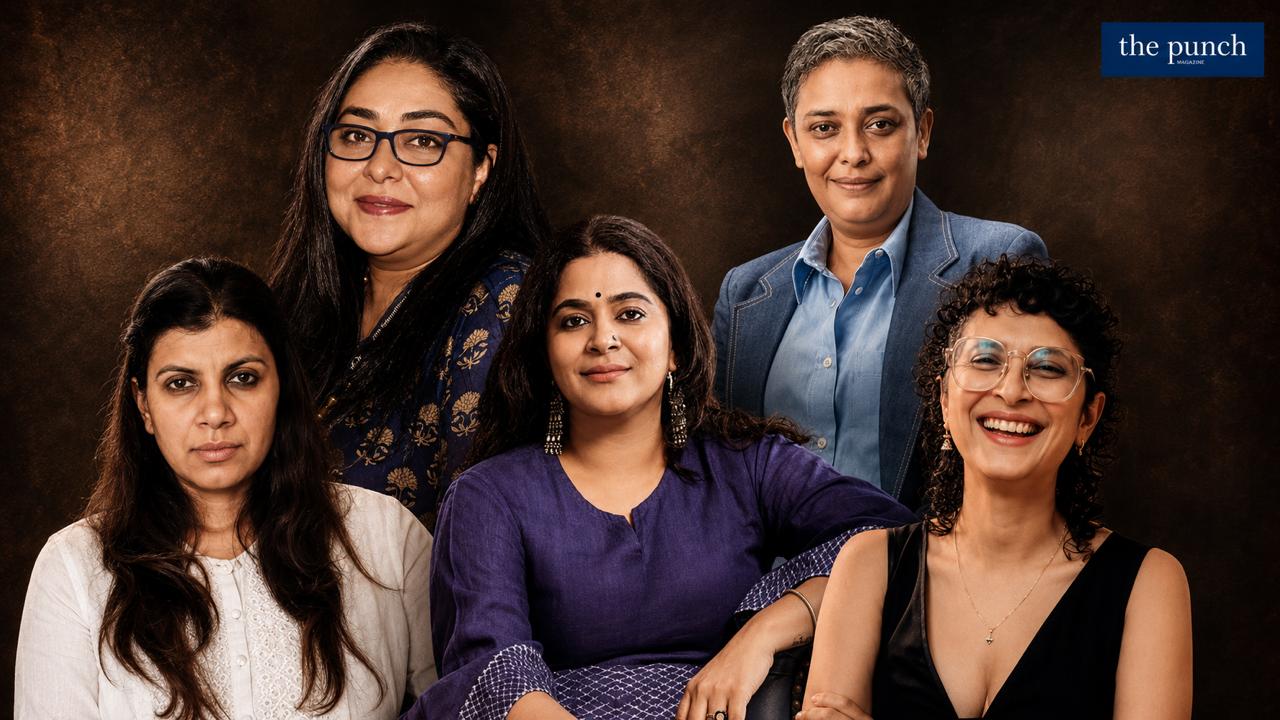 (Clockwise from top left): Meghna Gulzar, Reema Kagti, Kiran Rao, Ashwiny Iyer Tiwari and Alankarita Shrivastava
Cut to Farah Khan, who dominated the commercial masala genre with beloved films such as Main Hoon Na (2004) and Om Shanti Om (2007). Such is Khan's enduring popularity that even today, social media is filled with people pleading for her return, starved as they are of the kind of self-aware meta-humour and unabashedly filmy spectacle that has largely disappeared from mainstream cinema. Meanwhile, Zoya Akhtar's slice-of-life dramas and coming-of-age stories blended emotional depth with sophisticated urban settings, giving rise to some of the most memorable ensemble films of the era.
The 2010s marked another major shift. Women directors entered the mainstream in greater numbers than ever before. Much like the women who came before them, they resisted easy categorisation, growing alongside the internet and the rise of OTT platforms that expanded the space for unconventional storytelling. Contemporary filmmakers became increasingly willing to engage openly with themes such as female desire, sexuality, loneliness, caste, violence and domesticity, subjects that mainstream Hindi cinema had often approached cautiously or ignored altogether.
Whether through Kiran Rao’s realism in Laapata Ladies, Alankrita Shrivastava’s unapologetically feminist undertone in Lipstick Under My Burkha, Meghna Gulzar’s emotionally layered political dramas like Talvaar and Raazi, or Reema Kagti’s genre-bending thrillers such as Talaash and Dahaad; the new generation of filmmakers captured a rapidly changing social and cultural landscape while continuing the century-long tradition of women pushing Indian cinema in unexpected directions.
If there’s one thing this journey through a century of filmmaking teaches us, it is that women directors have always been part of Indian cinema's canon, even when they fade from its history and collective memory. The industry remains largely male-dominated both in terms of who makes decisions and the audience it chooses to cater. Despite decades of commercial success, critical acclaim and artistic innovation, women filmmakers are still often treated as a category unto themselves, prefixed by their gender in a way male directors rarely are.
Because this century-long legacy is so often overlooked, contemporary women filmmakers continue to be framed as newcomers, exceptions to a male norm, or once-in-a-generation breakthroughs, even as their films are routinely relegated to the margins through labels like ‘women-centric’ and ‘OTT-only’. Their success is still received as an exception rather than a continuation, as though women had not been part of Indian cinema’s making from behind the camera since the very beginning.
After a century, things are changing for the better. Women are making decisions behind the scenes more than ever before. They are writers, lyricists, producers untethered from the names of their husbands. And yes directors and filmmakers. Recent years have brought Indian women film personalities major national and international recognition, with Payal Kapadia becoming the first Indian to win the Grand Prix at Cannes for All We Imagine As Light, and producer Guneet Monga and her director Kartiki Gonsalves bringing home India’s first Oscar in decades for Elephant Whisperers.
Shuchi Talati’ Girls will be Girls won John Cassavetes Award at the 2025 Film Independent Spirit Awards; it was also selected for the Cannes Écrans Juniors at the 77th Cannes Film Festival. And yes, they still continue to challenge and offend the right people, causing political storms and sparking difficult conversations every now and then, whether through Arati Kadav’s Mrs. or Jasmeet K. Reen’s Darlings. Ashwiny Iyer Tiwari, who has made films like Nil Battey Sannata, its Tamil remake Amma Kanakku, Bareilly Ki Barfi, and Panga, recently her courtroom thriller System; her films celebrate women who defy social expectations, maternal sacrifices, and systemic corruption to reclaim their dreams.
Women were never merely asking for a place in cinema; they were actively expanding what cinema could do. From Fatma Begum setting her debut film in a fantastical world and using innovative visual tricks to bring it alive to Anvita Dutt’s Bulbbul and Qala, which draw on dark fairy tales, folklore, fantasy and gothic elements, women filmmakers have repeatedly pushed Indian cinema towards newer forms of storytelling. They have widened the kinds of stories it tells, deepened the way it looks at the social and political world, and opened up fresh artistic and technical possibilities.
Tracing this century-long history makes one thing clear: “female directors” were never a monolith or a neat label. They have always been a wide and restless field of voices, styles and perspectives, and that field continues to grow.
More from Culture



Comments
*Comments will be moderated