








Ankit Wali and Siddarth Koul’s Kashmiri-language debut feature looks at exile through memory, humour, grief and one old man’s aching wish to see Kashmir once again
While watching Batt Koch (The Lost Lane), the indie film on the plight of a Kashmiri Pandit family, which released in theatres earlier this year and was screened at the New York Indian Film Festival on May 30, I couldn’t help but think of its inevitable comparison with The Kashmir Files because the two films seem to stand on opposite ends of the same wound.
Vivek Agnihotri’s film approached the tragedy through rage, accusation, horror and a language of open confrontation; it wanted the viewer to feel the violence against Kashmiri Pandits with a clear intent to polarise. Batt Koch, by contrast, internalises the trauma through the story of an old man losing his sense of time, with his heart aching for a return to Kashmir, a complicated return that keeps getting deferred across decades.
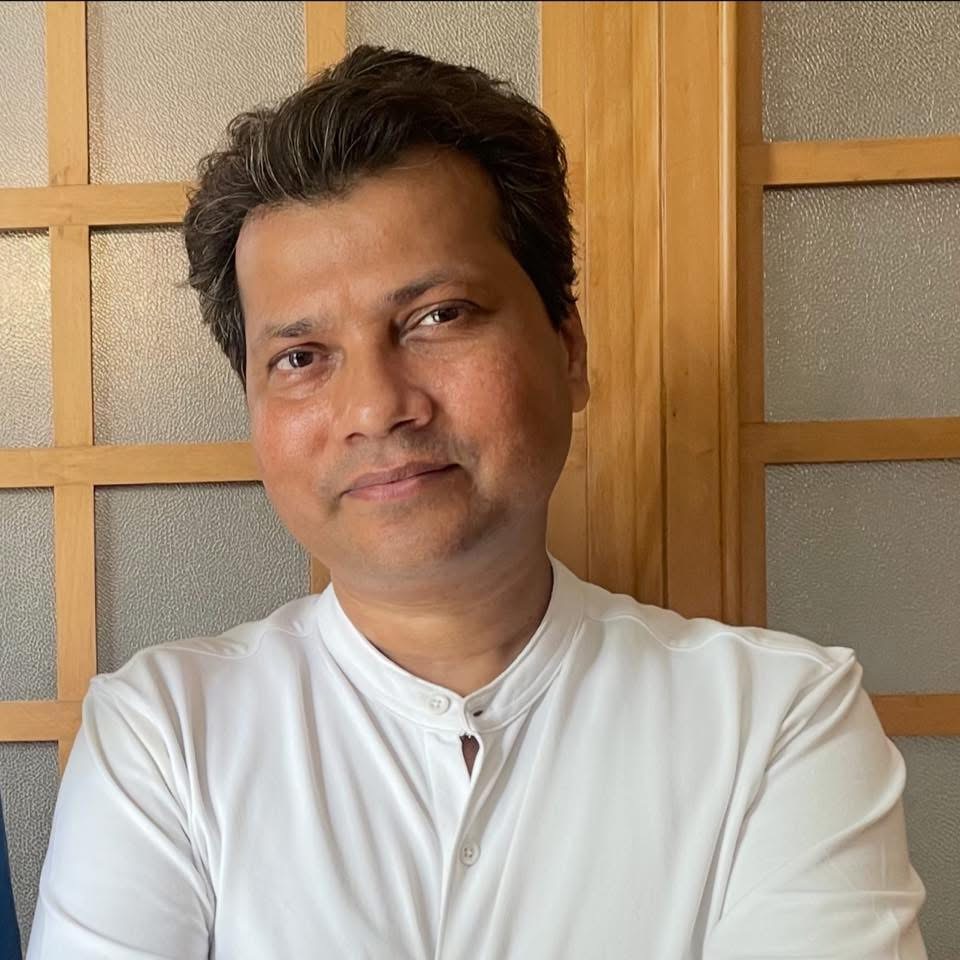
The film, which derives its title from a colloquial term for Pandits and a Kashmiri word for lane, has been directed by debut filmmakers Ankit Wali and Siddarth Koul, and produced by Vinayak Razdan. It has secured two major nominations at the New York Indian Film Festival: Best Debut Feature Film and Best Actor for M.K. Raina.
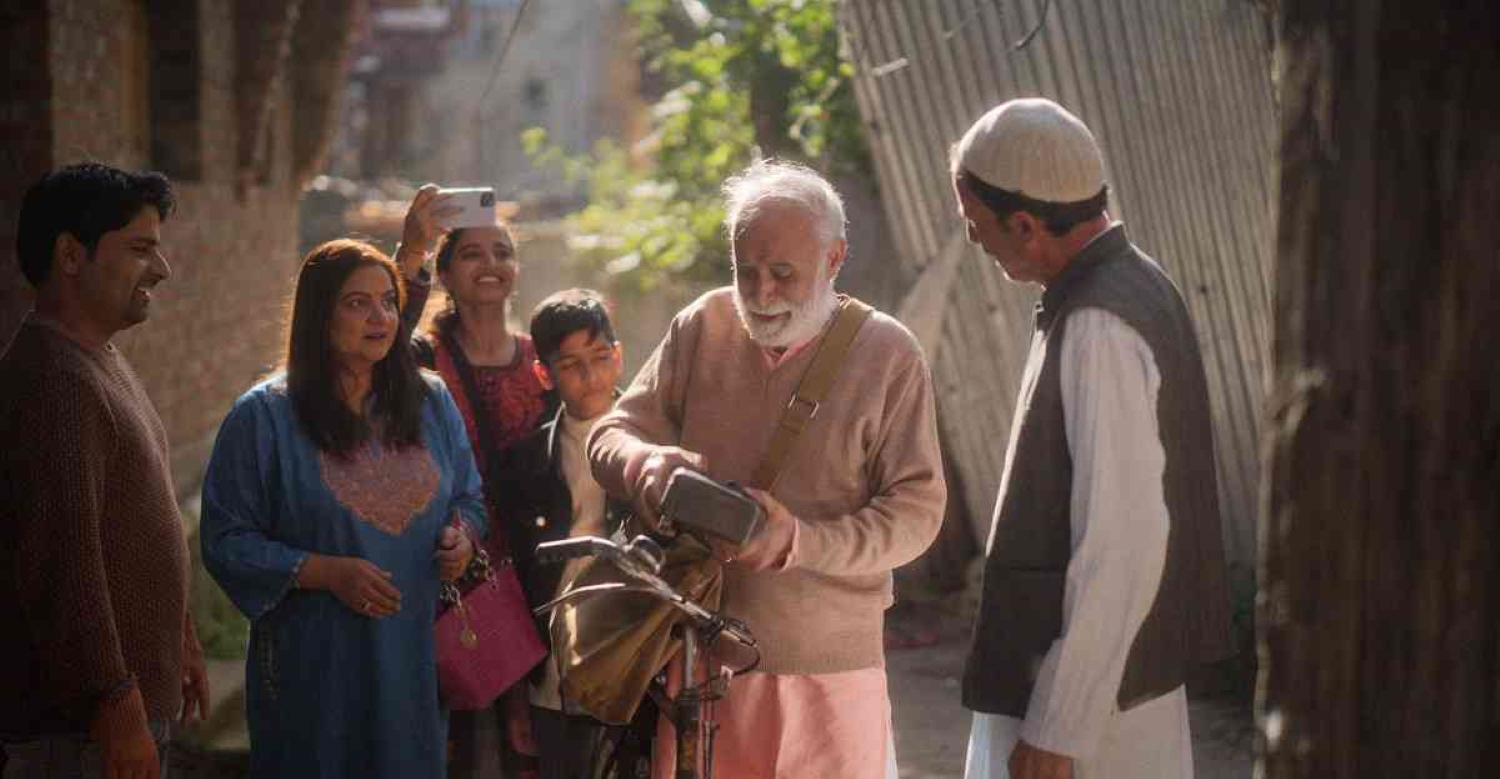
Raina plays the ageing patriarch of the Pandit family, which lives in Jammu, far from the ancestral home in Anantnag they were forced to leave behind during the exodus that sowed the seeds of distrust, cleaved hearts forever. The film begins with a simple but devastating thought: millions across the world are displaced from their homes. The world sees it as the act of leaving, and fails to understand what people carry inside them every day. That grief does not always make itself visible to the world. It stays hidden in the body, tongue, food, jokes, dreams, and old songs.
Poshkarnath Koul (the formidable M.K. Raina) begins to lose his sense of day and time after the death of his wife, Jai Kishori Kaul (Kusum Dhar) — who, too, longed to go back home — but Kashmir remains intact in him. It’s an ache that acquires an urgency of its own in her absence; the past is the only place where something in him still lives freely. It returns to him in fragments: Mattan in Anantnag, childhood streets, a village, a home.
Once, he may have seemed indifferent to the idea of return; now grief changes the meaning of the place. Kashmir, in his subconscious, becomes inseparable from his late wife. He does not want to go back only to see land or walls. He wants to touch the emotional geography in which she still exists for him. His last wish is to see his village, his home, once. “Even if I die after that, I’d be free,” he says. In that line, the film captures the pain that has been a part of a Kashmiri Pandit’s life for the last three-and-a-half decades.
The old man’s family — comprising his son Rajesh alias Bittu (Anil Koul Chingari), his wife and their two children — keeps planning a trip to Kashmir, but as often happens in displaced lives, plans remain plans. Work, modern life intervene. The son and his wife are preoccupied with their own duties and the kids with their studies. Caught in the mundane minutiae of everyday life, Bittu remembers that his own father would never say no to him as a child, even letting him go swimming. “Parents do everything for their kids,” he tells his wife.
Now grown and with responsibilities of his own, he is unable to fulfil one wish of his father. The grandchildren belong to another world. Their home is in Jammu and the Kashmir spoken of in the house is something they have never experienced. They have never lived there, but it is theirs in some ghostly inherited way. Kashmiri words, songs and phrases, Posh Daswanye, Habba Khatoon, kangri, the putsch, the turban, the shade of the Chinar become the fading remnants of a world that has had to survive outside its natural climate. There is a reference to a migration certificate for the daughter, whom Bittu wants to see as an engineer: it’s a bitter symbol of a life uprooted. The film understands the obscenity of this without underlining it too heavily.
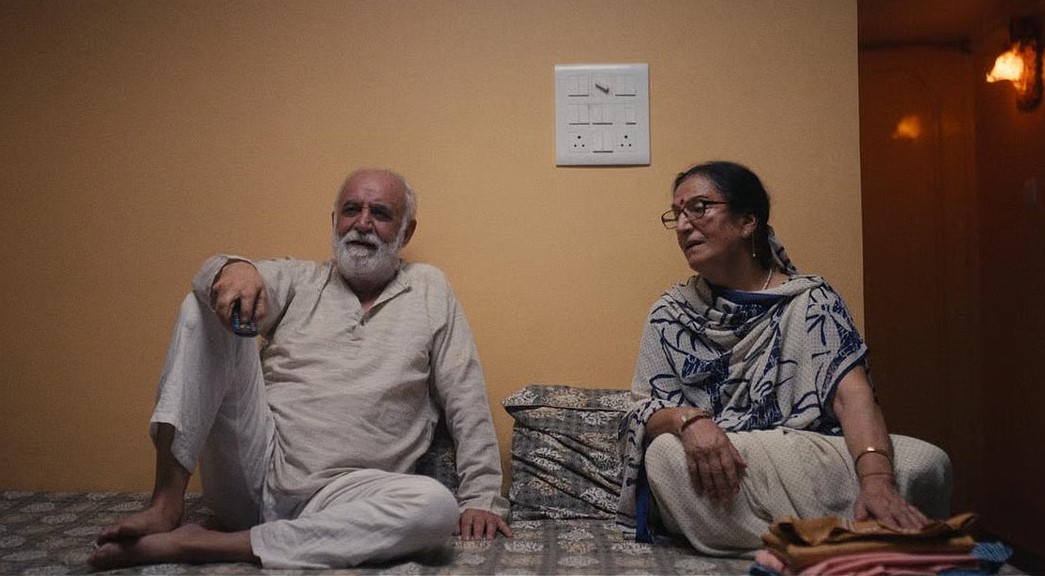
Batt Koch has no appetite for blood, revenge or chest-beating. There is no rancour, rabble-rousing or venom. The violence exists in nightmares, in a man’s startled mind. At some point, the film mentions the phrase that still carries the terror of that time: Raliv, Galiv or Tchaliv meaning merge, leave, or die. When the grandson says Raina should not have fled Kashmir, the old man answers with tired anger: “nobody leaves their home just like that.” The young can ask such questions, but only the old know what it took for them to leave their home behind. When the child asks if ‘their’ religion is wrong, his father explains, gently, that the wrong lies not in religion itself, but in imposing something on others. Ankit and Siddarth handle this moment delicately: we see a family trying to explain hatred to a child without passing hatred on as inheritance.
When the family finally makes its journey to Kashmir, it’s an attempt to heal a man who is unwell but becomes strangely restored by the thought of home. It is a way of reporting back to the self, to the dead, to those who left and those who stayed, and to the community that has lived with the memory of what they left behind, spent decades between belonging and unbelonging.
The trip becomes an act of witness; it asks what remains of a people when they are separated from the soil that shaped their rituals, their speech, their humour, and their seasons. For all its sadness, Batt Koch is not a hopeless film. It is tender, often gently funny, alive to the warmth and wit of Kashmiri Pandit family life. It shows that displaced people build new homes while still belonging to the old one. They raise children who may not speak the language fully but still carry its music somewhere inside them.
The film foregrounds the ache of an unfinished return. What stays with you finally is the image of an old man under the shadow of memory, asking whether there will be a day when each of them will return, and whether he will be there to see it. It shows how home is not simply where one lives. Sometimes it is where one remains unfinished, in a state of perpetual pain. Sometimes it is the place that remains the same in memory, even when the world has moved on. Sometimes it is a lane, a courtyard, a lost door, a cup of noon chai, a language fighting erasure. Sometimes it is the place that leaves you only after you are gone. It underlines, beautifully, that displacement is not only about losing a house or a piece of land, it is about watching a whole way of living slowly grow faint.
More from Culture




Comments
*Comments will be moderated