








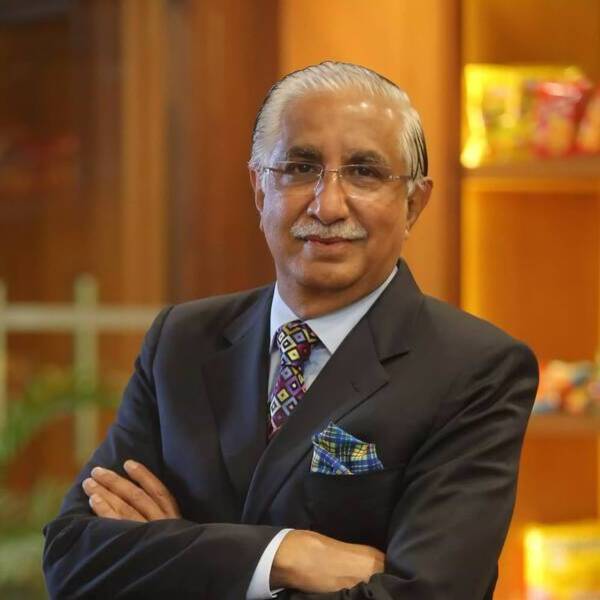
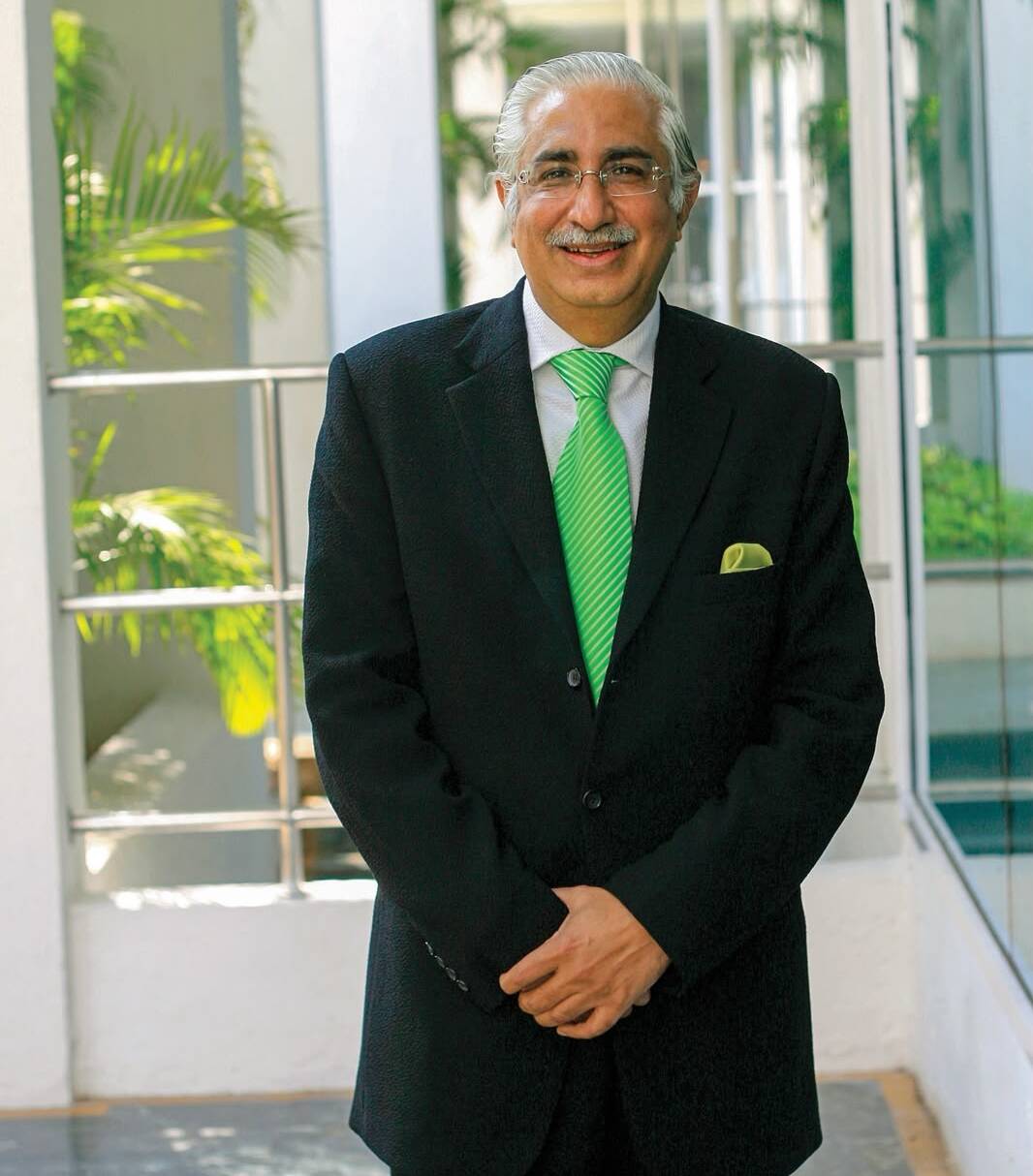
In The Night Manager: Memoirs of a Hospitality Student, Nakul Anand looks back at almost 45 years with ITC, beginning as a management trainee in 1978 and eventually serving on the company’s board. Photo: HarperCollins India
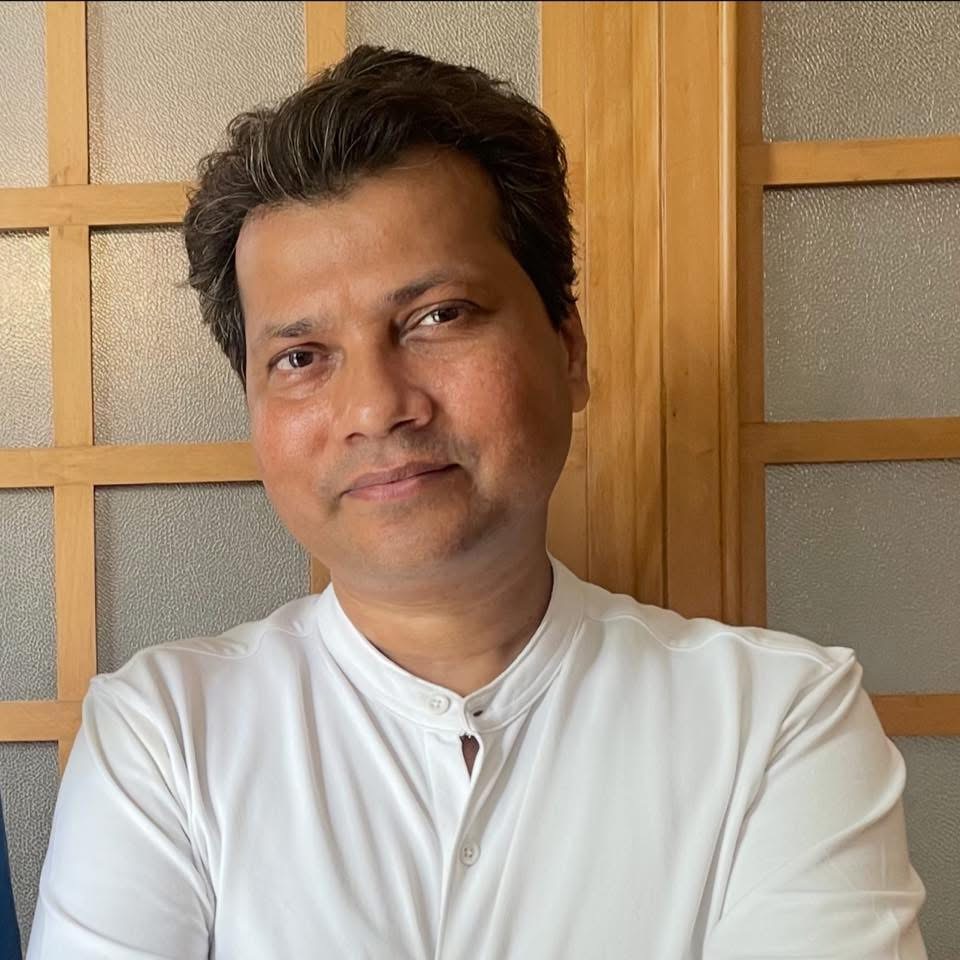
The former ITC Executive Director talks about reading, service, hospitality, Responsible Luxury, technology, the people who were his exacting teachers, and why he still prefers to think of himself as a student
When Nakul Anand retired after almost 45 years with ITC Limited, he wrote two lines on a piece of paper: “My hindsight, your foresight.” They became the reason for writing The Night Manager: Memoirs of a Hospitality Student (HarperCollins). He was not interested, he tells me, in producing a record of everything he had achieved or laying claim to ideas accumulated over a long career. He wanted to put down what the years had taught him while those lessons could still be useful to somebody younger. “Very often God gives you a comb when you’re bald,” he says, laughing. “You learn this information after 45 years, but what if this information was available to me at the start of my career?” If even a small portion of what he learnt helps somebody else, he says, the book would have served its purpose.
That also explains the word “student” in the subtitle. Anand does not use it coyly. He genuinely seems to believe that the danger of seniority is beginning to think one has finished learning. He still reads constantly, marks books heavily and reduces each one, when he can, to a couple of ideas he wants to remember. Yogesh Chander Deveshwar, the long-serving chairman and CEO of ITC Limited, who transformed the Imperial Tobacco Company into a diversified multi-business conglomerate in the 1970s, once told him that what distinguished him from many other hoteliers was the amount he read and advised him never to stop.
Anand describes reading as one of the most important reasons for whatever success he had. Jim Collins’s Good to Great stays with him mainly for one thought: “Good is the enemy of great.” His reading has moved from Arthur Hailey’s Hotel, which helped push him towards the profession, to Alvin Toffler’s Future Shock, management, sustainability, technology and, now, artificial intelligence. “Learning also compounds over a period,” he says. “You begin to understand, you begin to connect dots.” He learnt from books, from teaching, from bosses, colleagues and people who worked with him. Even now, he sometimes sits in the office of his 26-year-old son, who runs the Gen Z agency Brand Brew, because he gets “reverse mentoring” on social media and the way another generation thinks. He had just returned from a cruise when we spoke and said he had noted around 20 new things he had learnt there.
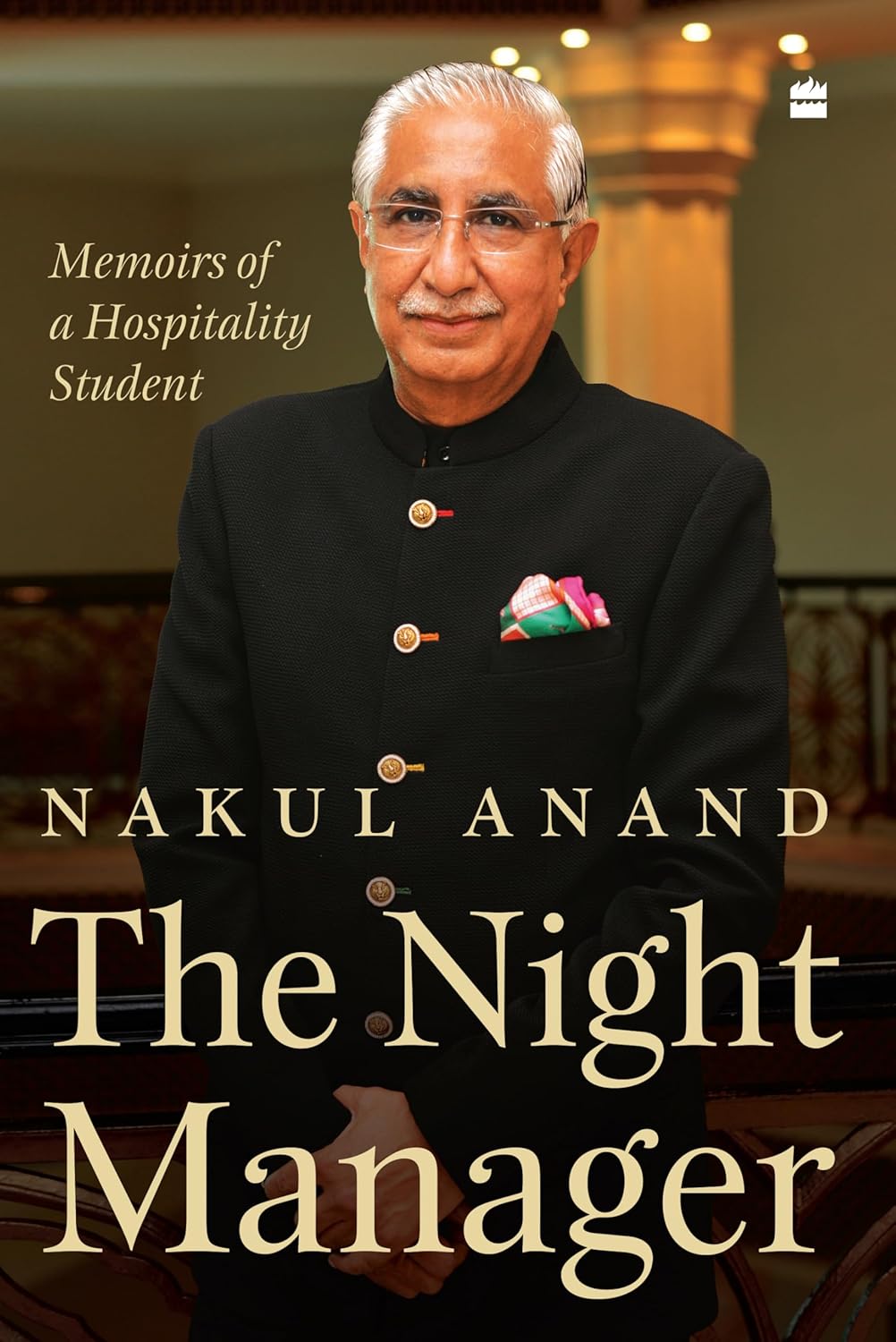
His interest in hotels had begun decades before ITC. Anand was born in Shimla in 1956 into a family whose life, like so many others of that generation, had been upended by Partition. His father worked with the ITC, and died young, when Anand was five. His mother, widowed in her thirties, later taught at Bishop Cotton School, where he studied. In the memoir, his earliest memories of hospitality come through family life: the formality of meals, the way tea was served, and outings with his grandfather, whom he affectionately describes as a man from another era. There were visits to Davico’s in Shimla, to restaurants in Calcutta (Trincas, Flurys, Waldorf, Skyroom, Blue Fox) and the Oberoi Intercontinental in Delhi, all of which seemed to offer entry into another world. As a boy, he would watch waiters, the way tables were laid and the way a room could make people behave differently. “I just loved the style and the atmosphere,” he says. “It transformed you into a different world.”
One memory from Shimla has stayed with him. As a teenager he called a luxury hotel where an older friend was apprenticing and became fascinated by the telephone operator’s practised greeting. He called more than once simply to hear it. On another occasion, having saved some money, he walked into a hotel he had long admired and ordered a Gold Coin apple juice. It arrived in a wine glass on a tray carried by a liveried waiter. The apple juice was not the point. The experience was. He remembers what it felt like to be served with that degree of attention. He understood something about himself quite early. “I realised that I would love to please people. I didn’t have an ego.”
Anand read Hailey’s Hotel while still at school and became unusually certain about what he wanted to do. His school-leaving certificate even noted his interest in hotel management. There was a practical side to the decision, too. He wanted to be professionally trained, but medicine or engineering would have taken years he could not afford. He needed to begin earning. Before he entered a hotel, though, there was an unexpected stop behind a turntable. As a student at Hansraj College, he became a DJ at The Cellar in Connaught Place, earning Rs 10 a shift and a meal. With vinyl and two turntables, there was no way to hide a poor choice. If the record was wrong, the floor emptied. If it was right, people came back. Looking back, Anand sees in those evenings an early education in reading a room without asking people what they wanted.
He graduated in Economics in 1977, worked briefly at Usha Sales, and joined ITC’s first formal batch of hotel management trainees in May 1978. Welcomgroup then had just three hotels: Maurya in Delhi, Mughal in Agra and Chola in Chennai. Anand likes to joke that he moved from DJ, disc jockey, to DJ, dinner jacket. But the move was not seamless. Several of the others already had hotel-management training. His roommate, Uday Girme, knew his way around a professional kitchen. Anand did not. In the book, he remembers offering him what he thought was a chocolate and being told it was a truffle. Anand thought a truffle was the expensive fungus. Then came trifle. The confusion gives an early chapter its title and captures how far outside the language of the profession he initially felt.
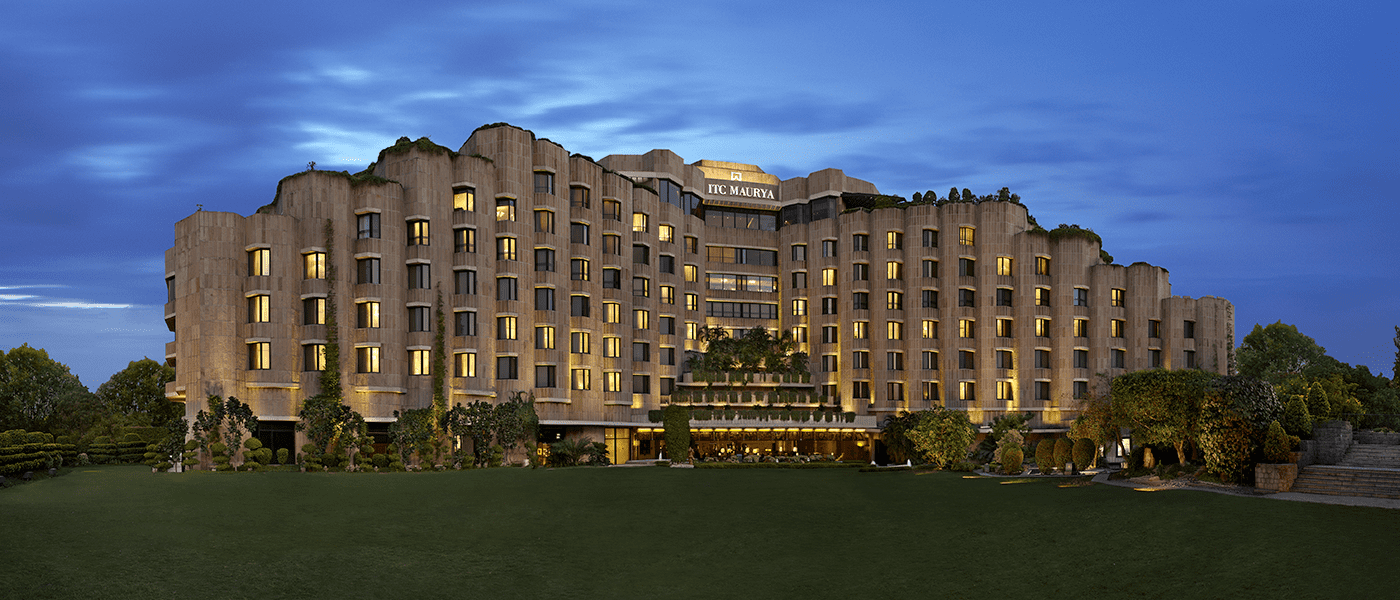
ITC Maurya in Delhi. Photo: ITC
The kitchen made that gap even clearer. Mise en place, julienne, sauté, braising, blanching and poaching were part of a vocabulary he had never encountered. He failed an early cooking examination and began getting up around five in the morning to read before training. Classes continued through the day, followed by practical work at the Maurya. But being behind in the beginning turned out to have an advantage: Anand asked questions that people who already knew the system might not have thought worth asking. Why were two particular magazines kept in a guest room? Why those two? Why was the soap a particular size? Was it linked to length of stay, replacement, wastage or pilferage? Why did a hotel bed have wheels? Why did a bar bring peanuts rather than wafers? “I began to question everything from literally a zero base,” he says. “I wasn’t asking from the point that I was being arrogant. I was asking because maybe I missed out that knowledge.”
Much of the memoir is really about the people who answered those questions, sometimes without giving him a formal lesson at all. French chef Roger Moncourt taught him to watch not only what left the kitchen but what came back. If a garnish repeatedly returned untouched, that was telling you something. In the butchery, Anand began setting himself targets for how quickly he could debone a chicken and how much yield he could preserve. Imtiaz Qureshi’s teaching could be far less formal: Anand remembers being shown how to test whether chickpeas were ready by throwing one against a wall. If it bounced, it needed more time; if it stuck, it was done. There were ice carvings, butter sculptures, canapés and all the old visual grammar of a five-star kitchen, but what Anand seems to remember most clearly are the practical shortcuts, the things learnt by watching somebody who had done the job for years.
At Takshila, Suhas Desai was exacting about service. Wine glasses were checked for fingerprints, table settings for alignment, staff for grooming and knowledge of the menu. But the point Anand remembers best was about selling. Once, he successfully persuaded a guest to order an expensive dish and felt rather pleased with himself. Desai pointed out that the guest was being hosted by one of the hotel’s regular patrons, who would ultimately pay the bill. The immediate sale was not worth putting a long relationship at risk. “You can skin a sheep only once, but you can shear it many times,” he told him.
So when I ask Anand about the old hotel dictum that “the guest is always right” and whether it can sometimes come at the cost of staff dignity, he changes the wording. “The right word would be: make the guest believe he’s always right.” The guest may be wrong. The employee may know it, and so may the manager. But turning the encounter into a contest in front of the guest is not, in Anand’s view, good service. “The day you enter the hotel industry, you leave your ego at the door,” he says, recalling what another teacher, front-office instructor Jai Raman, taught him. “Service is a selfless business and you’ve chosen to do that. You must enjoy it. If you don’t enjoy it, you have no business to be there,” he says.
Anand’s first posting at Chola in Madras (now Chennai) put that education to work and gave the memoir its title. The first difficulty was not a guest but finding somewhere to live. A young, unmarried north Indian hotelier who drank, smoked and ate meat was not every landlord’s preferred paying guest. Anand recounts the difficulty without self-pity; looking back, he says, perhaps he too would have been wary of renting to the young Nakul. The night-manager job itself initially felt uneventful. By ten at night most of the hotel had settled down. He did his rounds, signed folios, ate with the F&B team, handled whatever came up and sometimes rested for a while in the locker room.
After ten or fifteen days, he began to feel he was wasting the hours. “I thought, look, I’m not adding any value to myself.” He started arriving earlier and staying later. He learnt the front office and studied arrivals and departures. He went into engineering and asked how much electricity the hotel consumed and how much of it went into air-conditioning. There were no kettles in rooms, so room service could receive 40 requests for tea at seven in the morning; Anand went and watched how the trays moved and why some reached guests on time while others did not. “I just repositioned myself as night general manager,” he says. “I didn’t have to tell anybody.” He thinks that may have been one reason he was noticed, though he is careful to add that being noticed was not the intention. “I did it from a point of view of sheer boredom and not adding value to my life.”
Night duty also stripped the profession of any excess romance. The memoir has a guest running around a fire escape in his underwear in the middle of the night. In another episode, a wrong room number during a medical emergency leads hotel staff to pick up a heavily drunk sleeping guest and almost send him to hospital while the actual patient waits nearby. Anand writes about such incidents with humour, but they also explain his impatience with hotels that create unnecessary problems for themselves. He dislikes complicated light switches, shower controls that require experimentation, elevators in which the guest has to work out which lobby button actually means lobby. Good service, in his view, should remove friction/discomfort rather than advertise the cleverness of a system.
Page
Donate Now
More from Culture



Comments
*Comments will be moderated