








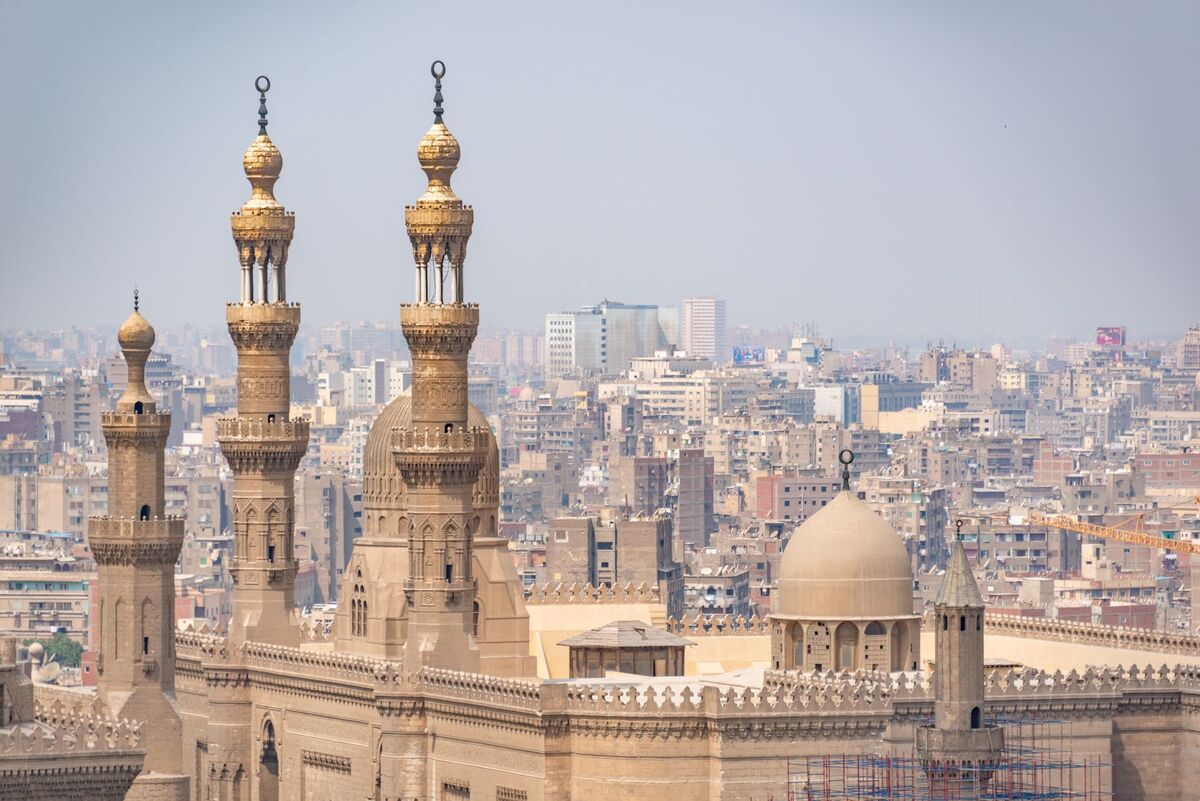

Arriving in Cairo during Ramadan, a family unsure of what the holy month might mean for their holiday discovers a city whose days and nights follow a different rhythm
On a sunny spring day, we landed in Cairo bang in the middle of the holy month of Ramadan. Our highly anticipated trip of a lifetime had finally materialised, and we were ready to make the most of it. Standing outside Cairo International Airport on that slightly chilly March afternoon in 2024, little did we know of the new experiences, sights and sounds awaiting us. We were not just about to experience Cairo; we were about to experience a Cairene Ramadan.
We had taken this trip after much deliberation. Months of ‘to go or not to go’ were followed by an almost certain rescheduling. I wasn’t happy, nor were my travel companions, my husband and teenage son. In a corner of our hearts, we wanted to hold on to the plan because everyone knows that postponed plans have an uncanny ability to be buried forever. In the end, however, our travel-hungry hearts won, and we hit the dusty trail to Al-Qahira, the Victorious City, as Cairo is called in Arabic.
Outside the airport, we soon found a cab to take us to our hotel. As we left the airport and drove deeper into the city, imposing government buildings and broad streets slowly gave way to sand-coloured residential neighbourhoods and narrow alleyways. I was soon to learn that most things in Cairo were sand-coloured: the buildings, the pyramids, the desert. This was a monochromatic city! The street signs, which were in both Arabic and English near the airport, soon gave way to Arabic-only ones. Halfway to the hotel, we were mesmerised by the Egyptian sun, a gigantic red ball about to slip into the blue waters of the Nile.
At a busy crossroads, we came across the first signs of festivity. A few young men were running about on the street, and traffic slowed as it approached them. I looked out of the window, eager to know more. As our cab inched closer to the excitement and commotion, men carrying glasses filled with a ruby-red beverage came into view. They were handing out the plastic glasses freely to passersby, wishing them ‘Ramadan Kareem’, which literally means ‘may Ramadan be generous to you’. Everyone slowed down to receive a glass gratefully.
Our driver accepted one as well. Beads of condensation collected on the outside of the small glass as a little of the red liquid sloshed over. It was inviting indeed! Overcome with curiosity, I asked the taxi driver what the drink was and why it was being freely distributed at the street corner. It was Karkadeh. He explained that it was an infusion of hibiscus, which gave the drink its distinctive red colour. A chilled glass of Karkadeh was one way of breaking the day’s fast during Ramadan, particularly for those who could not be home at dusk with their families.
The following day caught me by surprise, challenging my preconceived notions about Egypt during Ramadan. To experience historical Egypt fully, it is critical to engage the services of a qualified Egyptologist-guide. On our guide’s orders, we were up bright and early and found the hotel buzzing with activity. Breakfast was being served in the restaurant by smiling hotel staff, men and women who had eaten their suhoor before sunrise and would work throughout the day without a morsel of food or a gulp of water.
Sipping my morning coffee, I reflected on our misgivings about the trip because they had almost led us to shelve our plans. For a long time, we had been conflicted about whether to visit Egypt during Ramadan or reschedule for a later date. Constantly worried that Ramadan closures would affect our experience, we were almost prepared to postpone the holiday. Our lifelong dream of visiting the pyramids was slipping away like a defeated fighter kite. Yet here we were, a month later, marvelling at the professionalism of the hotel staff. Egypt was functioning, vibrant and welcoming!
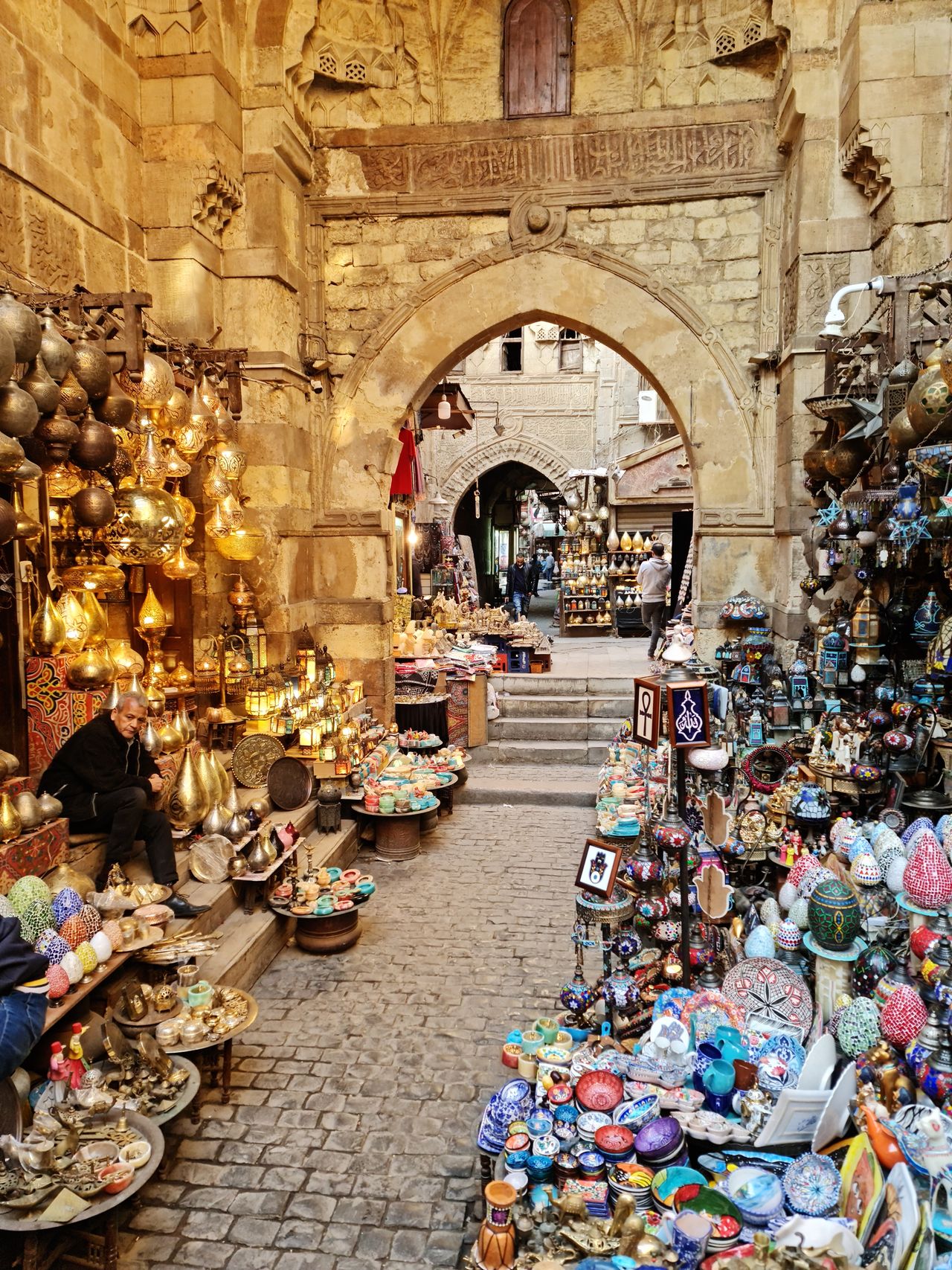 Khan el-Khalili was a riot of light and colour! It was here that the dun-coloured city momentarily dressed itself in festive finery. Photo: Dounia Hussein
Throughout the day, our assumptions about Egyptian life were repeatedly challenged. The whole city was active. Shops and restaurants were open. The locals had just one request of tourists: start the day a little early. Everyone wanted to be home before dusk to break their fast with friends and family. When we set out that morning at seven, the roads were already busy. Traffic was extraordinarily heavy and chaotic; everyone seemed to be rushing to work. I turned to our friendly guide for an explanation. “Working hours shift a little during Ramadan,” he explained.
“Everyone starts a couple of hours early so that they can finish a couple of hours early as well. You’ll find the traffic to be crazy between four and five in the afternoon. People leave work at four, reach home at five and break their fast at sundown. That’s the routine during Ramadan. If you step out around six, shortly before or after the evening call to prayer, the roads will be completely deserted. The city will come alive again later in the evening when the festivities start.” I marvelled at how Cairo adjusted during this one month. It was a wonderful compromise between keeping the city running and observing the demands of faith.
Our plan for the evening was to head to one of the oldest and best-known markets in the Arab world, Khan el-Khalili. As dusk began to fall, we made our way towards the market, passing several men distributing karkadeh. Our driver and guide picked up a glass each. This time, they offered one to me. I wrapped my fingers around the glass of the cool beverage and took a cautious sip. Sweet. Cold. Refreshing. The taste was as new as the experience.
While I enjoyed the Karkadeh, our car headed towards Cairo’s historic centre, where Khan el-Khalili is located. As we approached the market, we saw an unusual rush outside the food stalls. People were picking up last-minute treats on their way home from work. By the time we arrived at our destination, the lights had started coming on one by one: on the streets, in homes and in every shop. The Al-Hussein Mosque was completely lit up against the ink-blue evening sky. People were milling around with family and friends.
This was not a part of the city that went quiet at sundown! The eateries were packed with eager customers. To manage the crowds, owners had laid out extra tables along the roadside, much like a Parisian terrace. The air was thick with the aroma of kebabs. Quite a few foreign tourists were enjoying a Ramadan feast on the pavements of Khan el-Khalili. These cafés would remain alive and teeming until the early hours of the morning, when the next day’s fast began and everything fell silent for a few hours.
We made our way through the crowded streets, brilliantly decorated and adorned with Ramadan lanterns, each known as a fanous. We combed the lanes of this ancient market, looking for the best souvenirs to bring home. The place was lively. Families were shopping for Eid: women in abayas dragging along overexcited children and men in suits handing out cash. Shopkeepers called out from their shops, eager to make a sale. Clothes, curios, lamps, carpets and perfumes all had a place in this bustling market.
Khan el-Khalili was a riot of light and colour! It was here that the dun-coloured city momentarily dressed itself in festive finery. It was not only Cairo’s bazaars that were colourful; so were its people. There was our cheerful and knowledgeable guide, who chose to take us souvenir shopping instead of breaking the fast with his family. There were the hotel staff, serving us with a smile. There were the shopkeepers and restaurant owners who kept the city’s festive spirit alive.
Two hours later, with heavy shopping bags in tow, we had a hearty dinner at a nearby restaurant with our guide. The festive spirit of Ramadan had rubbed off on me. I did not regret for a minute our decision to visit Egypt at this time of year. I knew then that I would return home with the lit-up streets of Cairo in my eyes and the taste of that beverage of brotherhood in my mouth.
More from Culture

Comments
*Comments will be moderated