








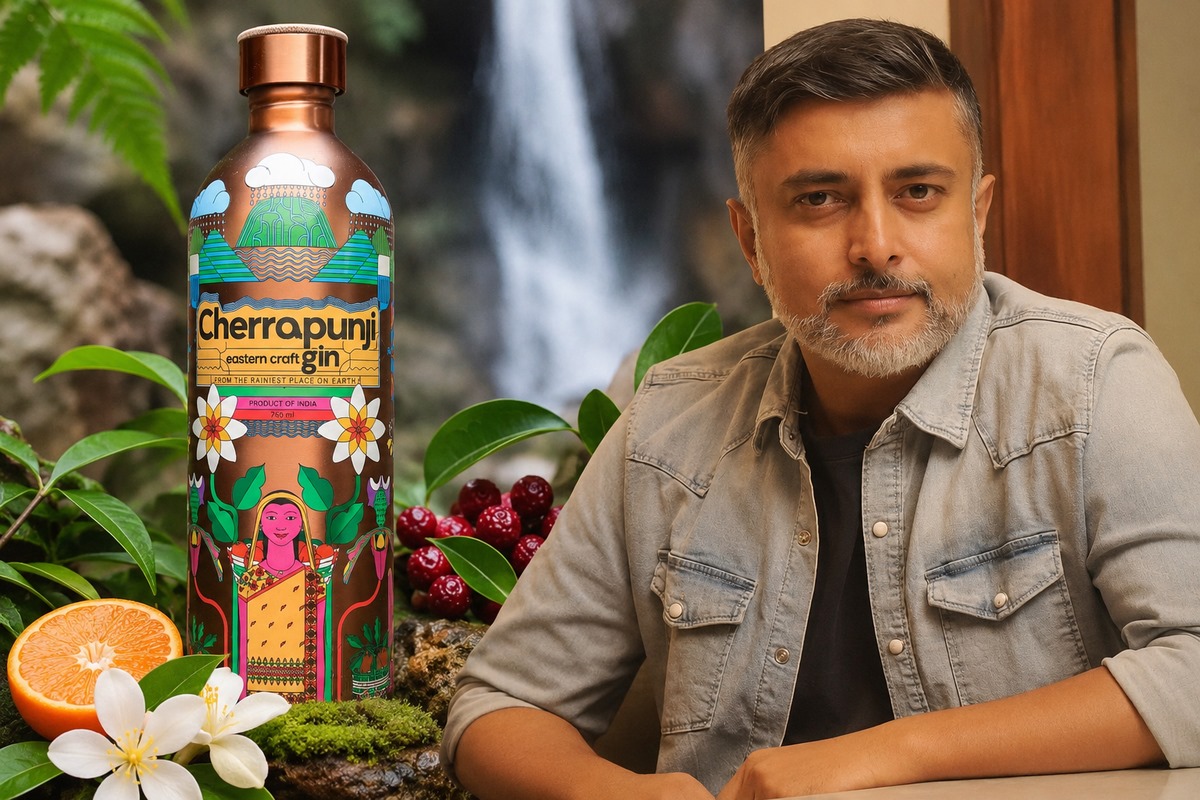
If you lined up ten different gins and tasted them blind, I can confidently say you would be able to tell which one is Cherrapunji: Mayukh Hazarika, founder and CEO of Cherrapunji Eastern Craft Gin. Photos: Raincheck Earth Co.
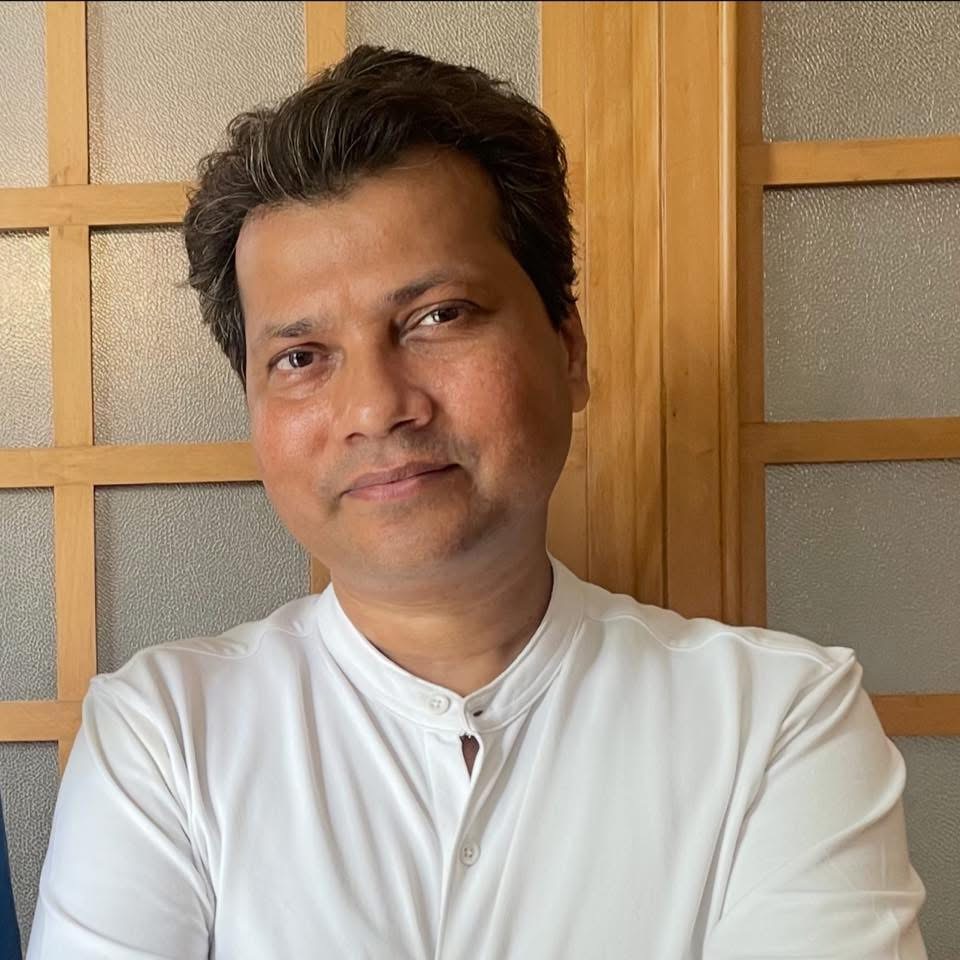
The Cherrapunji Eastern Craft Gin founder and CEO talks about the Red Dot-winning bottle, Meghalaya’s rainwater and botanicals, India’s craft gin boom, exports, regulation, technology and what it takes to build a premium alcobev brand from the Northeast
There are easier places to start a gin company than Meghalaya. And certainly easier things to build a brand around than rain. Mayukh Hazarika, Founder & CEO, Cherrapunji Eastern Craft Gin, who was born and raised in Shillong and later worked on large consumer brands including Pepsi, chose both. With Raincheck Earth Co. and Cherrapunji Eastern Craft Gin, the IIM Indore graduate has been trying to make a spirit that actually tastes and feels of the Northeast.
The water is harvested rainwater from Cherrapunji and Mawsynram; the botanicals come from the region. If Khasi mandarin and Kaji Nemu, which are processed by the company itself, bring citrus into the mix of other regional ingredients, giving the gin a profile that is fresh and aromatic but also distinctly steeped in where it comes from. Its more recent Sohiong expression uses the dark, tart berry from Meghalaya. It is a gin that attempts to put the geography into the liquid itself.
Even the bottle is hardly an ordinary liquor bottle. Cherrapunji chose food-grade stainless steel instead of the glass that dominates the spirits shelf, wrapping it in Reshidev RK’s exuberant illustrations of Meghalaya: its landscape, biodiversity, monoliths and matrilineal culture. It is bright, slightly eccentric and hard to mistake for anything else at a bar. The design recently won the Red Dot Award: Product Design 2026. For a relatively young Indian gin coming out of Meghalaya, that recognition is quite a leap.
In this interview to The Punch Magazine, Hazarika talks about the thinking behind the Red Dot-winning bottle, building a spirits company from the Northeast and what his FMCG years taught him about brands. He also gets into Indian gin’s rush towards local botanicals, the realities of selling abroad, regulation, climate risk and what craft distillers still get wrong about scale and technology. And, refreshingly, he isn’t particularly interested in chasing whatever happens to be fashionable this season. Excerpts:
Congratulations on the Red Dot Award, which recognises Cherrapunji Gin with Sohiong Berries and the Cherrapunji Eastern Craft Gin one-litre bottle with its integrated jigger. A SS304 food-grade stainless-steel bottle with a built-in 30 ml and 60 ml measuring system is an unusual gamble in an industry that had been using glass for decades. What convinced you it was a gamble worth taking? Also, do you think functional design could become the next competitive frontier in alcobev?
The idea of the jigger cap has been there since day one, and it’s my brainchild, the thought of building a jigger into the cap itself. The engineering issue at launch was that I wanted a beautiful bamboo cap that opened from the top, and the real challenge was that bamboo expands with repeated use and exposure to water. I wasn’t going to ship a jigger that wasn’t stable. So it came as an update two years later on the newer variant, then we translated it to the one-litre, and now even the OG, our main variant, is getting the upgrade.
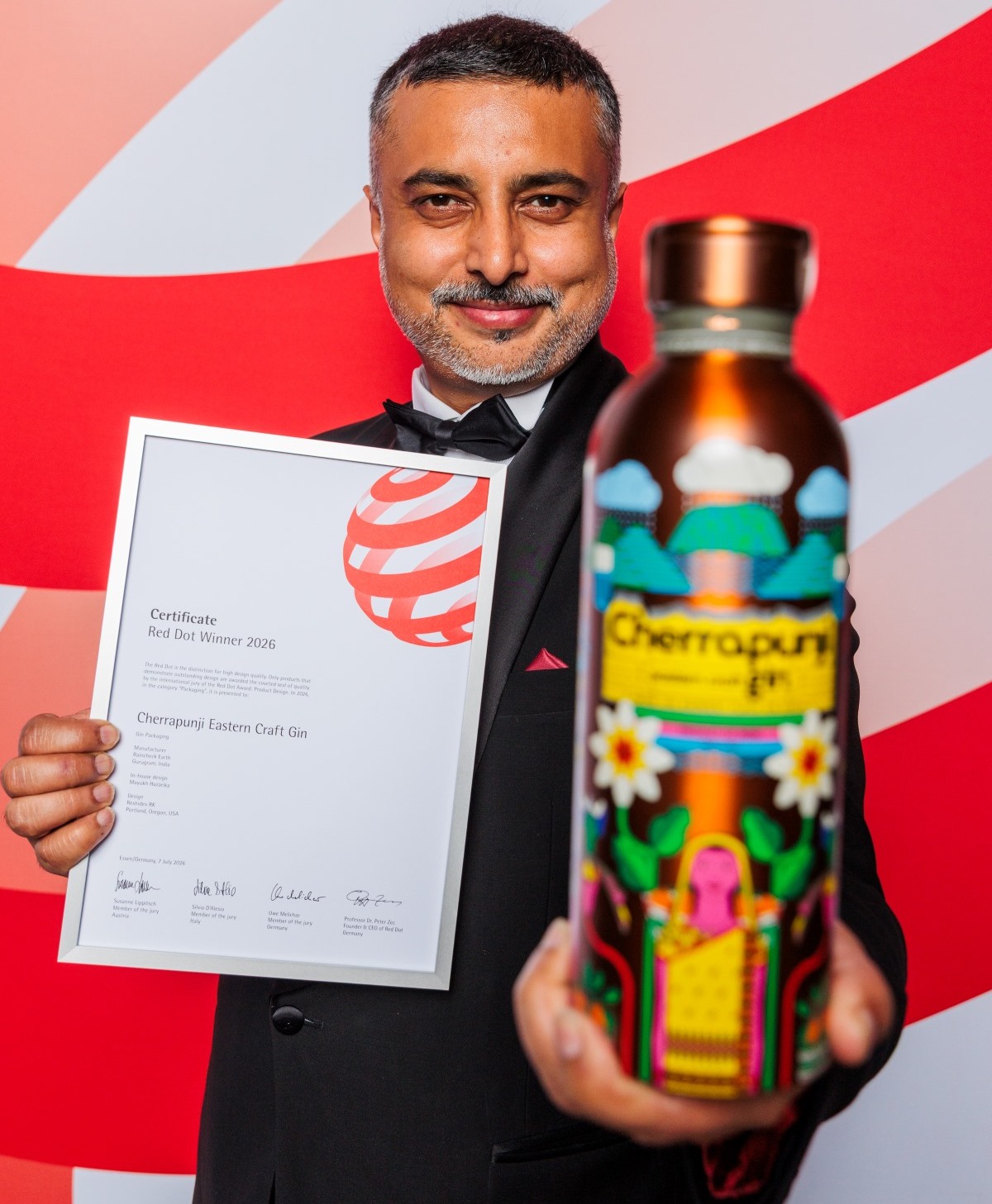
After you’re done with the gin, the bottle is meant to be reused as a bottle: Mayukh Hazarika
The starting point was questioning what packaging can do. I want it to deliver more. During use, the jigger adds real functionality. And because the bottle is stainless steel, two things happen. It’s extremely light, about a quarter the weight of a regular glass bottle, which makes it easy for consumers to carry and incredibly easy to ship. It’s also lean rather than bulky, so it consumes less volume. And after you’re done with the gin, the bottle is meant to be reused as a bottle. That’s the beauty of it.
Whether functional design becomes the next competitive frontier in alcobev, I can’t comment on what others will do. But for us, certainly, we’ll keep looking at packaging differently. We want it to deliver much more than just sitting pretty on a shelf.
Cherrapunji Gin is linked to Meghalaya in almost every sense. How do you ensure this element of authenticity doesn't become a fashionable buzzword? Have you ever said no to a branding idea because it felt too commercial or disconnected from the region? Do you think there are still parts of the state missing from the narrative you’ve built and that you’d like to explore in the years to come?
Whatever we do has authenticity built into it. Look at the system we’ve created around sourcing. We process our own botanicals, which means sourcing, peeling, sun-drying, in the case of the Khasi mandarin and Kaji Nemu, doing everything from the fruit onwards ourselves. There’s a lot of authenticity in that which we don’t even speak about. It isn’t a marketing tool.
Also read: Gamber Valley: On the Indian single malt whisky trail from Delhi to Alcobrew’s distillery in Solan
And we stay away from trends. The brand arrived towards the end of what was called the gin wave in India, and it still continues to grow and be loved, so we were never riding a trend to begin with. Take today’s buzzword: tequila. Everybody is rushing to make one. Is Cherrapunji ever going to make a tequila? No. That’s where I draw the line. The brand is rooted in the place, and we won’t chase a trend simply because it’s profitable or fashionable.
As for narratives still to come, the expression we launched last year with Sohiong berries is a good example. Nobody outside the region had heard of the Sohiong berry. Now people know it, they are intrigued, and farmers are getting better incentives to grow a berry that’s genuinely rare, with a harvest window of just four to six weeks. Stories like that will keep coming from the state. There’s plenty of room for more storytelling.
Indian craft gin has gone from being a niche category to one of the busiest corners of premium alcobev. Almost every new entrant today talks about local botanicals and provenance. Has ‘Made with indigenous botanicals’ already become the industry’s equivalent of a marketing cliché? What, in your opinion, genuinely separates a great craft spirit from a well-marketed one?
It becomes a cliché only when it’s tokenism. If you swap one or two botanicals into an otherwise standard recipe and call it indigenous, that will sound like a cliché, because it is one. In our case everything in the bottle is indigenous to the region, and that is far harder to do than it sounds.
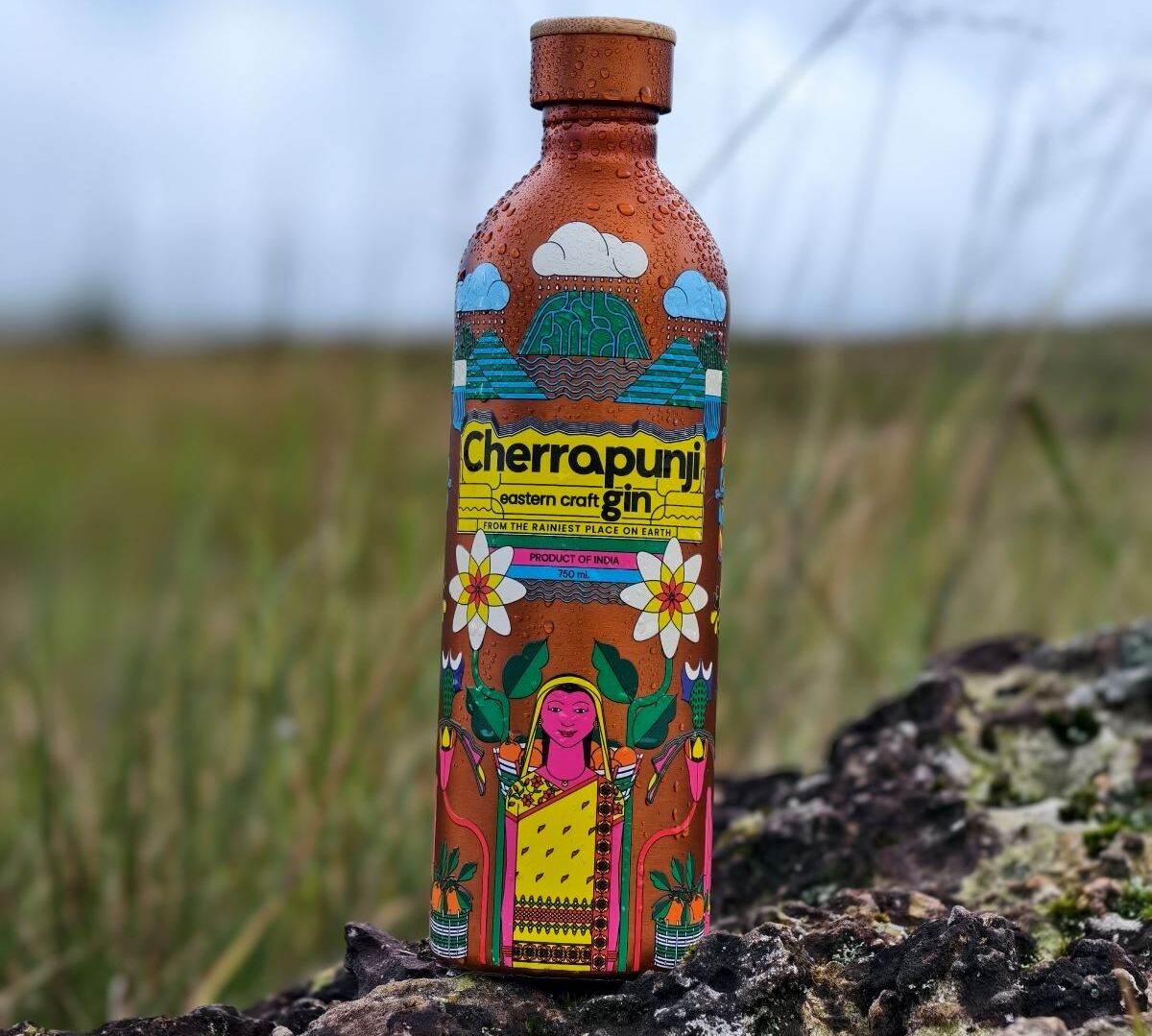
Cherrapunji Eastern Craft Gin (Classic Expression): The flagship citrus-and-spice forward gin featuring 12 Northeast Indian botanicals like Khasi mandarin, Kaji Nemu lemon, long pepper, pine-smoked tea, and Sikkim black cardamom, built on a resinous Himalayan juniper spine and distilled with pure rainwater
But I’d question the framing itself. There’s nothing wrong with using Indian botanicals to make gin. When the Scots make whisky with Scottish water, do we call it a cliché? When Japanese distillers work with ingredients from their own regions, or French wineries with French grapes? No. We call it heritage. Using what grows around you is how every great spirits tradition in the world was built, and India deserves the same reading. This is an opportunity, not a cliché.
That, in the end, is what separates a great craft spirit from a well-marketed one. In a great spirit, the place is in the liquid and in the process. In a well-marketed one, it’s only on the label.
Indian craft spirits are finally beginning to find shelf space overseas though it’s still a tiny space compared to established producers from the UK, Japan or Australia. Cherrapunji itself became the first alcobev brand from Northeast India to reach international markets. When you first started exporting Cherrapunji Gin, what assumptions did overseas buyers have about an Indian gin? What did you have to prove before they took you seriously? What has been the toughest lesson you’ve learnt since going global?
The assumption actually worked in our favour. Overseas buyers had already had a taste of Indian gin, and the Indian gin story travels well in bars abroad, because India is known as the land of spices and botanicals. Many bartenders already carried the perception that Indian gin is good. So we weren’t fighting a prejudice; we were walking through a door others had opened.
Still, perception only gets you a meeting. What worked for us, and it happened early, is that the awards came almost immediately. They were all international awards of global repute, and they did the proving. For buyers who had no reference point for a gin from the Northeast, the medals spoke before we did.
Also read: Chef Kulsum Begum, Chef Maliha Khan bring Hyderabad’s Salar Jung heirloom recipes to Chor Bizarre
The most important understanding since going global is that every market is its own world. Different pack sizes, different pricing dynamics, different ways of drinking, and each deserves its own strategy. Out of that came a discipline we hold firmly: we never sell to an importer simply because somebody wants to buy. We enter a market only when we see genuine potential and know we can invest in building the brand there. The result is that every single bottle leaving our distillery is accounted for. We know which country it’s in, which importer, which bars, which stores.
Before starting Raincheck Earth Co., you spent years in mainstream consumer businesses. Looking back, what did the FMCG playbook get completely wrong about premium alcobev? Conversely, are there lessons from large consumer brands that India’s craft distillers still underestimate?
FMCG and spirits behave completely differently when you’re building a brand. Alcobev is media dark, the ticket value is far higher, the consumer buys differently and the role of education is different. The playbook doesn’t transfer wholesale.
That said, my years in beverages, especially on brands like Pepsi, taught me how beverage brands are built. The seriousness with which I take packaging comes straight from FMCG.
And craft distillers should study large consumer brands more than they do. Their scaling playbook has a lot to teach small companies about building processes, organisations and systems. Craft gets you noticed. Excellence in the unglamorous things is what lets you last.
India remains one of the world’s most complicated alcohol markets. Excise policies change from state to state, taxes differ wildly, logistics are fragmented and distribution is tightly controlled. Has regulation become the biggest barrier to innovation? Or do Indian craft brands sometimes use regulation as a convenient excuse for problems that are really about scale, capital and execution?
India genuinely is one of the most difficult markets in the world when it comes to regulation, and it’s a huge barrier to entry for everyone, big or small. The difference is that big companies have the budgets, the large teams and the institutional understanding to track it all. For a craft brand, scaling distribution within your own country becomes one of the hardest things you’ll ever do, no matter which region you’re from, and craft brands are usually at the receiving end of it.
So no, I don’t see regulation as a convenient excuse for smaller Indian brands. Building that understanding needs time, it needs mentorship, and it needs a lot of money. Those are exactly the three things a small brand has least of.
Rainwater is central to your identity, but climate uncertainty is becoming impossible to ignore. Has building a brand around rainfall forced you to think differently about environmental risk? Twenty years from now, could climate change fundamentally alter the story your brand is built on?
It’s a valid question. Will the rainiest place on earth have less rain, or no rain? People assume our story is only about abundance, but the truth is the brand is as much about the lack of rain. Cherrapunji gets extraordinary rainfall, yet the water doesn’t stay, and that scarcity is exactly what inspires us to harvest rainwater in the first place.
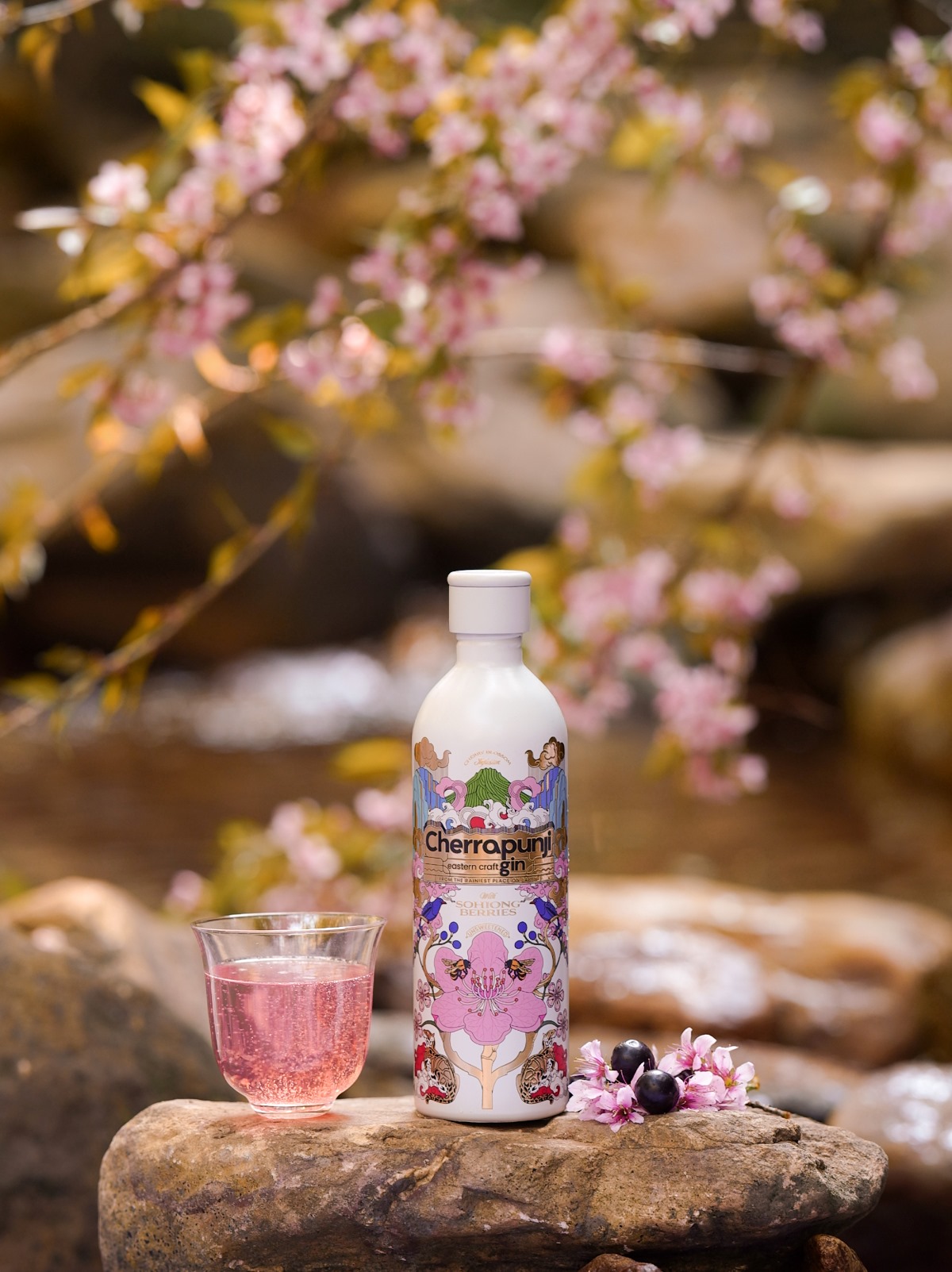
Mountain Berry Blossom (Sohiong Berry Edition): The seasonal berry-forward variant that uses wild-foraged sweet-tart Sohiong berries and cold-infused cherry blossom petals from Meghalaya, offering a natural pinkish-red hue without any added sugar or artificial coloring.
So yes, the risk is real. Whether it plays out in twenty years, a hundred or two hundred, I can’t say. Cherrapunji running out of rainfall seems unlikely in the shorter term, but there is a possibility, and pretending otherwise would go against everything the brand stands for.
Consumers often talk about terroir in wine, but far less in spirits. You’ve tried to make terroir central to the gin. Can the average drinker genuinely taste the place? Or is terroir ultimately something we learn intellectually rather than experience sensorially?
The answer lies in the category itself. Gin is perhaps the only spirit where you can actually taste the place, provided it’s made with the intent of using regional botanicals. If you lined up ten different gins and tasted them blind, I can confidently say you would be able to tell which one is Cherrapunji. That’s the confidence I have in the product I’ve built, and I speak only for myself.
Today, premiumisation is reshaping India’s alcobev industry, but younger consumers also seem less loyal, more experimental and more influenced by bars than by advertising. If you were launching Cherrapunji Gin today from scratch — with no reputation and no awards — would you build it differently? Where would you spend your first Rs 10 crore?
I would do exactly what I’ve already done. And the first ten crore would go into getting quality people. People are what make companies. High-quality people mean better growth and a faster route to your goals. Everything else follows from that.
India is seeing an explosion of craft gin labels, with new brands launching regularly. In such a crowded market, what do you think actually builds a lasting brand? Where do you think the next decade belongs? Which categories, technologies or consumer shifts do you think people are underestimating today?
Consumers want two things: a compelling story and a great quality product. That’s where the market is headed, in gin and every other category. The next decade belongs to the brands that innovate early and invest in building organisations, rather than spotting a small gap and filling it. Those are the companies that will last.
What’s underestimated is technology. The alcobev industry, especially the smaller players, stays away from it, and that’s a mistake. Most stills in use today run on two-hundred-year-old technology. Ours is a modern-generation still that can be controlled from anywhere in the world. Upgrading technology means more control over the product and more precision in bottling and packaging, and that’s what delivers in the long term. We’re gunning for more patents ourselves. We have one, and once you get one, you’re just hungry for more.
More from Culture







Comments
*Comments will be moderated