








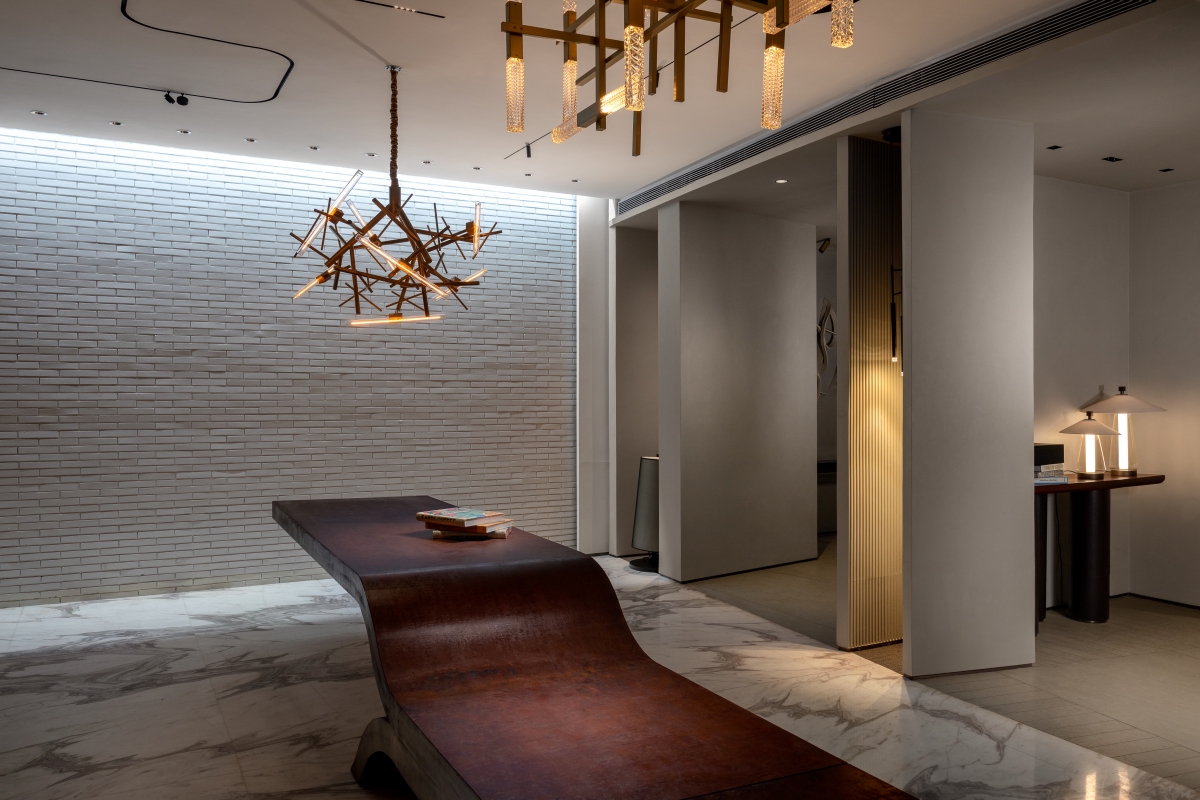
“The true success of illumination lies in how effortlessly it blends into the architecture,” write Amit Rohra, Founder, and Hitesh Rohra, Creative Director of Mr. Light Illumination. Photos courtesy of Mr. Light

Architecture is often understood through form, material, and proportion, but its emotional impact is truly revealed through light. A wall is never just a wall, a ceiling never merely overhead, and a floor never simply a surface beneath our feet. With thoughtful illumination, these elements become dynamic participants in spatial storytelling. Light has the power to sculpt, soften, dramatise, and guide, transforming static structures into immersive environments that evolve throughout the day and night.
Consider the wall. In its simplest form, it defines boundaries and holds structure. Yet under the influence of light, it becomes a canvas. Grazing light reveals textures in stone and plaster, accent lighting highlights art and architectural details, while subtle wall washing creates an expansive visual rhythm that can make spaces feel larger, calmer, and more fluid. The right lighting design transforms vertical planes into moments of intrigue and narrative, guiding the eye and shaping perception without ever demanding attention.
Ceilings, often overlooked in spatial design, hold equal potential. When illuminated with precision, they can dissolve into an illusion of height or become a feature that defines the room’s identity. Cove lighting, concealed luminaires, and delicate linear systems can create the sensation of floating architecture, while statement fixtures introduce layers of visual interest. A well-lit ceiling subtly alters how people feel within a space. It can make a room feel intimate and warm or grand and uplifting.
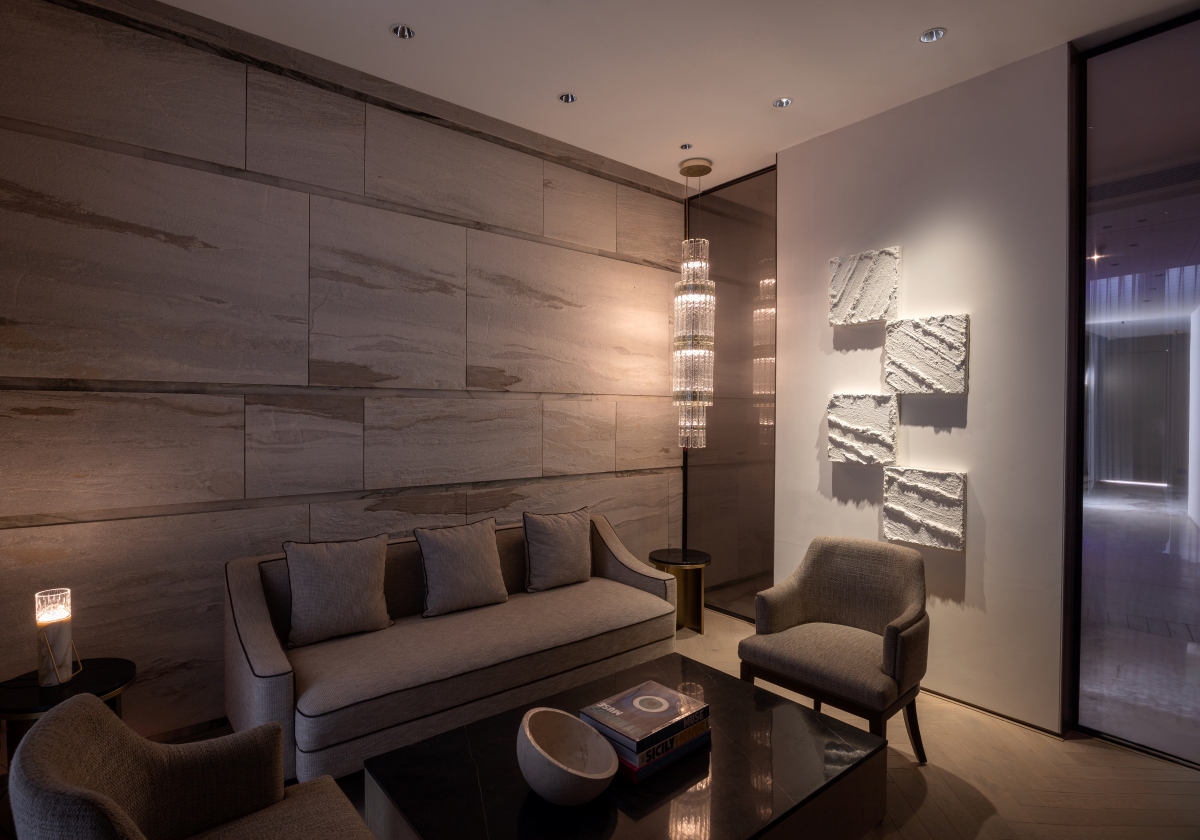
When light is thoughtfully layered across walls, ceilings, and floors, it does more than brighten a space. It reveals textures, enhances proportions, and quietly guides how people feel and move within an environment. Our approach has always been about creating lighting that respects the architecture while elevating the experience of those who inhabit it.
The floor also plays a crucial role in this orchestration of light. Gentle illumination along pathways, recessed floor lights, and reflective surfaces guide movement and reinforce spatial hierarchy. In hospitality environments, this can create a sense of invitation and flow. In residential spaces, it fosters comfort and safety while enhancing aesthetic continuity. Light interacting with flooring materials such as polished marble, warm wood, or textured stone adds depth and movement, turning the ground plane into an active element of design.
What ties these layers together is intentionality. Thoughtful illumination is never about brightness alone. It is about balance, contrast, and the relationship between light and shadow. It requires an understanding of how people inhabit spaces, where they pause, gather, reflect, and move. Lighting design, at its best, works quietly in the background yet profoundly influences how architecture is perceived and remembered.
As architecture continues to evolve toward more experiential and human centric design, lighting will remain one of its most powerful yet understated tools. When thoughtfully integrated, it dissolves the boundaries between structure and atmosphere, allowing spaces to breathe, shift, and communicate. Ultimately, the true beauty of illumination lies in its subtlety. It is the invisible hand that shapes how we see, feel, and remember a place. When walls glow softly, ceilings seem to float, and floors gently guide.
More from Culture




THUMBS.jpg)



Comments
*Comments will be moderated