








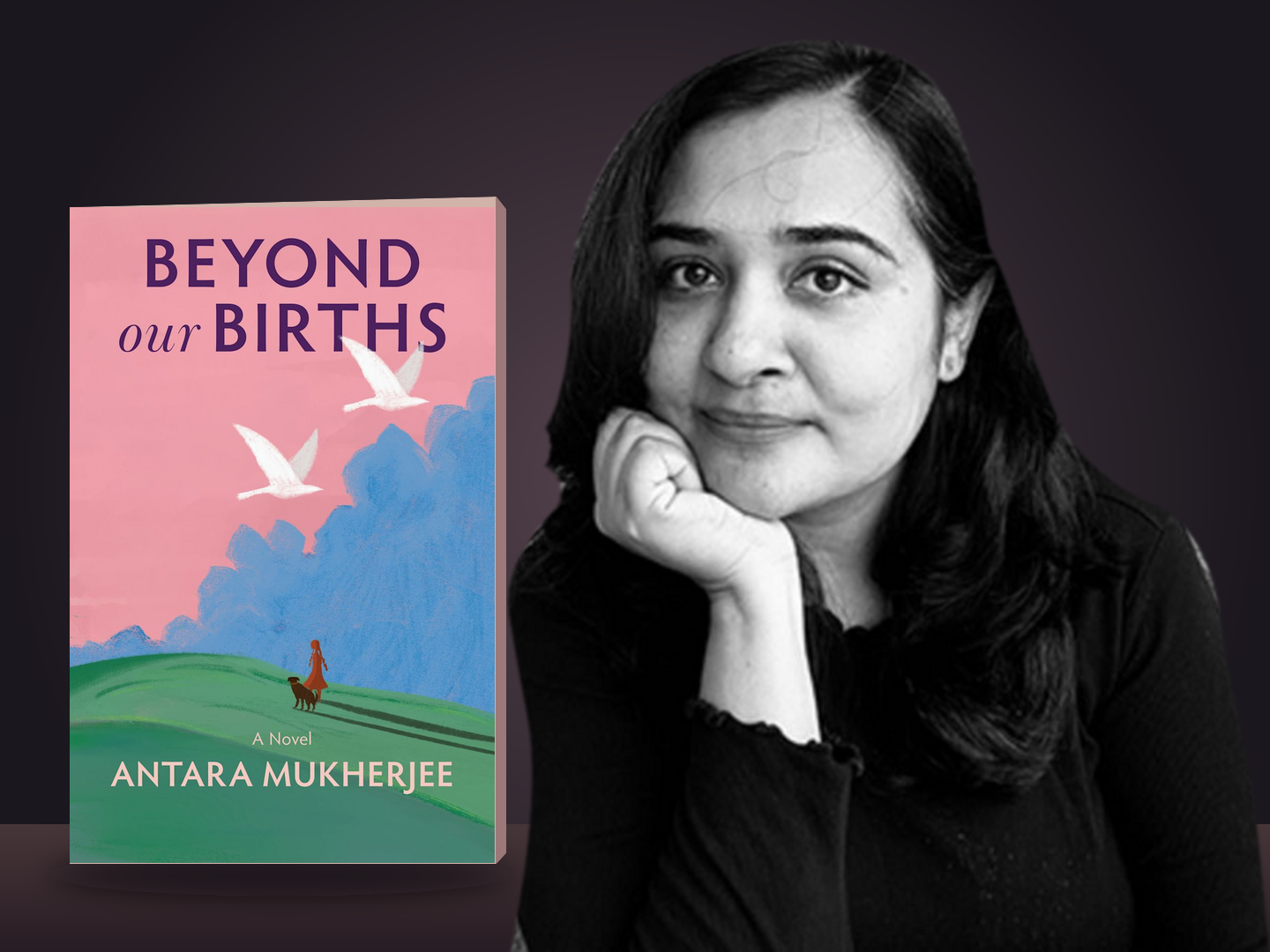
In Antara Mukherjee's debut novel, a five-year-old girl’s journey across India and Bangladesh becomes a story about class, religion, education, family and the identities other people choose for us before we can choose for ourselves.
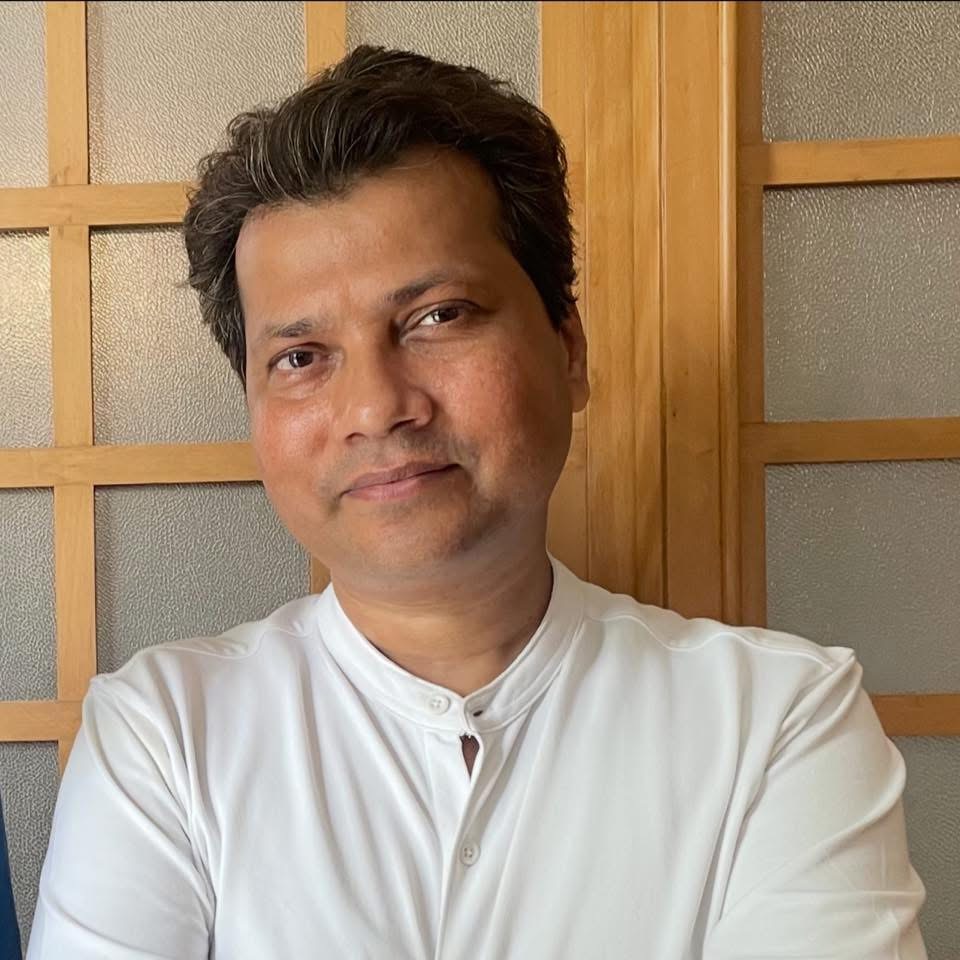
The Mumbai-based writer talks about her decade-in-the-making debut, following a young girl across India and Bangladesh, and the questions of home, freedom and selfhood that grow out of her journey
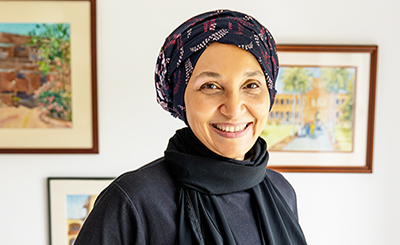
Antara Mukherjee has been writing towards her first novel for a long time. Before Beyond Our Births, her short stories and poems appeared in various magazines and journals, and the Yearbook of Indian Poetry 2021, among other publications. A short story won first place in the All India Literature Competition in 2020, and she later co-wrote a play that premiered at the Bangalore International Centre in 2022. More recently, her story “Bandel Local” was among the Indian entries longlisted for the 2026 Commonwealth Short Story Prize. Mukherjee, who has an MA in English Literature from the University of Calcutta and previously worked in communications, is now based in Mumbai.
Beyond Our Births (Bloomsbury) follows almost a decade in the life of Nimki, beginning when she is abandoned as a five-year-old near the India-Bangladesh border. She is taken into and eventually finds herself growing up in the Sengupta household in Kolkata, close enough to family life to long for a place within it, but never quite allowed to forget that she occupies a different position. Bina Ma, the matriarch of the Sengupta family, works with displaced women and children and wants to protect Nimki, but she cannot give her the emotional security she craves. Ira, her daughter, becomes Nimki’s companion, rival and another child competing for the same mother’s attention.
Around Nimki, Mukherjee builds a story about the small, daily ways in which class enters a child’s understanding of herself. Nimki watches Ira and her younger brother Rudra go to school, picks up English from them and begins to recognise what education might make possible. She also becomes painfully aware that affection, opportunity and even the right to imagine a different future are not distributed equally. Her desire to belong to the Sengupta family grows along with a sharper understanding of why she never fully can.
The novel then carries her back towards Bangladesh and the family she lost, opening up another set of questions while the people around her begin attaching religion, birthplace and class to who she is. The border is more than a line between two countries in the novel: it becomes the hinge on which Nimki’s life turns, separating families and identities while also forcing her to ask what home actually means. The threat of an early marriage, and her continuing hunger for an education, make that question more urgent.
In this interview, Mukherjee talks about where Nimki came from, why the border became central to the novel, and how she approached class, religion, education, sexual violence and the many different ways people look for a place to belong. She also reflects on writing her first novel, the importance of sensory memory, what she learned from revision, and why she now finds herself increasingly drawn to experimenting with language and structure. Excerpts:
On a summer evening, as I was watching the changing sky with my toddler, the character of Nimki came to me. While I had seen small children working in homes around us, at tea-stalls, restaurants, cinema halls and practically everywhere, I remember the precise moment of Nimki’s genesis as it was in that twilight hour when this story flashed before my eyes. I was so compelled to know more about her that I started writing. So yes, from the beginning I was aware of her journey and had a sense of how it was going to end, as I do with most of my stories. In fact, I could see the shape of the story with the two sides — one in India and the other in Bangladesh — resembling two cups joined by a fulcrum at the centre, which is the border. It’s around this fulcrum that the story turns. However, I remained conflicted over its ending for a long time. At one point, I wanted the story to have an open ending. As the border and the crossing of it reflect the political choice of the reader, I thought I’d leave it up to them to take that decision for Nimki. But given the times that we live in, I believe certain stories must end with hope. It’s hope that makes us resilient and emboldens us to dream of possibilities. A lot of readers have written to me saying that they found the ending cathartic.
Bina Ma works with an organisation that helps displaced women and children, but Nimki, who lives in her own house, never quite receives the love and security she longs for. What interested you about this contradiction? How does someone who cares deeply about the suffering of others fail to recognise the unhappiness of a child growing up in her own home?
I was interested in exploring this dichotomy within Bina Ma as I think this is what some people may experience who enter the sector taking it to be their calling. While for some it is their personal experience that draws them towards such a calling, for some it could be purely an act of humaneness. And yet it is this same humaneness that also creates an objective distance between them and what they choose to represent and fight for. This may be necessary for self-preservation as well as to approach the issue logically and to find solutions. So anybody working in the social sector may often limit themselves to how personal something can become despite the uplifting philanthropic euphoria one experiences which can morph into the situation Nimki finds herself in.
I was interested in exploring this dichotomy within Bina Ma as I think this is what some people may experience who enter the sector taking it to be their calling. While for some it is their personal experience that draws them towards such a calling, for some it could be purely an act of humaneness. And yet it is this same humaneness that also creates an objective distance between them and what they choose to represent and fight for. This may be necessary for self-preservation as well as to approach the issue logically and to find solutions. So anybody working in the social sector may often limit themselves to how personal something can become despite the uplifting philanthropic euphoria one experiences which can morph into the situation Nimki finds herself in.
Also read: Pia Ghosh-Roy on And I Am the Arrow: ‘I wanted to excavate the inheritance of invisible things’
As someone like Bina Ma who’s aware of the shortcomings in the existing system, she’s unwilling to leave Nimki to her chances. At the same time, she does not want to overextend herself to an extent that she can be manipulated. She probably feels that reinstating Nimki in a family environment is the best way Nimki could have been provided for. However, she’s unwilling to look at her emotional needs. That peeling of the emotional layer can make her vulnerable and looking away gives her an illusion of control. There’s a line in the novel about Bina Ma that says, ‘But she couldn’t be practical. It was this aspect of her personality that she feared the most.’ And later we read from her context about Nimki, ‘For a long time, she was perceived to be a crisis, a compulsion, a manipulation who challenged their morality and risked the sanctity of their family life. Bina Sengupta had dealt by putting her to good use with the household chores. That was her solace and also her guilt.’
How did you approach the relationship between Nimki and Ira? Did you find that their need for the same mother’s love brought them closer at times, even as their very different positions in the family kept coming between them?
To me, Ira and Nimki symbolize the yin and yang of a life force that runs beneath the first half of the novel. They are two seemingly opposing forces, yet they also complement each other and we see how eventually, as they shift and flow, they end up turning into one another. There are glimpses in the novel where we see Nimki becoming a student for Ira’s pretend play as a teacher, and they also dress up as ‘tourists,’ and later on Nimki tries to appease her by bringing her a butterfly and making a whistle from a palm leaf. So, in a way, they do share a bond with each other, although much of it is outside the scope of the plot. It is their love for Bina Ma that gets in their way and this difference is further accentuated by their different positions in the family. However, when Ira becomes the target of an assault, we see both the girls weeping together as women, fearful of their destinies in this male-controlled world.
To me, Ira and Nimki symbolize the yin and yang of a life force that runs beneath the first half of the novel. They are two seemingly opposing forces, yet they also complement each other and we see how eventually, as they shift and flow, they end up turning into one another. There are glimpses in the novel where we see Nimki becoming a student for Ira’s pretend play as a teacher, and they also dress up as ‘tourists,’ and later on Nimki tries to appease her by bringing her a butterfly and making a whistle from a palm leaf. So, in a way, they do share a bond with each other, although much of it is outside the scope of the plot. It is their love for Bina Ma that gets in their way and this difference is further accentuated by their different positions in the family. However, when Ira becomes the target of an assault, we see both the girls weeping together as women, fearful of their destinies in this male-controlled world.
Nimki cannot understand how class continues to follow her when she has already lost her family and everything she once had. What does a child make of being told that she belongs to a certain class? How does that knowledge begin to change the way she sees herself and the people around her?
When a child is told that they belong to a certain class, they may become hyperaware of the differences and begin to notice things around them that signify privilege. In case of Nimki, we see that she tries to earn her privilege either by overserving the family or by upsetting things for Ira. It also births within her the desire to be seen as the daughter of the Sengupta house. She questions everything — her name, her status of a maid in the household, and also her lack of education. Everything around can contribute to a child learning shame as not belonging to a desired class can breed a sense of inadequacy. Despite this underhandedness of fate, as she calls it, throughout the novel, we find her trying different things to outsmart the system so that she can be accepted as an equal. When Ira’s counsellor expresses surprise at Nimki learning to handle the laptop, she says, ‘Why couldn’t I? If I had a Sengupta attached to my name, you wouldn’t have asked me this question.’
Nimki learns English from the Sengupta children, but she does not have the same opportunities for education. Later, when she returns to Bangladesh, the possibility of an early marriage threatens to close off her future even further. How important was education to the kind of life you wanted Nimki to imagine for herself? What does a girl do with the knowledge that another life is possible when she has so little say in what happens to her?
When I started writing the story, I did not have much of an insight into how Nimki’s life would turn out to be. However, soon I could see that one of the fundamental goals that I could envision for her was for her to get educated. That also partly explains, why the Swamiji from Ramkrishna Mission travels to the interiors of Bengal and sets up schools for the underprivileged children. However, when the assault on Ira renders her incapable of handling her school work, it comes as an opportunity for Nimki to get an accidental education. I was keen for Nimki to see for herself how education could change her life rather than me forcing it on her. And therefore, even when she moves with her parents to Bangladesh, she keeps on pining for a proper school education. In one of the scenes when Jasmin says that she has always prayed for the health and the well-being of her children, Nimki asks her if she has ever prayed for them to be educated. But a girl may not be able to alter her course of life if she does not have access to school and her fundamental right to education is thwarted. Today, in many countries the greatest challenge for a girl unfortunately is to get into school and then stay in school, until she finishes her education.
Nimki has to make sense of a past she barely remembers and an identity that other people seem to have decided for her. How did you approach this part of her story? What happens to a child's understanding of herself when the people around her suddenly begin to see her differently because of her religion and where she was born?
Although I knew that the story would involve these two families, I hadn’t considered her religious identity when I started writing. Rather I was eager to place her in a middle-class family in Bangladesh as I knew that comparison between the two families was inevitable. However, I quickly realised that the story would not add up as someone with decent means would probably navigate the border with official permissions and therefore have a different experience at the border. So once the details about her biological parents are revealed, I knew I had to move towards the more uncomfortable questions around religion and class and the prejudices attached to both. And yet when I delved deeper what emerged was this beautiful family with Jasmin and an engaging camaraderie between the siblings and the little despot of the house — Kamal. In retrospect, I think it has worked well for Nimki’s character because an emotional attachment is established before the lens of religion and class is placed on her.
Although I knew that the story would involve these two families, I hadn’t considered her religious identity when I started writing. Rather I was eager to place her in a middle-class family in Bangladesh as I knew that comparison between the two families was inevitable. However, I quickly realised that the story would not add up as someone with decent means would probably navigate the border with official permissions and therefore have a different experience at the border. So once the details about her biological parents are revealed, I knew I had to move towards the more uncomfortable questions around religion and class and the prejudices attached to both. And yet when I delved deeper what emerged was this beautiful family with Jasmin and an engaging camaraderie between the siblings and the little despot of the house — Kamal. In retrospect, I think it has worked well for Nimki’s character because an emotional attachment is established before the lens of religion and class is placed on her.
When people around children begin attaching religion and birthplace to their identity, the child can start to encounter herself through their eyes. So it’s people’s gaze that becomes a part of their self-image although deep down he/she may not have changed at all. While a child may not understand the politics intellectually, they would notice how people speak to them differently, or how they is not welcomed into certain spaces or how there’s simply a hesitation in including them. This is how the personal becomes political. The world assigns an identity before a child gets a chance to create one for herself.
Ira’s experience of sexual assault changes the course of the Sengupta family’s life, and Nimki plays an important role in helping them find her. What did you want to explore through the way the family responds to this violence? I am also interested in how you approached Ira’s experience as a writer, particularly the parts of her suffering that the people closest to her might never fully understand.
Much of how the family responds to the sexual assault has been influenced by what we are witnessing all around us. Despite having access to law, a reasonable social standing and education, the Senguptas do not report the violence. This might be a common phenomenon in India even today because the chastity of a woman is still weighed above all the parameters of her worthiness.
Also read: Shivani Sibal on Moms: ‘We must not just live a good life, but actively appear to be doing so’
As I wrote the scene of her assault, I was quite sure that I did not want to make it graphic or visceral. Since the reader lives through that hour-long scene sensing it all through Nimki’s eyes, I think the emotional heft of the assault is felt in that restraint. The distance creates an anticipation which further fuels an anxiety.
To portray Ira’s suffering after the assault, I decided to rely heavily on visual elements. So, Ira rubbing the ant-trails which start resembling like the markings on a prisoner’s wall, or her fear of the figures in the bathroom made by the leak in the cistern, or her sleepwalking through the nights project her suffering as cruelly panoramic. The loss which she feels in her bones, the betrayal by her lover, the weight of obligation from Nimki, and her altered relationship with her family was something that took shape organically.
Nimki finds a kind of fatherly acceptance in the elderly monk she meets at a temple. Their relationship becomes important to her as she searches for a place where she can belong. What drew you to this relationship? Nimki has spent so much of her childhood hoping to be accepted by people who have the power to decide whether she can stay with them. What does she begin to understand about love and family through her friendship with the monk?
Through each of the characters and their nuances, I’ve tried to explore the different shades of belongingness and the restlessness that comes with it. Therefore, while on one hand there’s Nimki who’s yearning to go back to her family, the monk on the other hand has walked away from his own. In a way they are at the two ends of the spectrum and yet what threads them together is their deep-seated longing for their mother. There’s a moment in the story when they meet and Nimki questions him about his home and he says, ‘Any place in this world can be your home, if it makes you feel at home. But not many places will make you feel that way.’ So in a sense, I saw both of them as outliers — living outside the societal framework of family where they have nothing more to lose. When we bring two such characters on the page together and allow them to interact, what it evokes is a familiarity between them which can grow into a fondness. The no-man’s land therefore becomes symbolic in more than one way. It is through his character that Nimki in the end, realises that while we cannot control the circumstances of our birth, we can decide whom to build our lives with.
Through each of the characters and their nuances, I’ve tried to explore the different shades of belongingness and the restlessness that comes with it. Therefore, while on one hand there’s Nimki who’s yearning to go back to her family, the monk on the other hand has walked away from his own. In a way they are at the two ends of the spectrum and yet what threads them together is their deep-seated longing for their mother. There’s a moment in the story when they meet and Nimki questions him about his home and he says, ‘Any place in this world can be your home, if it makes you feel at home. But not many places will make you feel that way.’ So in a sense, I saw both of them as outliers — living outside the societal framework of family where they have nothing more to lose. When we bring two such characters on the page together and allow them to interact, what it evokes is a familiarity between them which can grow into a fondness. The no-man’s land therefore becomes symbolic in more than one way. It is through his character that Nimki in the end, realises that while we cannot control the circumstances of our birth, we can decide whom to build our lives with.
I was struck by the way you describe Nimki’s memories of her mother. She remembers the feel of her skin, coconut oil being rubbed into her hair and the smell of fennel seeds when her mother kissed her. Elsewhere, she chews rubber bands to cope with the pain of missing her family. How did you find the language for a child's memories of loss? When you write a scene like this, how do you decide how much to explain and how much to leave to the reader to feel?
From her lived experience with her parents in Bangladesh, I’ve tried to collect fragments that she may recount every day to reconstruct a remembered reality. What she does not realise is that by selecting certain memories, she is simultaneously deselecting many others, which probably hides more than she can discover with those handful details. Yet it is with those handful details that she composes a narrative that gives her a sense of identity. Therefore, what I chose for Nimki were the little details that had a strong sensorial foothold in her mind and when they are listed one after the other, they create a theatre that is somewhat macabre but also metaphysical.
Beyond Our Births is your debut novel, though you have been writing short stories and poetry for years. The book has also had a long journey to publication. How did your writing change over those years? I would love to know how you worked on the sentences, the voices of your characters and the movement of the story. When you look at the finished novel now, what do you recognise of the writer who first began it, and what could you only have written after spending so many years with Nimki?
When this story first came to me, I could already see the enormity of its scope and therefore my everyday attempt was to be able to do justice to it. What I had realised early on in my writing journey is that there is a storytelling aspect to writing and then there is the craft of writing. When these two aspects come together, a great story is born.
When this story first came to me, I could already see the enormity of its scope and therefore my everyday attempt was to be able to do justice to it. What I had realised early on in my writing journey is that there is a storytelling aspect to writing and then there is the craft of writing. When these two aspects come together, a great story is born.
Over the years I’ve realised that my first drafts are most important as nearly eighty percent of what I write in the first draft remains. However, it’s only in the subsequent drafts that the secondary characters come alive, the chronology gets revised and a central theme starts evolving. Thereafter, I begin fine-tuning the dialogues and tweak the descriptions so that everything is aligned towards the theme. I also have a tendency to overthink and overwrite and sometimes that becomes detrimental. I have to then work towards restoring things back to a previous draft.
As regards Beyond our Births, when I look at the finished novel now, I recognise the anxiety that I first felt about writing those intricate details about the characters that also needed to feel true. However, my decision to dive deep into the craft books on writing and eventually finding a community of writers has played a huge role in my path. For many years I thought that I had found the best story at the beginning of my writing career, which may be true. But what I now find myself gravitating towards is a play of language and more importantly, an experimentation with the structure of a novel.
As regards Beyond our Births, when I look at the finished novel now, I recognise the anxiety that I first felt about writing those intricate details about the characters that also needed to feel true. However, my decision to dive deep into the craft books on writing and eventually finding a community of writers has played a huge role in my path. For many years I thought that I had found the best story at the beginning of my writing career, which may be true. But what I now find myself gravitating towards is a play of language and more importantly, an experimentation with the structure of a novel.
More from The Byword





Comments
*Comments will be moderated