








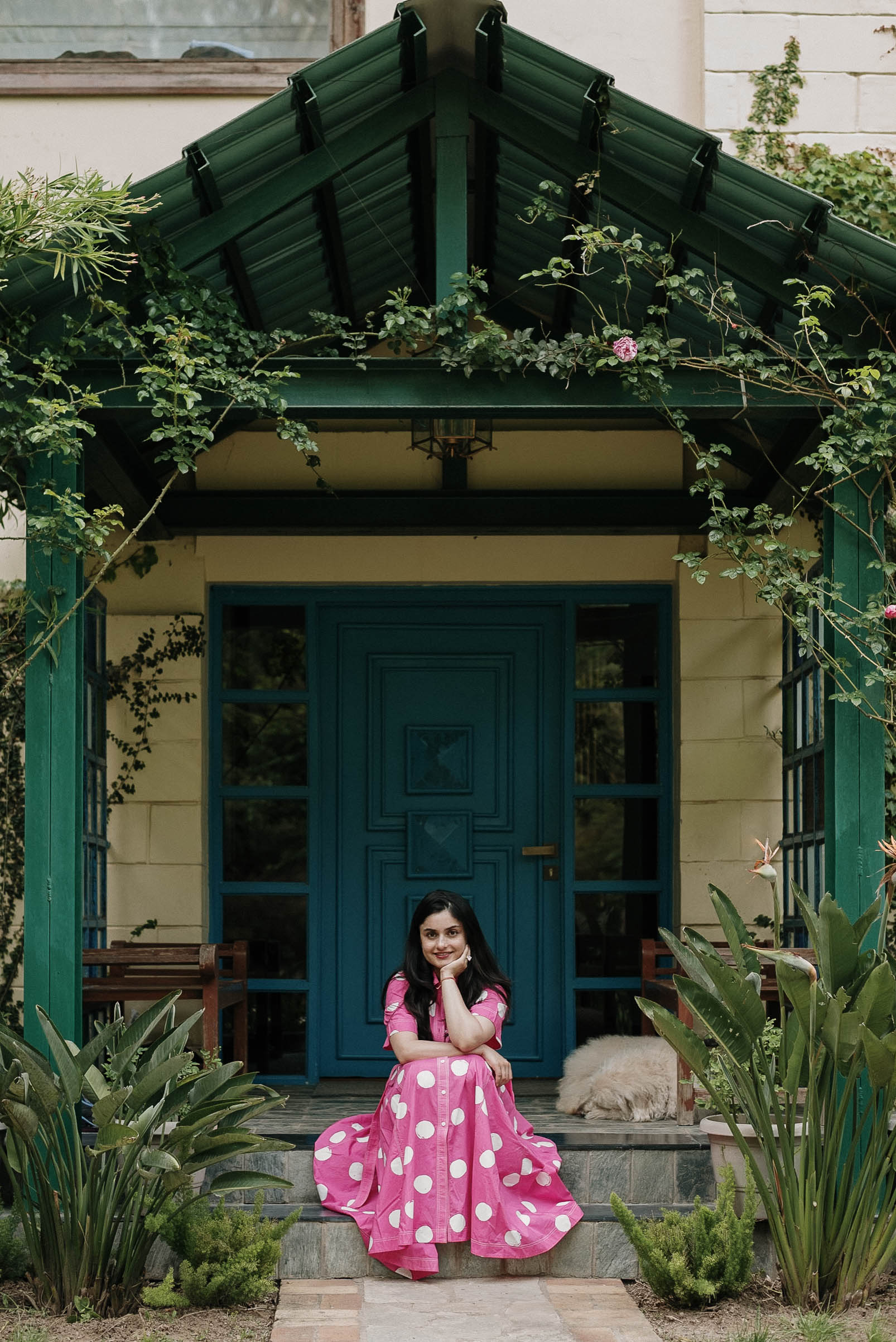
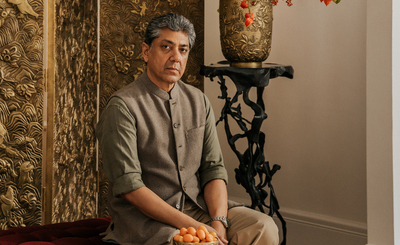
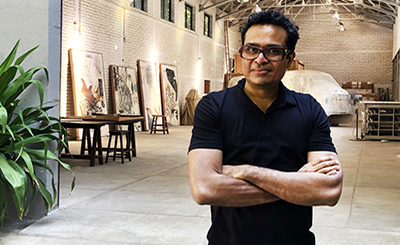
Teesta Bhandare at the residency venue, Salogra, in Himachal Pradesh. Photos courtesy of Knowledge Convergence Foundation
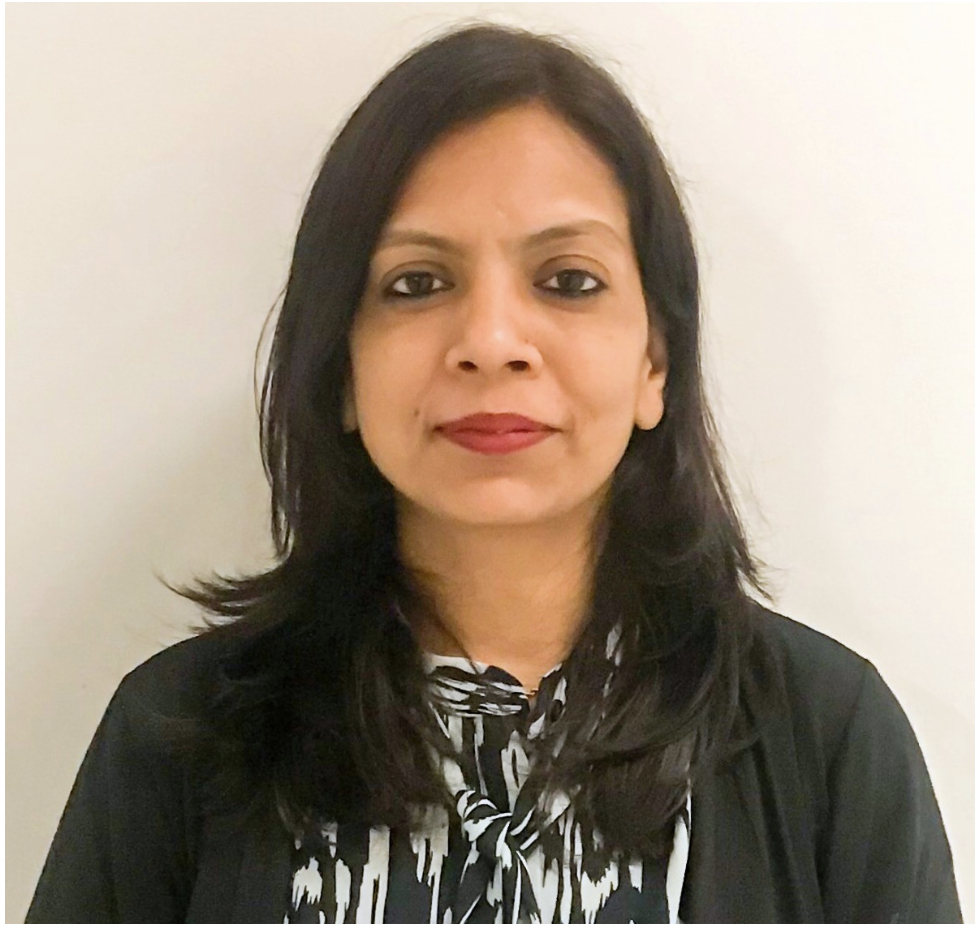
With the inaugural exhibition of the Knowledge Convergence Foundation at Bikaner House, New Delhi, Teesta Bhandare brings together artists across generations and disciplines to examine the idea of paradise, its promises and its place in the world we inhabit
The idea of paradise has occupied the human imagination for centuries. It appears in religious beliefs, philosophical thought, literature and art, often as an image of perfection, an imagined refuge or a world in which life might be different. But what happens when that promise is examined against the realities of the world we live in? Can paradise be understood beyond the idea of an ideal destination? And how do our individual and collective ideas of a better world shape the societies we build?
These are some of the questions that informed Paradise Promised, the inaugural exhibition presented by the Knowledge Convergence Foundation (TKCF), founded by art collector and advisor Teesta Bhandare. Held at Bikaner House, New Delhi, from September 14 to 16, 2026, the exhibition brought together works by seven artists who participated in the Foundation’s first multidisciplinary residency in Salogra, Himachal Pradesh, with works by three other artists whose practices engage with the exhibition's wider concerns.
For Bhandare, the exhibition was the culmination of a process that began well before the works came together in Delhi. The Foundation, established on April 1, 2026, grew out of her interest in creating a platform where artists and people from different creative disciplines could meet, work and exchange ideas without the social barriers that often shape interactions within the art world.
The choice of paradise as the inaugural residency theme was deliberate. “The idea of paradise has been explored across cultures and belief systems for centuries. Beyond being an imagined ideal, it can shape our aspirations, the choices we make and the societies we build,” Bhandare says. The intention was to look at how the idea is understood today and what happens when the promise of an ideal world is set against the circumstances of everyday life.
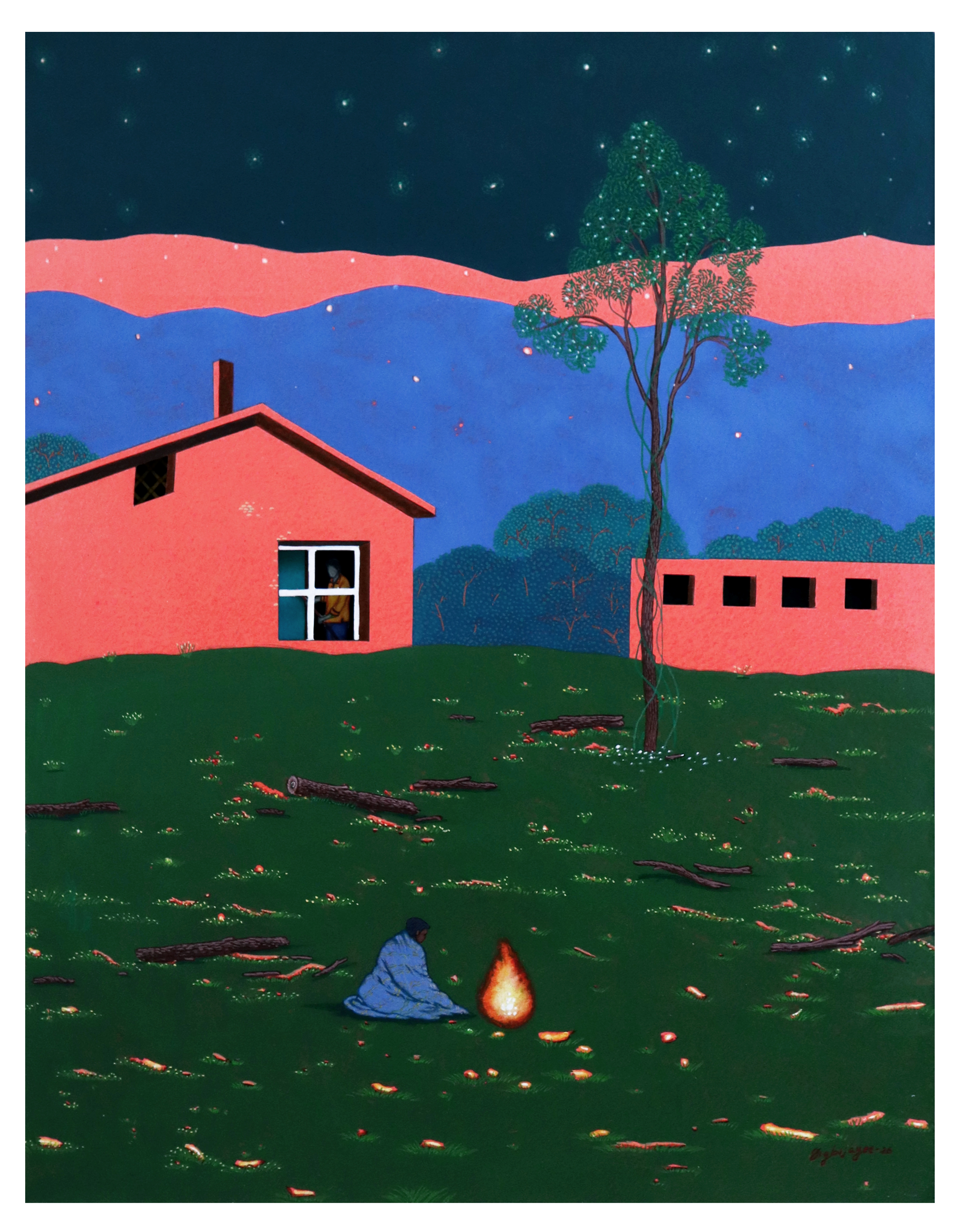
Digbijayee Khatua, Between Hope and Silence, 2026
Seven artists were brought together with curatorial advisor Lina Vincent, an art historian and curator with more than two decades of experience. They included Rekha Hebbar Rao, Veer Munshi, Kodanda Rao Teppala., Sheena Maria Piedade, Digbijayee Khatua and Dhiraj Pednekar, along with Vincent. Each was invited to approach the theme through an individual practice and set of experiences. The exhibition subsequently widened the conversation by including works by Shailesh B R, Akshata Mokashi and Dhiraj Rabha, who were not part of the residency but whose practices resonated with its concerns.
The common theme did not require the artists to arrive at a common position. In fact, the differences in their responses were central to the exercise. Bhandare and Vincent were interested in what might emerge when artists with distinct approaches spent time considering the same set of questions. In the exhibition, the works retain their individual identities, while their placement alongside one another allows viewers to discover connections that might not otherwise have been apparent.
The residency itself took place in Salogra, a relatively quiet setting in Himachal Pradesh, close to Solan and Shimla but comparatively untouched by urbanisation. Its natural surroundings offered the participants a change of pace and the opportunity to step away from their usual routines. There was time to think, work and engage with one another without the pressures of a conventional studio or exhibition schedule. For Bhandare, the location was as much about creating the right conditions for reflection as it was about providing a place to work. “Being surrounded by nature gave the artists room to step away from their usual routines and explore ideas in a more focused way,” she says.
An important part of the programme was its series of conversations and workshops with people working in different fields. Historian Sohail Hashmi, author and festival director Namita Gokhale, Anahita Batra, and singer, composer and filmmaker Madan Gopal Singh, accompanied by musician Pritam Ghosal, were among those who engaged with the artists. These exchanges brought perspectives from history, literature, music and other areas of cultural practice into the residency.
The intention was to make the experience larger than the act of producing new work. Bhandare sees the conversations as an essential part of the process, allowing artists to encounter ideas outside their immediate disciplines and reconsider familiar ways of looking at the world. The value of bringing people together, she believes, lies partly in the possibility of being challenged by someone else's approach to a question one might have assumed was already understood.
This is also central to the Foundation's larger purpose. Bhandare believes that creative communities benefit when people with different experiences and ways of thinking have the opportunity to work alongside one another. Remaining within familiar professional and social circles can make it easy to approach ideas in predictable ways. An encounter with another discipline or generation can disrupt that comfort and introduce possibilities that might not emerge otherwise.
“The idea behind the Foundation is to provide a platform for conversation without social barriers and awkwardness that exist in everyday interactions between stakeholders of the creative community,” she had said while announcing TKCF. “The idea is that everyone, no matter the experience or field of discipline can contribute meaningfully and should have a space to do so.”
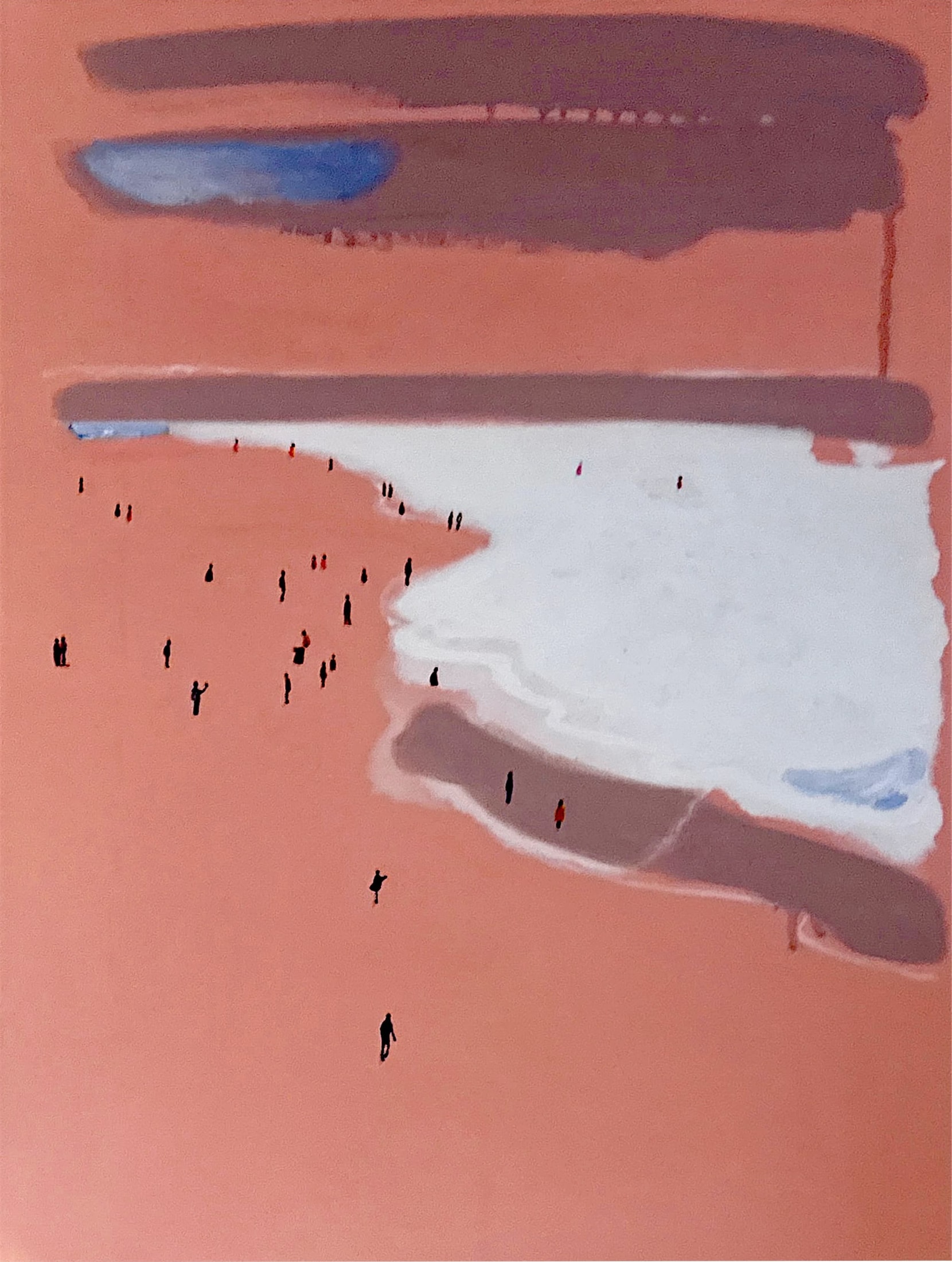
Nature of Paradise, Kodanda Rao Teppala
Her thinking about the Foundation has been shaped by a journey through different parts of the art ecosystem. Bhandare moved away from corporate law around six years ago to pursue her interest in the arts. Her subsequent work has included organising exhibitions for young collectors and emerging artists, developing her own art advisory and building an understanding of contemporary art through the experience of collecting.
Her engagement with art, however, began much earlier. One of her first points of contact with contemporary artistic practice was Leap Years, an after-school centre established by her father more than two decades ago. Artists including Gigi Scaria, Kanchan Chander and Vibha Galhotra taught there, giving her an early opportunity to encounter artists and their work beyond the conventional gallery setting.
Over time, collecting and advising gave her a closer understanding of the relationships between artists, galleries, collectors and institutions. It also brought into focus the aspects of the art world that extend beyond the commercial framework. While the market remains an important part of the ecosystem, she became increasingly interested in the time and space artists need to develop their practices, experiment and engage with people outside their immediate circles.
Also read: Aneri D. Patel is building a museum for Ahmedabad, and a new audience for contemporary art
TKCF is an extension of that interest. Its programme brings together residencies, workshops, exhibitions and publications, conceived as connected parts of a longer engagement rather than isolated activities. The residency gives artists the opportunity to develop ideas; the exhibition brings those ideas into conversation with a wider audience; and the publication allows the discussions to continue beyond the physical exhibition.
The range of practices represented in Paradise Promised reflects the breadth of this approach. Rekha Hebbar Rao, trained under modernist artist K K Hebbar, is known for her use of colour and allegorical explorations of life. Veer Munshi, a graduate of Kashmir University and MS University, Baroda, has built a practice around exile, identity and the human consequences of displacement in Kashmir.
Kodanda Rao. Teppala., educated at Andhra University and MS University, Baroda, works with vibrant, synthetic palettes to depict socially charged landscapes, often addressing environmental and societal change. Sheena Maria Piedade, an interdisciplinary practitioner and art therapist, explores capitalism, community and ecology, while Digbijayee Khatua’s work considers urbanisation, ecological fragility and changing socio-political structures.
Dhiraj Pednekar, who holds an MFA in Sculpture from the University of Hyderabad, works across sculpture, film and education. The wider exhibition brings in Shailesh B R, whose practice explores colour, texture, form and line, including through kinetic sculptures; Akshata Mokashi, who has developed a distinctive engagement with tapestry weaving, describing it as painting with yarn; and Dhiraj Rabha, whose paintings examine displacement, identity and resilience, drawing on the socio-political narratives of his surroundings.
 (I)-Dhiraj Rabha.jpg)
Echoes of Resilience, Dhiraj Rabha
For Munshi, the residency also offered the possibility of a longer-term space for mentorship and collective engagement. Reflecting on the experience, he observed that such a programme could become an important working environment for multidisciplinary practitioners, allowing interactions between creative people to contribute to a wider social consciousness. It is an idea that speaks to the Foundation's interest in making the process of artistic exchange as important as the finished work.
Bhandare is equally keen that visitors approach the exhibition without feeling obliged to arrive at a particular interpretation. She wanted people to spend time with the works and respond to them in their own way. “I hoped visitors would take their time with the artworks, allowing themselves to engage with them in their own way rather than feel the need to arrive at a fixed interpretation,” she says. “I wanted the experience to remain open and fluid, leaving room for people to make their own connections with the works and find something that resonated with them personally.”
That openness is important to an exhibition built around a theme as expansive as paradise. The works do not have to offer a single answer to what an ideal world might look like. Instead, they create a space in which different experiences and understandings can exist alongside one another. The exhibition's title also invites viewers to consider the distance between what societies promise and what they are able to deliver, and the ways in which such promises influence individual aspirations and collective behaviour.
Also read: Subodh Gupta interview: ‘Even the most ordinary objects can carry extraordinary human histories’
For Bhandare, Paradise Promised is the beginning of a longer programme. The exhibition will be followed by a publication documenting the works developed in response to the theme, alongside contributions from cultural practitioners across South Asia. TKCF is also working towards its next residency edition, with a similar annual cycle planned: a residency in April, an exhibition in September and a publication towards the end of the year. The next theme is to be announced, with artists also able to participate through open calls.
Bhandare’s ambition is to build a platform that artists will want to return to, not simply for the opportunity to exhibit but for the relationships, conversations and freedom to explore ideas that it makes possible. She is conscious that a residency cannot be measured only by the work produced during its duration. Its influence may also be seen in the exchanges that continue afterwards, the new collaborations that emerge and the ways in which an artist’s thinking changes through encounters with others. “I would like TKCF to be a place artists return to for the conversations, relationships and freedom to explore ideas in new ways,” she says. “If we can create an environment in which artists feel supported to experiment, learn from one another and reach audiences they might not otherwise encounter, we will be moving in the right direction.”
In that sense, the first edition of TKCF is less about presenting a definitive understanding of paradise than about making room for artists to question it. The promise lies in the conversations that begin when people from different disciplines and generations are given the time and freedom to think together, and in the possibility that those conversations will continue well beyond the exhibition space.
More from Arts


Comments
*Comments will be moderated