








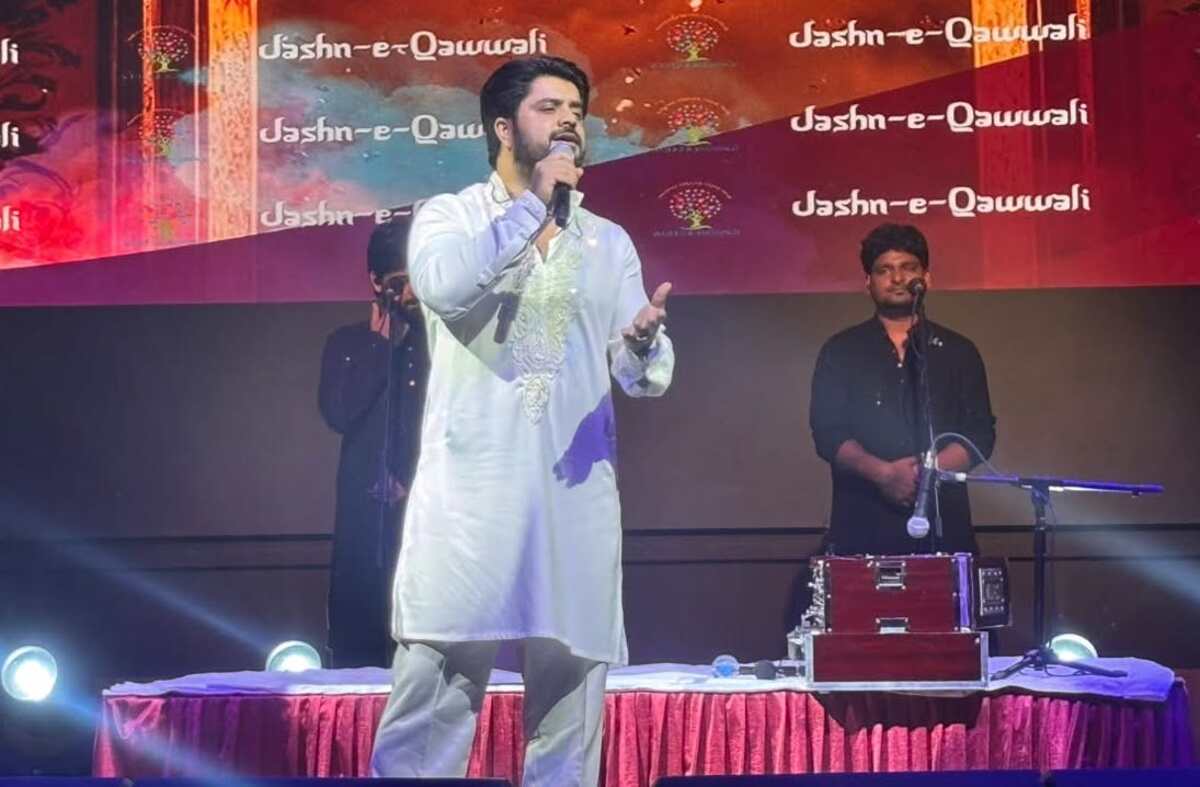
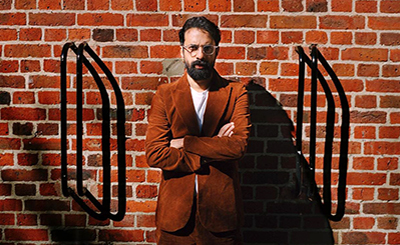
At the fifth edition of Jashn-e-Qawwali, Wishes and Blessings’s fundraising concert, Kabul Bukhari’s voice carried a packed Bharat Mandapam through beloved qawwalis and film songs, but the evening’s real purpose was helping the Delhi-based NGO build a permanent home for the elderly residents of Mann Ka Tilak
When Kabul Bukhari and his troupe began to build the evening at Bharat Mandapam recently, the hall slowly moved into the old rhythm of a mehfil. The claps slowly became steadier, the chorus fuller, and the audience began to answer the singer almost instinctively. There were hundreds of people in the room, but the best moments of Jashn-e-Qawwali felt like a gathering that knew why it had come: for music, certainly, but also for something beyond music.
Bukhari, the Kashmiri Sufi and folk singer from Karnah in Kupwara, brought to the evening the high, open-throated energy associated with contemporary qawwali performances. His set moved through songs that many in the audience had listened to many times over: Saanson Ki Mala Pe, Tum Ek Gorakh Dhanda Ho, Kaali Kaali Zulfon Ke Phande Na Dalo, and the much-loved friendship song Ehsaan Mere Dil Pe Tumhara Hai Dosto, with its line, “Tum jaise meherban ka sahara hai dosto.”
Saanson Ki Mala Pe, written by Tufail Hoshiarpuri, is most strongly associated with Ustad Nusrat Fateh Ali Khan, who turned it into one of his great devotional performances. It’s a song about longing. The beloved’s name is counted on the garland of breath itself. In Bukhari’s rendition, that old ache of devotion found a natural place inside an evening organised around care.
Tum Ek Gorakh Dhanda Ho, written by Pakistani poet and broadcaster Naz Khialvi and made famous by Nusrat Fateh Ali Khan, is a searching, restless address to the divine. It asks where God is, why He remains hidden and present at once, why the seeker finds signs everywhere and certainty nowhere. In a fundraiser for abandoned and neglected elders, the song’s bewilderment had an unexpected sharpness. It carried the unease of people looking for meaning in suffering without pretending that suffering is simple.
Kaali Kaali Zulfon Ke Phande Na Dalo, another Nusrat favourite, brought the familiar playfulness and hurt of romantic address into the room: beauty as snare, desire as danger, a heart already wounded asking not to be trapped again. And Ehsaan Mere Dil Pe Tumhara Hai Dosto, sung originally by Mohammed Rafi for the 1966 film Gaban, with music by Shankar-Jaikishan and lyrics by Hasrat Jaipuri, shifted the mood towards gratitude. In the context of the evening, its line about leaning on generous friends acquired a second meaning. It became, almost without announcement, a thank-you to those whose presence could help turn a cause into a home.
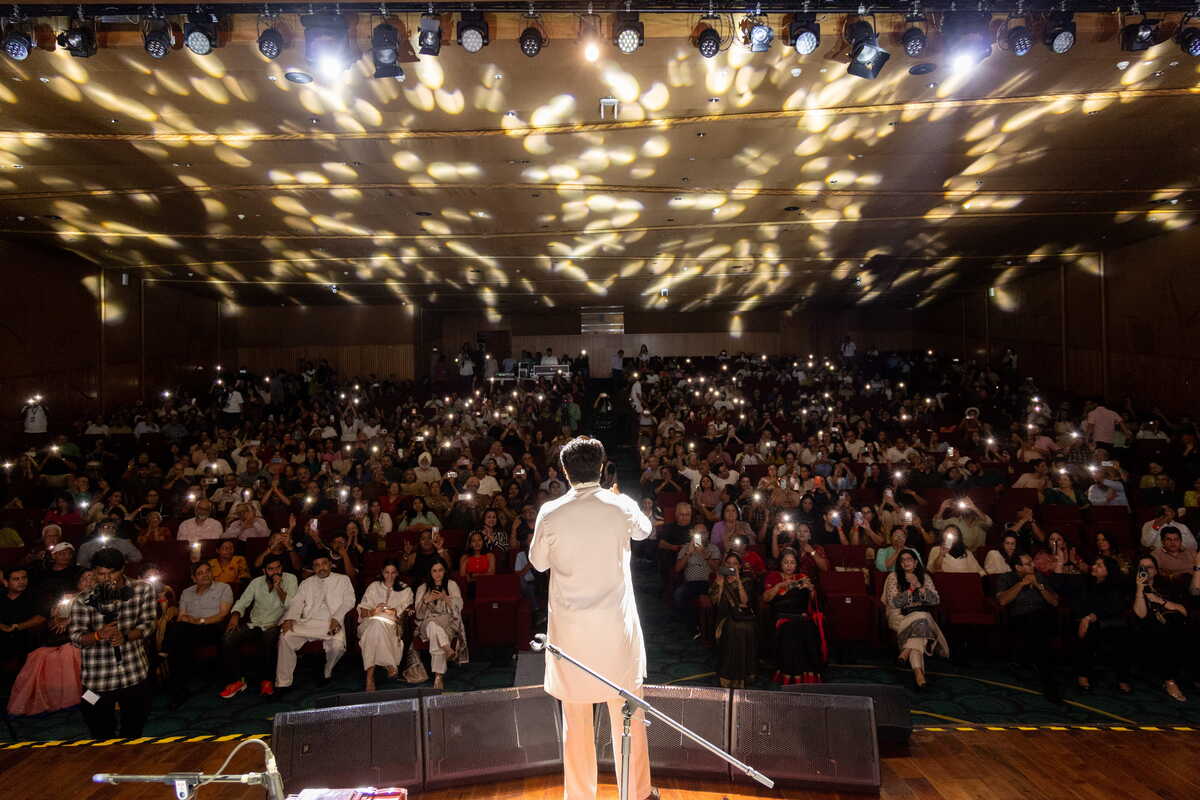
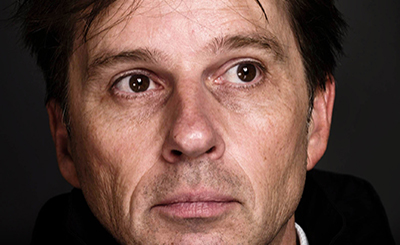
Kabul Bukhari, the Kashmiri Sufi and folk singer from Karnah in Kupwara, brought to the evening the high, open-throated energy associated with contemporary qawwali performances
For Dr Geetanjali Chopra, founder of Wishes and Blessings, Jashn-e-Qawwali did not begin as a planned annual cultural property. Its roots go back to Covid, in 2021, when the Qawwals of Rampur approached the organisation in distress. Their shows had stopped and their livelihoods had been affected. “They were literally starving,” she recalls. The first edition was organised online on BookMyShow as a way to help them. “We per se did not go into music,” she says. “Music approached us, or musicians approached us, and that’s how Jashn-e-Qawwali took birth.”
The first edition supported the Qawwals of Rampur. The second supported survivors of domestic abuse and underprivileged women, and helped launch SAHAS, the organisation’s skill development wing. The third raised funds to set up WB Rasoi, its community kitchen. The fourth and fifth editions have been directed towards Mann Ka Tilak, the elderly care initiative of Wishes and Blessings, and the plan to procure land for a permanent old age home.
Over the years, Chopra says, audiences have begun to look forward to Jashn-e-Qawwali as the organisation’s flagship fundraiser. Some come for the qawwali while some others remain connected to the work through the year. “There are some music lovers who just come for music,” she says. “So we can’t generalise.” But the event has created a space where the two impulses can meet: the love for a live musical night and the desire to support a cause.
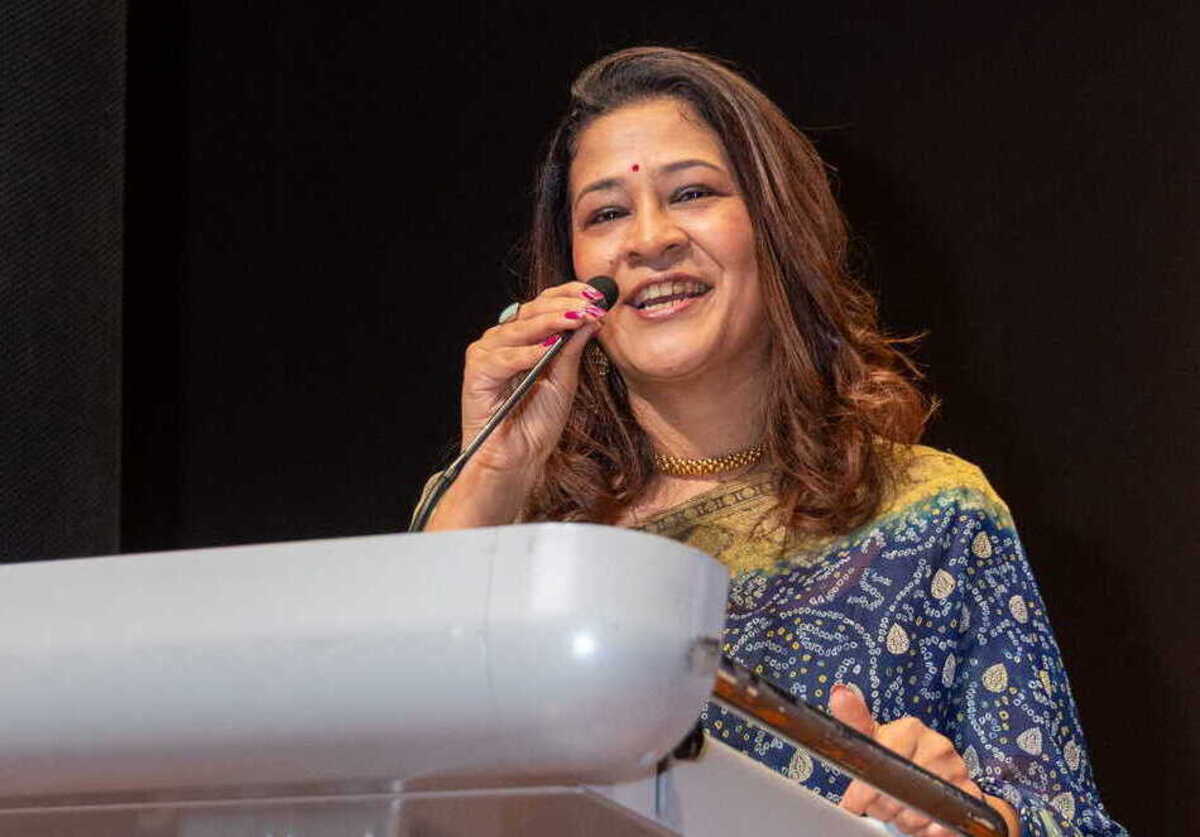
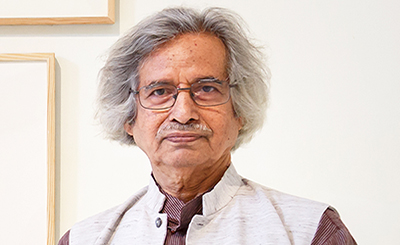
Geetanjali Chopra, founder of Wishes and Blessings.
A memorable part of the evening was that the beneficiaries were not kept outside the story. From the first edition, Wishes and Blessings has tried to include them in the event. “We believe that the event is not just the core team’s or mine or the founder’s or the organisation’s, but the entire family of Wishes and Blessings,” Chopra says. Children, women and elderly residents have all been part of different editions. For the women of Mann Ka Tilak, the gesture carries special emotional resonance. Many have known abuse, abandonment or neglect. To be brought into a public gathering, to be seated with respect, to be seen as part of the evening and not as an afterthought, matters.
Chopra says the women often tell her it is their good fortune to be there. She tells them the opposite. “It is our good fortune that you are actually blessing the event,” she says. That exchange lies at the heart of Mann Ka Tilak. Elderly care is usually spoken of in terms of food, medicine, shelter and beds. Mann Ka Tilak does provide those things, but Chopra’s work has also taught her that the deeper wound is emotional, the feeling of being discarded after a lifetime of giving.
“The saddest part is the neglect, abandonment and abuse of elderly people,” she says. There is no single pattern. Every case is different. Sometimes the cause lies in circumstances, sometimes in family breakdown, sometimes in values, and sometimes in the harshness of modern living where elderly people are made to feel redundant or burdensome. Some residents are relieved to come to an old age home because their suffering has finally ended. Others arrive with the grief of abandonment. “Every individual needs to be handled individually,” Chopra says. Sometimes through counselling, conversation, and sometimes by allowing them silence while showing up every day.
Wishes and Blessings needs Rs 5 crore to procure land for the permanent old age home. Since the beginning of the last financial year, it has raised a little over Rs 2.5 crore. “We are halfway through,” Chopra says. She is careful about declaring what Jashn-e-Qawwali’s fifth edition has achieved financially, because donations often continue after the event. The final picture will take time. The home itself is still some distance away. The land must come first. But eight years of working with elderly residents have already shown the team what the future space must consider. Ramps instead of steps, elder-friendly washrooms, safe movement. These are small details only to those who do not need them.
That is why the evening continued well into the night. Kabul Bukhari’s qawwalis gave the night its succour, but Mann Ka Tilak gave it its centre. Jashn-e-Qawwali began with musicians in distress during Covid. Five editions later, it is trying to build a home for women who have known another kind of abandonment.
More from Arts


Comments
*Comments will be moderated