








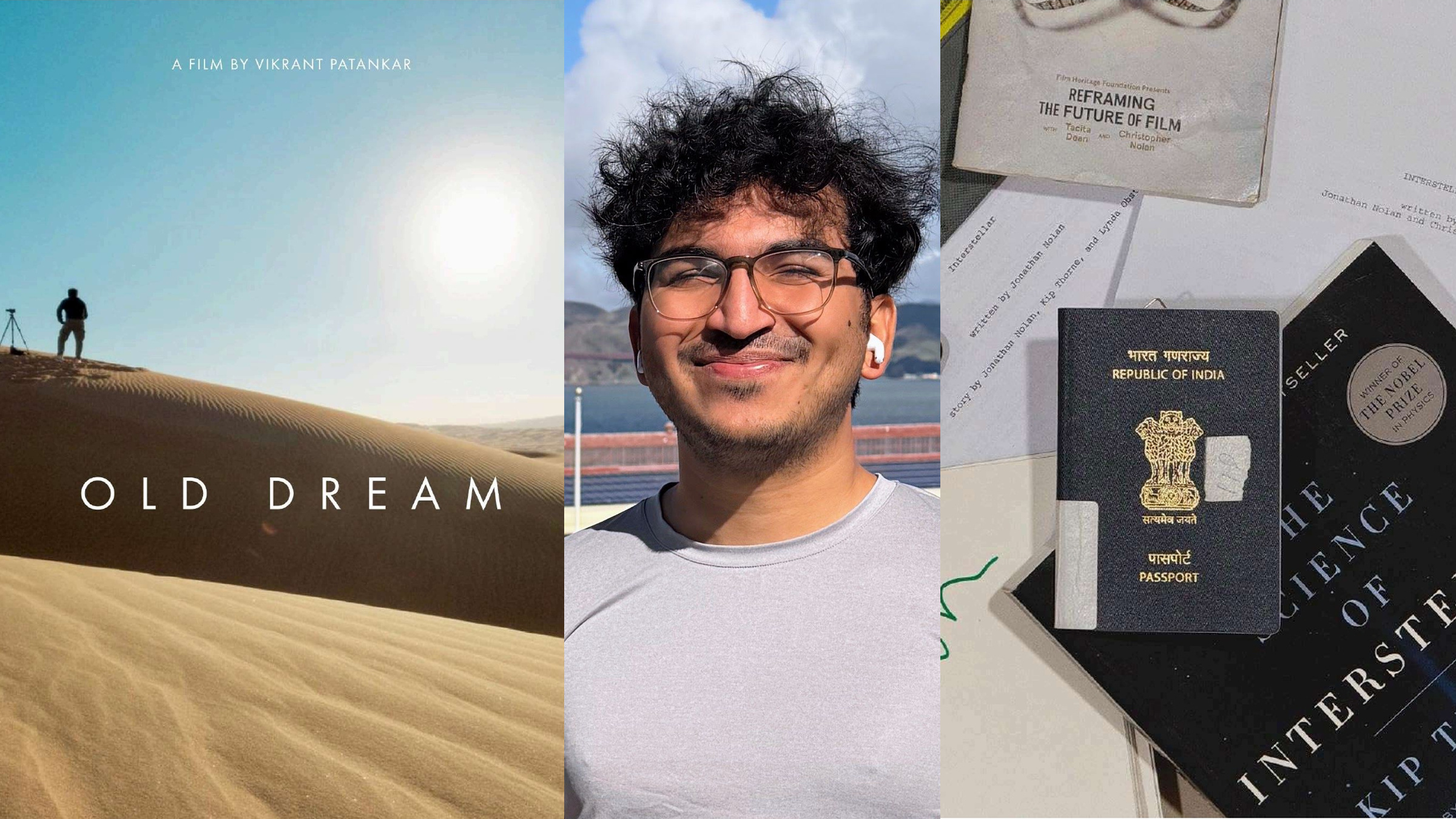
Old Dream: For the Love of Dune, Vikrant Patankar’s feature-length personal documentary is inspired by Denis Villeneuve’s Dune films, deserts, Hans Zimmer’s music and the act of going to the movies
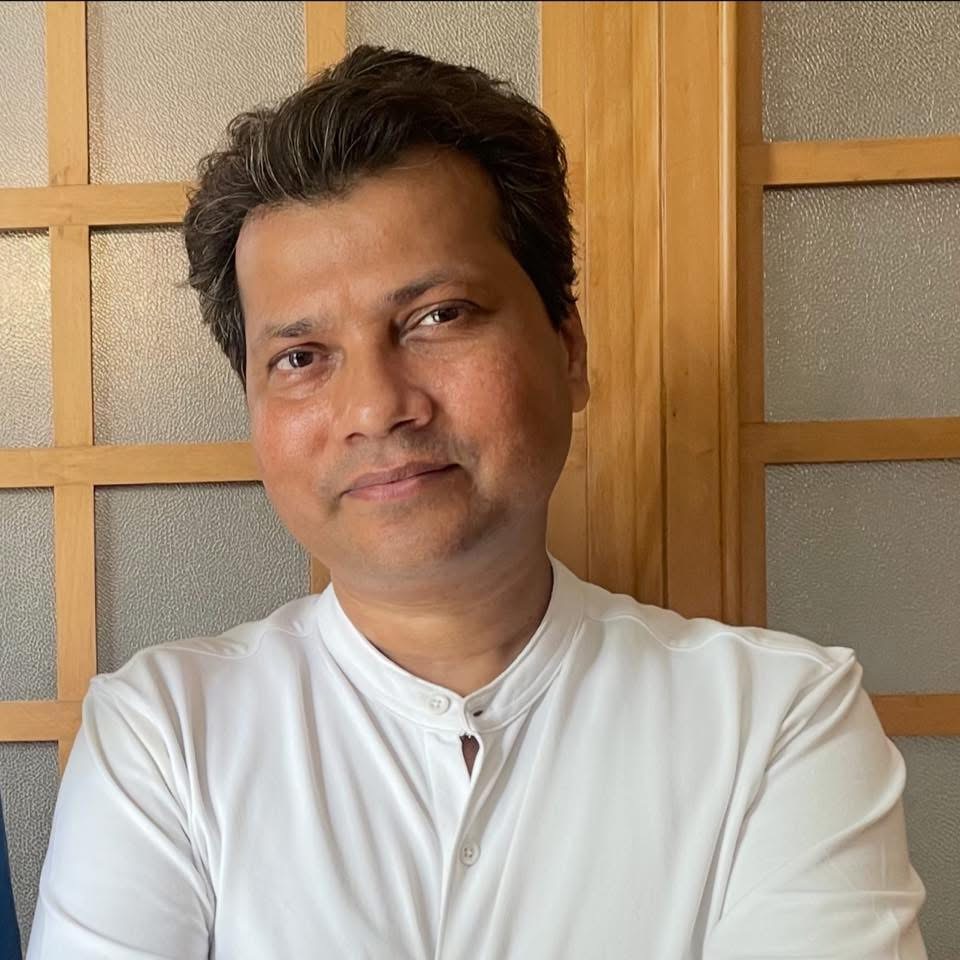
With his first narrative short Summer Montage in development, the feature documentary Old Dream taking his love of Dune into the desert, and a year of filmmaking inside an AI startup behind him, Vikrant Patankar talks about learning cinema on his own, directing children, making musicals for tech companies, living with AI without surrendering to it, and why he still wants people to gather in a dark theatre
Vikrant Patankar likes the word ‘regardless’. It keeps turning up when he talks about his work. Make the thing regardless of whether anyone is waiting for it. Follow an idea even when it does not quite fit the job description. Make a film before you know who will fund it. Travel somewhere because a movie once took you there in your head. It sounds like a habit he has picked up over the years.
It is also a useful way into where he finds himself now. Patankar has spent the past year making films in the technology world, most notably as the founding filmmaker at AI startup Composio, while steadily pushing towards the cinema he wants to make for himself. His current slate shuttles between those two worlds. There is Old Dream: For the Love of Dune, his feature-length personal documentary inspired by Denis Villeneuve’s Dune films, deserts, Hans Zimmer’s music and the act of going to the movies. And there is Summer Montage, his first narrative short, now in development for a 2027 festival run: a small film about two five-year-olds, a friendship that neither quite knows how to name and the strange experience of somebody disappearing from your childhood.
His current portfolio also gathers the very different films he has been making in tech — musicals, comedy, product films, reports and launch videos — into what increasingly looks like a filmmaking language of its own. The distance between these things is not as great as it first appears. Patankar, who was born and grew up in a modest chawl in Mumbai where his parents worked in healthcare before relocating to Bengaluru at 24, has always moved from one obsession to another. “Nobody taught me Windows Movie Maker,” he says. “We did not have internet at home back then, so I just tinkered around and figured it out.”
His first edit was a home video of the family’s Ganpati festival. He was 10 and gave it everything a ten-year-old filmmaker thought a film ought to have: elaborate opening titles, end credits and background music. Once the internet became available, he taught himself After Effects through YouTube tutorials before he had even properly learnt Premiere Pro. Motion graphics came before conventional editing. He copied effects from Harry Potter, Dragon Ball Z and Superman, making himself fly and disappear. But even that was not really the beginning.
Before video, there was drawing. As a small child he kept winning drawing competitions at school. He could look at something and reproduce its shapes, scenery and colours. Then, at four or five, he saw an episode of MAD on Pogo in which the host made a DIY projector with a magnifying glass, celluloid and a flashlight. What caught Patankar’s imagination was happened afterwards: you made an image bigger, put it on a wall and people gathered around it.
He began doing his own version with his mother’s feature phone. He would turn the brightness all the way up, place a magnifying glass in front of it and project the display onto a wall. Anime opening titles were filmed off television; the lights went out; neighbourhood children became his audience. “If I see something beautiful, I want to do it myself,” he says. “If that person can do it, I can do it too.” Imitation, in other words, became education. If his attempt did not match the thing that had excited him, he went back and tried harder. “The feedback loop is the teacher.”
There was freedom in learning that way, but also a cost. At 13, Patankar says, he was already earning around Rs 20,000 a month from YouTube, money that contributed to his family household. By 15, his channel had 23,000 subscribers. Yet there was no roadmap. His attention shifted to PC tutorials, product reviews and technology writing before, at 18, La La Land pushed him towards screenwriting. More importantly, years of doing everything alone had not taught him how to collaborate. He later assisted independent filmmakers without pay simply to learn that part of the job. Eventually he found himself hiring and managing crews on productions costing tens of thousands of dollars. “No YouTube tutorial teaches you that.”
That self-taught route helps explain Summer Montage. Patankar could have chosen something technically safer for his first narrative short. Instead, he chose children. The story comes partly from something that happened to him in first grade in 2005. He had a crush on a classmate. They were five. A year later, she was gone. He knew only her first name and never discovered where she went. As an adult, it would be easy to turn that memory into a miniature childhood romance. Patankar is resisting precisely that. “It was not heartbreak, just absence,” he says.
Summer Montage is about two five-year-olds who sit together in first grade. They fight because they are benchmates but quietly like being around each other. Then second grade begins and one of them is no longer there. Perhaps the family changed neighbourhoods, cities or countries. The remaining child does not know. What interests Patankar is how a child absorbs disappearance before possessing the vocabulary adults use for loss. His protagonists do not discuss what has happened with parents or teachers. They do not even discuss it properly with each other. The feeling stays inside them. Loss and acceptance happen almost simultaneously. “I do not want to romanticize those emotions,” he says. “I want to present them exactly the way they felt.”
His current description of the film is equally spare: a 15-minute Hindi-English narrative short set in Mumbai, using handheld camerawork, natural light, real locations and child actors, with no AI-generated imagery. It is also, deliberately, his first experience of directing children. That last choice becomes particularly interesting because Patankar spends so much of his professional life close to artificial intelligence.
Summer Montage received support from Emergent Ventures through a proposal he called Reclaiming Human Imagination in the Age of AI. He did not try to make a film sound like a startup or translate emotion into the language of economics. He pitched something much simpler. At a moment when generative AI was producing endless predictions about replacing filmmakers, actors and other creative workers, he wanted to make a film about the unspoken emotions of actual five-year-olds, photographed in real spaces. “In a world full of synthetic content, authenticity itself becomes a creative stance.”
The application led to a direct conversation with economist Shruti Rajagopalan. Patankar remembers being struck by the informality of the process: the evaluation happened over a WhatsApp call. He has also received support through the Kothari Fellowship, which backs young Indians pursuing unconventional projects. Patankar says neither fellowship has made him feel creatively beholden to its funders. “The idea existed before the money did. The funding did not create the film. The film attracted the funding.” If Summer Montage is where he draws a firm line around human presence, his technology films are where he tests how elastic filmmaking can become.
He coined “founding filmmaker” because the usual startup titles bored him. There were founding engineers and founding designers; why not a filmmaker? At Composio he ended up writing, directing, shooting, editing and colouring work that ranged from product demos and hiring films to podcasts and launch campaigns. His current portfolio includes Agents! Agents! Agents!, made for Composio’s $25 million Series A announcement, Rube Recipes, Agent Orchestrator, Composio Skills and the company’s 2025 AI Agent Report. For the Series A announcement, he made a musical. “Nobody asked me to turn a twenty-five-million-dollar Series A announcement into a full musical,” he says. “I did it anyway.”
It was not randomness for its own sake. La La Land had changed the direction of his own life, so the musical became personal. The finished film, set in San Francisco, turned a funding announcement into something closer to a satirical musical short than a conventional corporate video. He has similarly explained products through a cooking show, horror and comedy. The principle is that technical information remains accurate — engineers check scripts before production — but accuracy need not determine the form. “The engineers judge the information,” he says. “Emotion, rhythm and simplicity are my department.” His unlikely reference point for making technology feel human is Doraemon.
As a child, Patankar never thought of Doraemon primarily as a robot. He thought of him as a friend. Every gadget opened up another possibility and technology felt playful rather than threatening. Even taking a Waymo in San Francisco brought back something of that feeling for him. This does not make him an AI evangelist. Nor is he interested in presenting himself as an AI refusenik. Working close to the technology has made it less mystical to him. He uses AI for dictation, transcription, proofreading, logistics, iterations on writing and bits of storyboarding. The line comes when assistance begins replacing authorship. “If I dump everything on AI, I am doing injustice to my own human creativity,” he says. “GenAI should get you started. It should not become the only way you create.”
One experience in San Francisco reinforced that thought. He went to the San Francisco Symphony to watch an animated film accompanied by a live orchestra. Technically, he thought, much of the same effect might have been achieved with fewer musicians. The audience might not even have noticed. But that was beside the point. “Art was never about efficiency,” he says. “Art was always about doing things regardless.” That word leads naturally to Old Dream.
In January this year, Patankar travelled to Abu Dhabi to continue a private ritual he had kept for around ten years: filming the first sunrise of the year. He chose the Liwa Desert because parts of Dune had been filmed there. What began as another personal act turned into the announcement for a much larger film. Old Dream: For the Love of Dune is not intended as a review of Villeneuve’s films. Patankar has little interest here in deciding whether they deserve three stars or five. He wants to understand what happens when a movie gets inside somebody’s life. “What does it feel like to stand where Arrakis was built? Why does Hans Zimmer’s score do what it does to a room full of strangers? Why do we still dress up, make time, travel, and sit in the dark together?”
He had already explored that territory in For the Love of Interstellar, a roughly 40-minute film drawn from a 7,000-word essay about his long relationship with Christopher Nolan’s film. The project followed his attempt to see Interstellar in IMAX 70mm and became less a piece of criticism than an account of loving a movie, drifting away from it and finding one’s way back. Old Dream pushes that idea further. Patankar has flown across countries simply to see films. He has bought tickets absurdly far in advance. None of this makes much sense if cinema is understood only as content delivery. It makes perfect sense if going to a movie is itself part of what a movie means.
Perhaps that is why, despite working in one of the most aggressively future-facing industries around, his ambitions remain rather old-fashioned. He thinks of engineering, product design, startup filmmaking and independent cinema not as competing identities but as successive periods in his life. For now, technology work helps finance the personal films. It also teaches him speed, scale, collaboration and how to make something when there is no established template. The comparison he makes is with the early David Fincher, making commercials and music videos before feature films. Startup filmmaking, Patankar says, is his version of that period. The destination, though, is the big screen.
He wants eventually to make large feature films for large audiences. He is not embarrassed by scale or ambition. But beneath that ambition is something surprisingly close to the child with the magnifying glass. “I love the act of going to the movies,” he says. “Dressing up, making time, sitting in a theatre, watching something, and coming back home.” Technology may change how films are made. AI will almost certainly change parts of the process. Patankar himself will probably keep juggling formats, cameras, companies, deserts and whatever obsession arrives next. But the thing he is working towards has barely changed since childhood: make an image, put it up somewhere large, and give people a reason to gather around it.
More from Culture





Comments
*Comments will be moderated