








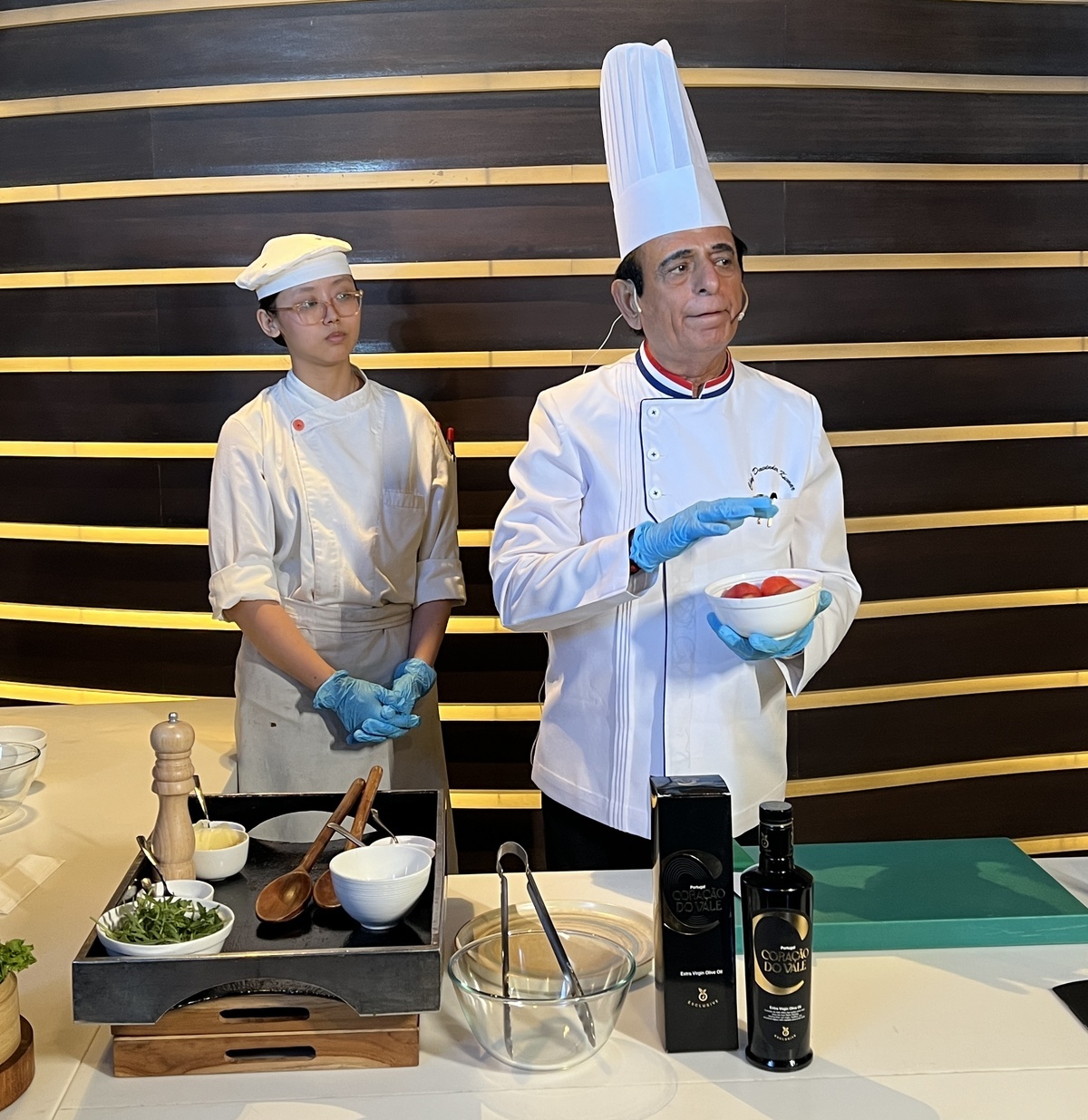
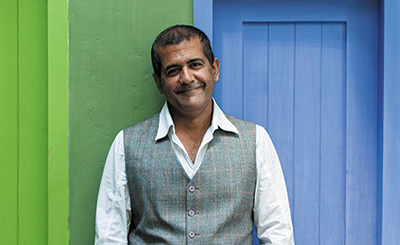
Chef Davinder Kumar during a live demo at the tasting series, “The Portuguese Pour.” Photos: Nawaid Anjum
Chef Davinder Kumar’s tasting series introduced Portugal’s Coração Do Vale extra virgin olive oil to India through a refined menu of crostini, olive focaccia, charred sweet potato chaat, pan-seared sole, biryani and desserts, while opening a larger conversation on regional Indian cuisine, purposeful innovation, health, authenticity, presentation, and the future of hospitality after the Iran-Israel/US war
Portugal’s ultra-premium extra virgin olive oil (EVOO) Coração Do Vale made its India debut at Le Méridien New Delhi recently through Chef Davinder Kumar’s tasting series, “The Portuguese Pour.” The invitation-only culinary event brought together Coração Do Vale from Portugal’s Baixo Alentejo region and the five-decade-long journey of Chef Kumar, one of Indian hospitality’s most respected names, lovingly known as Chef DK among his admirers.
The event marked the India introduction of Coração Do Vale by Leads Brand Connect. The brand’s story came wrapped in the romance of sun-drenched Portuguese olive groves, early-harvest olives, cold extraction, low acidity, native varieties, and the promise of a clean, peppery finish. But what made the afternoon interesting was not just the bottle on the table. It was what Chef Kumar did with it. Instead of treating the olive oil as a foreign guest that needed to dominate the meal, he allowed it to behave like a good conversationalist: present, refined, never loud.
Crostini, olive focaccia with EVOO, and roasted makhana, set the tone for a lunch that moved between Europe and India without turning the table into a confused passport office. There was Broccoli Almond Soup with EVOO Pesto Crostini, followed by mains such as Pan Seared Fish with Mint, Caper and EVOO Tapenade, Murg Tikka Lazeez, Paneer Khaas, Pasta Aglio e Olio, and Dum Subz Biryani. Dessert brought in Tiramisu, Mango Flan, Phirni, and Ice Cream. There was even a signature mocktail touched with olive oil, which, for many at the table, was the afternoon’s most curious little surprise.
Also read: How Manam Chocolates is rewriting India’s relationship with cacao, one bar and beverage at a time
There were live demonstrations designed by Chef DK for the occasion: Tomato and Raw Mango Carpaccio with Kalamata Dust, EVOO and Shaved Parmesan; Charred Sweet Potato Chaat with Bajra Crisp, Imli Jaggery and EVOO Reduction; Pan Seared Sole with Mint, Caper and EVOO Tapenade; and Rustic Carrot and Cinnamon Cake. Each dish showed how a premium olive oil enters Indian flavour systems without swaggering in like a tourist with too much luggage.
For Chef Kumar, who has watched Indian kitchens change across decades, this ability to adapt is essential. Looking back on his journey, he refused to turn memory into a garland of only pleasant moments. “It has been a journey full of challenges, opportunities and failures,” he said. “There are many memories, good and bad. But the best teacher is your last mistake. Over the years, the best way forward has been to keep upgrading yourself.” That line stayed with me because it explained almost everything Chef Kumar spoke about: food, health, regional cuisine, technology, presentation, and the danger of meaningless fusion. “Change is the key,” he said. “You need resilience and adaptability. Food has evolved over the years, and so have we. The mindset has to change.”
He remembers a time when chefs served what they wanted to serve. Today, he said, the relationship has changed. “Earlier, we served what we wanted. Today, we serve what the customer wants.” This is not, in his view, a surrender to fashion. It is an acknowledgement that dining has become more layered. People no longer want only to be fed. They want to know where the dish comes from, why an ingredient has been chosen, what memory it holds, and what makes it worth paying attention to.
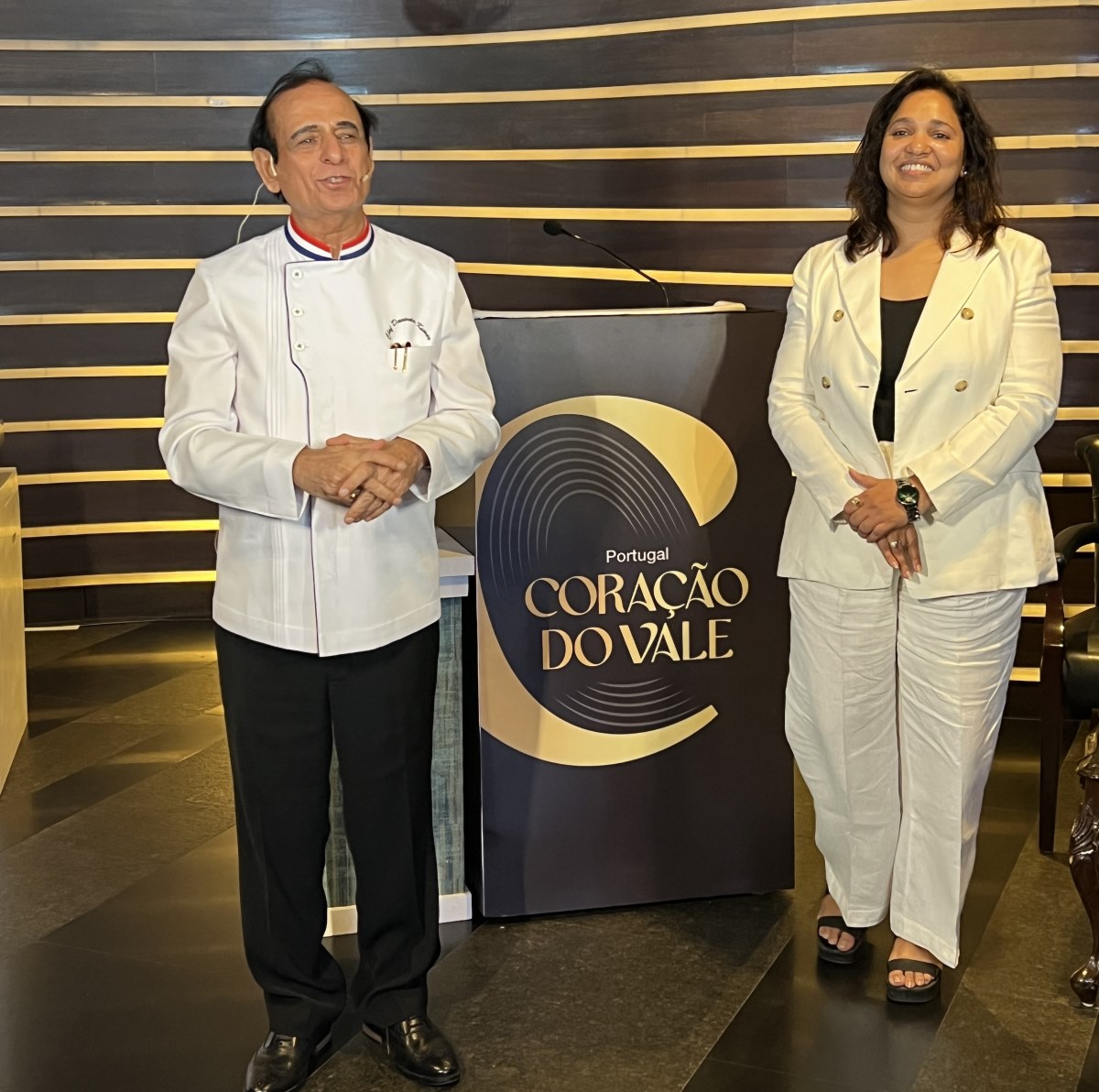
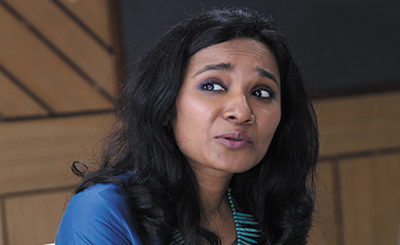
Chef DK with Richa Khandewal, Managing Director, Leads Brand Connect
He pointed to the charred sweet potato chaat served that afternoon. It was not just sweet potato dressed up for a fine-dining plate. It came with fig, imli jaggery, bajra crisp, and an EVOO reduction. “There is a story,” he said. “Why sweet potato? Why fig? Why that emulsion and not a dressing? People like to hear where the ingredient comes from, why jaggery has been used, and why that particular jaggery.” This, for him, is the new grammar of food. It is no longer enough for a dish to be technically correct. It must carry a narrative without becoming a lecture. It must have beauty without forgetting hunger.
Chef Kumar believes the industry has changed because life itself has changed. Technology, globalisation, travel, availability of ingredients, and rising exposure have reshaped both chefs and diners. “In the 1970s and 1980s, we had to import almost everything,” he recalled. “Even arugula leaves were imported. Today, even a roadside hawker is selling broccoli.” So, the once-rare ingredient has become ordinary, and the ordinary ingredient is now waiting to be rediscovered.
Also read: CHO: Vietnamese Kitchen & Bar: Chef Vaibhav Bhargava takes Delhi on an unforgettable culinary trip
That rediscovery, in fact, is where Chef Kumar becomes most animated. He is interested not only in imported excellence but in what India has forgotten in its own backyard. “Regional cuisine is the future,” he said. “The future is about fresh produce, local produce, and hidden ingredients.” He mentioned Gahat dal from Uttarakhand, a traditional ingredient that rarely appears on glamorous menus but deserves its place. “We have forgotten so many ingredients,” he said.
This is why he sees Indian cuisine’s global rise not as a trend but as a correction. “Indian cuisine has been accepted globally,” he said. He remembered participating in an international culinary event in Tokyo in 1983, where chefs from across the world gathered. “The jury did not know what jalebi was. They did not know what kebab was. Today, these are known around the world.”
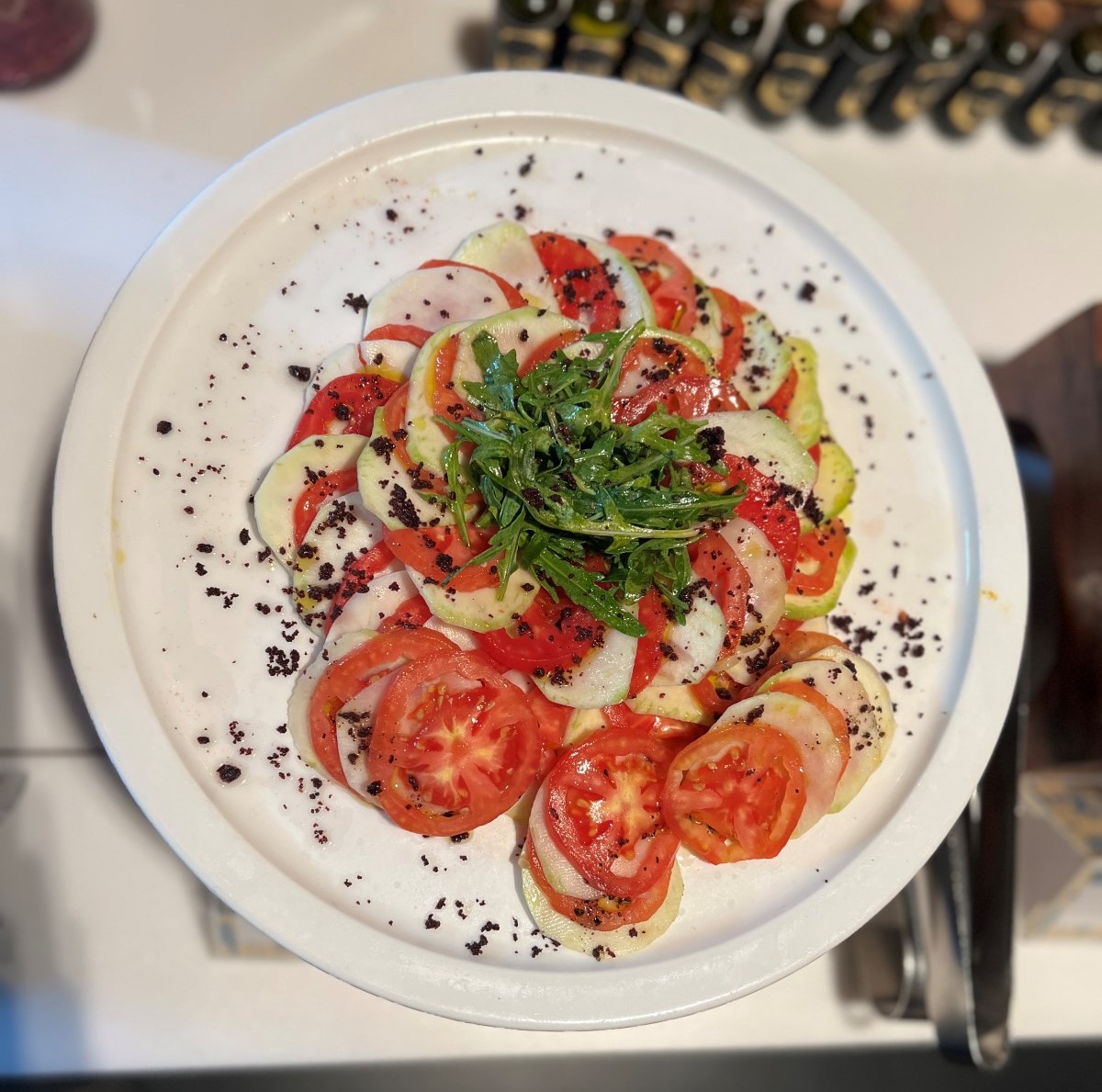
Tomato and Raw Mango Carpaccio with Kalamata Dust, EVOO and Shaved Parmesan
For him, the old shorthand of Indian food abroad — curry, butter chicken, naan, and little else — has started to fade. “There is more to Indian cuisine than traditional butter chicken,” he said. “The whole concept has moved.” Today, one can find restaurants outside India exploring regional cooking, from South Indian food to Bihari cuisine. Chef Kumar himself had recently done a pop-up around Bihari cuisine, which he sees as part of a much larger shift.
He was equally clear that South Indian cuisine deserves to be seen beyond the tired trio of idli, dosa and sambhar. “In Delhi itself, there are so many good restaurants serving South Indian food,” he said, mentioning Nadu as an example of how regional food can be presented beautifully without compromising on its identity. “They are serving cuisines from various states of South India. It is so beautifully presented.”
Presentation, for Chef Kumar, is not a cosmetic trick. It is part of how food is received. “Dal is the same, chicken is the same, brinjal is the same, but how you present it matters,” he said. “These days, presentation plays a very important role.” A dish, according to him, must look like someone cared enough to bring it to the table with thought.
This is also where his views on fusion become delightfully blunt. Chef Kumar is not fond of the word, and he is even less fond of what is often done in its name. “Fusion cuisine came and died,” he said. “It created confusion as fusion. I am strongly against fusion.” The problem, according to him, is not innovation, but laziness in the guise of creativity.
So, why does Indian food need foreign ingredients? Our ingredients are being adopted by French and European chefs. Why do we need paprika in Indian food? Why do we need olives in Indian food? He clarified that he is not against exchange or imagination. What he supports is innovation that begins at home. “We can do fusion among our own cuisines,” he said. “Use panch phoron (cumin or jeera, fennel or saunf, fenugreek or methi, nigella or kalonji and black mustard or radhuni / wild celery seeds) in a marinade, use mustard from Bengal. Innovate, upgrade, but do not lose the originality.”
“You don’t elevate chicken chettinad by adding thyme and rosemary,” he said. “You destroy it.” For him, true elevation is different: serve it on a banana leaf, place it carefully, add curry leaves, think about the plate, the aroma, the memory. “Sushi in a tandoor, momos in a tandoor — we are destroying food,” he said. “Are the Chinese making momos in a tandoor? Then why are we doing it?” The line drew a laugh from me, but it carried a serious point. Food cultures can speak to one another, but they should not be bullied into gimmicks. Change, he said, must have purpose. “The name of the game is change. But it should be purposeful change.”
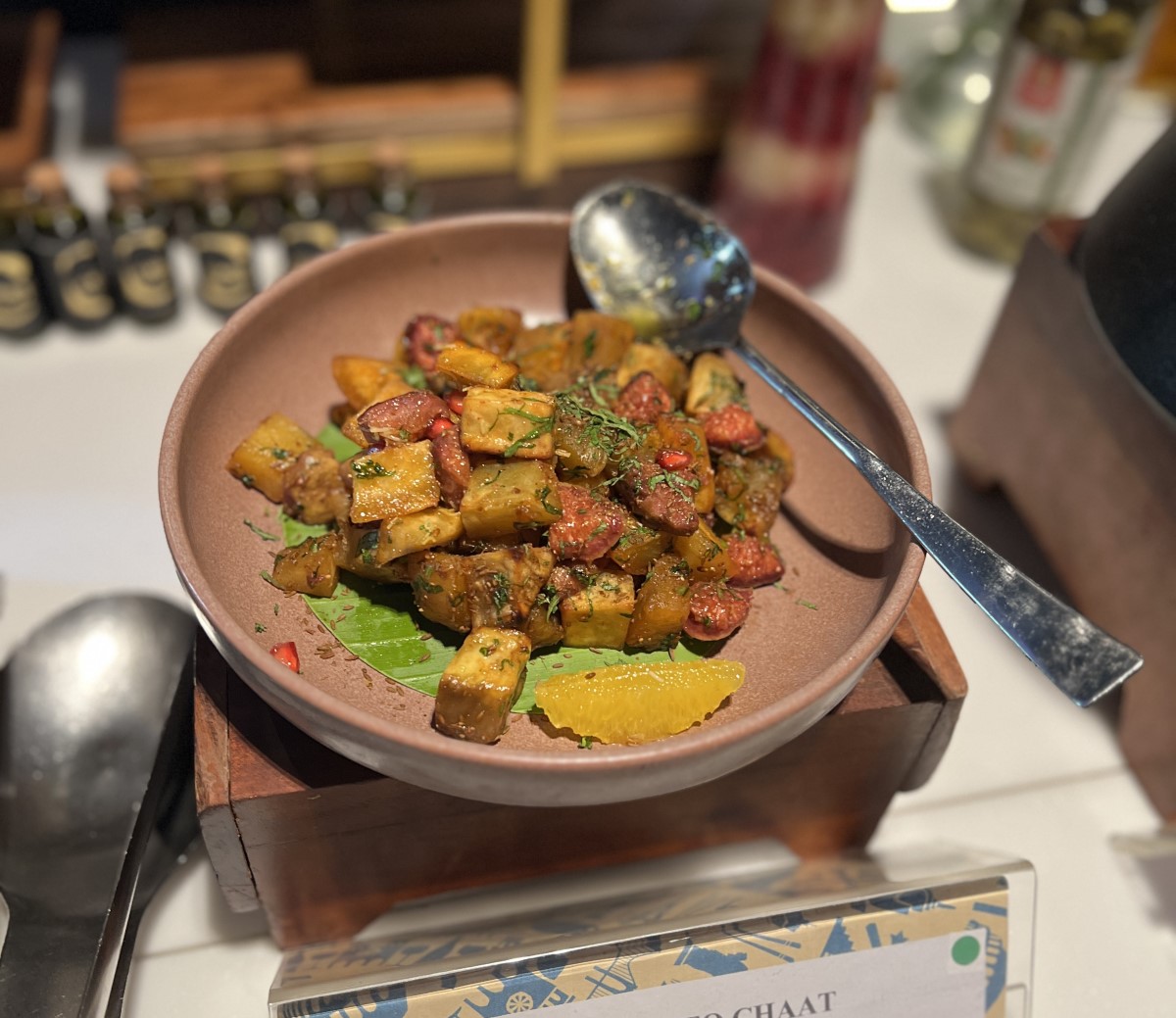
Charred Sweet Potato Chaat with Bajra Crisp, Imli Jaggery and EVOO Reduction
Health, too, is now part of that change. After Covid, he said, diners became more conscious of what they were eating. Chefs had to respond without turning food they love into punishment. “If I am cooking nihari, I cannot deviate from the recipe,” he said. “But I can make it slightly lighter without losing the root of its authenticity.”
He remains respectful of traditional Indian fats. “Mustard oil, pure ghee, coconut oil are among the best for cooking,” he said, adding that he generally avoids refined oil. But he also sees a place for excellent olive oil when used with understanding. Speaking about Coração Do Vale, he compared its quality to a premium spirit. “You pay for quality,” he said. “It is like Blue Label. People pay for taste, for quality and for the brand.”
Coração Do Vale is made from a blend of seven olive varieties: Arbequina, Arbosana, Cobrançosa, Picual, Cordovil, Verdeal and Galega. Its profile is fruity and grassy, with a creamy mid-palate and a clean peppery finish. Chef Kumar put it simply: “Coração Do Vale never competes with the food; it completes it.”
Richa Khandewal, Managing Director, Leads Brand Connect, called the afternoon a fitting beginning for the brand in India. She described Coração Do Vale as an oil marked not only by provenance but by personality, and said Chef Kumar’s kitchen offered the right stage for its debut. The brand will be available through its direct-to-consumer platform, on Amazon India, and at select premium gourmet stores across Delhi-NCR.
Towards the end of our conversation, I asked Chef Kumar whether he would write a memoir. He smiled at the idea. Someone, he admitted, had suggested it. For now, he is working on another book, though he did not want to reveal too much.
He also spoke about the current pressures on hospitality: inflation, slowing tourism, cautious diners, and the general unease that enters restaurants when the larger economy feels uncertain.
“Hospitality has been impacted by the Iran-Israel/US war,” he said. “When tourists don’t come, everything gets affected. Food also gets affected. A common man will think twice before going out for dinner.” His advice to the industry was practical: control expenses, control wastage, but do not hurt service. That balance — between economy and generosity, health and pleasure, change and authenticity — is really what Chef Davinder Kumar returned to again and again.
At Le Méridien, over sweet potato chaat, sole, focaccia, makhana, phirni and a peppery pour of olive oil, Chef DK offered a lesson that was simple enough to remember and difficult enough to practise: move forward, but don’t lose the taste of where you began.
More from Culture

Comments
*Comments will be moderated