









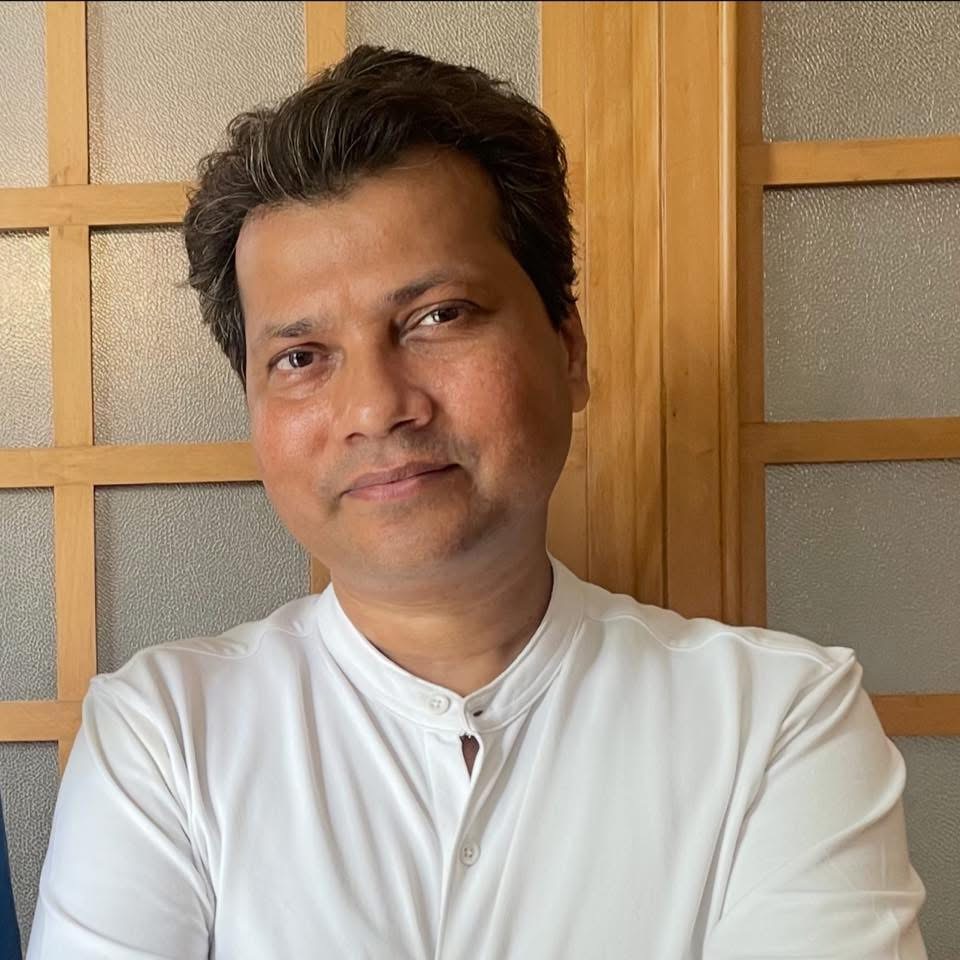
Chef Kulsum Begum and Chef Maliha Khan bring generations of closely guarded Salar Jung recipes to Delhi, opening up a lesser-known world of Hyderabadi aristocratic cooking, its techniques, memories and inherited tastes
For all its fame, Hyderabadi food is still surprisingly easy to reduce to a few familiar dishes. Mention it and the mind tends to go first to biryani, haleem and mirchi ka salan, and to a cuisine generous with chilli and spice. That familiar picture, however, leaves out a great deal. Hyderabad’s old aristocratic families had their own kitchens, recipes and ways of cooking; the food of the Salar Jungs, the Paigahs or the Asaf Jahs was not simply one interchangeable ‘Hyderabadi cuisine’. Much of this food was cooked within these homes for generations before it found its way onto the menus of five-star hotels. ‘The Royal Tables of Hyderabad,’ a three-day pop-up at Chor Bizarre in Delhi from September 4 to 6 in collaboration with Heirloom Kitchen, offered a rare chance to eat from one of those traditions: the food of the Salar Jung household.
Chef Kulsum Begum, a niece of Nawab Mir Yousuf Ali Khan — commonly known as Salar Jung III, who served as Prime Minister of Hyderabad Deccan during the reign of the seventh Nizam, Mir Osman Ali Khan — was raised in a family in which daughters were not taught the recipes because they would marry into other families. It was the daughters-in-law who were expected to inherit them. She persuaded her ‘nanna’ (maternal grandmother), Buggo Begum, to teach her, and after marriage with Mohammad Amir Naqi Khan took her to the Mahmudabad family in Uttar Pradesh, she found herself missing the sharper, sourer (as compared to the more restrained Awadhi cooking of her new home) flavours she had grown up with in Hyderabad. She began cooking those dishes at home, initially for her husband’s friends and guests, who soon started looking forward to the meals. What began as private dinners gradually ended up in professional kitchens; by the early 2000s, she was presenting Salar Jung food at hotel festivals and training chefs in the recipes and techniques she had learnt in the family.
Also read: At JW Marriott Aerocity’s K3, The Caspian Table brings a taste of Baku and Tbilisi to Delhi
In the truest sense of the word, these are heirloom recipes, carried through generations much like jewellery, silver or old crockery, being a receptacle for not only ingredients and methods but family habits, memories and a sense of where the food came from. The move into a hotel kitchen happened almost by accident. ITC Maurya invited her to present the family’s food at a festival in Delhi, an intimidating prospect for someone who still thought of herself as a housewife cooking family food rather than a professional chef. The festival began what became nearly three-decades-long association with ITC, first presenting the cuisine and later working with hotel chefs on the recipes and their exacting methods. Her husband, she says, encouraged her from that first festival onwards. What had travelled from Hyderabad to Lucknow through letters and memory had found its way to hotels.
Chef Maliha Khan, Chef Kulsum’s elder daughter, who is helping carry the repertoire into the next generation while her son cooks Lucknowi food, curated ‘The Royal Tables of Hyderabad.’ We are sitting on a table overlooking the usual noisy self of the Asaf Ali Road, and surrounded by the wonderfully cluttered, old-world charm of Chor Bizarre, where old advertising signs, enamel plates, vintage tins and framed curios crowd the walls exactly as they have for years. The first dish that arrives is a bowl of Aab Gosht, pale gold, with pieces of tender mutton in a clear, lightly spiced broth. It allows the flavour of the mutton to remain the centre of the dish while the spices are subtle. That feels like a fitting introduction to a meal that constantly unsettles what most of us think we know about Hyderabadi food. Over the next two hours, bowls of haleem, green chicken curry, shikampur kebabs, roghni sheermal, lachha parathas and an earthen pot of dum biryani follow.

In the Mutton Dum Biryani, the rice remains beautifully separate while the meat has mellowed into tenderness beneath it.
There is also a vegetarian meal being served alongside it: tomato shorba, paneer maghziyat, kathal haleem, arvi ka salan and terkari pulao. The Tamatar ka Shorba is bright and warming, carrying tomato with spices rather than cream-heavy richness. Paneer Maghziyat treats paneer with much greater seriousness than the usual restaurant staple, giving it a richer texture and a nutty gravy that works beautifully with the roghni roti. The Kathal ka Haleem is particularly impressive. It lets baby jackfruit slowly cook with grain until the ingredients develop their own body and texture. Arvi ka Salan, served with lachha paratha, has that wonderful slightly earthy quality of colocasia meeting a flavoured gravy, while the Terkari Pulao is fragrant with vegetables, yoghurt and fresh herbs.
The Mutton Shikampur is a neatly browned kebab resting on a small roghni roti. Its crisp exterior gives way to a soft centre enriched with hung yoghurt, making it moist without becoming rich in the cloying sense. The sourness is subtle and the meat remains beautifully seasoned. It is one of those dishes that disappears before you realise you’ve eaten it. Hara Masala Murgh’s bowl looks vibrant green from coriander and fresh herbs. A layer of fragrant oil floats over the surface while pieces of chicken are dabbed in a thick masala of green chilli, mint and coriander. It is aromatic rather than aggressively hot. The lachha paratha served alongside is flaky and buttery enough to gather every bit of the gravy. This was easily one of my favourite dishes of the lunch because of its freshness; it tastes like herbs first and chilli later.
Also read: ‘We want Coffee Island Beyond to become part of your routine’: Vita Nova Group CEO Amitabh Negi
The Mutton Dum Biryani arrives in an earthen handi; as I lift the lid, I see long grains of basmati rice scattered with herbs, fried onions and generous pieces of mutton. There is fragrance, but thankfully no overpowering perfume. The rice remains beautifully separate while the meat has mellowed into tenderness beneath it. For Haleem, mutton and grain are cooked for hours until the meat loses its separate iden
Atity and works into the grain, giving the haleem its thick, almost creamy body. It is less about chilli heat than the flavour that develops through time. Traditionally, haleem is worked and pounded as it cooks to achieve that characteristic smooth, slightly elastic texture.
It’s the set menu, and in desserts, we have Khubani ka Meetha, Hyderabad’s beloved apricot pudding. The apricots have cooked down into a luscious sweet-sour preserve and are served with vanilla custard, making for a gentle finish after the richness of mutton and rice.

For Haleem, mutton and grain are cooked for hours until the meat loses its separate identity and works into the grain.
Chef Kulsum Begum, seated across from me with her daughter Chef Maliha Khan beside her, take me through the preparation. They talk about how onions are roasted, why packaged masalas rarely work, or how one careless ladle of curd can ruin a biryani meant for 50 people. What Chef Kulsum learnt from her naani, she tells me, goes beyond a collection of recipes. Even the movement of her hand while roasting mattered. “Your hand must move like this, not like that,” Kulsum remembers being told. “If you change the movement, the taste will change.” She demonstrates the motion as she talks. An onion had to be cut in a particular direction for a particular preparation. Spices had to be roasted and ground differently depending on the dish. There was a stage at which a masala was ready that could not always be communicated through minutes on a clock. “Cooking has its own science,” she says.
The kitchens she remembers were also very different from domestic kitchens now. Cooking happened over wood fires, and the dying embers continued to be useful long after the main flame had gone. Mutton and onions could be left over that low heat and allowed to cook slowly. There were enough people in the household for jobs to be divided: someone could cut vegetables, somebody else peel almonds or grate ingredients, another person could attend to the fire. Even a household with only two or three members might have ten or twelve people working in it, she says, and food was made for the staff as well.
Chef Kulsum knows perfectly well that this cannot simply be recreated in a modern flat. What bothers her is the assumption that changing the method makes no difference. A pressure cooker will tenderise the meat, she says, but the result is not the same as meat cooked slowly. She remembers ginger-garlic water being sprinkled over mutton as it roasted. Tomatoes were handled according to what was being cooked. Bitter gourd had to be opened, cleaned of its seeds and cut very finely. A person’s ability in the kitchen could begin with something as basic as cutting an onion correctly.

Hara Masala Murgh’s bowl looks vibrant green from coriander and fresh herbs.
Ready-made masalas are another problem. Chef Kulsum remembers once bringing home a packet of potli masala, sometimes referred to as lazzat-e-taam, which brings together whole spices like cardamom, cloves, cinnamon, peppercorns and coriander seeds with less everyday ingredients like pathar ka phool (stone flower), khus ki jad (vetiver root), paan ki jad (betel root) and dried rose petals. Rather than grinding everything into a masala and frying it, the aromatics are tied in muslin and allowed to simmer with the food, slowly scenting the cooking liquid before the pouch is taken out. Her mother opened it and immediately objected to the proportions. That’s how she learnt to judge spices with her hand, which creates an obvious difficulty when the same dish has to be made in a hotel kitchen for far more people.
That problem becomes particularly clear when she talks about biryani. You cannot take a recipe for one kilo of meat and simply multiply every ingredient by ten, she says. While meat and curd give off water, onions bring moisture as well as sweetness. Too much onion and the biryani becomes sweet; too much curd changes both its moisture and sourness; too much garam masala overwhelms everything else. The rice is cooked separately to about 80 per cent, then layered with the meat and finished on dum. By that stage, you have to understand how much moisture is already in the pot. There is no useful formula if the cook cannot judge what is happening.
Also read: How Manam Chocolates is rewriting India’s relationship with cacao, one bar and beverage at a time
Chef Kulsum’s explanation of mirchi ka salan is similarly specific. She objects to the assumption that the dish is just about chilli heat. The treatment of the onions matters enormously. In the Salar Jung version, they were roasted before being ground. Change that stage, use them raw or hurry the roasting, and the gravy changes with it. She remembers her son’s friend being wary of the dish because he assumed anything called mirchi ka salan would be unbearably hot. He tasted hers, liked it and eventually wanted some packed for him.
Chef Kulsum belongs to a generation that was told not to share the recipes. Chef Maliha, on the other hand, belongs to one that understands that secrecy can also lead to gradual disappearance. The two are now trying to preserve the Salar Jung food, which is not a general label for everything cooked in Hyderabad. It comes with its own methods, balances and tastes. Commercial cooking has its own pressures. Food has to be made faster, served to larger numbers and kept consistent. And diners do not always have the patience to wait for dishes that take several hours. Chef Kulsum understands this, but she also knows what is lost in the process.
More from Culture







Comments
*Comments will be moderated