








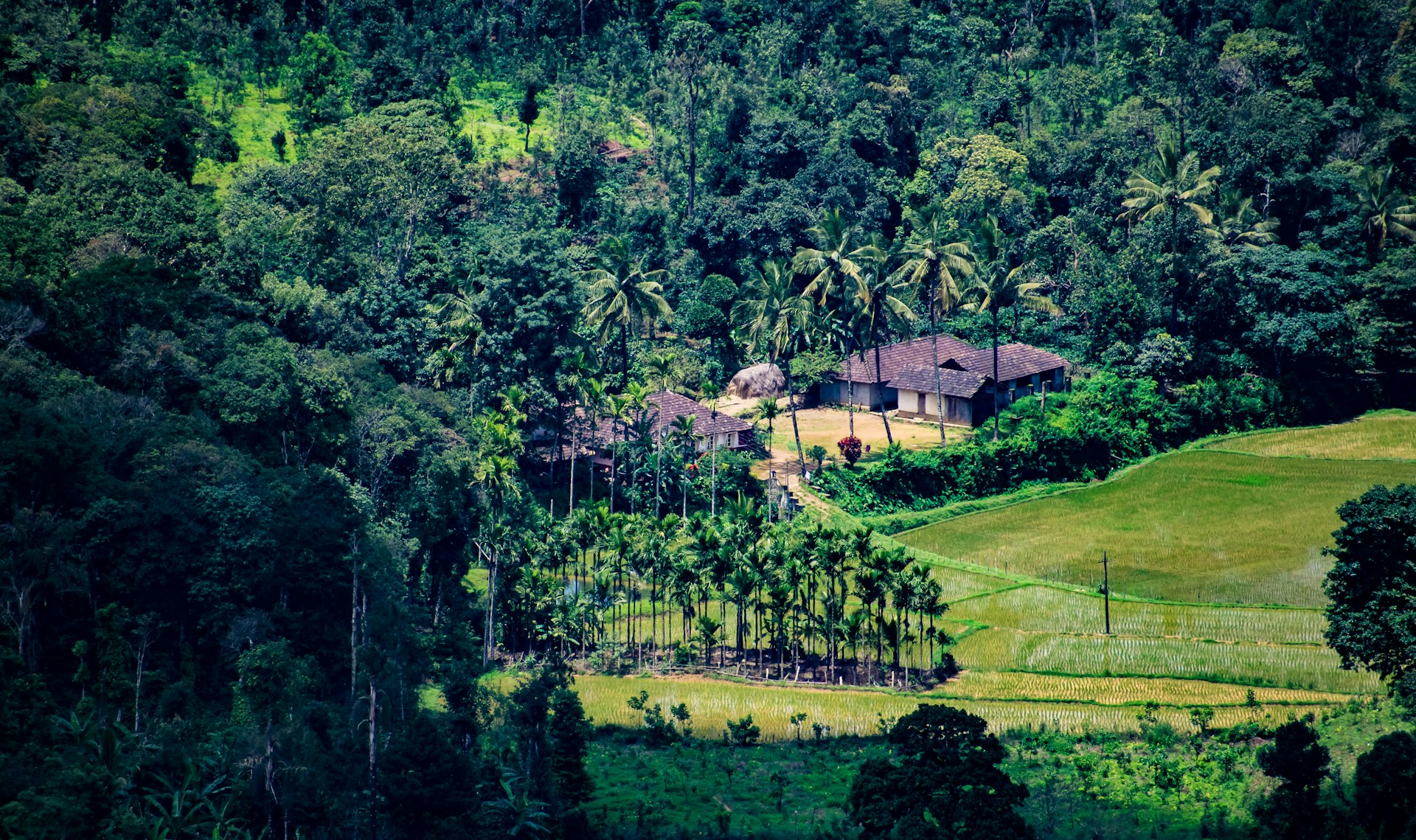
Kodagu, also known as Coorg, nestled in the lush hills of the Western Ghats in Karnataka, is the birthplace of the flowing goddess Cauvery, who irrigates the fields of southern India, a nurturing mother whose flowing grace sustains the whole region. Photo: Deepak Srinivasan

For generations, the devarakadus of Coorg survived because communities treated the forest as sacred. Today, as plantations, development and changing ways of life press in, that old relationship between people, gods and land is beginning to fray
For centuries, the forests of Kodagu were protected not by iron gates, but by something far more unyielding: an unspoken faith. Indigenous wisdom turned that faith into a living belief — a ‘social fence’ that kept the sacred groves whole. Today, as people increasingly look to ancestral ways of living to heal a fractured present, we face a crisis that’s staring us in the face: that faith is being diluted by chaotic modern utility, the fences are crumbling, and the forests are being compromised. Can this protective canopy survive our growing appetite for consumption, an appetite that never seems to be satisfied? If the treasure is resting in the seed bank, how do we wake up the soil before the blueprint is lost forever?
It is this calling that took me to Kodagu, also known as Coorg, nestled in the lush hills of the Western Ghats in Karnataka. It is the birthplace of the flowing goddess Cauvery, who irrigates the fields of southern India, a nurturing mother whose flowing grace sustains the whole region. It was with her blessing, and that of Igguthappa, the god of harvest and rain, that I began. The district arrives in mist. Its green is lush in a way no photograph could do justice. I had come to Kodagu by a route I couldn’t have planned.
It began in Peru, months earlier, in the land of Pachamama, where I had learned to ask a place for permission before entering it — and to wait for the answer. I carried that habit home. Then a trip to India came up suddenly, and on the long flight over I was reading a book when the words sacred groves surfaced for the first time. I hadn't known such a thing existed. Over the following weeks the phrase kept returning — in conversations, in articles — until it led me to the work of Dr. M.A. Kalam on the devarakadu, the forests of the gods or the sacred groves, and from there to Kodagu, in the Western Ghats of Karnataka. About five kilometres before Madikeri, we stopped at a temple we had not planned to visit. There was only a pull to stop, so we did.
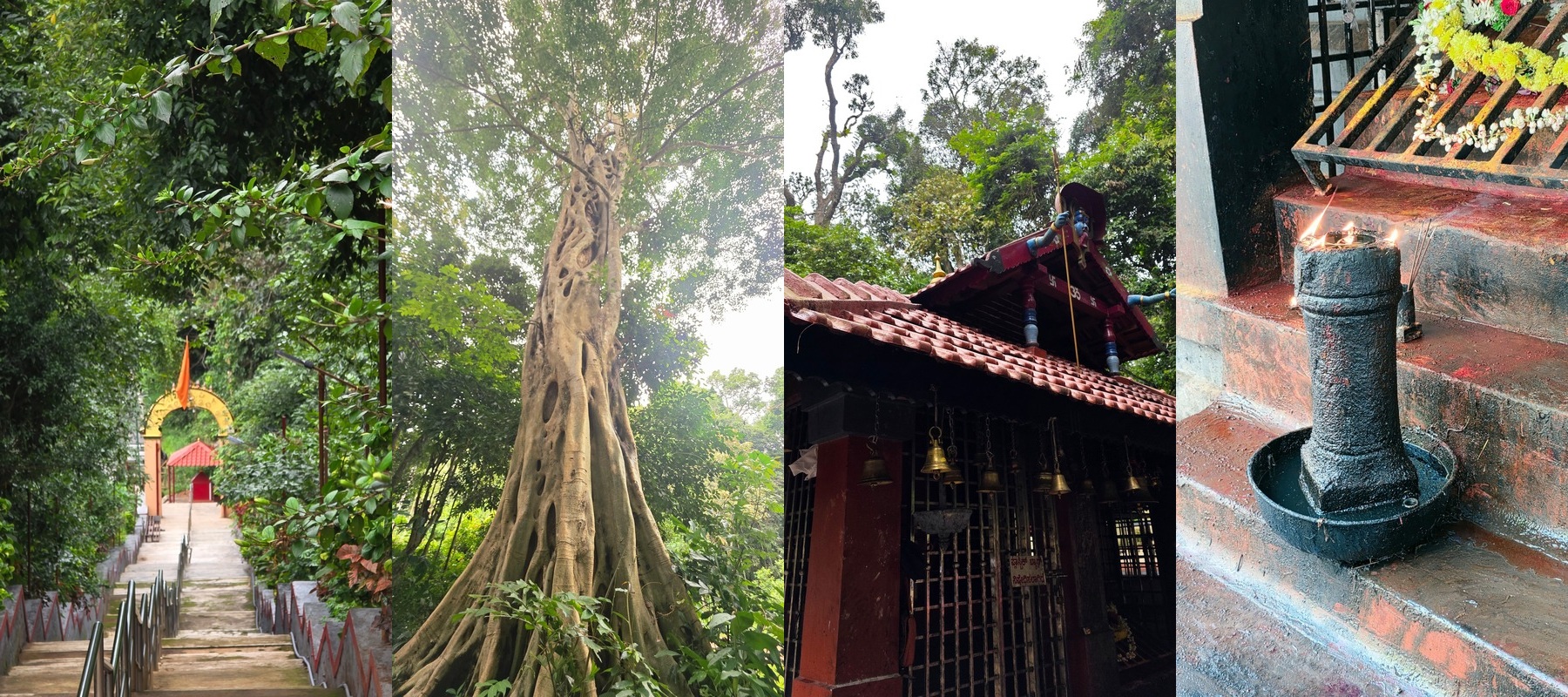
About five kilometres before Madikeri, we stopped at a temple we had not planned to visit. There was only a pull to stop, so we did. Photos: Deepa Joshi
It was a small shrine to Bhadrakali. We offered prayers, and then, for no reason I could name, walked around to the back — where the temple ground simply thickened into forest. No wall, no gate, no sign telling you that you had crossed from one thing into another. Just old trees, very large, and an anthill grown tall and untouched for what must have been years. The air changed. The welcome was eerily inviting, an unshakeable feeling, that this place had a great deal to say, and that I did not yet have the vocabulary to receive it. What transpired was an entry into paying attention to it. Standing in front of the unexplainableness of devarakadu: a forest kept whole not by any fence you could see, but by fear and reverence, by people who never drew a line between themselves and what grew around them.
My aunt, an avid trekker, pulled me back toward practical sense — leeches, thick unmarked undergrowth, no guide. She was right. I stayed at the edge, and I did not go in. A day after the Bhadrakali temple, in Ponnampet, I found the vocabulary I'd been missing.
***
I met Dr. Cheppudira Kushalappa, the former Dean of the College of Forestry at the University of Agricultural and Horticultural Sciences. He took me into a grove watched over by Vana Bhadrakali, Goddess of the Forest — represented not by an idol but by a single unworked stone. Nothing carved. Nothing telling you what to picture. Worship is left entirely open, which is its own kind of instruction. Like all beautiful things in life, this seemed like an interpretation that lay bare to decipher from the folds of your mind’s eye transcending the right and wrong and breaking free from the binary.
We stood near the stone, as he explained the thing I had felt at the edge of the first grove but couldn't name. “There was no physical fence,” he said. “There was a social fence. The social fence was fear.”
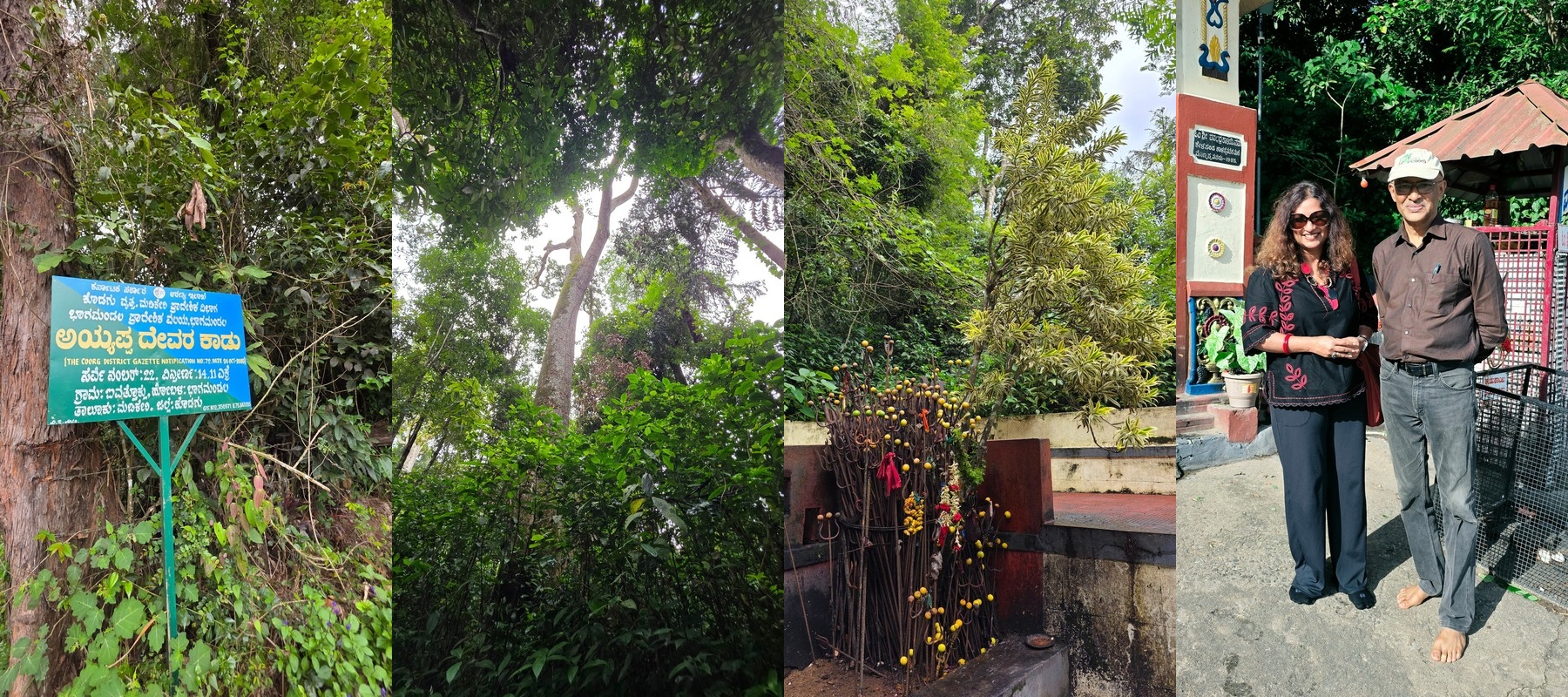
Nobody owns a devarakadu in the ordinary sense. Everyone is simply responsible for it: a responsibility no one assigned, and no one can easily take back. Photos: Deepa Joshi
The ancestors of this land, he told me, took everything they needed from these forest patches — water, medicine, food — and so they worshipped them. What people asked for was never grand: their own health, the health of their animals, a good crop. The whole landscape was once forest, so there had been no practical reason to set aside a special patch for a god. But the elders, sensing that the forest would not last forever, marked certain places as belonging to a deity before the change arrived. No footwear inside. Nothing carried out of the forest. No one ever had to teach this community the word conservation; it was simply the shape of their days.
And the ownership of such a place, I learned, runs unlike anything I had come across. The land belongs to the community. The trees, by law, belong to the state. The deity belongs — in the eyes of the people who tend her — to no one and to everyone at once. Nobody owns a devarakadu in the ordinary sense. Everyone is simply responsible for it: a responsibility no one assigned, and no one can easily take back.
There are more than 1200 of these groves on record in Kodagu, Kushalappa said, a number matched nowhere else on earth. In Virajpet taluk alone, there are five hundred and eight of them, home to 165 gods and goddesses, worshipped by 18 different communities. And yet all the devarakadus together account for barely two percent of the district's land. That fraction, he said, is the foundation of Coorg’s entire culture of protecting the wild. Then he said the thing I carried home. “The seed bank,” he said, “is in the soil.”
Most of Kodagu’s original forest is gone now, cleared for coffee, for cardamom, and lately for roads and resorts. But under these groves, the ground still holds seeds of plants that have vanished from the farmed land all around them — a buried, dormant record of everything that used to grow here. The grove is not only the trees you can see. It is the memory of a forest, kept alive underground, waiting.
***
Once a year, that memory wakes up out loud.
The festival begins on Thulasankramana — the 18th of October — with the season’s first observance, and a day later, up in the Kunda Hills, the villages hold Kundatha Bodd Namme, the devarakadu habba. From there the celebration moves through village after village, and the forest, for one night, becomes unmistakably active.
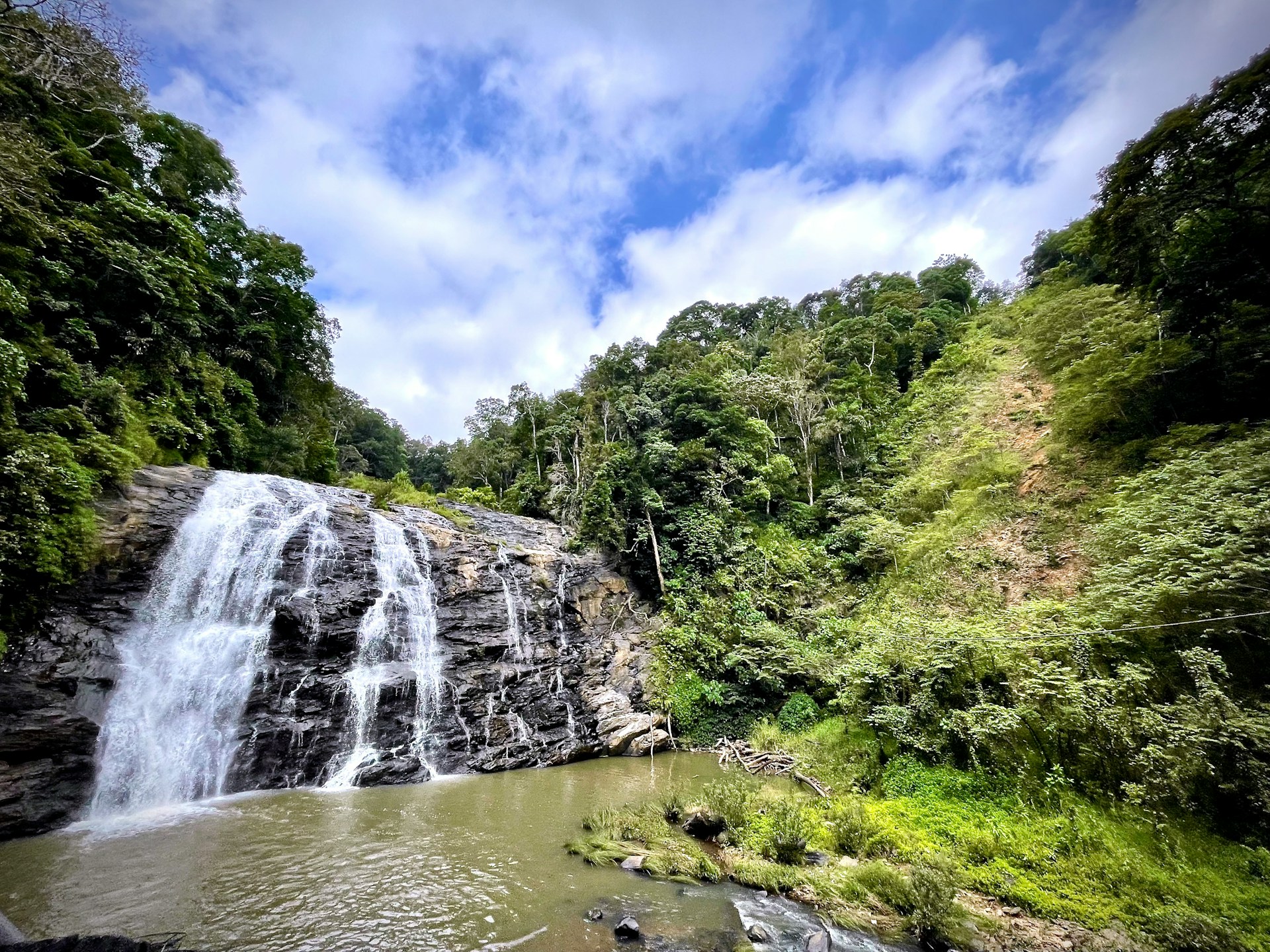
Most of Kodagu’s original forest is gone now, cleared for coffee, for cardamom, and lately for roads and resorts. Photo: Sam Benstan
People gather after dark, lit only by oil lamps. One person — chosen and vetted through a process the community controls entirely — enters a trance believed to be the deity taking hold of them. There is music. There are offerings. And by every account I heard, a charge in the air that has nothing to do with performance.
Kushalappa's own first memory of a devarakadu is a night exactly like this: a boy standing beside his father, watching a man go into trance under lamplight. “Many people my age would have seen something like this in their own village,” he said. “It shaped all of us.”
Also read: The Beckoning Chimes of Munich
There is a pattern, too, in how the goddess herself is described. She begins gentle — blessing the crops, curing the sick, watching over the children. But if the forest is neglected, if its boundary is crossed, she becomes something else entirely: a source of real consequence. It is not a contradiction. It is simply what protection looks like once the thing being protected is genuinely under threat. The threat, when it came, did not announce itself as one.
Before coffee, Colonel Muddanna says, cardamom grew under the forest cover on Kodagu’s slopes, and the valleys held paddy. Coffee — planted first by British estate owners, later taken up by Kodava landowners themselves — slowly pushed the cardamom out. And as the plantations grew, they needed workers, and the workers needed housing. In some cases, the answer was the groves themselves: land held sacred for generations, quietly signed over to shelter migrant labour.
The numbers hold the grief plainly enough. More than 15,000 acres of devarakadu land were once under formal protection. Across the eight decades the groves spent under the Revenue Department, more than 9,500 of those acres were lost.
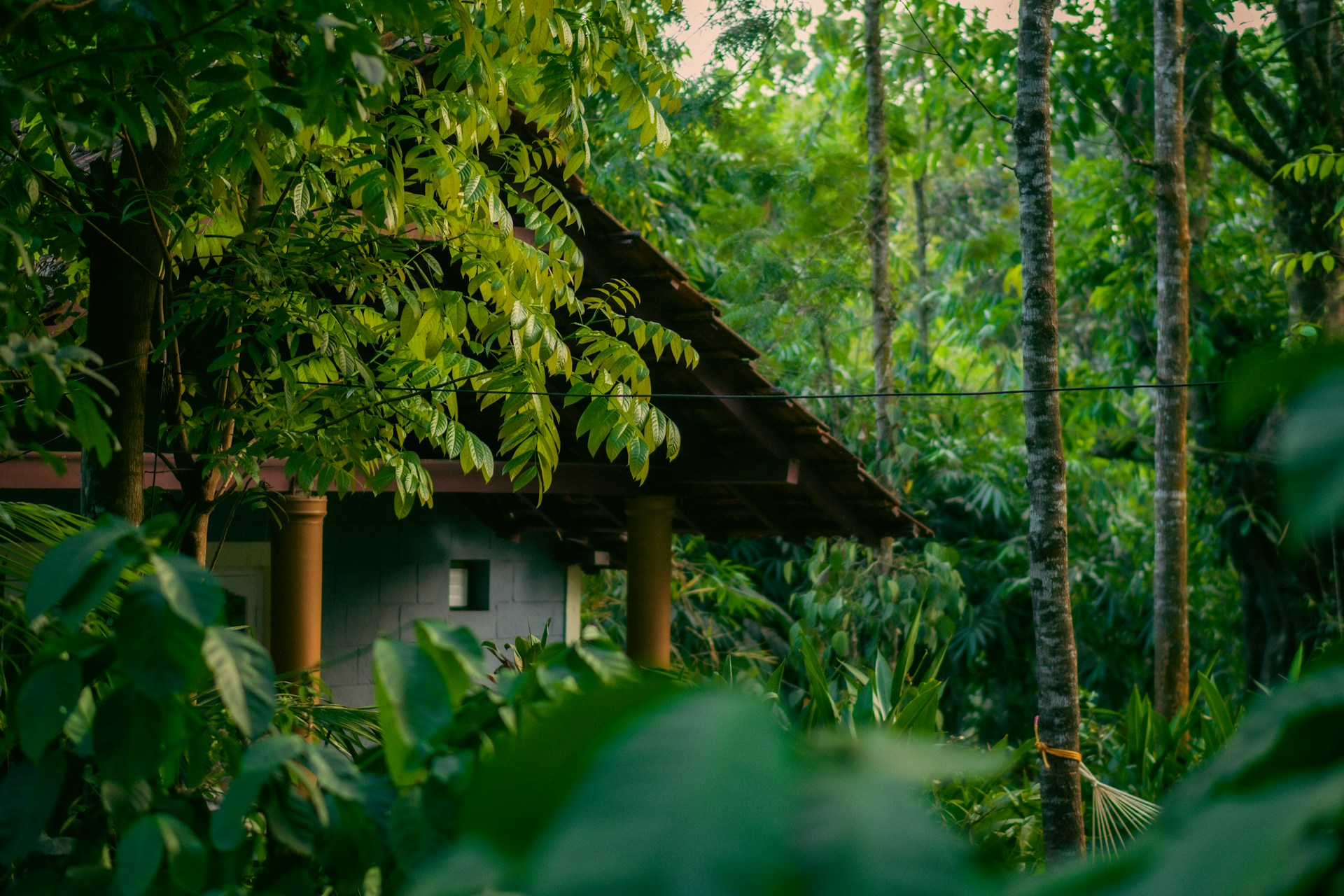
Before coffee, Colonel Muddanna says, cardamom grew under the forest cover on Kodagu’s slopes, and the valleys held paddy. Photo: Aakash Goel
The faith did not vanish. It was diluted — by economics, by migration, by a younger generation with no memory of lamplight or trance.
Only a few thousand acres of devarakadu forest remain formally protected in Kodagu today, a fraction of what stood a century ago. In 1994 a state order finally reclassified the groves as Protected Forests rather than ordinary revenue land — real progress, with a great deal still undone.
But what I carried home wasn’t acreage. It was a community that worships a bare stone instead of building a monument to itself. A system where the government holds the trees on paper while the people hold the actual weight of them. A single night, once a year, when a whole forest is treated, out loud and together, as something more than timber.
This reverence, Kushalappa mentioned almost in passing, reaches back to the Vedic period — long before anyone thought to call it conservation. The devarakadu is not an isolated custom. It is one living thread of something far older. He was clear about one more thing: this landscape is not built for crowds, and whatever future these groves have depends on people entering them, when they are allowed in at all, carefully and with permission — arriving with reverence, not appetite.
I never walked into that first grove, behind the Bhadrakali temple. I still think about it more than most of the places I actually entered. So: how do we wake the soil before the blueprint is lost?
Perhaps the answer was in front of me the whole time. The seed bank does not need to be rebuilt. It needs conditions. Belief cannot be legislated back into existence, but connection can be rebuilt, one festival attended, one child carried into the forest at night by a parent, one visitor arriving with permission instead of hunger. The seeds are still there, in the ground and in the culture both. What they are waiting for, is us.
More from Culture





Comments
*Comments will be moderated
Good Article. Needs some more explanations.about Devarakadu.
JanhaviRao
Sep 2, 2026 at 11:04